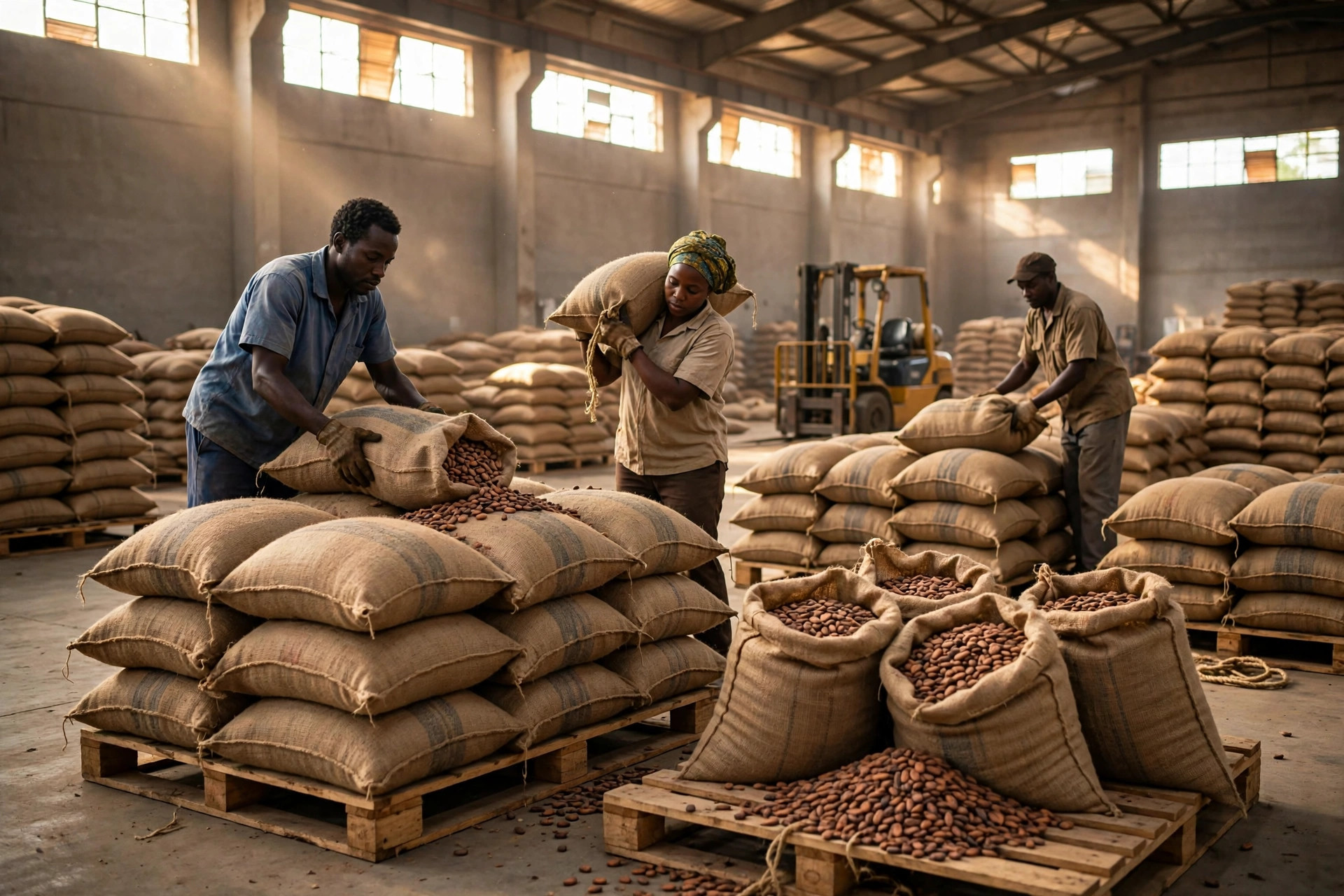
Vietnam black pepper export warehouse storage is not about how big your warehouse is. It is about whether moisture is under control before the pepper goes in, and whether lots are kept apart once it is there. I have watched plenty of shipments that looked perfect at origin — good crop, good price — and still ended in a rejected container, because the warehouse step was treated as an afterthought.
Let me put it plainly: this business has two sides, and cost is only one of them. The other side is risk, and cutting the wrong corner on storage can wipe out an entire container. So here is my verdict up front: for Vietnam pepper exports, the warehouse game comes down to three things — moisture, lot separation, and paperwork. Square footage, equipment, and location can all be negotiated. Those three cannot be compromised.
My Verdict: Vietnam Black Pepper Export Warehouse Storage Is Won on Moisture and Lot Control
Pepper has two enemies: damp and mixing. Damp brings mold and insects. Mixing destroys traceability, so one bad lot drags the whole shipment down with it. Too many newcomers treat the warehouse as "somewhere to stack bags." That is the single biggest mistake in this trade. The warehouse is not a parking lot. It is the last quality checkpoint in the export chain.
I always run the risk math before the rent math for clients. Saving a few dollars per ton per month on rent sounds smart. Losing a full container to mold at destination — cargo value plus freight, gone — costs dozens of times more. Once you see that ratio clearly, most of the later decisions make themselves. How well a warehouse is run shows up the moment the container doors open at destination, and every dollar saved earlier can come back doubled as a loss.
I Have Seen Too Many Shipments Die at the Drying Yard
Here is a lesson I still remember. A few years back, during the rainy season, I was following a cooperative's crop in southern Vietnam. Rain kept coming for days, the drying yards were full, and half-dried pepper went into storage anyway. At intake it looked fine and smelled fine. After more than a month at sea, the destination opened the container and found mold on the layers near the walls. The buyer rejected the whole container. That cooperative's year was gone.
The lesson was not about the warehouse. It was about the intake standard. Pepper that goes in wet cannot be saved by good storage afterward. Since then I have held one hard rule for every client: moisture must be checked before intake, and any lot that fails goes to a separate area for separate handling — never mixed with good stock. It sounds like common sense, but in the rush of a rainy harvest, most people are tempted to think "stack it first, sort it later." The moment you say that, the trouble is already on its way.
Sampling itself deserves care. Do not just check the bags by the door — those are usually the driest ones. I sample by stack position, and I pay special attention to middle layers and bags against the wall, because damp tends to show up there first. Keep the results on file with the date, stack position, and the name of the person who checked. If a dispute arises at destination, those records are the most useful evidence you own. In the end, many claims are settled not by the cargo itself, but by whose paperwork is more complete.
Then there was the mixed-lot case. A trader stacked pepper from two growing regions and two harvest periods in the same bay, then filled a container on a rough first-in-first-out basis. Destination inspection found uneven quality, and the buyer demanded a price cut on the whole container. That single discount was larger than a full year of his warehouse savings. After that I insisted on one rule: one lot, one stack position, with a stack card noting region, harvest period, and intake date. A container is only ever filled from matching lots.
Four Rules of Vietnam Black Pepper Export Warehouse Storage
The first is moisture. Pre-intake checks, regular re-checks in storage, and extra checks in the rainy season — none of these can be skipped. Sun drying costs the least but depends on the weather. Mechanical drying costs more, but it puts the delivery schedule in your own hands. My usual advice: run large volumes through sun drying with mechanical drying as backup, and send small high-value lots straight to mechanical drying. Never gamble on weather when it comes to moisture.
The second is lot discipline. Stack cards are one part of it; the other part is outbound order. Pepper does not improve with age in storage — a lot held past one season loses aroma and appearance. First-in-first-out sounds simple, but it only works if you have a warehouse map and outbound records to back it up. When things get busy, that is exactly when it falls apart.
The third is pests and odor. Pepper absorbs smells, so it must never share space with strongly scented goods. Spend the effort on routine cleaning and inspection rather than waiting until you find insect traces and need emergency treatment — emergency treatment costs more and hits your delivery schedule harder. Specific treatment methods should follow local regulations and buyer requirements; check the latest official policy rather than inventing your own approach.
There is also a location trade-off most people overlook. A warehouse near the growing region is cheap and lets you store the crop right after harvest, but it is far from the port, so inland transport takes longer and adds variables. A port-side warehouse ships fast and makes consolidation easy, but rent is higher, and the crop still has to travel there — itself a risk. My rule of thumb: fast-turning, high-volume cargo belongs near the port, where shipping speed matters; seasonal intake that ships gradually belongs near origin, where storage cost matters. Trying to have both usually means getting neither. Location math is inland transport plus damage risk, not rent alone.
The fourth is the cost comparison itself. This is the table I show clients when they ask which storage option to pick:
| Storage option | Cost | Risk | Best for | | Simple shed plus sun drying | Lowest | High in rainy season | Fast-turning cargo near origin | | Standard warehouse with inspection routines | Medium | Manageable | Most exporters | | Better-conditioned professional warehouse | Highest | Lowest | High-value cargo, long storage |
There is no universal answer. It depends on your cargo value and your shipping window. High value and a distant sailing date mean you should not skimp on storage. Fast turnover near origin means a simple shed with strict management is plenty. Here is the counterintuitive part: the clients who spend least on storage are often not the cheapest overall — claims and discounts eat far more than the rent they saved.
The Final Gate Before Loading: Do Not Let Good Cargo Die on Paperwork
Cargo in order, paperwork still matters. Origin certificates, quality inspection certificates, packing lists — the product name, lot numbers, and quantities on those documents must match the actual shipment exactly. I have seen cargo with no quality problem at all held up at destination for two weeks because one lot number was written wrong on a document. Clearance and inspection requirements change over time, so check the latest official policy rather than relying on last year's experience.
Before sealing a container, I insist on one final cross-check: container number, seal number, lot numbers, and piece count, verified by two people against each other. It takes less than ten minutes and can save a container's worth of trouble.
One more detail: watch the weather on loading day. Loading in the rain raises humidity inside the container, and that cargo is more likely to suffer on the voyage. Avoid rainy-day loading when you can; when you cannot, compress the loading time and keep the doors open as briefly as possible. The difference between veterans and beginners in this trade often shows up in small details like these.
And do not forget the contract itself. Spell out how quality disputes are handled — the inspection standard at destination, the re-inspection process, the claim deadline — while you are still on good terms. Those clauses look like boilerplate until something goes wrong, and then every sentence is money.
At the end of the day, competitiveness in Vietnam black pepper export warehouse storage does not come from the building. It comes from how seriously you take moisture, lot separation, and paperwork. You can rent a warehouse. You cannot rent that kind of discipline.
Does the warehouse you work with show you moisture results before intake? By Lao Mi, Supply Chain Veteran (20 yrs)