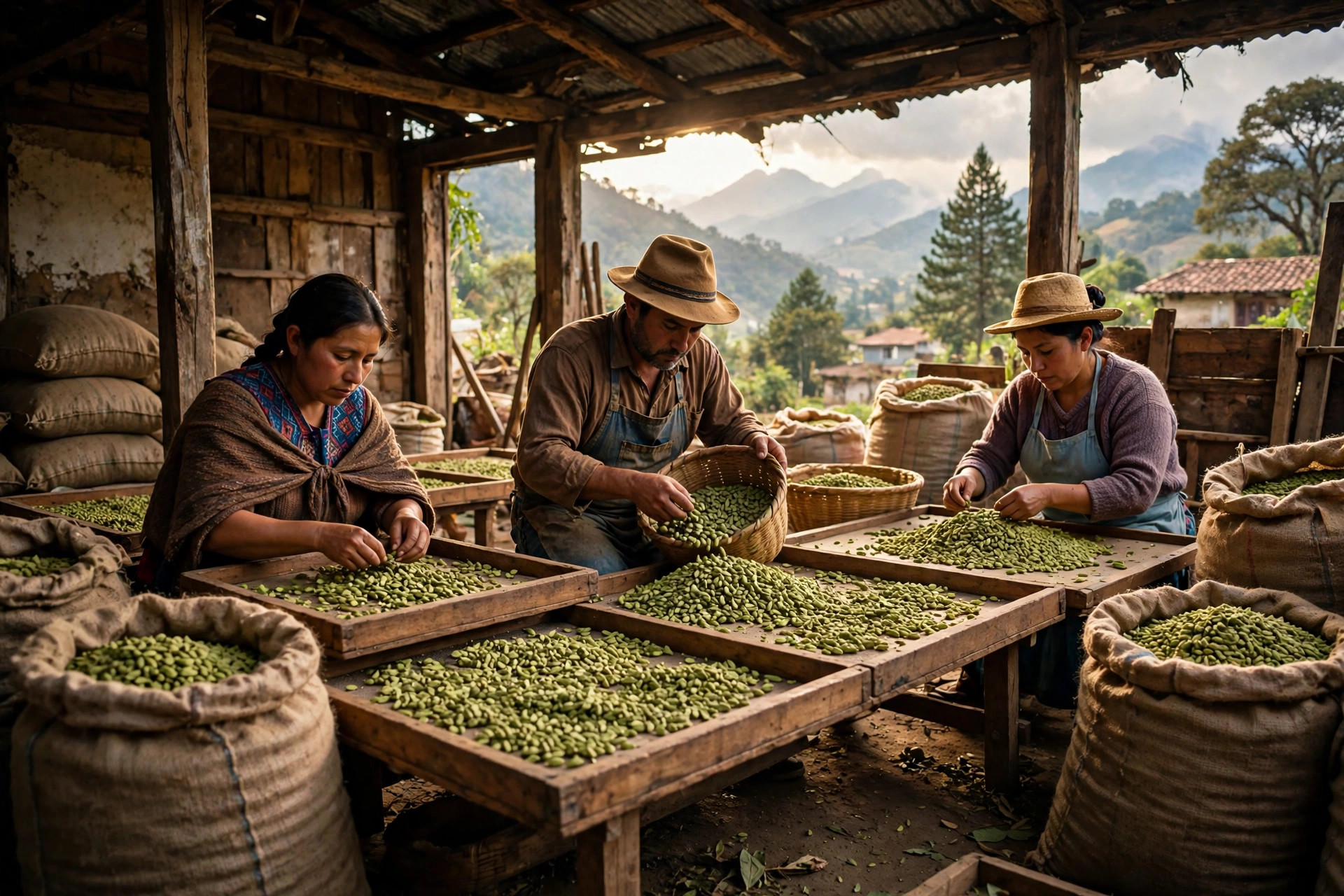
Let me tell you something I learned about Guatemala cardamom export warehouse storage on the road to Cobán. I got there before dawn, and people were already lighting fires along the hillside. They were not cooking breakfast. They were drying cardamom. Smoke drifted up the slope, and the valley smelled sweet with a sharp edge. After all these years on the road, I can tell you cardamom is one of the most delicate crops I have hauled. A little too much heat and the color goes. A little damp on the way and the aroma fades. Store it next to the wrong cargo and it picks up someone else's smell. In Guatemala cardamom export warehouse storage, the real money is not lost on freight. It is lost in drying, grading, and warehousing, one careless step at a time.
Around Cobán, much of the cardamom grows on small hillside plots under tree cover. Farmers pick green pods that are far too wet to ship. They have to be dried first, and the common tool in the villages is a wood-fired dryer: hot air from burning wood slowly brings the pods down to a state that keeps. Let me tell you, this job rewards patience more than speed. Push the fire too hard and the pods darken, sometimes scorch, and buyers knock the price down on color alone. Keep the fire too low and the inside never really dries. The pods look fine going into the warehouse, then come back damp and moldy a couple of weeks later. Old drying hands do not watch a gauge. They watch the smoke, smell the air, and feel a handful of pods for dryness and split shells. Outsiders call that a folk method. I call it judgment earned over decades.
Guatemala Cardamom Export Warehouse Storage Starts at the Dryer: Heat Is Grade
I know a buyer in Cobán, a man we can call Old Ma, who collects cardamom from hillside growers. The first thing he does with a delivery is not weigh it. He grabs a handful, looks at the color, smells it, and squeezes the pods to check whether they are dry through and whether too many have split open. He once told me plainly that whatever money you save on firewood during drying, you pay back twice over at grading. Overheated pods turn dull and pick up a smoky note, and buyers who use cardamom for spice blends or tea notice color and aroma before anything else. Under-dried pods are worse, because the damage hides until the warehouse does its quiet work and mold appears.
So the first ledger in Guatemala cardamom export warehouse storage belongs to drying: does the dryer move hot air evenly, is the firewood dry, and are pods cooled and rechecked before bagging? Green wood makes heavy smoke that finds its way into the pods, and pods bagged while warm trap moisture inside. I once hauled a load that looked perfect on the road; at the port, the aroma had already thinned out. That was a drying and intake-check failure, and the discount told the whole story.
Grading Follows the Contract, Not Your Own Invention
Cardamom grading comes down to three things: whole pods versus split pods, how green the color is, and how much trash and broken material is mixed in. Plump whole pods with bright green color and strong aroma are the top of the pile. Lots of splits, dull color, and debris drag the price down. The idea is simple. The hard part is making sure the grading language on the farm matches the grading language in the buyer's contract.
A case I saw: a seller split a lot into two grades at origin. The second grade looked only slightly darker, and the aroma still seemed fine, so he priced it a notch below the top grade. At destination, the buyer applied the contract's color and split-pod limits, and part of that second grade fell further down the scale. The discount was much larger than the seller expected. Nothing was rejected, but the margin thinned out fast, and the seller felt cheated. Nobody cheated anyone. The sample, the grading photos, and the inspection method had never been written down clearly before shipment. Grading terms must follow the buyer's contract. Do not invent a numbering system that sounds official, and do not borrow another country's grading scheme and pretend it applies. Where the contract is silent, confirm with a pre-shipment sample, label the sample bag with batch, drying date, and grade, and get both sides to sign off on it. That costs a few days. An argument at destination costs far more.
Inside the warehouse, grading discipline means physical separation: different grades, stacks, labels, and locations. Mixing grades to save space is a false economy, since an inspector may judge a mixed stack at the lower grade. Intake should record grade, batch, and drying date, and dispatch should follow drying order and sales orders, so paper and pallets tell the same story.
Moisture and Odor in Guatemala Cardamom Warehouse Storage: The Two Enemies
Once cardamom is in storage, it faces two enemies. The first is moisture. The Cobán highlands get plenty of rain, and a damp floor, leaking roof, or still air will let dried pods drink water back. Given time, they mold and lose aroma permanently. Warehouse housekeeping matters more than fancy racking: raise stacks off the floor, keep them off walls, keep air moving, and walk the warehouse daily in the rainy season, feeling bags and checking stack bottoms for damp marks.
The second enemy is odor transfer. Cardamom absorbs other smells easily. Store it with coffee, other spices, chemicals, or scented timber, and after a while it no longer smells like itself; a buyer who smells a mixture will downgrade the lot even if the pods look fine. Use a dedicated space, or where sharing is unavoidable, separate by odor zone with distance and barriers, and keep pallets and tools apart rather than reusing them straight from a scented load.
Here is the counterintuitive part: a fuller warehouse is not a better warehouse. Leaving aisles for air and inspection looks like wasted space, but it is what protects the grade of everything in the building. A warehouse packed solid cannot be inspected. Damp spots hide. Odor problems hide. By the time a problem shows up at opening, the loss is bigger than the floor space you thought you saved. In this business, empty space is insurance, not waste.
From the Highlands to the Port: Connection Matters More Than Speed
The road from Cobán to the port winds through mountains, and in the rainy season landslides and closures are part of life. After all these years, I do not fear a long road. I fear a broken connection: goods waiting for a truck, a truck waiting for a ship, and a sailing that moves while cargo sits extra days in a port warehouse. Cardamom can sit a few extra days, but not in a different climate: a dry inland warehouse and a humid port shed are not the same environment, and color and aroma notice the difference.
Plan backward from the sailing: fix the vessel schedule, then port entry time, then inland dispatch, leaving road buffer but not pointless port waiting. Load bags stable with air gaps, keep the truck bed free of leftover strong odors, and check tarps and seals before rainy-season departure. At the port, count bags, check seals, and photograph any damage or damp marks on handover. I once saw beautiful inland paperwork hide a few rain-damaged transfer bags, dry outside and damp inside; mixed into a container, they would have dragged down the buyer's impression of the whole lot.
| Stage | Where it usually goes wrong | How to hold the line |
|---|---|---|
| Drying | Fire too hot darkens pods and adds smoke; fire too cool leaves moisture | Dry in batches, burn dry wood, cool and recheck before bagging |
| Grading | Farm habit grading does not match the contract | Follow the contract, confirm by sample, separate grades and records |
| Warehousing | Damp, odor transfer, packed aisles that block inspection | Raise stacks, separate by odor, leave air and inspection aisles |
| Shipping | Inland-port handover gaps, rain damage in transfer | Plan backward from sailing, allow road buffer, inspect at handover |
There is an old saying among drivers: slow work makes fine goods, and haste makes waste. Every hour saved rushing cardamom from hillside to port can return as a discount-sheet number. Hold the fire in drying, the contract in grading, and dryness and clean air in storage. Where a contract or inspection requirement governs, follow what it says, and never fill a gap with an invented number.
By Shifu Zhao, Trucking Veteran (15 yrs)