We had a client in laos coffee export warehouse storage who opened our first meeting with exactly one question: how much is the warehouse per month? I told him to hold that thought and answer mine first: how many days did your beans sit through the rainy season on the Bolaven Plateau? He stared at me. What, he asked, does that have to do with the warehouse rate? Everything, I said. Every cent you save on storage can come back doubled in moisture damage and grading disputes.
This client bought green coffee on the plateau and shipped it out through Bangkok Port. On his first shipment he went for the cheapest warehouse he could find, a plain shed with no dehumidification, bags stacked straight on the floor. It rained for two straight weeks. The walls sweated, the bottom rows of bags went soft to the touch, and nobody noticed until the container reached Bangkok. The buyer sampled it, caught a musty note in part of the lot, and downgraded the whole container. The discount on the final payment dwarfed whatever he had saved on rent. That is the first lesson of this trade: moisture control is not a cost, it is insurance.
In Laos coffee export warehouse storage, moisture is the first bill
Here is what outsiders get wrong about moisture: they think buying a dehumidifier solves it. It does not. Green coffee hates sustained humidity more than it hates a single downpour. Bags sitting on a damp floor, stacked tight against a wall with no airflow, will quietly pick up moisture day after day. By the time anyone smells a problem, the damage is already priced into your shipment.
My advice to clients is always the same, and it is boring on purpose: write the humidity responsibility into the contract before the first bag arrives. Who runs the dehumidification equipment? Who logs humidity, and how often? If readings go over the agreed limit, who acts, and who pays for the fix? Most disputes I have seen were never really about the beans. They were about a contract that mentioned the rental rate and nothing else. The seller blamed the warehouse, the warehouse blamed the condition of the incoming beans, and the argument dragged on for months while the business relationship died.
Here is a counterintuitive point worth sitting with: moisture protection looks expensive until you spread it across the shipment. Take a typical lot of several hundred bags. Spending a little more on pallets, airflow, and humidity logging protects the entire container from a downgrade. Skipping it means betting a whole rainy season on good luck. Buyers have zero tolerance for musty coffee. One downgrade costs you not just the payment adjustment but often the buyer itself, because nobody reorders from a supplier who ships questionable lots.
| Approach | Upfront spend | Risk | Long-term result | | Bags on the floor, no dehumidification | Lowest | Rain-season damp, musty notes, full-lot downgrade | Lost payment, possibly lost buyer | | Pallets plus airflow gaps | Slightly higher | Much lower | Damage stays manageable | | Pallets, dehumidification, and humidity logs | Highest | Lowest | Disputes backed by records, stable long-term trade |
Grading is where Laos coffee export warehousing quietly eats your margin
The second story is even more typical. Another client had genuinely good beans and still lost money on grading. His coffee had been graded once at origin, then mixed in the export warehouse with other lots. When the buyer sampled the shipment, it pulled beans from a weaker lot and judged the whole consignment by them. The contract named no grading standard and no sampling method, so the client had nothing to stand on. He argued, the buyer shrugged, and the settlement came in at the lower grade.
The insider truth here is that grading disputes are rarely about quality. They are about contracts that never defined grading properly. A workable contract spells out what counts as top grade, what counts as secondary, the maximum defect ratio, whether sampling is done per bag or per container, and whose result wins when the two sides disagree. These clauses look tedious. They are exactly the clauses that save you.
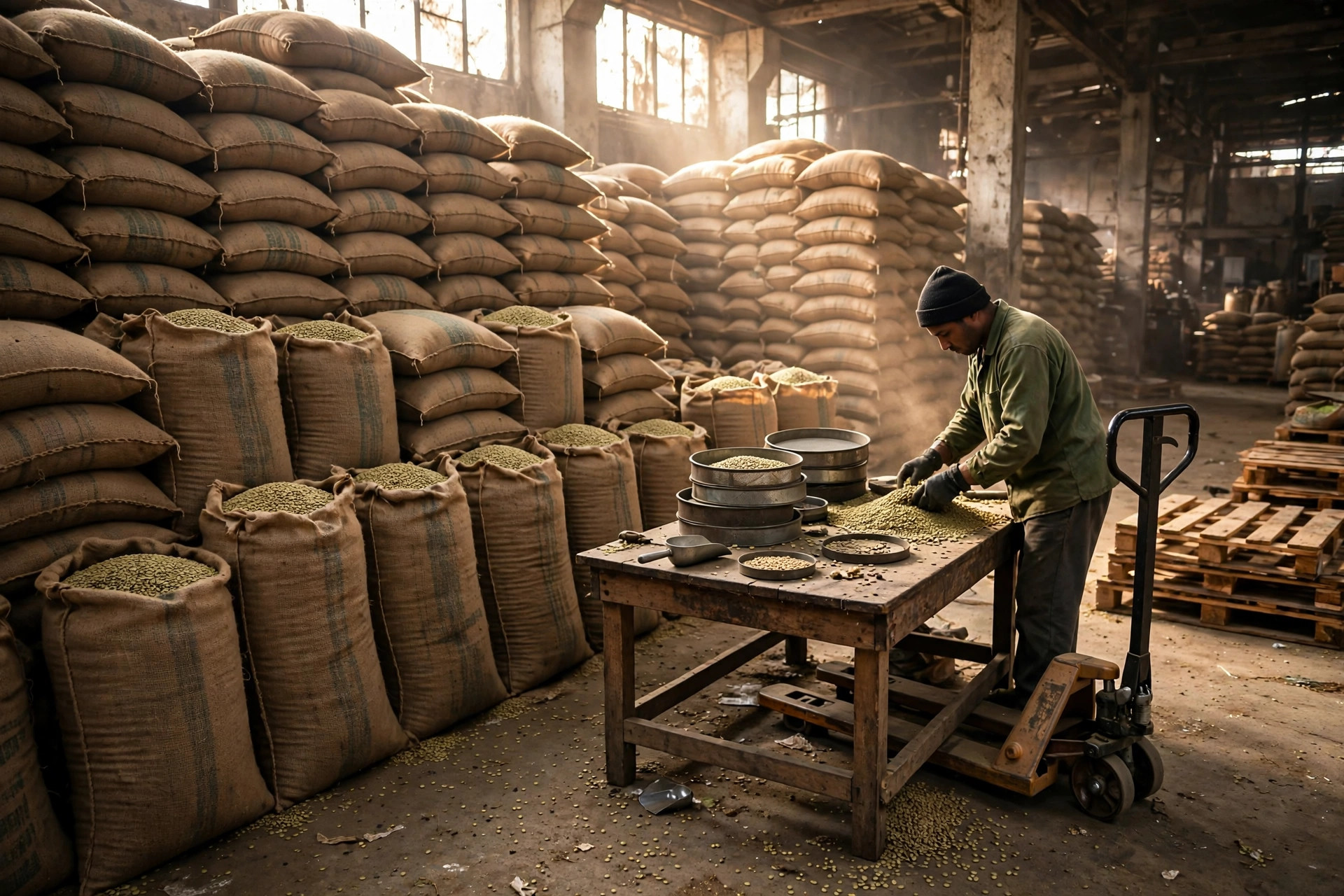
There is also a real trade-off to think through. Grading finer costs more in warehouse labor and management; grading coarser invites buyer rejection. Our rule of thumb for export warehouses is to skip perfection and nail the basics: keep lots separate, label every bag with lot and grade, and seal a retained sample. When the buyer samples, there is a record. When you dispute, there is evidence. A little extra trouble up front beats having nothing to say when a claim lands.
A few practical details beginners almost always miss. First, inspect the beans when they enter the warehouse, not when they leave. The intake condition is the line where responsibility changes hands, so both sides sign it and keep photos. Second, never store different clients' coffee in a shared pile; mixed lots are where disputes are born, and once flavors cross, nobody can prove whose beans failed. Third, sample again before loading the container, so you hold two matching records if the buyer later complains. None of this is expensive. What is expensive is having no evidence when things go wrong.
Three questions to ask before you sign
So back to the negotiating table. Next time you sit down over a warehouse contract, ask these three questions first. One: when rainy-season humidity runs over the limit, what does the warehouse do, and who pays? Two: are the grading standard and the sampling method written into the contract, and whose result prevails when they differ? Three: what is the claim process and deadline for damaged goods, and how is evidence kept? Ask these out loud and the other side immediately knows they are dealing with someone who has done this before. You will also notice something pleasant: the padding in their quote tends to shrink.
One more habit I always push on clients, because sellers love to skip it: never compare warehouse quotes on rate alone. One quote includes dehumidification and humidity logging, another includes nothing, and the cheaper-looking one bills you for everything later. Before comparing prices, ask for the full service list, line by line: what is included, what is excluded, and what triggers extra charges. Suppliers dread this question because it leaves nowhere to hide the margin. And the more precisely you ask, the less room there is for traps in the contract. That is the cheapest advantage in this business.
Coffee traveling from the Bolaven Plateau to Bangkok Port passes through a lot of hands, and every handoff is a chance to lose value. The warehouse is where most of that value quietly leaks away, through damp bags and sloppy grading. Anyone working in laos coffee export warehouse storage learns this sooner or later, usually the hard way. Get the moisture and grading clauses right, and the rest of the deal gets much easier to defend. Remember, the finer the contract, the better you sleep.
By Susan, 3PL Sales Director