Vienna is not a local warehouse play. That is my conclusion up front, and everything else in this piece is just explaining it. If you size the Vienna Austria warehouse market by Austrian demand alone, the math will disappoint you every time: a limited local market carrying Central European rents. Look at it as a logistics node and the math flips. Vienna sits where a Danube inland port, a dense rail network, and motorways meet, facing eastern Austria in one direction and Slovakia, Hungary, and southern Czechia in the other. I have seen too many location decisions made on rent per square meter, then paid back with interest in linehaul cost and lost delivery time. Vienna punishes that mistake faster than most cities.
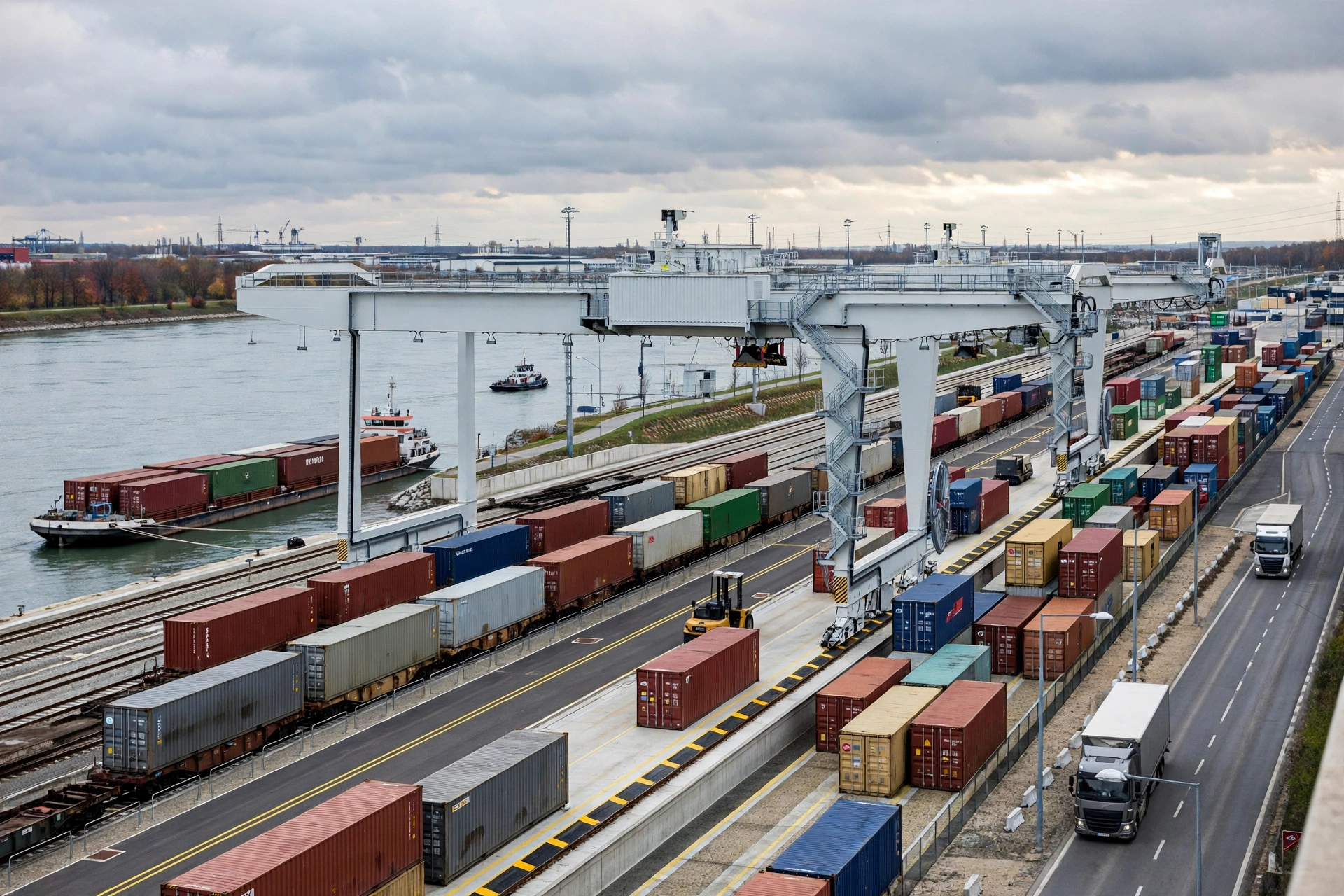
Start with the hard facts of the port. WienCont, at Vienna's Freudenau port, is Austria's largest trimodal container terminal for rail, water, and road, and it has been operating since 1979. This is not a render and a press release. The terminal covers roughly 170,000 to 200,000 square meters, offers storage capacity of 10,000 TEU, and has annual handling capacity of about 700,000 TEU, with actual annual throughput above 400,000 TEU. It works with 3 gantry cranes, 15 reach stackers and container handlers, and 8 rail tracks inside the terminal. Rail services connect Hamburg, Bremerhaven, Rotterdam, Koper, and Trieste, and about 50 trains a week run toward destinations including Budapest, Duisburg, Rotterdam, and Istanbul. Geographically the terminal sits at the crossing of three TEN-T corridors: Baltic-Adriatic, Orient-East Mediterranean, and Rhine-Danube. When I judge an inland hub, I ignore the brochure adjectives and check four things: real train frequency, real storage capacity, real throughput, and a long operating history. Vienna checks all four, which is why it can honestly call itself a distribution point for a region much bigger than Austria.
Two recent details matter as well. In September 2025 the Port of Vienna signed a multi-year framework agreement with Lagermax securing space for finished-vehicle logistics storage and transshipment, a sign that long-cycle automotive business is anchoring itself at the port. And WienCont says its carbon emissions have fallen by about 75 percent since 2022. Note the wording: that is the terminal's own reported figure, not an independent audit, and you should quote it that way. Still, the direction matters, because European customers increasingly ask logistics partners for carbon data in tenders, and a node that has done the work saves you an awkward conversation later.
Vienna Austria Warehouse Location: The Port or the Suburban Ring?
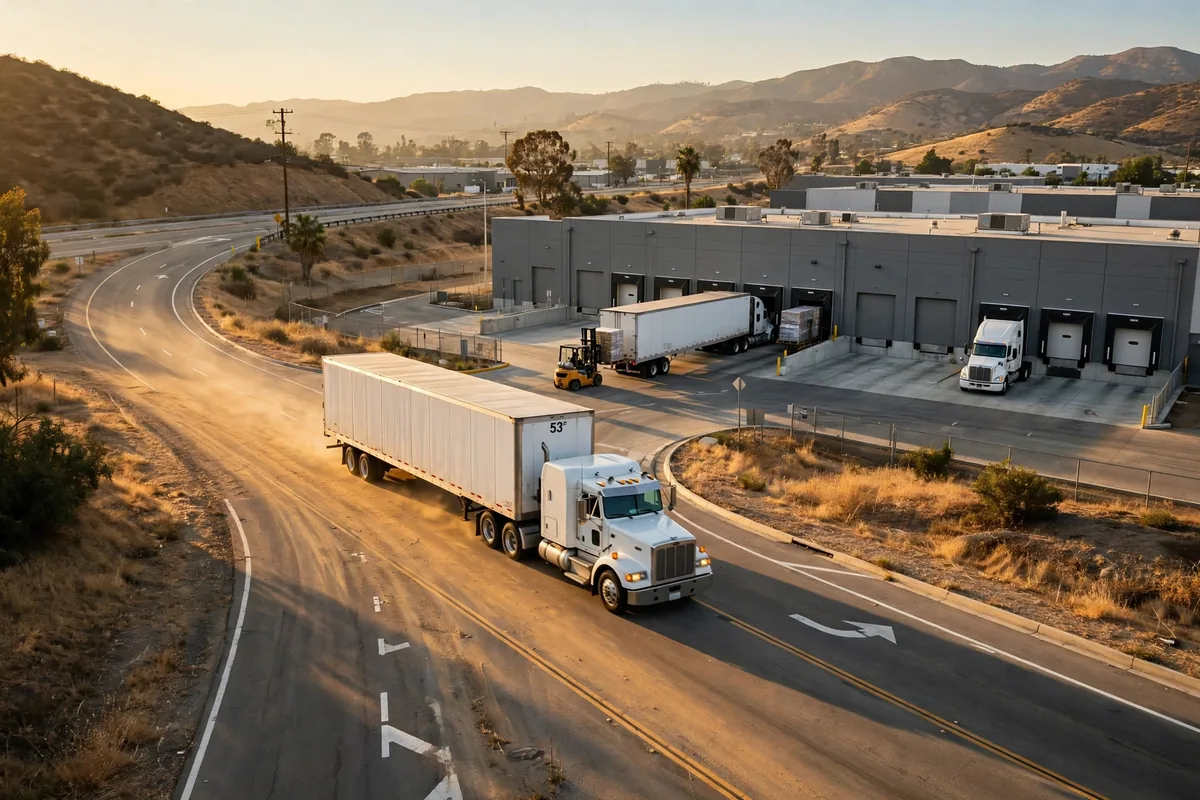
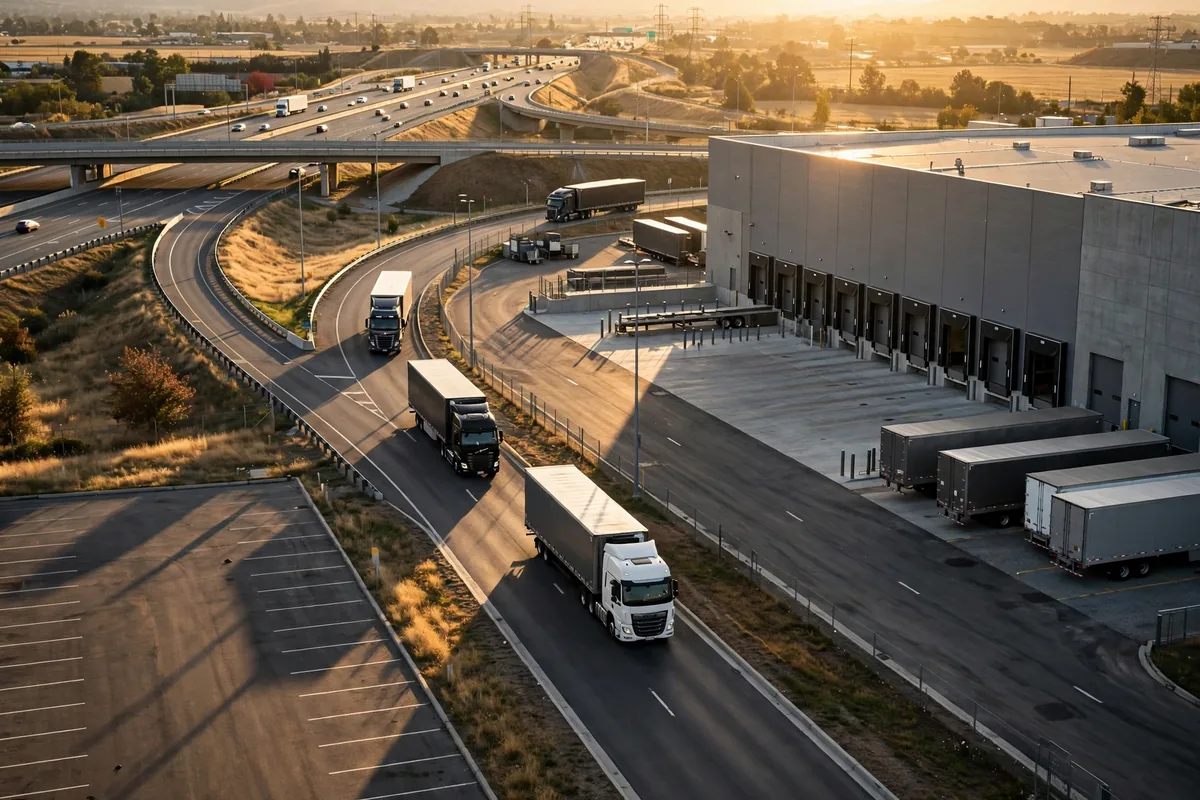
This is the question everyone asks first, and it is the wrong shape of question. There is no best area in Vienna, there is only a best area for your freight. Port-side space near Freudenau wins on interchange: containers arrive, and rail, barge, and truck are all in the same yard, so deconsolidation and onward movement into Central and Eastern Europe stay short and clean. Suburban space near the ring roads wins on distribution: closer to consumption, easier truck access, and a better fit for daily multi-drop delivery into Vienna and the towns around it. Put high-frequency consumer freight at the port and you will fight the port's rhythm every morning. Put full-container deconsolidation in a suburb and you buy an extra dray, an extra handling, and the damage and delay that ride along with both.
Here is a hypothetical example to show the accounting, with illustrative numbers you should replace with your own quotes. Hypothetical example: a consumer goods distributor receives full containers, deconsolidates in Vienna, and ships onward into eastern Austria and Hungary. At a port-side site the drayage and interchange bill is minimal, but every local delivery route starts farther from its drops, so driver hours and fuel climb quietly all month. At a ring-road site the delivery routes get cheaper, but every container pays a longer dray from the port plus appointment and waiting time. The honest comparison has four lines, not one: rent, drayage and linehaul, last-mile delivery, and handling plus waiting. Add all four before you decide. In reviews I have done, the warehouse with rent a fifth lower has more than once been the more expensive building on total cost, because nobody priced the other three lines.
A second scenario shows the rhythm problem. Hypothetical example: in 2024 a home goods seller ran its regional stock from a suburban Vienna site, bringing freight in by rail, splitting it for Austrian delivery, and running fixed groupage departures toward Bratislava and Budapest. The model worked because the rhythm matched the freight: rail did the long leg, the suburban warehouse did fast dispatch, and the eastern routes ran as scheduled consolidated trucks. Move that same operation to the port and the long leg gets easier while dozens of daily local drops start queuing out of a port area. Reverse it for vehicle and heavy parts freight, which suffers the moment it leaves the port and rail environment. Ask how your freight moves before you ask where the building is. Get the order wrong and every later fix is a patch.
Vienna Austria Logistics for Two Freights: Auto Parts Are Not Consumer Goods
Auto parts and consumer goods both pass through Vienna, and running them the same way is a reliable way to disappoint both. Automotive freight is planned freight. Batches are known, schedules are set by assembly and aftermarket networks, and the operation needs yard space and stable rail connections more than it needs a pretty warehouse interface. The September 2025 multi-year framework agreement between the Port of Vienna and Lagermax, locking in finished-vehicle storage and transshipment space, tells you where this business is heading: long-term space, rail reliability, and steady operating shifts near the port. For parts, I put the warehouse close to the port and rail node and rank schedule stability first. A missed box in this world is not a late parcel, it is a line or a workshop waiting.
Consumer goods are the opposite animal. The game is turn speed and delivery density: many SKUs, fragmented orders, and promotional peaks that arrive without asking permission. That freight wants a ring-road warehouse near consumption, with flexible dispatch and easier hiring. Its real test in Vienna is the eastbound map. Bratislava, Budapest, and southern Czechia are not far, but each is its own market with its own delivery system, and treating them as Vienna suburbs is a beginner's error. My pattern is to hold inventory in one Vienna mother warehouse and run the eastern lanes as fixed scheduled routes, cutting frequency before I run half-empty trucks. Half-empty trucks, run for a month, will teach you costing faster than any consultant.
Here is the counterintuitive part I keep repeating. In Vienna your enemy is rarely rent. It is empty running and waiting. Rent is visible and negotiable across a table. Empty miles and idle hours leak out of the margin every month where nobody is watching. The infrastructure at the eastern end is not the weak link: a terminal running about 50 trains a week, with capacity around 700,000 TEU a year and real throughput above 400,000 TEU, is telling you the trunk capacity exists. If your operation cannot connect to that rhythm, the problem is your site and your wave design, not the port.
Use this simple framework before you sign anything:
| Your freight | Preferred position | First priority | Classic mistake |
|---|---|---|---|
| Full containers deconsolidated for CEE | Port side, near Freudenau | Rail and interchange connection | Judging on rent and ignoring drayage and waiting |
| Auto parts and vehicle logistics | Near port and rail node | Space and schedule stability | Running planned freight like consumer freight |
| Consumer goods and retail replenishment | Suburban ring road | Delivery density and dispatch flexibility | Treating eastern neighbors as local suburbs |
| Both types | Port deconsolidation plus suburban delivery, or one site with two zones | Separate the two rhythms | One process for two kinds of freight |
So, is Vienna worth entering? It depends entirely on whether you have freight that needs to move east. With Central and Eastern European volume behind it, Vienna is a genuine trimodal hub, and WienCont's throughput above 400,000 TEU a year is the evidence. Without that volume, serving Vienna alone, you have simply rented an expensive warehouse in a small market. Before you look at a single building, answer one question honestly: where does my freight actually need to go next?
By Lao Mi, Supply Chain Veteran (20 yrs)