The conclusion first: the shortlist from AI warehouse site selection is worth reading, but anyone who signs a lease based on it alone will pay tuition sooner or later. I have sold online for five years and moved warehouses three times. Every time, someone told me "this time is different, this time the AI worked it out." And every time, the same lesson: the algorithm was not wrong — it just never calculated the things that actually hurt.
First, a complaint. The site-selection tools on the market all brag the same way: punch in a few numbers, wait a few minutes, and out comes a ranked table with five stars next to the top pick and the words "optimal solution." A seller sees cheap rent on top of the list and rushes to sign. But stop and think: the algorithm's "optimal" and your business's "optimal" are not the same thing. The algorithm optimizes what it can see — rent, distance, order density. What keeps you up at night is what it cannot see: nobody to hire, a peak season that blows up the warehouse, a courier depot that stops accepting parcels at 8 p.m. It calculates none of that. You find out after you sign.
What AI Warehouse Site Selection Actually Calculates
Let me open up the black box. The algorithm really does four things. First, it maps your orders — plotting past delivery addresses to see where your customers cluster. Second, it calculates distance and freight cost. Closer to customers means cheaper cost per parcel, and this is the part it weighs most heavily. Third, it compares rent and labor cost — which city has cheaper warehouse rent and an available workforce scores higher. Fourth, it rolls everything into a weighted score and hands you a ranked list.
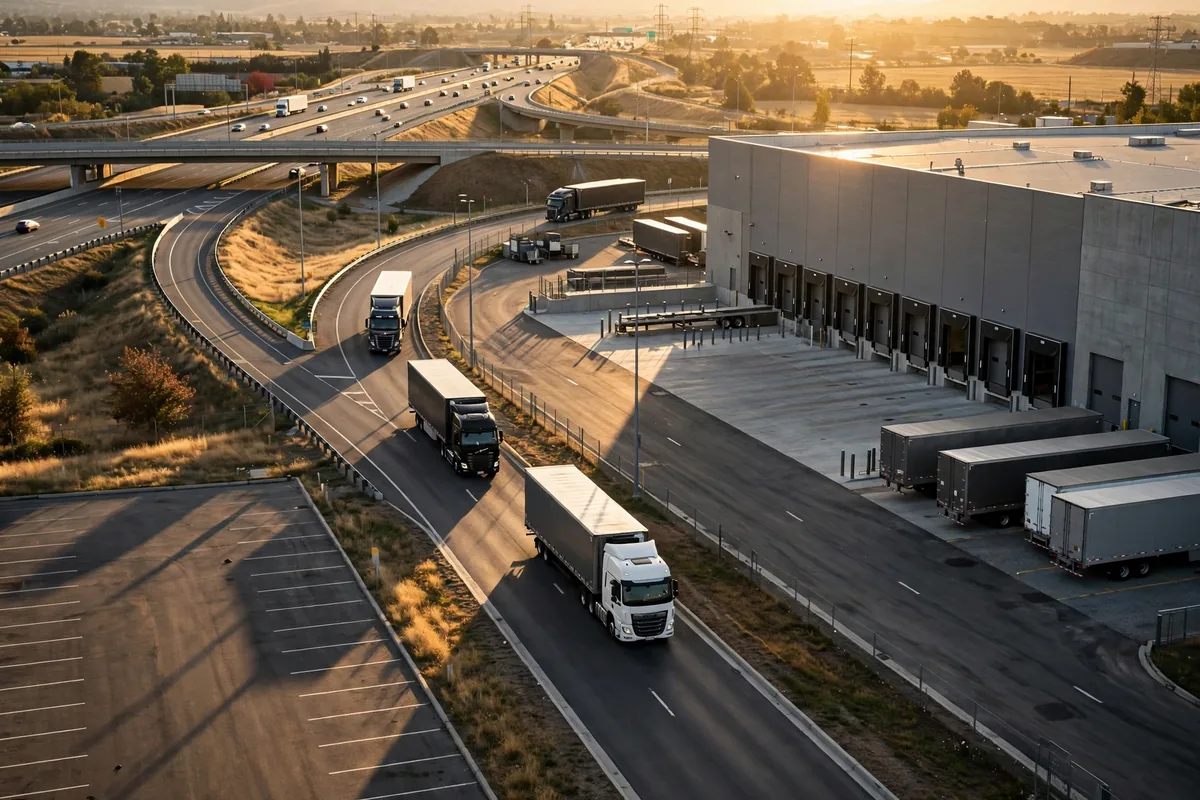
The logic itself is sound. One number worth remembering from public industry data: transportation accounts for roughly 50–60% of total U.S. logistics costs, according to the CSCMP State of Logistics figures cited in industry site-selection guides. In other words, move the warehouse a little farther from your customers and the freight line on your P&L gets fat fast — whatever you saved on rent cannot cover it. So the algorithm's instinct to hug the customer cluster is correct.
But it has three built-in blind spots. First, it runs on historical orders, and your history describes the past, not next quarter's bestselling product. Second, it calculates averages — average freight, average delivery time — while your business dies on extremes: the three days of a big promotion, one rainy week, two days when the courier network melts down. Third, it has never visited the site. A warehouse can look two kilometers from the highway on a map while the actual two kilometers are a perpetually jammed dead-end road. The algorithm does not drive there to check.
There is one more trap people fall into: the data you feed it is dirty. Order addresses are mixed with return addresses, customer pickup points, and test orders you placed yourself. The algorithm swallows all of it, and the customer map it draws is crooked from the start. My routine is to clean the data first: keep only real delivery addresses from completed sales, strip out returns and pickups, delete test orders. If the data is not clean, a pretty ranking is self-deception. Peak season needs its own run, too. A few weeks of promotion volume can equal a whole normal quarter, and an algorithm averaging the full year will call a warehouse "enough" that explodes in peak season. I always make it run a separate pass on peak-season volumes to see whether the busiest days break anything.
How to Verify What AI Warehouse Site Selection Recommends
My method: the algorithm produces the shortlist, and my legs do the verification. Take the top three, visit each one, and check the things it never calculated.
Two scenarios, both hypothetical — I made up the numbers so the math is clear, but the lessons are real.
Hypothetical scenario one: in the summer of 2025, a friend selling home goods followed an algorithm's recommendation and moved into a cheap warehouse on the far outskirts. The rent was noticeably lower, and he was thrilled. Three months later he did the math: average delivery time stretched from two days to four, reviews started mentioning "slow shipping," and the return rate crept up. Everything he saved on rent went into extra freight and lost repeat purchases — and then some. The algorithm did not lie to him. The rent really was cheaper. It just never told him that customers will not wait four days for your cheap rent.
Hypothetical scenario two: the same seller changed tactics. The algorithm gave him three candidates. Instead of signing the cheapest one, he built a true-cost table for all three and visited each in person. He picked the middle-priced one — close to his main customer cluster, with a courier sorting hub right outside the gate and parcel acceptance until 10 p.m. In the first quarter after the move, on-time shipping went up, bad reviews went down, and repeat purchases came back. The extra rent paid for itself through freight savings and reputation.
Here is the hypothetical cost table, with numbers I invented to show the calculation:
| Monthly cost item | Candidate A: cheap far-out warehouse | Candidate B: pricier near-suburb warehouse | | Rent | 80,000 yuan | 110,000 yuan | | Transportation | 150,000 yuan | 90,000 yuan | | Labor | 60,000 yuan | 65,000 yuan | | Total monthly cost | 290,000 yuan | 265,000 yuan | | Delivery time | 4 days on average | 2 days on average |
See it? Rent is 30,000 cheaper, freight is 60,000 more expensive, the total bill is 25,000 higher — and delivery is twice as slow. That is the classic trap for anyone who shops by rent alone: rent is a sticker price, freight is a slow leak, and the algorithm adds them together into a total. If you only read the first row, you will step in it. One more use for this table: redo it every six months. Freight rises, rent changes, your customer map shifts. Last year's best warehouse is not necessarily this year's best. Site selection is not a one-time purchase; it is a bill you review every year.
Here is the counterintuitive part: the biggest value of AI warehouse site selection is not telling you which warehouse is best. It is forcing you to calculate total cost properly. Plenty of sellers cannot even say what share of their monthly spend is freight before they move — then the algorithm runs, and the whole picture comes out. The ranking itself matters less than the first clear look at where the money actually goes.
Four Checks Before You Sign
First, run it on your real orders. Do not use the tool's demo data. Feed in your last three months of actual orders and recalculate. If the ranking changes, your business and the algorithm's assumptions were never on the same page.
Second, visit in person — during rush hour. Check whether the roads in and out jam up, what time the courier trucks come for pickup, and ask the warehouse next door how hard hiring is. The algorithm will tell you none of these three things.
Third, get the expansion and exit terms in writing. Business has slow and peak seasons, and a warehouse that cannot flex with your order volume is a trap. Short lease first if you can; do not lock in three years on day one.
Fourth, keep a human veto. The algorithm says number one, but your eyes on site say something feels off — trust your eyes. The algorithm does not take the blame. You sign the lease.
One more thing: ask about exit costs before you sign. If the warehouse does not work out, how many months' rent does early termination cost? Do you have to restore the unit when you move out? These clauses look harmless at signing and turn into real money on moving day. I learned that one the hard way — now I ask about exit before I ask about entry.
So here is the honest summary. AI warehouse site selection is neither a scam nor a miracle. It is a fast calculator with a good memory — it shrinks the candidate list to three and puts the total cost on the table. But the final signature is still yours. A warehouse with cheap rent and slow delivery looks efficient to the algorithm and unacceptable to your customers, and your customers have the final vote.
This one I tested myself, and it works: let the algorithm make the shortlist, and let your own legs and your own ledger make the decision. Trust half the list. Verify the other half yourself.
By Ah K, E-commerce Seller (5 yrs)