USPS changed the rules again.
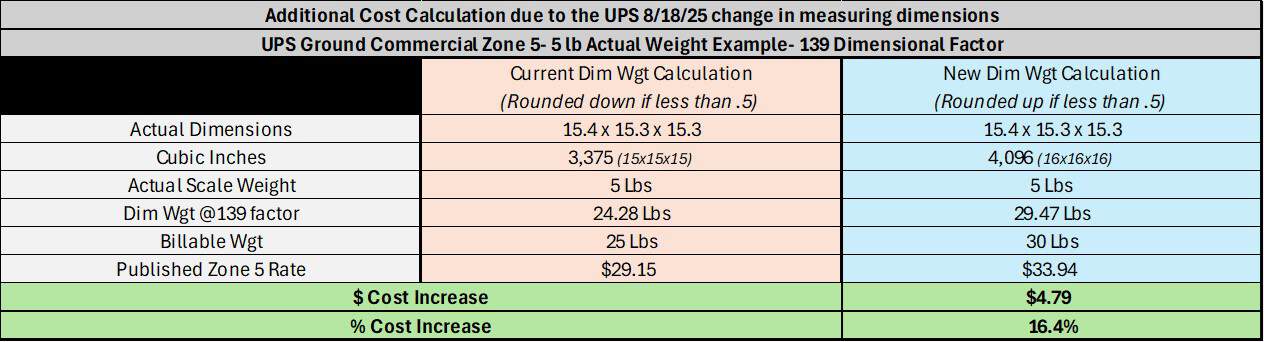
This time it's dimensional weight. Starting July 12, 2026, the USPS DIM divisor dropped from 166 to 139, matching UPS and FedEx. In plain English: the same box that used to bill at 14 pounds now bills at 17. Billable weight is up roughly 19% on average, and you didn't earn a single extra dollar to cover it.
When I got the notice from DCL Logistics, my first thought was: sellers of lightweight, bulky products are screwed.
Don't panic. I spent two weeks tearing the new policy apart and verified everything below against real invoices — mine and two fellow sellers'. All actionable. Let's go.
What the USPS DIM divisor change (166 to 139) actually means
Four facts. Memorize them:
First, effective July 12, 2026, the divisor goes from 166 to 139. Smaller divisor, bigger dimensional weight. That's pure math — no negotiating with it.
Second, it applies to Priority Mail Express, Priority Mail, USPS Ground Advantage, and Parcel Select. Basically every product you actually ship with. None of them escaped.
Third, dimensional weight only kicks in above 1 cubic foot (1,728 cubic inches). Small-item sellers can breathe — your poly mailers and small boxes are untouched.
Fourth, any dimension under a full inch rounds up. Measure 12.5 inches, USPS bills you for 13. This one is sneaky. More on it in the pitfalls section.
The math under the new DIM divisor: same box, before vs. after
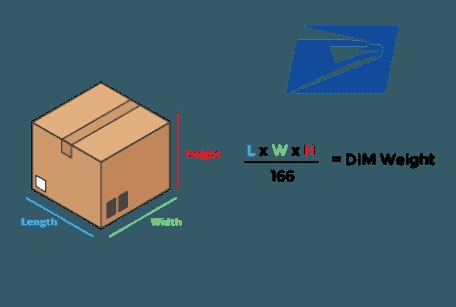
The formula is simple: DIM weight = length × width × height ÷ divisor, rounded up to the next whole pound.
Take a common box: 16 × 12 × 12 inches. That's 2,304 cubic inches — over 1,728, so it's in the danger zone.
Old divisor: 2,304 ÷ 166 = 13.9, rounds up to 14 lbs. New divisor: 2,304 ÷ 139 = 16.6, rounds up to 17 lbs.
Say the actual weight is 9 lbs. You used to pay for 14. Now you pay for 17. Three extra pounds, about a 21% jump — right in line with the ~19% average increase USPS announced.
Now a borderline box: 14 × 12 × 10 inches = 1,680 cubic inches. Under 1,728. Congratulations — this box bills at actual weight before and after, not a cent more. So step one is to go measure your boxes. Landing on either side of that 1,728 line is the difference between "fine" and "ouch."
Case study: new box, just over $3,000 saved in a month
Chen, Los Angeles, sells collapsible storage bins on Amazon and his own site. His hero SKU shipped in an 18 × 14 × 12 inch box, actual weight 11 lbs.
Volume: 18 × 14 × 12 = 3,024 cubic inches. Under the old rule: 3,024 ÷ 166 = 18.2, rounds to 19 lbs. Under the new divisor: 3,024 ÷ 139 = 21.7, rounds to 22 lbs.
Billable weight jumped from 19 to 22 lbs overnight. He ships Priority Mail to the East Coast, and each order cost about $4.20 more. From July 12 to the end of the month — 340 orders — he paid over $1,400 extra. He told me he lost his appetite the night he saw that invoice.
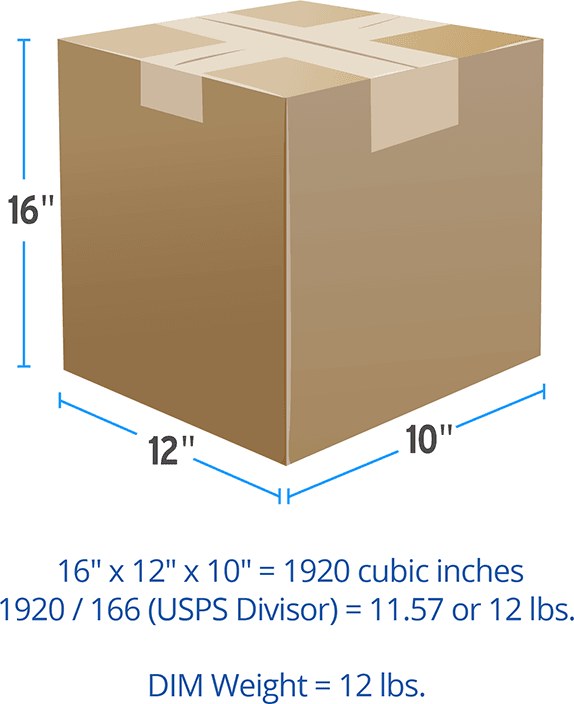
His fix was blunt: change the box. He repacked the product into a 16 × 12 × 10 inch box (1,920 cubic inches). New math: 1,920 ÷ 139 = 13.8, rounds to 14 lbs. Billable weight dropped from 22 all the way to 14 — five pounds below even the old 19.
The new box costs $0.18 more per unit. On 340 orders, that's barely $60. In August, with similar volume (around 350 orders), his shipping bill came in just over $3,000 lower than July. That math works every single time.
Case study: auditing 200 labels, $318 clawed back
Linda, Dallas, sells pet toys mostly through her own store. Mid-July, while reconciling, she noticed one batch of 200 orders cost noticeably more than it should have. Something was off.
Turns out her actual box was 13 × 10 × 8 inches — 1,040 cubic inches, well under 1,728, so dimensional weight shouldn't have applied at all. But her shipping software still had last year's bigger box on file as the template: 15 × 12 × 10, which is 1,800 cubic inches — over the threshold.
1,800 ÷ 139 = 12.9, rounds to 13 lbs. Actual weight? Six pounds. She was overcharged about $1.60 per order — $320 across 200 orders, gone.
She filed a claim with USPS with measured dimensions and photos, and got $318 back. Not a fortune, but the lesson is worth more: the box template in your shipping software must match the boxes actually sitting in your warehouse. One stale template is a monthly auto-donation.
Your 10-minute self-check table
Don't guess. Grab a pen and run through these six steps:
| Step | What to do | What the result tells you |
|---|---|---|
| 1. Measure | Tape-measure every box you use, outer dimensions | Everything downstream depends on this |
| 2. Calculate | Length × width × height (inches) | Cubic inches per box |
| 3. Check the line | Volume ≤ 1,728 | Unaffected — carry on |
| 4. Recalculate | Volume > 1,728: divide by 139, round up | That's your new billable weight |
| 5. Compare | New billable weight vs. actual weight, take the larger | The larger one is what you really pay |
| 6. Check fractions | Any dimension with a decimal | Recalculate with that side rounded up — don't skip it |
Once you're through the table, you'll know exactly how much more each SKU costs under the new rule. My advice: start with every SKU over 1,728 and work through them one by one.
Three moves, in this order
First, switch to smaller boxes. Volume is the most direct lever. Like Chen — compress whatever you can, with the goal of getting under 1,728 cubic inches, or at least making the ÷139 math look better. Get samples before you commit: make sure the product fits and survives the trip. Don't trade shipping savings for a spike in damage claims.
Second, audit your invoices. Pull everything after July 12 and spot-check: is the box template right, are fractional dimensions rounded correctly, is dimensional weight being charged where it shouldn't be? That's how Linda got her $318 back. Make it a monthly habit — five minutes of work.
Third, compare carriers. With the USPS DIM divisor now at 139, it's on equal footing with UPS and FedEx. Stop defaulting lightweight parcels to USPS. Take your top 10 SKUs and get quotes from all three. I know sellers who moved some lightweight volume to UPS Ground and ended up paying less. There's no universal answer — it depends on your zones and weight breaks. You have to test it yourself.
The pitfall: measure wrong, calculate wrong
The easiest trap: dimensions under a full inch round up.
Plenty of sellers eyeball it — 12.5 inches gets written down as 12, or just guessed. USPS doesn't do generous: 12.5 bills as 13. And 12.5 × 10 × 12 vs. 13 × 10 × 12 is a 60-cubic-inch difference. For a box sitting near that 1,728 line, those 60 inches can push you into dimensional weight territory — a few extra dollars per order, gone.
Do it right: measure outer dimensions with a tape, precise to half an inch, and always calculate with the rounded-up figure. Then sync your shipping software to match. Don't run one set of numbers in the warehouse and another in the system.
That's the new reality. USPS changing the rules isn't new, and it won't be the last time. Measure your boxes, do the math, swap the boxes, audit the invoices. Do those four things and not a dollar of savings slips away.
Tested it myself. It works.
By Ah K, E-commerce Seller (5 yrs)