My used pallet racking buying inspection education cost me real money, and I would like yours to be cheaper. We run a 3,000-square-metre warehouse with a small team. We cannot burn cash the way a big operator can. So when I expanded in the spring of 2023 and a dealer told me used racking was roughly half the price of new — based on the local quotes I gathered at the time, not a universal market rate — of course I was tempted. Anyone would be. The mistake was not wanting the saving. The mistake was nearly buying the saving before I had inspected the steel.
Here is our situation, honestly. Orders had grown, light shelving could no longer hold full pallets, and my forklift driver was stacking pallets along the aisle edge. That is not a system, that is an accident looking for a date. New racking would have eaten about two months of profit on my rough, experience-based estimate. Used racking looked like the obvious answer. It still can be. But only if you inspect it like your own money is at stake, because it is.
A used pallet racking buying inspection starts with the uprights, not the price
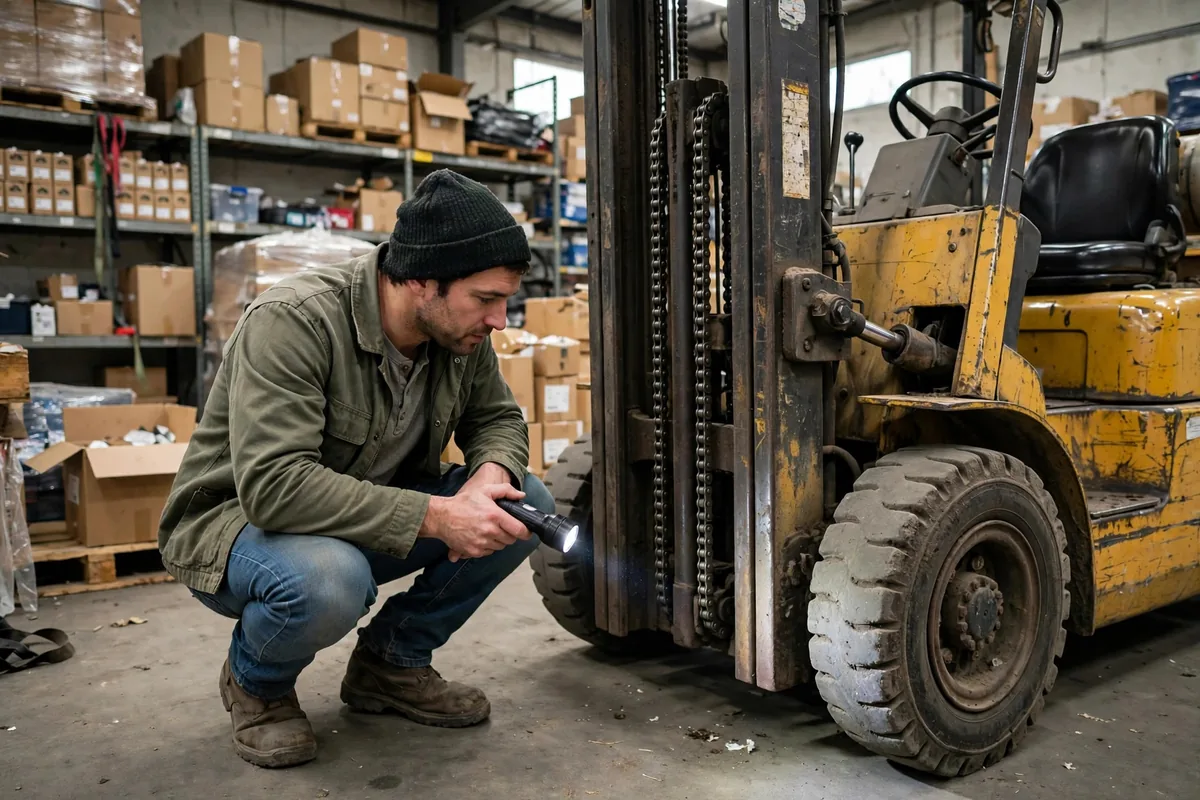
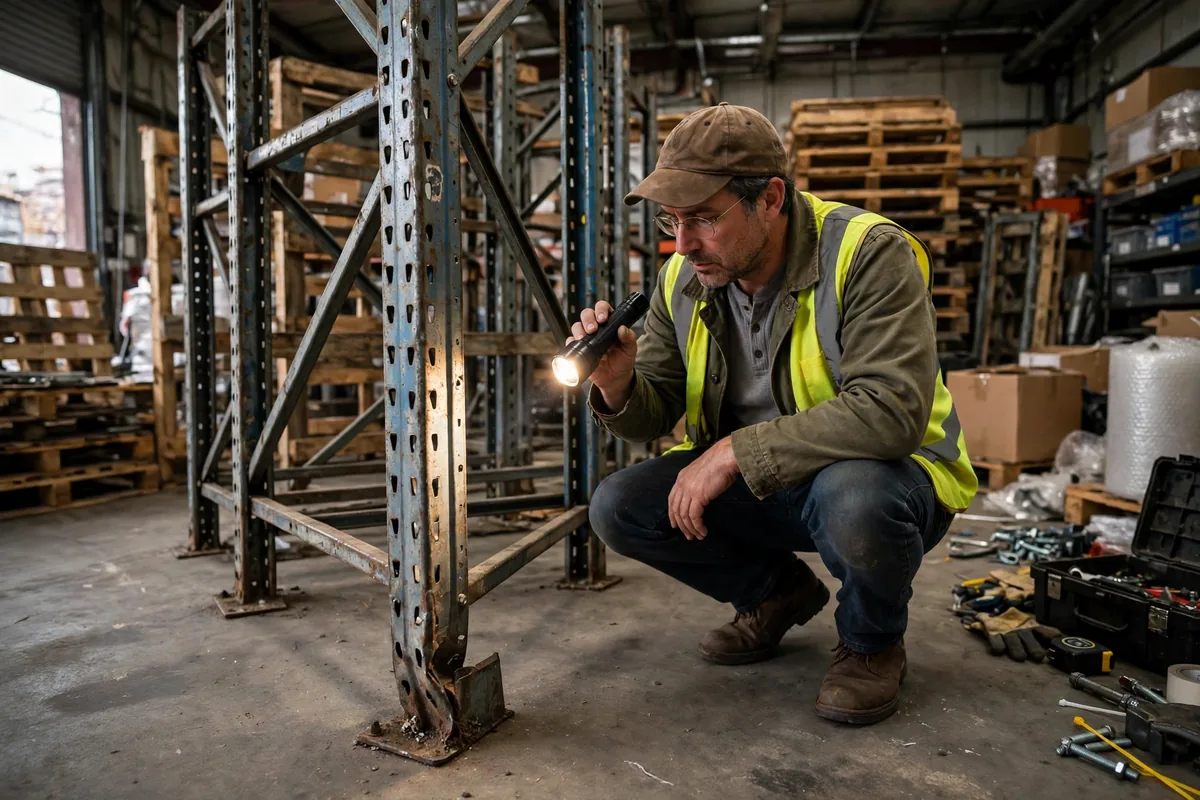
In March 2023 I visited a warehouse clearance site outside the city. The seller said the racking was two years old and practically new. I walked to the side of an upright, crouched down, and looked along its length against the light. One in three uprights in that row had a gentle bow, like it had been kissed by a forklift. When I ran my hand over it, there was a dent and cracked paint.
That is the core risk with used racking. The upright is the load-bearing spine. A bent upright is not a cosmetic flaw; it is lost safety margin. My low-tech method is embarrassingly simple, and it works:
- Stretch a line or hold a long straight edge against the upright and look for daylight and bow.
- Inspect the bottom metre closely. That is where forklifts hit, so look for dents, tears and weld repairs.
- Check the holes. Holes pulled from round into ovals tell you the frame has been overloaded or badly struck.
- Check every beam separately: end connectors present, safety locks present, welds uncracked, beam itself untwisted.
On that lot I rejected about a third of the uprights on the spot — my own count on the day — and only took the straight ones. The seller was not happy. I would rather have an unhappy seller than a falling pallet.
Now the counterintuitive part: the most expensive part of used racking is the little plaque you cannot find. Many dismantled systems have lost their load capacity plaques. Without a plaque, you do not actually know what that bay was rated to carry. You can guess low, or gamble high. Small warehouses cannot afford to gamble. My hard rule now is simple: no plaque means the bay goes on light duty only, or we verify the model with the original manufacturer or a qualified inspector before loading it properly. For the applicable standards and ratings, always check the manufacturer's documentation and the latest official guidance — do not take a seller's word for it.
The field checklist I now refuse to skip
The second time, I was smarter. In May 2024 a friend's food warehouse in a neighbouring city was closing, and he offered me first look at his racking. This time I brought a tape, a torch, a marker and a printed checklist. Two of us spent an afternoon on it and filled a page with faults:
| Check | How to check it | Decision |
|---|---|---|
| Upright straightness | Line or straight edge along the full height | Clearly bent: reject |
| Base damage | Dents, cracked paint, repair welds | Torn metal: reject; welded: be cautious |
| Beam connectors and locks | Hang each beam, check locks | Cracked connector: reject; missing lock: replace |
| Capacity plaque | Photograph it, record the model | No plaque: light duty or verify with maker |
| Base plates and anchors | Look for distortion and cracking | Distorted: replace the part |
| Corrosion | Scrape back: surface rust or rot? | Rotted through: reject |
I took roughly seven out of ten bays from that lot, based on my own tally that afternoon, and left the rest. My friend laughed at me for being picky. Three months later he told me the remainder went to another warehouse, where a beam connector let go shortly after loading. Nobody was hurt, luckily. Sometimes picky is just another word for safe.
My order of work is now fixed, and I recommend it to any small operator: stand back and look at the whole row first, then inspect upright bases up close, then hang every beam, and only then talk price against the plaque and your notes. Never reverse that order. Once a price is in your head, every fault starts to look acceptable.
When used pallet racking becomes a false economy
This table is a model built on my own experience-based assumptions, not market pricing. Replace the index numbers with your own quotes:
| Cost item | New (index 100) | Good used (assumed) | Poor used (assumed) |
|---|---|---|---|
| Purchase price | 100 | 50 | 35 |
| Transport and dismantling | 8 | 12 | 12 |
| Replacement parts (locks, feet) | 0 | 5 | 15 |
| Rejected material wasted | 0 | 5 | 20 |
| Expected service life (estimate) | Long | Medium-long | Short |
| Annualised cost feel | Predictable | Lowest | Actually highest |
See it? The cheapest lot on the invoice is the most expensive one per year. That is the false economy: you save on the purchase line and pay it back in sorting, parts, rejects and worry. My experience-based line in the sand is this: if fewer than about seven in ten bays pass inspection, or too many load-bearing parts need replacing, buy new and stop negotiating with yourself.
One more trap is compatibility. Different makers use different hole pitches and beam connectors, so a bargain lot may not marry up with the racking already in your building. Then you own two orphan systems and two sets of spares. Measure what you already have, take a sample beam with you, and if it does not match, buy one complete matching lot or walk away.
Small warehouses have their own way of surviving, and used racking genuinely is one of our best tools for growing without borrowing heavily. But the saving only exists if you are willing to crouch down and look at every single upright. Turn your used pallet racking buying inspection into a tick-box sheet, take it to the site, and do not pay until every box is ticked. That is the most useful advice this small warehouse owner can give you, and I paid tuition to learn it.
By Xiao Ma, Small Warehouse Owner