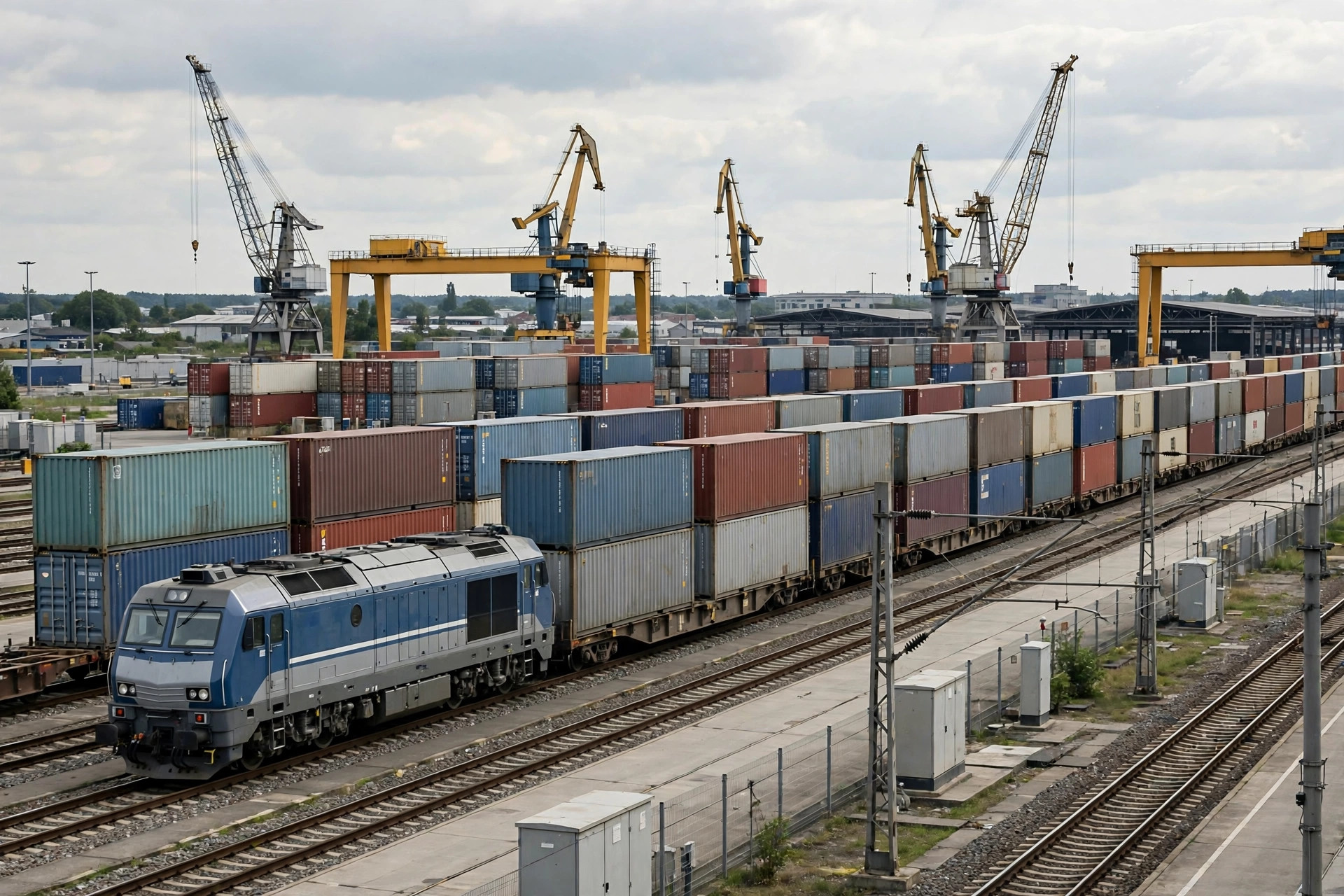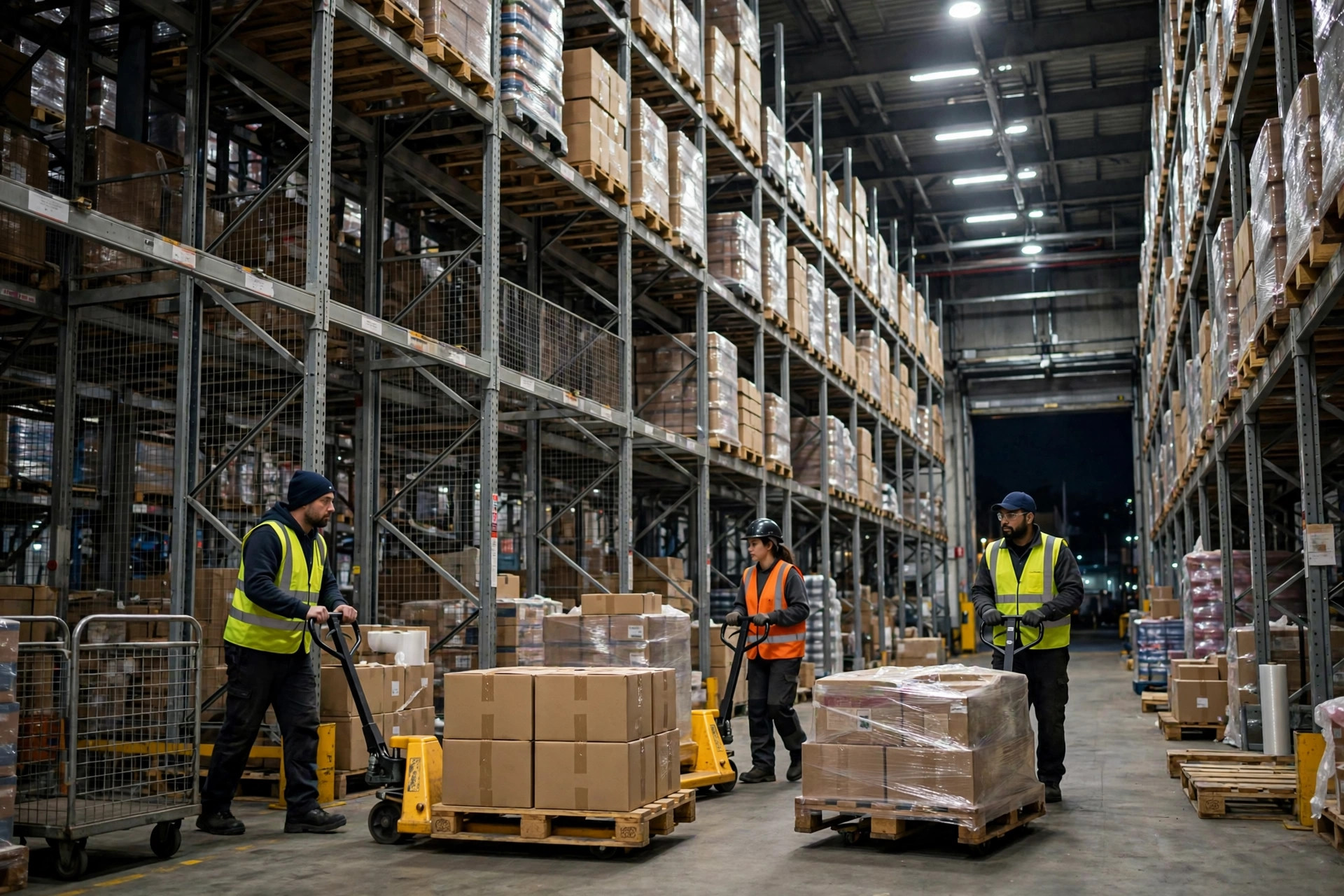
US overseas warehouse owners aren't browsing automation out of curiosity these days — labor costs are forcing the issue. Twenty-plus dollars an hour is just the starting price for a frontline warehouse worker, and the real problem is you can't even hire them. "We post the job ad before peak season and everyone who shows up quits in two days" — I've heard some version of that line a dozen times in the last two years.
Let me be blunt: the biggest trap in automation isn't overpaying. It's buying in the wrong order. The equipment itself is rarely bad — what's bad is equipment that doesn't fit your warehouse. It's like swapping an engine before asking whether the truck runs long-haul or city routes. The finest engine in the world is wasted in the wrong vehicle.
The Big Three of Automation: What Problem Each One Solves
Three systems dominate the conversation at US overseas warehouses right now. Plain-language version:
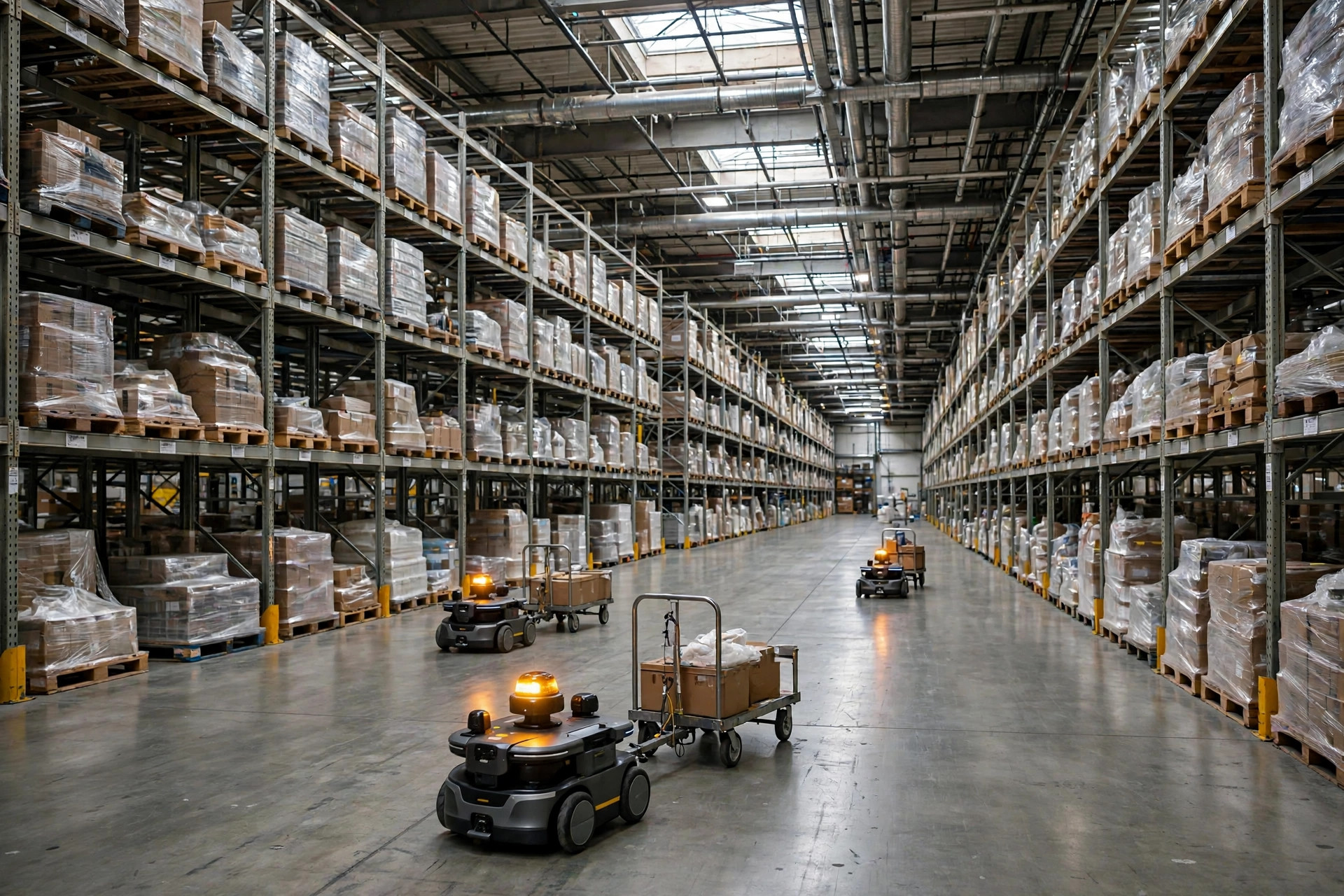
AMR fleets solve the "walking" problem. A picker walks ten-plus kilometers a day, and most of it is pushing a cart around "transporting," not "picking." AMRs outsource the walking — the human stays put and picks while the robots do the running. Think of it as giving every picker a tireless errand-runner.
Cross-belt sorters solve the "diverting" problem. Thousands of SKUs, tens of thousands of orders — manual sortation by paper list can't hold up on speed or accuracy. A cross-belt loop is like a ring highway: parcels are cars, chutes are exits, and the system tells every car exactly which exit to take. Fast and accurate.
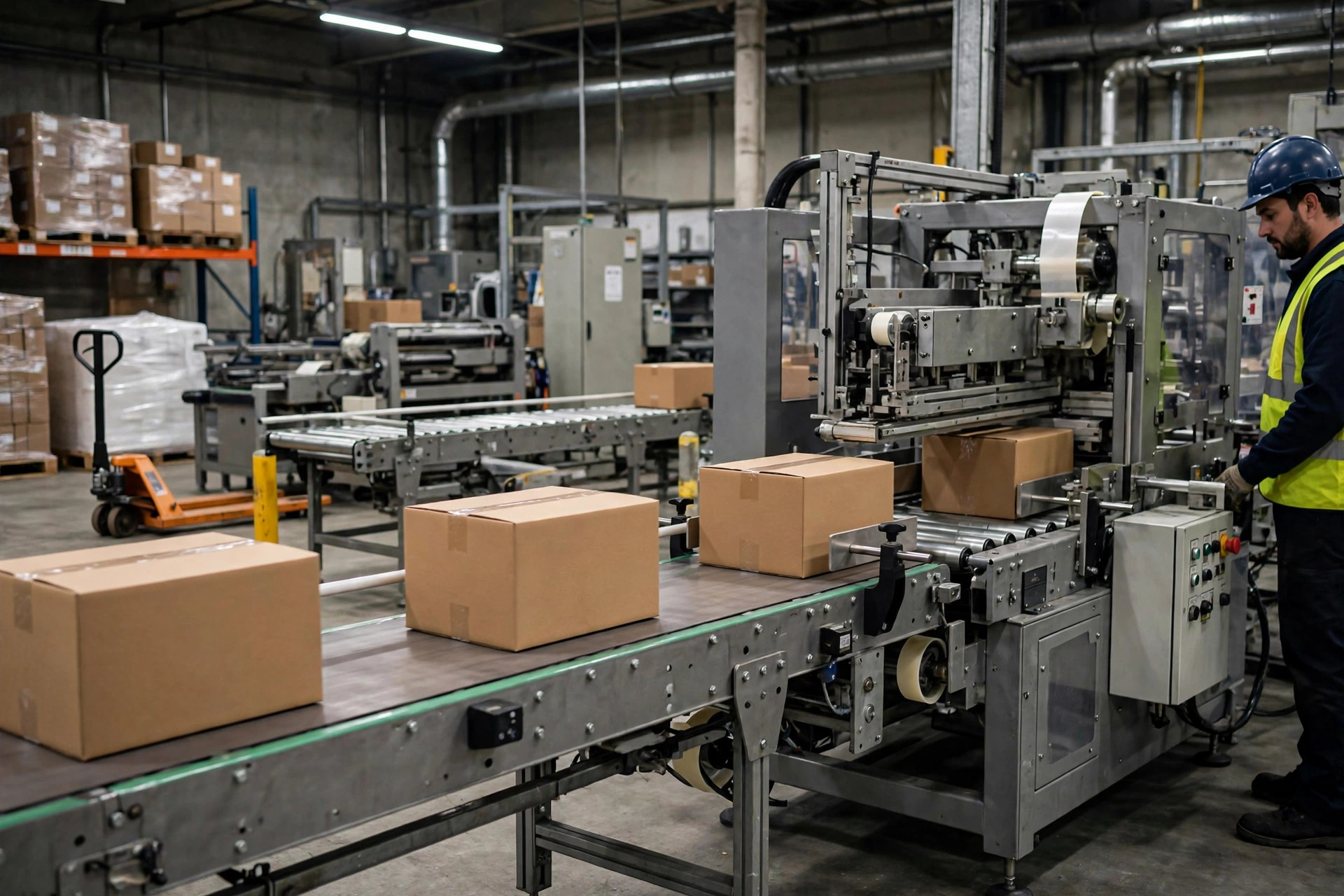
Auto-packing lines (case erecting, sealing, labeling) solve the "repetitive motion" problem. Erecting boxes, sealing, slapping on labels, thousands of times a day — expensive and error-prone by hand. Machines don't get tired. One line replaces several people.
Here's the mental model: it used to be "people go to goods," with humans pushing carts all over the building. With AMRs, it's "goods come to people" — inventory drives itself to the picker. Flip that around and effective picking hours jump, backs stop hurting, and turnover drops with it.
Two real stories. In 2025, a Chinese-run overseas warehouse in Ontario doing 8,000+ small-parcel orders a day, just two carton sizes, put in an auto case-erect-seal-label line. Packing went from 8 people to 3. The owner told me last peak season his biggest headache was hiring; this peak season, hiring is the thing he worries about least — machines don't quit.
The principles are that simple. The hard part: which one goes in first?
The Dividing Lines: Which Automation Goes First, Decided by Three Numbers
Don't let an integrator's slide deck decide for you. Three numbers do: daily order volume, average lines per order, and total SKU count.
Auto-packing lines have the lowest bar: 3,000+ orders a day with cartons concentrated in two or three sizes, and it's worth a look. Packing is pure repetitive labor, the most standardized step, the cleanest machine substitution.
AMR transport fits "big and spread-out" warehouses: deep buildings where pickers walk long distances just to move goods, SKUs scattered everywhere. AMRs need no racking changes, deploy fast, cost less per unit — start with a few, prove it out, add more.
Cross-belt sorters have the highest bar: 10,000+ orders a day, 3 or fewer lines per order, SKUs in the thousands — that's what it takes to feed the sorter's pace. Below that, the line runs three or four hours a day and idles the rest, burning electricity and capital. That's just burning money.
Time for some straight talk: a small warehouse doing two or three thousand orders a day buying a cross-belt sorter has been talked into it by a sales pitch. And those "fully automated in one step" proposals sound thrilling but bundle three purchases that shouldn't happen together. Automation is won bottleneck by bottleneck — not bought all at once.
The cautionary tale: in 2024, a Los Angeles warehouse doing 2,500 orders a day insisted on a cross-belt sorter — over a million dollars in equipment and installation. Volume couldn't feed its pace; the line ran 3 hours a day and idled the other 20. The owner later told me that money would have paid for itself twice over in AMRs and packing automation. The sorter wasn't wrong. The timing was.
And here's a funnier one: in 2023, a warehouse in the Inland Empire — all of 30,000 square feet, less than 100 meters deep — bought 6 AMRs first. The pickers reached the end of the building in a few steps; the robots couldn't outrun a walking human, and 4 of the 6 spent their days parked at the charging station. The owner later admitted that in a building that small, AMRs were decoration — the money should have gone to packing automation first. The equipment wasn't wrong. The warehouse's travel distances were never measured. AMRs are built for big, spread-out buildings; in a small one they're an anti-aircraft gun aimed at a mosquito — and the gun jams first.
The Math: How Fast Does an Auto-Packing Line Pay Back?
Take the lowest-bar option and run the numbers — that tells you whether the money is worth it.
A small-parcel warehouse doing 5,000 orders a day used 6 people at packing. US frontline warehouse labor runs $20+/hour; call it $25. At 260 working days a year, 8 hours a day: one worker costs $52,000 a year, six of them $312,000 — and that's before overtime and workers' comp, so reality is higher.
After an auto case-erect-seal-label line goes in, packing needs 2 people for loading and assisting. Four workers saved, a bit over $200,000 a year. Equipment runs in the hundreds of thousands depending on configuration (get a real quote). Payback: one to two years. That's why I call auto-packing the default first move for most US overseas warehouses: smallest investment, cleanest substitution, easiest math.
The Maintenance Trap: Installation Is the Start, Not the Finish
One last thing nobody likes to talk about: automation's biggest cost often isn't the purchase — it's every day after.
AMRs demand decent floors. Uneven slabs, wide expansion joints, and the robots alarm all day. Cross-belt sorter sensors hate dust, and warehouses are dusty — skip the cleaning schedule and sort accuracy slides. Packing-line spare parts order in weeks, not days; no critical spares on the shelf means a day of downtime costs you peak-season volume. Integrators won't dwell on any of this before you sign. After you sign, it's all yours.
Three pieces of practical advice for owners about to automate: get the spare-parts list and lead times written into the contract, not promised verbally; assign one person to shadow the entire installation — that's your future equipment lead; and fix your floors first, because discovering floor problems after the AMRs arrive costs more than the robots did.
And here's the counterintuitive part: management costs go up after automation. You need people who understand the equipment, troubleshoot it, run preventive maintenance. What you save is repetitive frontline labor; what you add is technical maintenance labor and a spares inventory. So automation never just saves labor cost — it saves you from the risk of "peak season arrives and nobody's there to work." Every owner knows exactly what that risk is worth.
Is the money worth it? Watch this one number: what the replaced labor costs you per year. Get that number straight, then look at the quote. You'll know.
By Da Liu, Automation Engineer