Start with the bill. Uruguay soybean export is a business of real size and real money: in 2025, Uruguay's total goods exports were USD 11.23 billion, and soybeans accounted for USD 1.58 billion, or 14%. The U.S. Department of Agriculture's Foreign Agricultural Service puts Uruguay's soybean production at 3.3 million tonnes in 2024/25, a record, with 3.1 million tonnes expected in 2025/26 and exports expected at 2.9 million tonnes. The other side of that bill is timing. Production and exports are concentrated in a short window, so a small slip between storage and shipment turns into a loss that is not small at all.
China takes the bulk of the crop. China accounted for nearly 80% of Uruguay's soybean exports in 2024, and Uruguay's official agencies put China's share at 86% of soybean exports in 2025. That share cannot be treated as background in a warehousing contract. It decides whose rhythm your cargo follows. When the buyer is concentrated, shipment is concentrated, and once vessel schedules tighten, storage capacity and rail wagons tighten with them.
Uruguay Soybean Export Starts With Moisture and Time
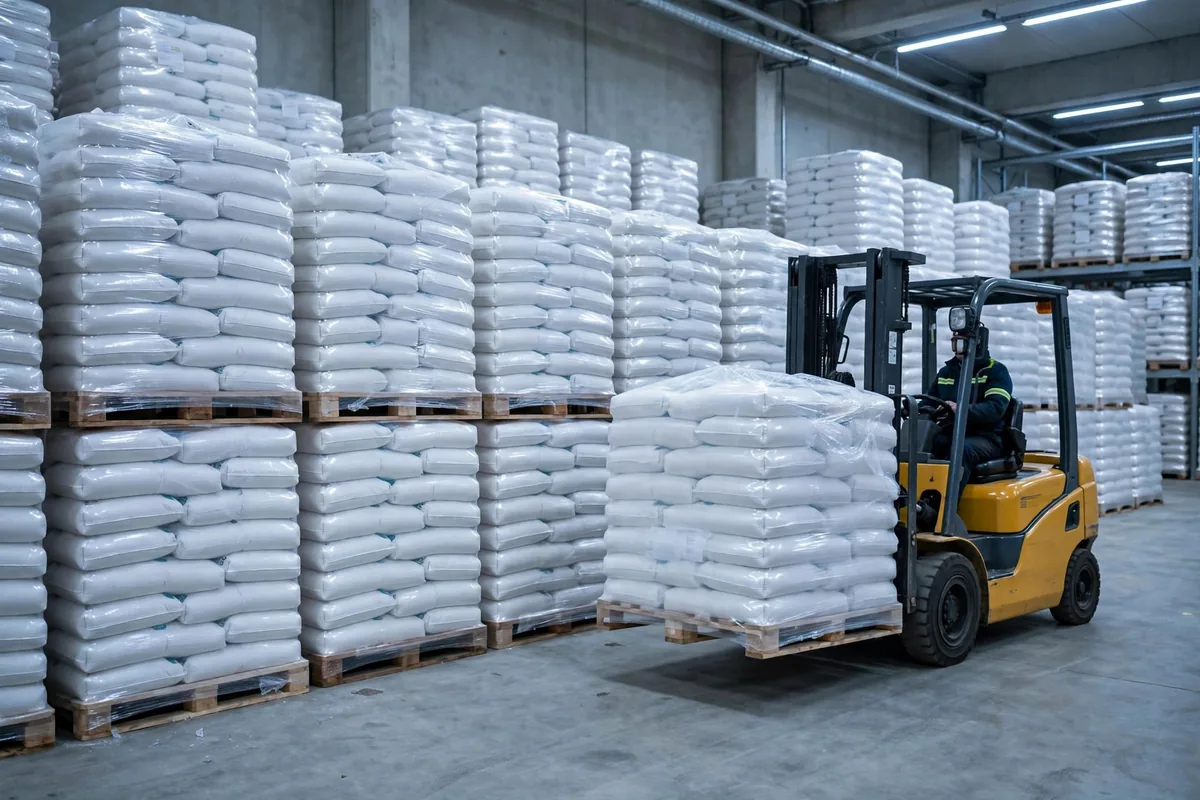
The first bill in soybean storage is moisture. Too much moisture brings mould and heating. Drying it down costs money and time. Silos and flat stores settle that bill differently. A silo costs more to build, but ventilation and temperature are easier to control, and it suits longer storage. A flat store is flexible and quick to build, but moisture control depends on management, and one careless stretch can spoil the lot. The choice cannot rest on construction cost alone. It has to rest on storage period, turnover, and how long this particular batch will actually sit.
Consider a scenario, with figures that are hypothetical and only the logic matters (illustrative scenario): a batch of soybeans arrived with moisture above the agreed level, and the warehouse skipped enough ventilation time to meet a shipment date. The grain sat, a hot spot developed, and a retest failed the quality standard. The cargo had to be dried again or sold at a discount, and the vessel was missed in the meantime. Add drying, the discount and the missed sailing together, and the total is far larger than the ventilation time that was saved. That is money wasted, and it was wasted because the calculation was upside down: time was saved and cargo value was lost.
Moisture and mould control is not one trick. It is moisture testing at intake, regular temperature checks in store, ventilation records, and a retest before loading, each step linked to the next. The contract should state the moisture standard, how often temperature is checked, what happens when a reading is out of range, and who pays for drying. These clauses look tedious during negotiation. When something goes wrong, they are all money. The quality reputation of Uruguay soybean export is defended in these tedious steps.
When Harvest Arrives, Uruguay Soybean Export Storage and Rail Wagons Collide
The second bill is rhythm. At harvest, inland grain stores fill at once, storage capacity tightens, and rail wagons and barges have to queue. Cargo moves from inland stores to the port of Montevideo, and a blockage at any point travels upstream: a full warehouse stops intake, a shortage of wagons leaves a vessel waiting.
Take another scenario (illustrative scenario): at the harvest peak, several grain stores dispatched to the port at the same time, wagon scheduling could not keep up, the port yard filled first, and the vessel waited at anchorage with demurrage charged by the day. Only then did the shipper discover that the warehousing contract covered rent and said nothing about priority dispatch in the peak, or about who carries demurrage. That bill should be counted before signing: where your cargo stands in the peak queue, who moves first when transport is tight, and who pays for waiting time. Warehousing is not only renting space. It is buying certainty of dispatch.
The table below is the comparison I often use with clients. All figures are hypothetical and only the structure matters (hypothetical example):
| Cost item | Ship in advance, in batches | Ship in a peak-season rush |
|---|---|---|
| Storage occupation | High, space is booked early | Low, cargo moves on arrival |
| Transport and vessel schedule | Stable, wagons and berths are easier to book | Tight, capacity must be fought for |
| Demurrage and waiting | Low | High, the port easily backs up |
| Quality risk | Low, ventilation time is adequate | High, fast turnover invites problems |
| Total cost | Driven by rent | Driven by demurrage and discounts |
The table carries a counterintuitive point. Many people assume that shipping on arrival is cheapest, because it avoids rent and storage time, yet the demurrage, the scramble for capacity and the quality discounts in a concentrated rush often add up to more than shipping in advance in batches. Rent is the visible money. Demurrage and discounts are the invisible money, and the invisible money is often larger. Counting only the rent line does not settle the Uruguay soybean export shipping bill.
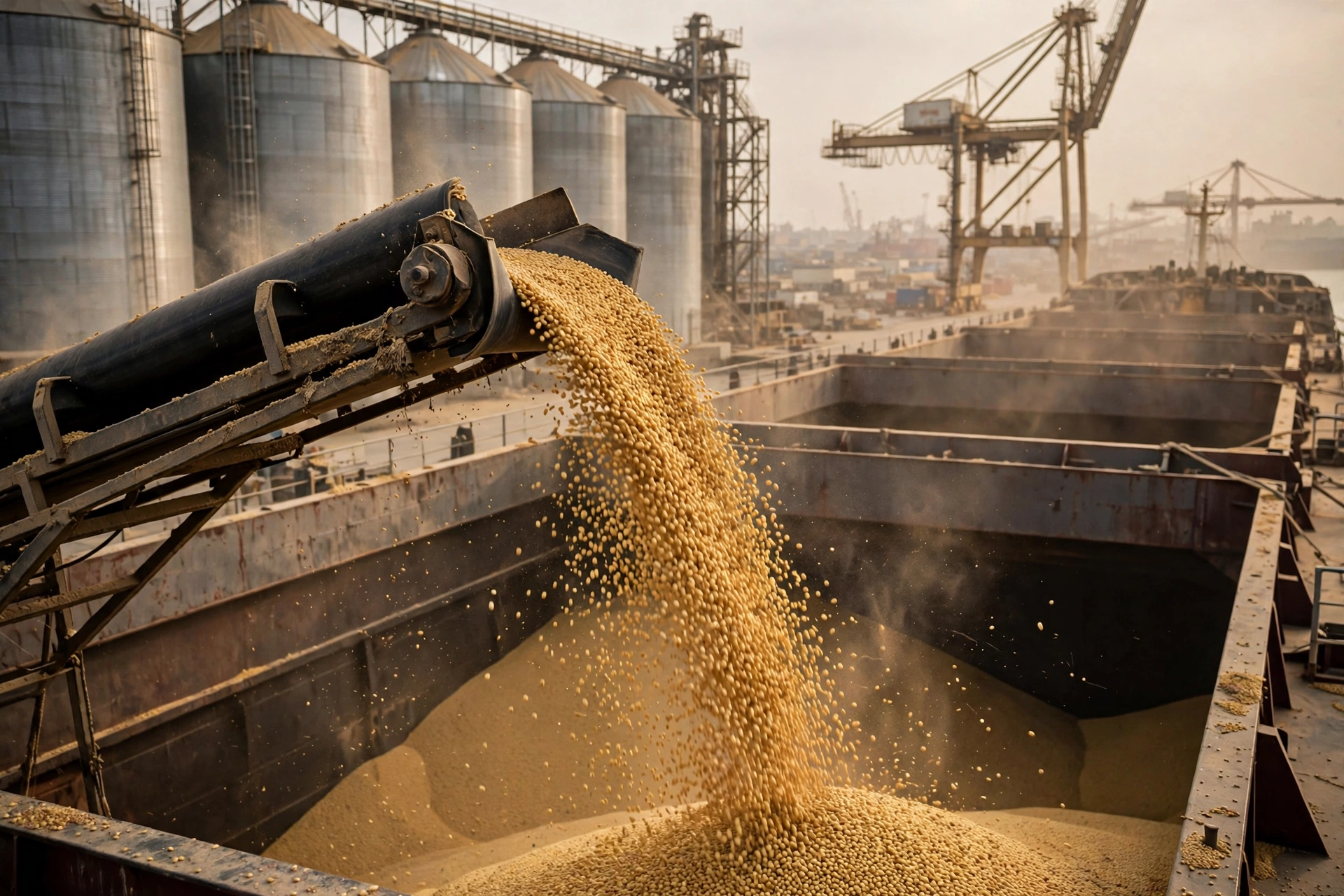
Bulk handling at Montevideo is the exit of this chain. The Montevideo dry bulk terminal handled 1.686 million tonnes in the first 51 weeks of 2025, including 1.0 million tonnes of soybeans. That figure says soybeans are the main cargo at this terminal, and the terminal's working rhythm is the rhythm of soybean shipment. Inland stores, wagons and barges all have to be scheduled against the port's rhythm, not each on its own.
Soybean Export Buyer Concentration: Who Buys the Crop Carries the Risk
The third bill is buyer concentration. With China taking nearly 80% of Uruguay's soybean exports in 2024 and 86% in 2025, the structure has a clear upside: demand is steady, volumes are large and vessel schedules are easier to plan. The downside is equally clear: the risk is concentrated too. If the main buyer's purchasing rhythm changes, a sailing is postponed or inspection standards tighten, the whole chain from warehouse to port in Uruguay has to adjust with it. Cargo sitting in store and vessels queued at the port have no second large buyer ready to take them at once.
How should this be counted? My suggestion is to count two lines. The first line is the cheapest dispatch rhythm under the current buyer structure. The second line is how long your warehouse can hold if the main buyer's rhythm slips, what that holding costs, and who carries the demurrage. If the second line cannot be counted, the contract is not finished. Many warehouse contracts count only the first line, and when trouble arrives everything depends on last-minute coordination, which is the most expensive kind of coordination.
In the end, Uruguay soybean export warehousing is three bills: the moisture bill, the rhythm bill and the buyer-concentration bill. Production of 3.3 million tonnes and expected exports of 2.9 million tonnes sit behind every stretch of road from inland grain stores to the port of Montevideo. If moisture is not controlled, cargo value falls first. If the rhythm is wrong, demurrage arrives first. If the buyer is too concentrated, the risk is already placed.
The calculable conclusion is this: before signing a warehouse contract, count three sets of figures. First, the intake moisture standard and who pays for drying when it is exceeded. Second, peak-season dispatch priority and demurrage responsibility. Third, how long your warehouse can hold and how much each extra day costs if the main buyer's rhythm slips, calculated on a hypothetical-example basis and filled in with the actual quoted prices in the contract. Once those three sets are clear, the warehouse contract is properly signed.
By Lao Zhou, Logistics Cost Analyst