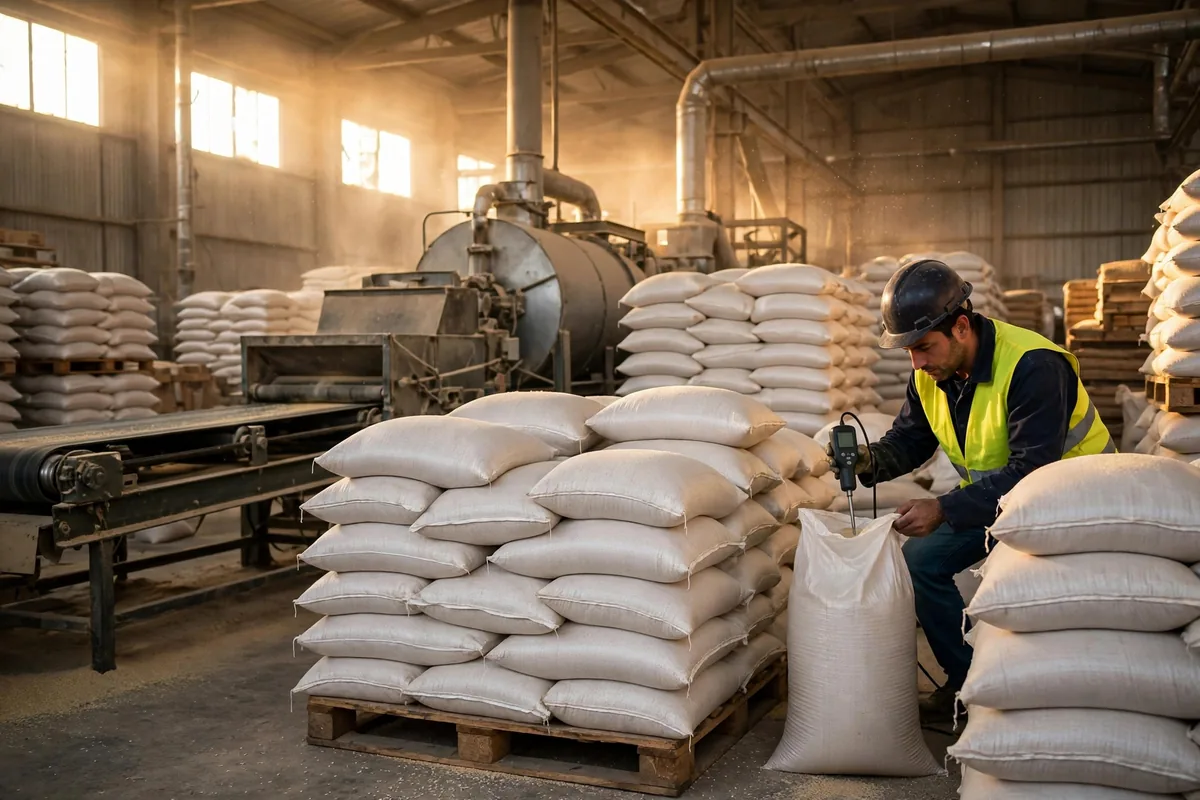
Let me tell you something. Fifteen years behind the wheel, I have hauled steel, hauled appliances, hauled just about everything that fits on a flatbed. Rice to a seaport was never on that list until two years ago, when a friend in the South America trade called me from the Port of Montevideo. A container of Uruguayan rice had arrived in Brazil, and when the buyer opened it, the top layer had caked into lumps. They docked his payment on the spot. I told him: that rice did not go bad at sea. It went bad in the warehouse, weeks before it ever saw a ship.
Uruguay is a small country, but rice is one of its signature exports. Follow one grain of rice with me, from the paddy fields in the east to the docks at Montevideo, and I will show you where the warehouse math actually gets decided.
First, the Size of the Trade: Uruguay Rice Export Warehouse Logistics by the Numbers
According to the U.S. Department of Agriculture, Uruguay grew 1.43 million tonnes of rough rice in the 2024/25 season, roughly 1 million tonnes of milled rice, with exports forecast at about 920,000 tonnes of milled rice. In 2024 the country exported $577 million worth of rice, making it the 11th-largest rice exporter in the world. Brazil is the biggest buyer by far at $186 million, followed by Peru at $62.2 million, Belgium at $43 million, Spain at $36.6 million, and Mexico at $33.8 million.
Production is concentrated in four eastern departments: Treinta y Tres, Rocha, Cerro Largo, and Rivera. In 2024/25 farmers planted 180,000 hectares and averaged 8.56 tonnes of paddy per hectare, a yield that ranks among the best anywhere. Uruguayans themselves eat less than 100,000 tonnes of milled rice a year. Roughly nine-tenths of the crop is grown for export. This rice is not grown to feed the neighbors. It is grown to be loaded onto ships.
Drying Is the First Gate: 14% Moisture Is a Red Line
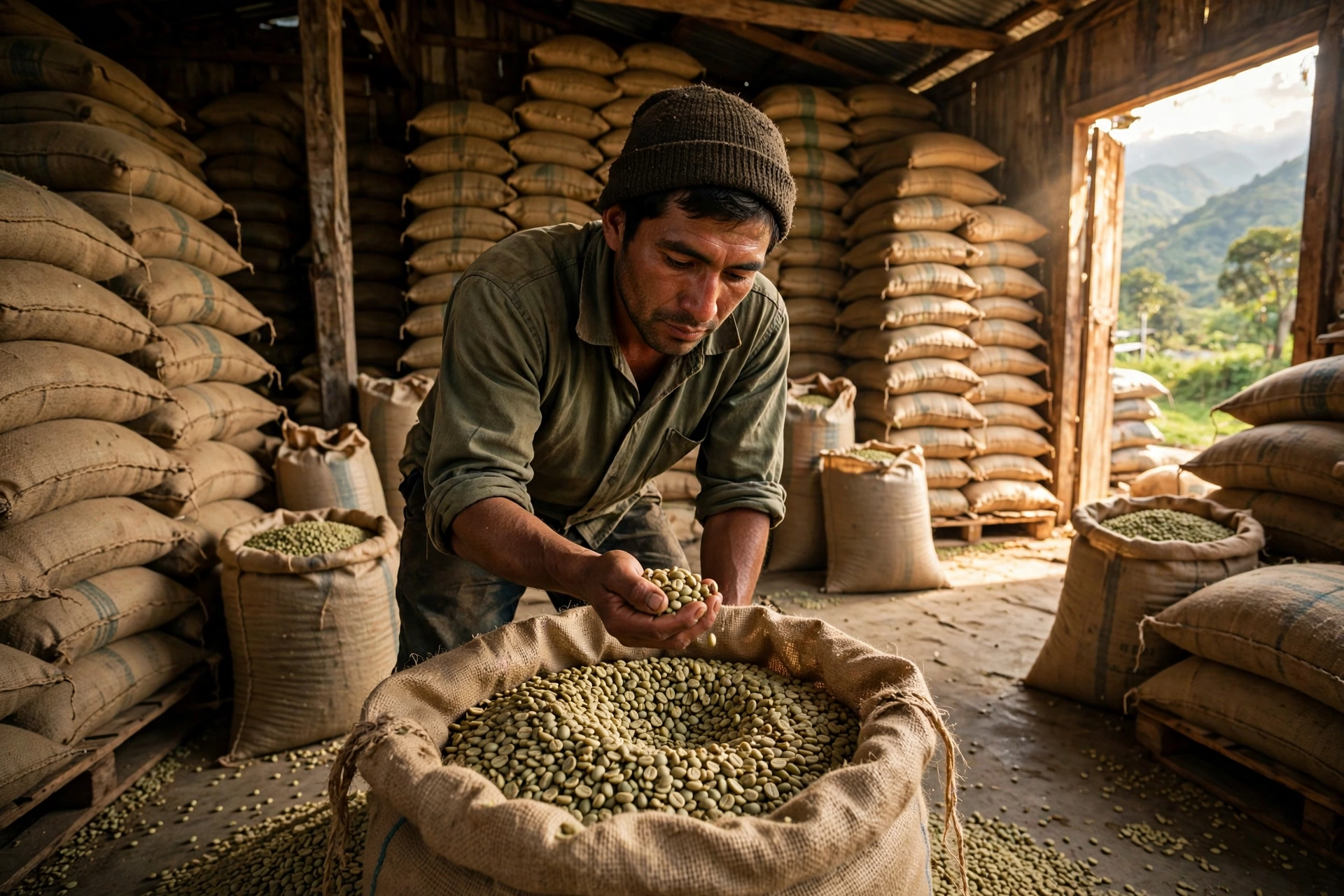
The first iron rule of rice storage is moisture. The International Rice Research Institute puts it plainly: paddy is safe to store at 14% moisture or below, 12% to 13% if you want it to keep for eight to twelve months, and seed grain needs to go down to 12%. Fresh paddy comes off the field at 20% to 25% moisture, so drying is not optional. It is the whole ballgame. And drying has its own rules: when you take grain from 18% down to 14%, the air temperature should stay below 42 degrees Celsius. Dry it too hot and too fast, and the kernels crack inside. Your broken-rice percentage jumps, and the buyer pays you less for the same tonnage.
In March 2025, during harvest in Treinta y Tres, a fellow driver told me what the scene looked like at one local mill. The dryers ran 24 hours a day, trucks queued for half a day at the gate, and every load got its moisture tested on arrival. Anything above 22% went straight to the dryer line. One truck waited two extra days because three trucks were ahead of it, and the grain started heating up in the pile. They dried it in the end, but the broken-rice rate for that lot came in well above normal, and the Brazilian buyer discounted the price. The mill hands later worked it out: two days of waiting cost them more than a month's wages for two workers.
The cost of drying is not just fuel and labor. Count the damage done while waiting in line. During harvest, drying capacity is a mill's lifeline. Enough capacity, and rice stays rice. Not enough, and rice becomes feed-grade prices.
Uruguay Rice in Storage: Moisture and Insects Have Nothing to Do With Luck
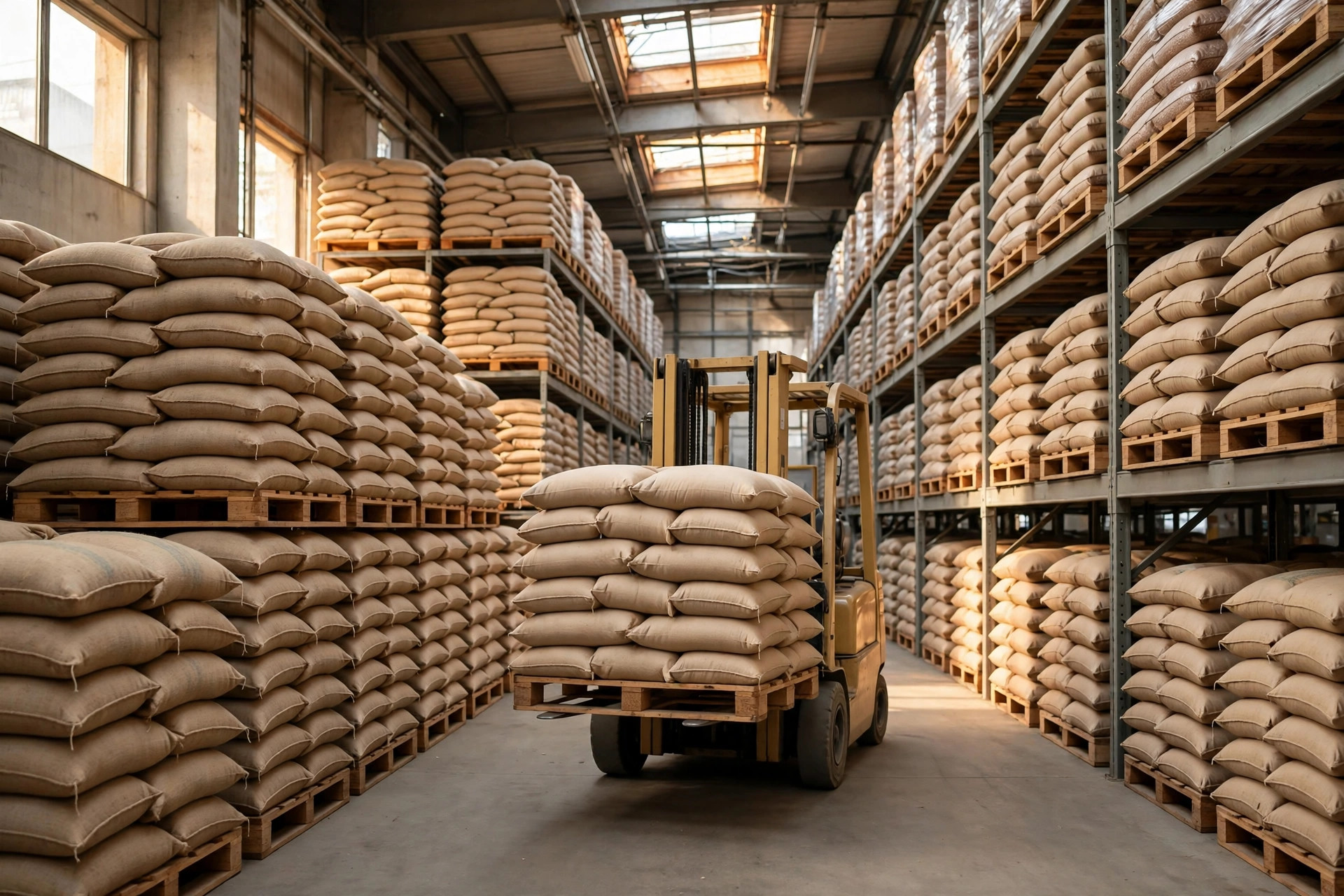
So the rice is dried and in the warehouse. Are we done? Not even close, let me tell you. Montevideo sits on the Rio de la Plata, and the air is damp. When the rains come, relative humidity inside a warehouse can climb past 70% without much effort. The working rule is to keep it under 65%, because that is where mold struggles to get started. Past that line, rice kernels soak moisture back out of the air like a sponge, and all the drying work you just paid for goes to waste.
Insects work the same way. Paddy keeps best in its husk, because the husk is a layer of armor. Once you mill it, the starch is exposed and it spoils and attracts insects much faster. That is why experienced mills store paddy and mill it only when the sailing schedule is set. Milled rice should not sit in the warehouse overnight if you can help it, two or three days at most. And there is an old rule every warehouse hand knows: never store new grain against old grain. The insects in the old lot will move into the new pile overnight.
When we went back over my friend's caked container, it came down to two small problems stacking up. Drying was delayed by two days in the queue, and then the milled rice sat four extra days waiting for the vessel. Either problem alone would not have killed the shipment. Together, they handed the buyer a reason to cut the payment. That is how warehousing works. Small problems love to pile up into one big bill.
The Inland Leg to the Port of Montevideo: Where Loads Get Ruined
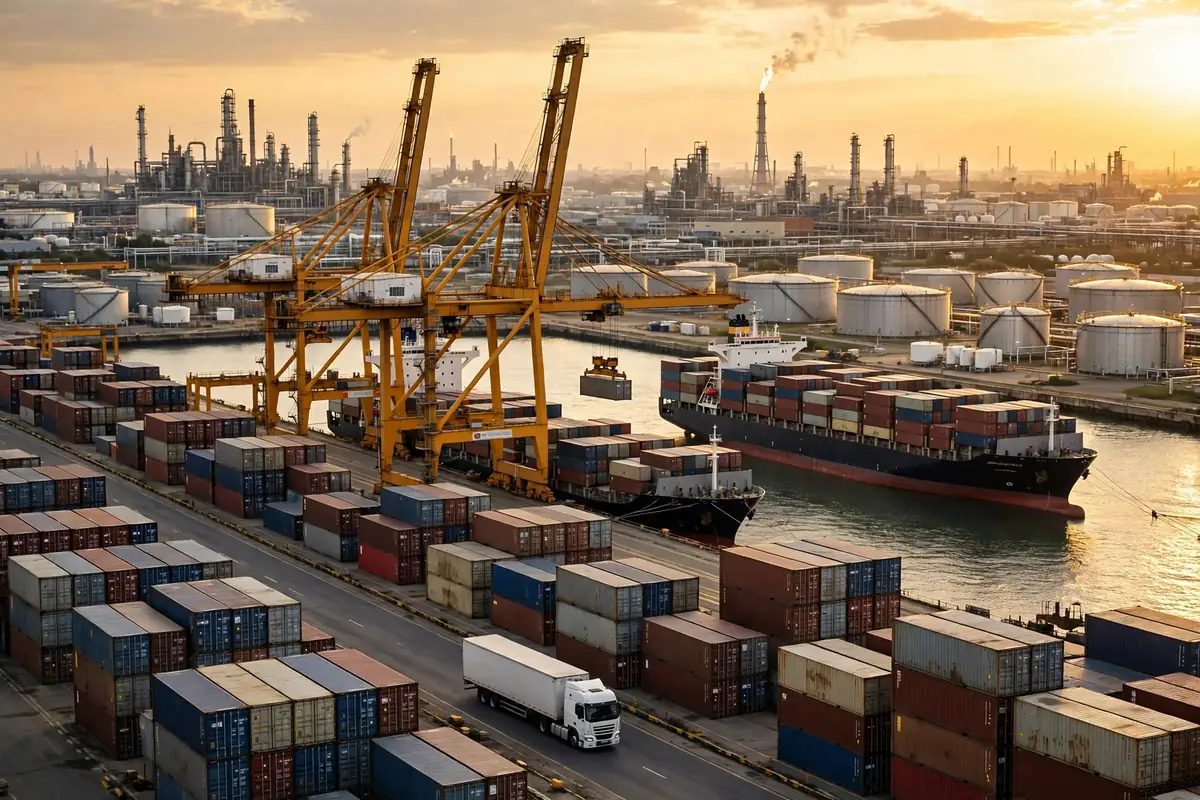
After the warehouse comes the road to the Port of Montevideo. Montevideo is Uruguay's main port and a free port. More than 70% of the country's imports and exports by volume move through its maritime and river system. From the eastern growing region, a truck needs most of a day to reach the port, and in the rainy season the roads are slick. One torn tarpaulin is all it takes for rain to find its way in and ruin half a load.
Two rules on this run. First, check the tarpaulin before loading. A torn tarp means you wait for the next truck rather than gambling the cargo. Second, if it is pouring, two hours parked at a rest stop beats pushing on. Wet rice does not dry out and forgive you. Arriving two hours late only earns you a scolding from the warehouse. Any driver who has run this road knows which one costs more.
Here is a cost breakdown for moving 1,000 tonnes of paddy from field to ship. It is an illustrative example built on typical local rate levels, not a quotation. Ask for prices using this structure and you will not get steered into a trap:
| Stage | What you pay for (1,000 tonnes, illustrative) | Where it usually overruns |
|---|---|---|
| Field intake | Harvest, short haul, initial inspection | Rainy-season harvest pushes short-haul rates up |
| Drying below 14% | Dryer fuel, power, labor | Harvest queues; damage done while waiting |
| Storage | Rent, ventilation, fumigation, inspection | Milled rice stored too long; mold and insects |
| Trucking to Montevideo | Freight, tarpaulins, insurance | Rain, road conditions, waiting for the vessel |
| Port and loading | Terminal charges, stuffing, documents, inspection | Vessel delays; demurrage climbing day by day |
Here is the counterintuitive part. Most people assume ocean freight is the dangerous leg for rice exports. I will tell you it is the opposite. Those days at sea, the container is sealed, and temperature and humidity stay relatively stable. That is the easy part. The dangerous part is the first two weeks after harvest, when the dryer queue is backed up and the warehouse ventilation cannot keep up. The rice goes bad on land before it ever meets the ocean. And here is the second surprise: drier is not always better. Dry paddy below 12% and the kernels turn brittle, so they shatter in the mill and your broken-rice rate goes up. The buyer discounts you either way. Fourteen percent is both the red line and the sweet spot.
Grain fears damp, trucks fear rushing, and people fear taking chances. In the rice export business, one extra bit of care in the warehouse saves ten times the money at the port. Next time someone tells you Uruguayan rice is cheap, ask one question: was it dried before storage, or stacked up and left to go moldy?
By Shifu Zhao, Trucking Veteran (15 yrs)