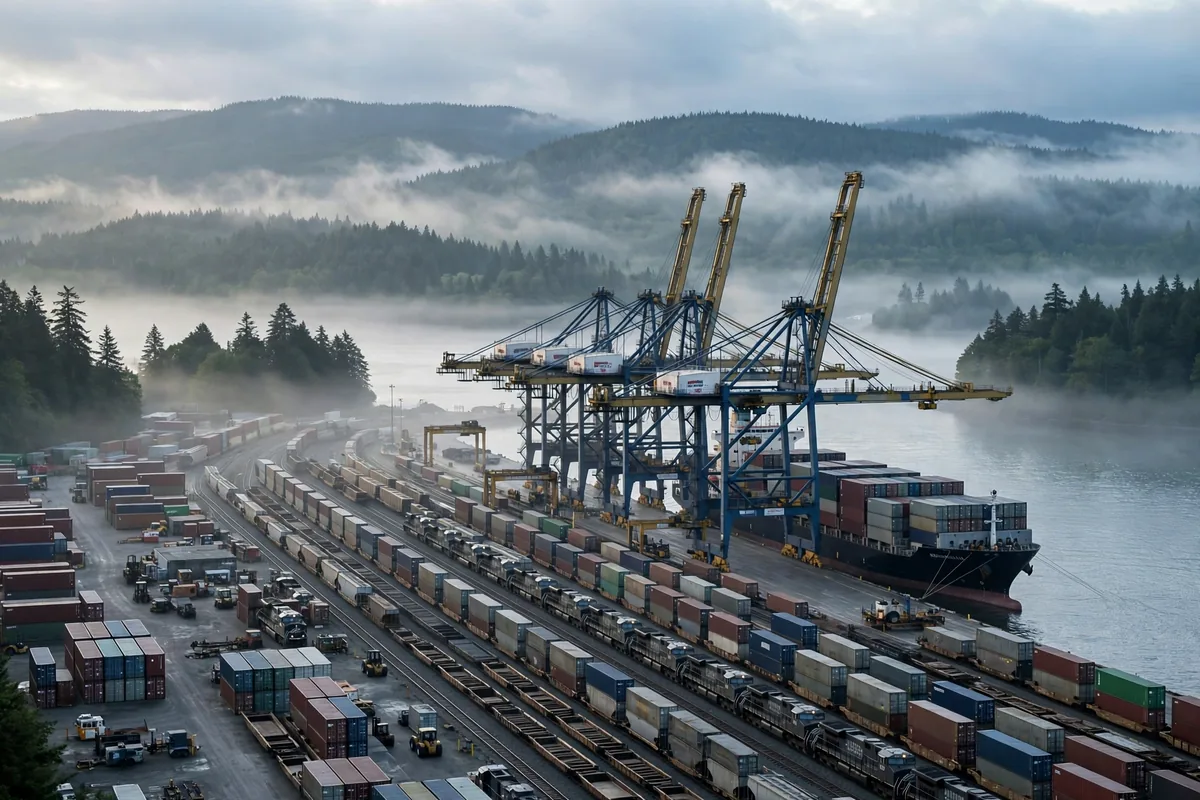
We had a client, a mid-sized food importer in Europe, buying sunflower oil from Ukraine for the first time in 2024. The contract looked beautiful. The price was negotiated down to the cent. Then the first shipment arrived, and the inspection sheet carried a line he hadn't budgeted for — heating and insulation charges at the tank farm. He called me and asked: whose bill is this? Mine was a short answer: if the contract doesn't say, it's yours. That's the first lesson of the Ukraine sunflower oil export warehouse business: the storage bill has to be settled before you sign, because once the cargo has arrived, you have no leverage left.
Ukraine is the world's biggest sunflower oil exporter: $5.12 billion in 2024, roughly 37% of global sunflower oil exports. In 2025 the country's farm exports totaled about $24.2 billion, with sunflower oil at about $5.1 billion of that. The main buyers are the EU at about 56%, India at about 14%, and Turkey at about 7%. At that scale, a small problem in storage becomes a large number once it's multiplied across a whole vessel. And there's a warning in the data: the U.S. Department of Agriculture projected in December 2025 that Russia would overtake Ukraine in sunflower oil exports in 2025/26, about 4.4 million tonnes against 4.2 million. When the top spot is being chased, a reliable supply chain is the competitive edge itself.
The oil leaves the crushing plant, goes into the plant's tanks, then moves to port tanks or to a bottling line. Every transfer is another loss and another test. Plenty of buyers watch the ex-works price and never count how many tanks the oil passed through. The storage bill starts at the very first tank.
Two Kinds of Ukraine Sunflower Oil Export Warehouse Storage: Bulk Tanks and Bottled Pallets
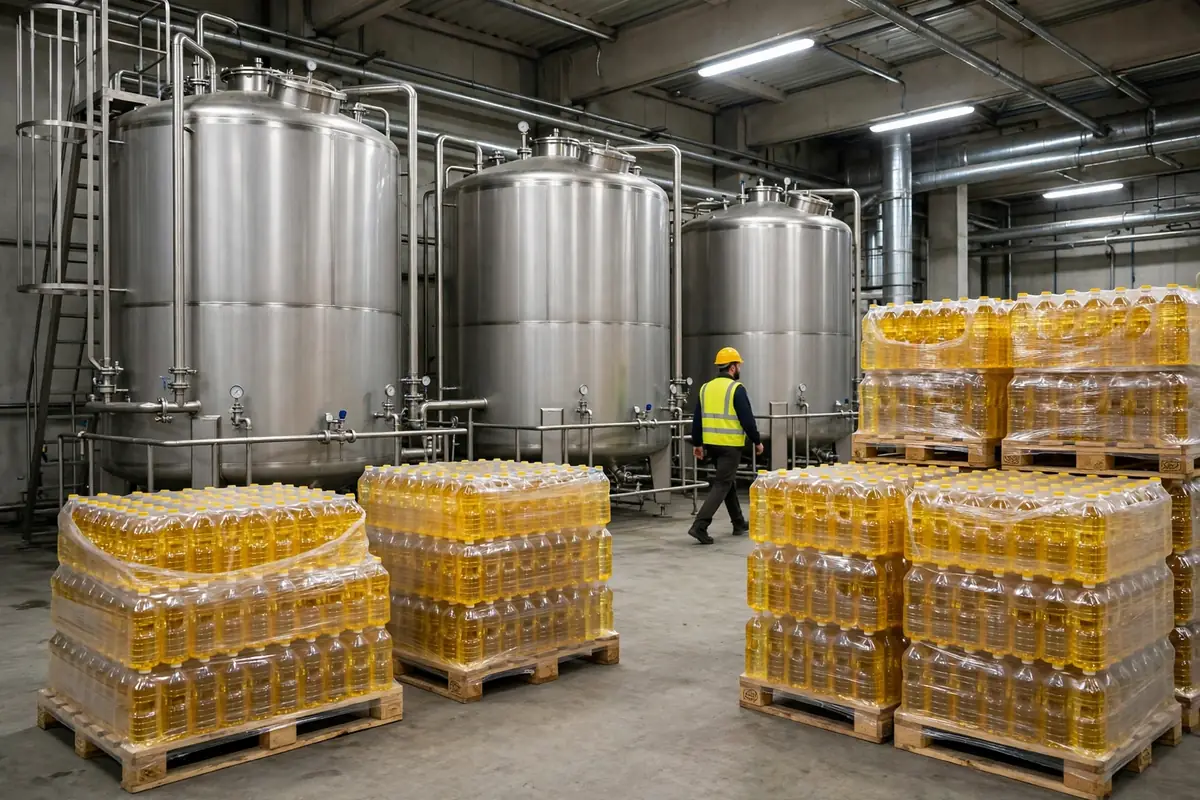
Bulk oil goes into tanks, and tank storage fears three things: oxidation, water, and cross-contamination. A tank has to be cleaned before the new oil goes in — whatever the previous cargo was decides whether this cargo can follow it. Residue at the bottom, a weeping valve, a faulty breather: these are old problems, and they never retire. Winter adds a heating bill. Cold oil moves slowly, pumping and loading take longer, and if the contract doesn't say who pays for heating and insulation, you will argue about it later.
Bottled oil goes into a finished-goods warehouse, and it looks like the easy option until you run it. Cartons hate damp, pallets hate weight, labels hate friction. Bottled oil rents by the pallet: stack high and you save rent but risk crushed cartons; stack low and you're safe but paying more per litre stored. Then there's shelf life. Bottled oil sitting still in a warehouse only gets less valuable, so the storage bill has to include rotation speed, not just rent.
| Bulk tank | Bottled warehouse | |
|---|---|---|
| Charged by | Tank capacity, per day | Pallet, per day |
| Fears most | Oxidation, water, cross-contamination | Damp, crushing, label wear |
| Likeliest dispute | Cleaning, who pays heating | Breakage rate, shelf life |
| Suits | Large volumes, steady buyers | Many distributors, fast turnaround |
Quality testing belongs in the contract too: plant test, loading test, arrival test — same standard, same sampling method, written down. Testing is where everyone starts telling different stories: the seller waves the plant report and says there's no problem, the buyer waves the arrival report and says there is, and without an agreed standard nobody can say whether it happened in the tank or on the ship.
The Three Sentences Most Sunflower Oil Contracts Forget
First: who pays storage, and up to which point. Tank rent, heating, cleaning, pallet fees, breakage handling — every line needs an owner. Unwritten means the buyer pays.
Second: one named load port or an alternative? The three Greater Odesa ports handled about 68 million tonnes of cargo in the first eleven months of 2025, and the Danube ports moved about 8 million tonnes of farm products in 2025. With that kind of volume behind them, an alternative port in the contract is a real option, not a wish. Name one port only, and when the sailing changes you have no contractual ground to move anywhere else.
Third: which inspection counts — the one before loading or the one at arrival? Different answers, different liabilities. Leave it out, and the argument goes to whoever shouts loudest, and the loudest voice is usually not yours.
We had another client, a trader selling into the Turkish market, whose contract named a single load port and said nothing about where storage charges stopped. When the sailing slipped, the cargo sat in a port warehouse for a while longer, and the storage invoice landed on his desk with nobody contracted to pay it. By then, sitting across the table and renegotiating, he had no chips left. The customer-is-always-right moment is a lot less funny when you're the one holding the bill.
Doing the Math: Sunflower Oil Warehouse Costs, Bulk vs. Bottled
A worked example, using hypothetical figures: take the same cargo in bulk and in bottles. The bulk side pays for tank capacity, heating, and cleaning losses. The bottled side pays for cartons, pallets, wrapping, and breakage — on top of pallet rent. Put the two storage bills side by side and the bottled route usually comes out higher per unit, even though it looks simpler on paper. That's the counterintuitive part of Ukraine sunflower oil export warehouse work: bottled oil feels low-maintenance and costs more to store; bulk oil feels troublesome and gets cheaper per unit at scale. The right choice isn't the one with the better selling price — it's the one that leaves more after the storage bill is paid.
There's one more line buyers forget: time. Bulk oil sitting in a tank for an extra month costs rent plus heating. Bottled oil sitting in a warehouse for an extra month costs rent plus shelf life burned away. Oil is not a product that gets more valuable while it waits, so the storage bill needs a line for time.
So the next time you negotiate a contract, ask these three questions before you sign: who pays for storage, up to which point, and which inspection counts. Get the answers in writing. In this business, every cent you save on storage is profit.
By Susan, 3PL Sales Director