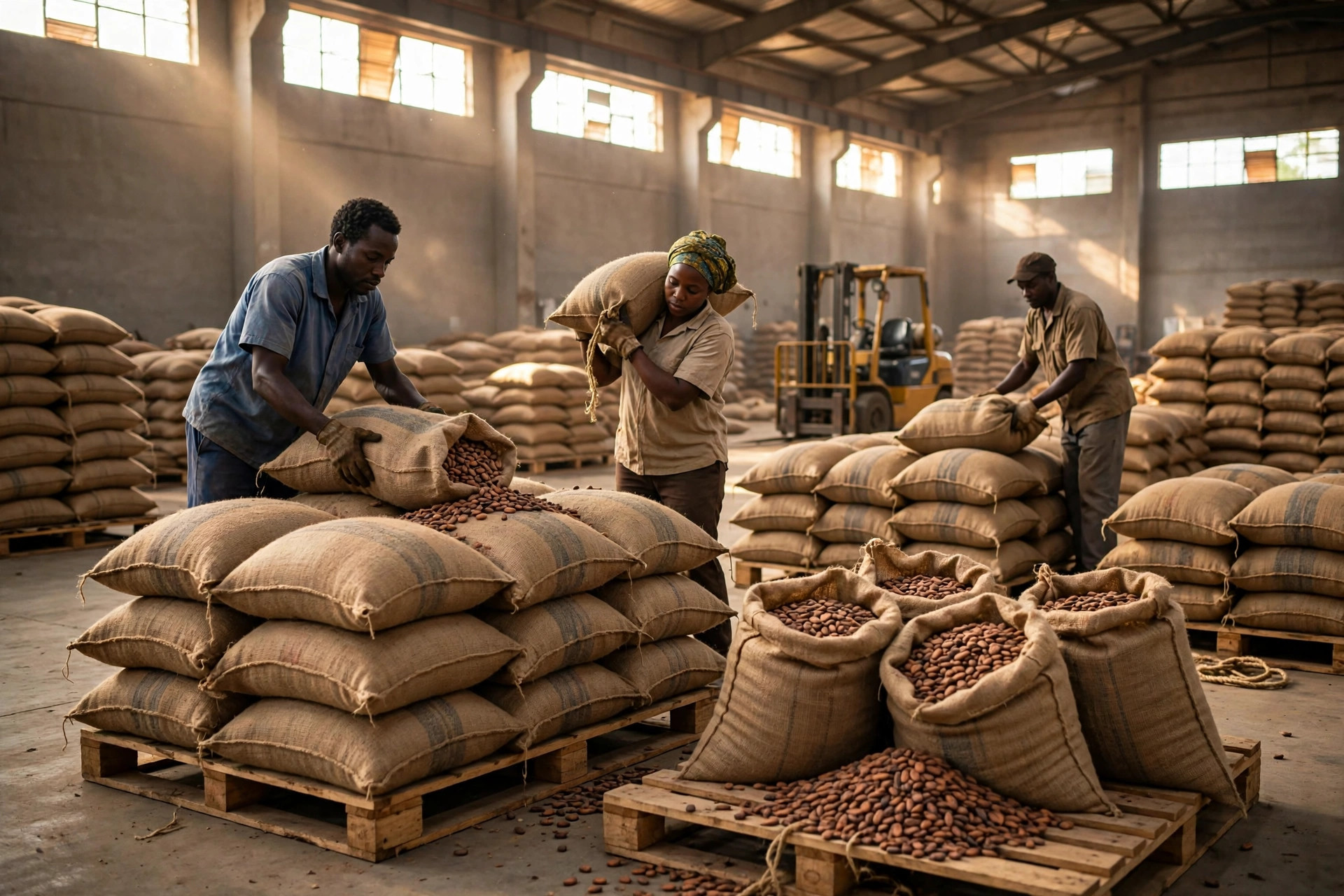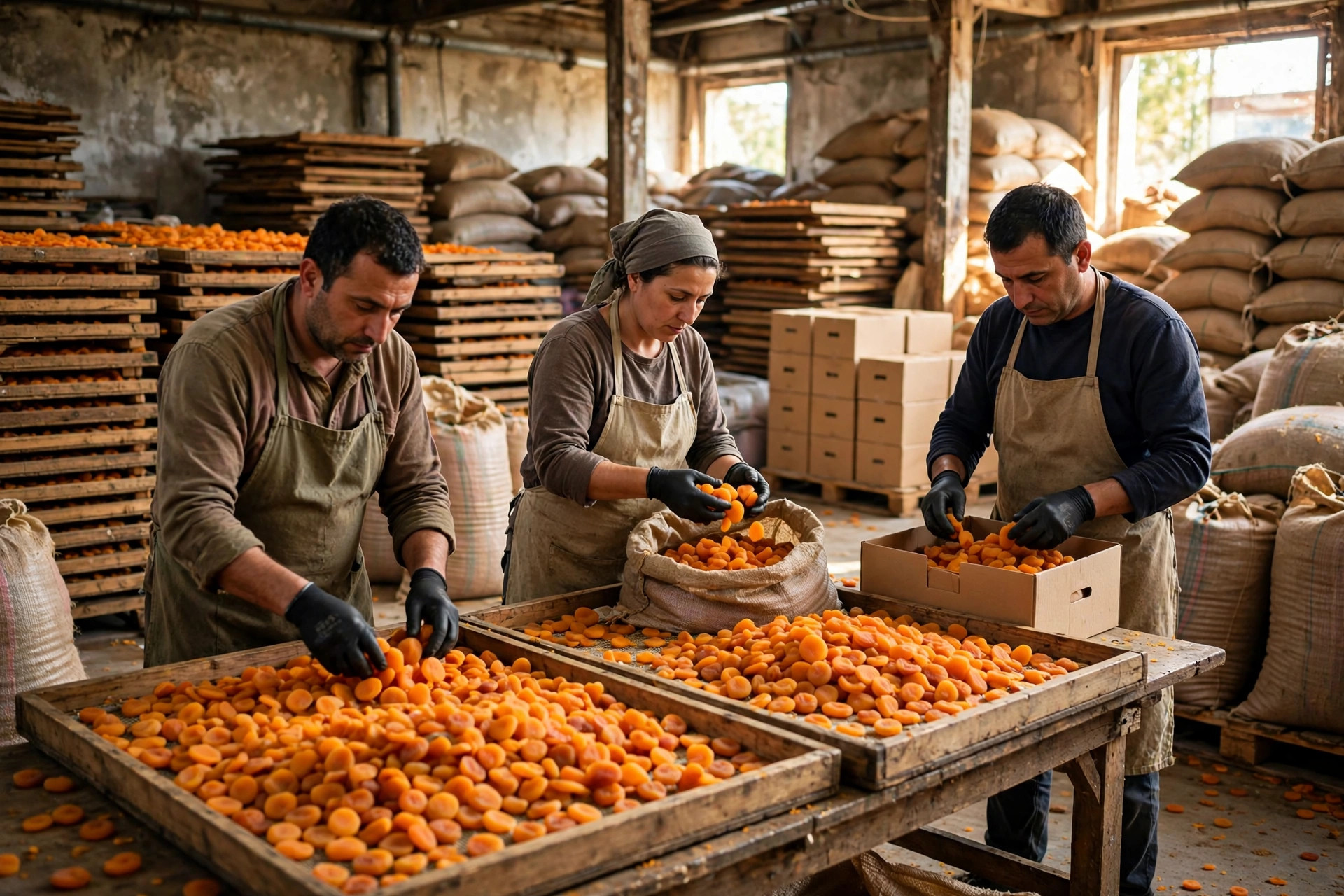
It is half past four in the morning and the yard is already awake. Trucks are lined up outside the gate, and the forklifts have started their rounds. If you work in turkey dried apricot export warehouse storage, you know this scene. Peak season does not start at nine. It starts before dawn. Let me be blunt: dried apricots are not hard to store because the work is heavy. They are hard to store because one messy morning can spoil a whole week.
One morning I stood at the receiving dock with a delivery note in my hand and three trucks waiting. Hasan, our old shift lead, walked over and said one thing: do not rush the unloading. Check the paperwork first, check the fruit second, check whether you have enough hands third. In this business, slow at the start means fast at the end.
Turkey Dried Apricot Export Warehouse Storage: Three Checks Before a Pallet Moves
In our warehouse, every incoming load now passes three checks, no exceptions. First, the paperwork. Product name, lot number, carton count. If the note and the load do not match, the truck waits to one side. We do not unload it. Second, the fruit itself. We open a few cartons, feel the fruit, smell it, and look for dampness, stickiness, or anything mixed in that should not be there. Third, the location. If no slot has been assigned, the goods do not come off the truck and sit on the floor. A pile on the floor with no name becomes nobody's job within half a day.
We wrote that rule after an embarrassing week two peak seasons ago. A load arrived in the morning, and a customer needed part of it out the same afternoon. We dropped the cartons beside the aisle and planned to put them away later. Then the afternoon got busy, and more loads came in behind them. By the time we went looking, the first pile was blocked. We spent more than two hours hunting for it. That shipment left a day late, and the customer nearly missed a sailing. Since then, the rule has been ironclad: no assigned slot, no unloading.
The second story is about a new hire. He had been with us for about two weeks when he put two different lots onto one pallet because the cartons looked alike from the outside. On paper, the system now said one thing. On the pallet, the truth was another. We only caught it at dispatch, when a scan did not match. That night, an experienced hand stayed with him and they split the pallet carton by carton until eleven at night. The next morning we changed how we train people. The first lesson for a newcomer is not driving a forklift. It is telling lots apart: the carton label, the lot number, the shade of the fruit, the softness when you press it gently. Veterans can spot the difference at a glance. Newcomers need practice, and they deserve someone standing beside them while they learn.
Rostering Is a Skill, Not a Spreadsheet
Peak season is when rostering matters most. Let me be blunt: more people on the floor does not mean faster work. A complete, balanced team means faster work. Our rule is simple. Every shift mixes veterans, steady hands, and newcomers. At least two people with three or more years in the warehouse lead each team. They do more than lift and stack. They watch the paperwork, watch the locations, and watch the newcomers' hands.
The shift lead spends ten minutes before work reading the day's list aloud: which lots go out, which lots just came in, which lots must not be touched. Ten minutes feels like a lot at four in the morning. It saves far more than ten minutes of searching later. Night shifts and early shifts rotate, so the same group does not carry three nights in a row. The hardest jobs, unloading and stacking, rotate inside the team, so no one person carries them from start to finish. When someone spots a mixed lot, damp fruit, or a broken carton, we say so at the end of the shift, out in the open, and we thank them first. People need to know that reporting a mistake is not shameful. Hiding one is.
Newcomers follow a slower path on purpose. For the first three days, they watch and learn. They do not handle dispatch loads alone. From day four, they work on small batches with a veteran watching. After about a week, they take charge of one location on their own. It looks slow. It cuts rework so sharply that the team ends up faster overall. A veteran teaching a newcomer is not lost labour. It is the cheapest insurance a warehouse has.
Moisture, Smell, and Pests: The Daily Round
Dried apricots have three quiet enemies: dampness, strong smells from nearby goods, and pests. Damp fruit turns sticky and the customer notices at once. Fruit stored next to strongly scented goods picks up that smell, and then the whole lot is hard to defend. Pests are the worst of the three. Find one problem spot and you may have to open and check a whole batch. Our defence is not fancy equipment. It is a daily round, done properly.
Every early shift, one person walks the warehouse with a checklist: any wet patches on the floor, doors and windows properly closed, anything unusual near the stacks. They tick each item, and the shift lead signs the sheet. When something goes wrong, we can trace it back to that round.
Stacking follows the same plain logic. Apricots do not sit in the same row as strongly scented goods. Pallets do not hug the wall so tightly that no one can walk behind them or check them. Pallets sit slightly off the floor, so a damp patch does not soak straight into the bottom cartons. A broken carton never gets tucked back into the middle of good cartons. It goes to a separate spot and gets dealt with the same day. Too many warehouses get into trouble because someone took a shortcut with a damaged carton, leaked sugars attracted pests, and the neighbouring cartons paid for it. Export paperwork and inspection rules differ by destination and by customer, so where we are unsure we check the latest official policy rather than guessing from memory. The warehouse owns one promise: fruit, lot, and paperwork must match. We do not decide the rest for the customer.
Do the Math: Fast Now, or Steady All Week
Here is the calculation I show every new shift lead in turkey dried apricot export warehouse storage. Take one team, one day, and compare two ways of working:
| Approach | Looks like today | What it costs later |
|---|---|---|
| Drop goods by the aisle, put them away later | Unloading is thirty minutes faster | Two hours searching, plus a possible mixed lot and late dispatch |
| Assign a slot and check paperwork first | Unloading is thirty minutes slower | Dispatch scans pass first time, almost no rework |
| Let a newcomer handle a big order alone | The roster looks full | One mixed lot, and the whole team reworks until eleven at night |
| Pair newcomers with veterans for a week | The first three days feel tight | Fewer errors, fewer reworks, a steadier team |
That table is now our decision rule. Any shortcut that saves thirty minutes in the morning and costs two hours in the afternoon is not a shortcut. Here is the counterintuitive part, and it took me years to accept it: the fastest way through peak season is to slow some people down on purpose. Slow the shift lead down to read the list. Slow the veteran down to teach. Slow the receiving dock down to assign a location. Thirty minutes slower at the start buys back two hours later, and it buys back something harder to measure: the customer's trust.
That is how we run the place now. Three checks at receiving. Mixed teams on every shift. A signed daily round. Broken cartons dealt with the same day. Paperwork checked against the latest official policy whenever we are unsure. None of it sounds clever. Anyone walking in tomorrow can follow it, even in the busiest week. If you run a warehouse like ours, here is my reminder to you: do not let a truck leave the yard with a doubt still hanging over its load. Check the lot, check the carton, check the note, and then let it go. Your next order depends on the one you just shipped.
By Chen Feng, Warehouse Operations Manager