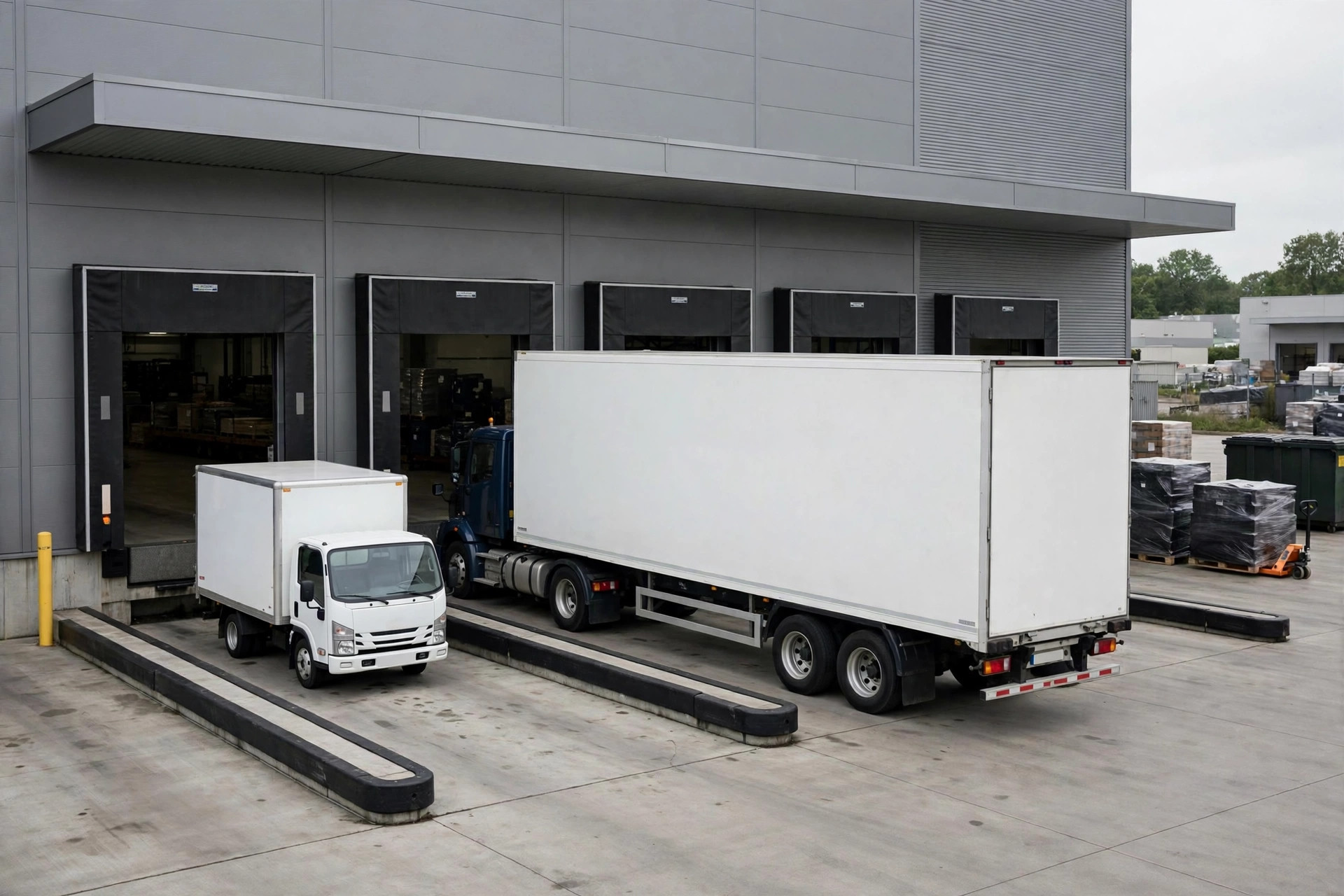
It was past 2 a.m. and I was rolling east on I-40, about three hundred miles out of Chicago, when my phone went off. A late-delivery alert from the TMS: my estimated arrival had slipped by two and a half hours. The shipper got the same alert, and the warehouse shuffled its unloading crew overnight. When I rolled in, the dock door was open and a forklift was waiting. I lost maybe ten minutes, total.
That was a few winters back. Without that alert — sent a full four hours early — I would have hit Chicago right in the morning rush, and the delay would have stretched past six hours, wrecking the warehouse's whole shift. Fifteen years behind the wheel taught me this: a TMS late-delivery alert is a lifeline when it's set right and a curse when it's not. The question isn't whether you have alerts. It's how early they go off, and where you draw the line.
A threshold too loose: the late-delivery alert that arrives too late to help
I've seen shippers set the trigger at "alert when the ETA slips 30 minutes." Sounds strict, right? For a short local run, maybe. For a long haul, it's useless. One trip I ran Dallas to Atlanta, a pileup shut the highway down, the system flagged me 40 minutes late, and the alert went out. Problem was, I was 45 minutes from the warehouse when they got it. The warehouse manager told me, "Shifu, this alert is the same as no alert. Where am I supposed to find people on 45 minutes' notice?"
Warehouse unloading runs on shifts. Pulling in extra hands or moving a dock appointment takes at least two or three hours to arrange. A 30-minute warning is just someone telling you "good luck with that." The shipper thinks the system has them covered. The warehouse curses them anyway.
So here's the first real rule of the road: set your lead time by working backward from how long the other side needs to react — not from how responsible you want to feel. If the warehouse needs two hours to reshuffle, your alert needs to go out at least two hours early. Give it an extra half hour of cushion.
The late-delivery alert that cried wolf: when the threshold is too tight
The opposite problem is more common. Some shippers, scared of getting blamed, set the trigger hair-trigger tight: ETA slips 15 minutes, alert fires. Sounds responsible. In practice it's a disaster.
A dispatcher I work with — calls himself Little Li — once vented to me about it. His TMS fired at 15 minutes, and he got a dozen alerts a day. Ten minutes of traffic, five extra minutes at the fuel stop, a slow unload ahead of me — every little thing set it off. Two months in, he'd swipe every buzz away without looking. Then came the real one: I blew a tire on the highway, ETA slipped three hours, the alert fired, and he swiped it away like all the others. Nobody on the shipper's side picked it up. The warehouse sat idle all afternoon.

I tell you, alerts work exactly like the boy who cried wolf. Too many false alarms and people go numb. And that's worse than having no alerts at all — with no alerts, at least everyone knows to watch the road themselves. With alerts nobody reads, the whole operation is driving blind.
What this really is: a late-delivery alert threshold is math, not attitude
A lot of people treat the threshold as a character issue: tight means responsible, loose means lazy. Wrong. It's arithmetic.
What one missed alert costs: a production line down, a store out of stock, a warehouse crew standing around on overtime, and in the worst case, a lost customer. What ten false alerts cost: ten phone calls, a few pointless schedule changes, a dispatcher glancing at his phone.
But that math is too simple, because the cost of false alerts compounds — the first ten get ignored, and starting with the eleventh, the system is dead. So here's the real picture:
| Threshold style | False alarms | Miss risk | Where it fits |
|---|---|---|---|
| Tight (alert at 15 min late) | A dozen a day; people tune out fast | Looks low, actually high (nobody's watching) | The lab — not the real world |
| Middle (alert at 1 hr late) | A few a week, tolerable | Medium | Short hauls, fixed lanes |
| Loose (alert at 2+ hrs late) | Rare; when it rings, it's serious | Low | Long hauls, dedicated lanes |
See the trap? The most dangerous setting isn't loose or tight — it's "so tight nobody believes it." Better a loose threshold people trust than a tight one people mute.
And here's the counterintuitive part, the thing fifteen years on the road taught me: the delay to fear isn't "half an hour late." It's an ETA that's slipping faster and faster. The scariest late arrivals are never the ones you see coming from the start — those you can plan around. The scary ones start out fine, then the ETA slips 20 minutes three hours in, then another 40 minutes an hour later. That accelerating drift means something systemic is wrong up ahead — a shutdown, a massive jam, a mechanical problem. A good TMS alert shouldn't just watch a fixed clock. It should watch the speed of the drift. Drift accelerating? Escalate, even if you're only half an hour late on paper.
Four pieces of real advice, for shippers and warehouses
First, split alerts into tiers: yellow and red. Yellow (might be 1–2 hours late) goes out as a message the dispatcher glances at. Red (definitely 2+ hours late, or accelerating ETA drift) demands a phone call and a human confirmation. Tiering is the best cure for the boy who cried wolf.
Second, agree with the warehouse in advance on what happens when an alert lands. An alert isn't done when it's sent — it needs an action list: reshuffle the unloading crew, move the dock appointment, unload another truck first, notify the downstream customer. Write it down, pin it on the dispatch room wall. An alert's value isn't in knowing. It's in moving.
Third, send the alert to three parties at once: the shipper, the driver, and the receiving warehouse. Plenty of systems only notify the shipper, and the driver hears last. Take it from someone who drives: the driver knows something's wrong on the road half an hour before the system does. Let the driver trigger an alert manually — it beats any algorithm.
Fourth, review your false-alarm rate once a month. Pull last month's alerts and count: how many turned into real delays, how many were false alarms. False alarms over seventy percent? Loosen the threshold next month. Missed a real delay? Tighten it. A threshold isn't set once for life — lanes change, seasons change, drivers change.
The old saying
Fifteen years out here taught me one thing above all: a late-delivery alert doesn't manage the truck. It manages people. The most scientific threshold in the world is worthless if nobody believes it. Say the ugly thing up front, and the road won't bite you later — send the alert early, send it to the right people, and make sure someone acts on it. Do those three things, and being late stops being scary. What's scary is a system buzzing away while a whole room pretends not to hear it.
By Shifu Zhao, Trucking Veteran (15 yrs)