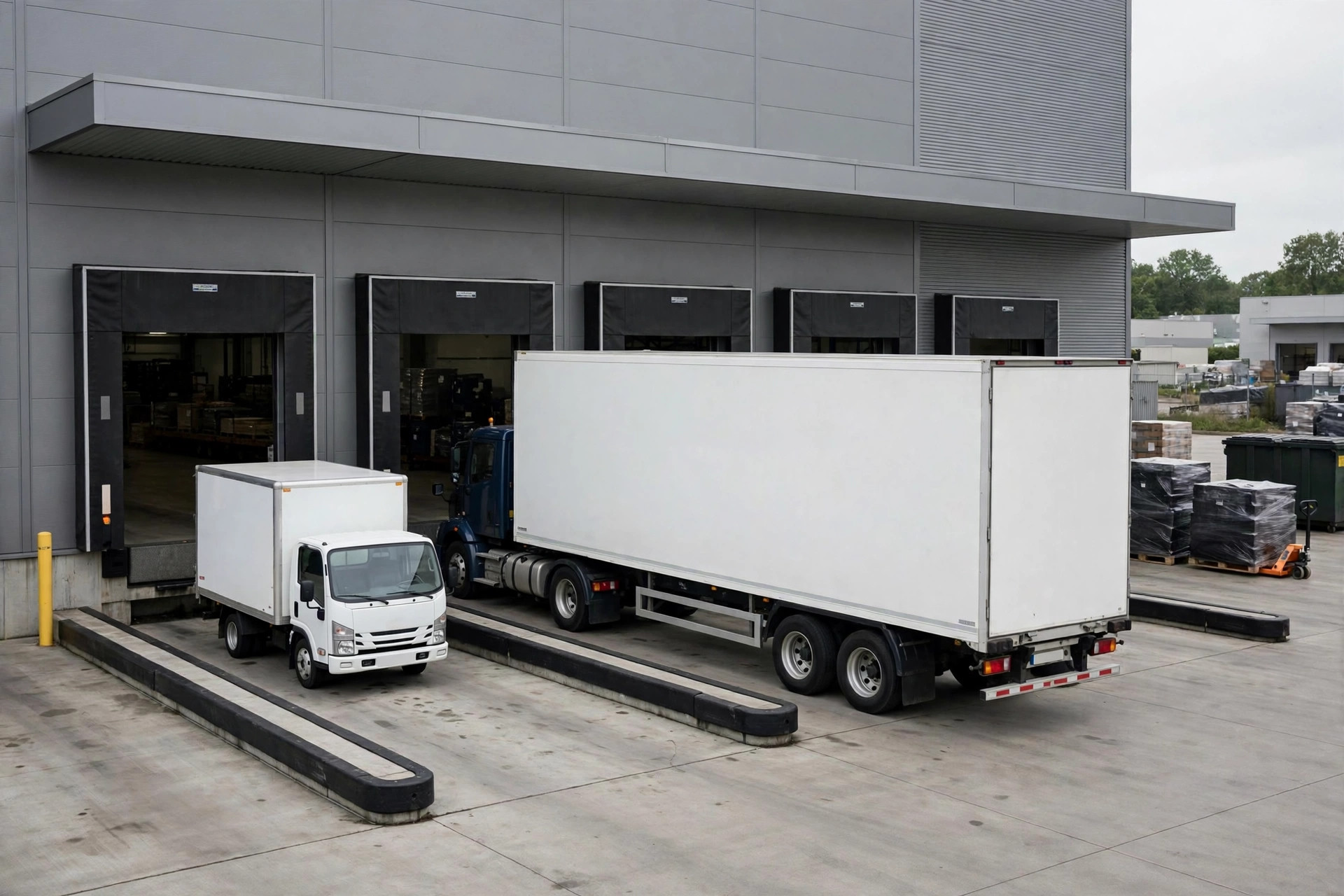
Let me give you the verdict up front: neither LTL nor FTL is cheaper in the abstract. There is only a breakeven line — and most shippers I have worked with have never actually calculated theirs. They pick a mode by gut feel: a big-looking order gets a full truck, a small one goes LTL. Then they wonder why freight spend bleeds ten-plus points a year with nobody able to point at the wound.
A client who used LTL like it was FTL — and the reverse
Back in 2021, I was consulting for a furniture e-commerce company out of Fontana, California, shipping around 300 orders a day. Mode choice was in the hands of the sales team, and they went with instinct. A customer bought a sofa set plus two chairs — six pallets, Fontana to Denver. Sales saw "furniture = big item" and booked a full 53-foot dry van. That truck rolled across three states one-third full.
Meanwhile, a ten-pallet order of office chairs went out as three separate LTL shipments. Each one hit the carrier's minimum charge, then stacked up accessorials — liftgate, limited-access delivery, pallet fees — and the total came in higher than a single truckload would have cost.
Both sides of this trade-off are ugly. LTL's trap is death by a thousand fees: the linehaul looks cheap, but the minimum charge floors you, and every accessorial piles on. Worse, LTL freight gets handled at every terminal it passes through. More touches means more damage claims and more late arrivals — and furniture is exactly the kind of freight that suffers.
FTL's trap is paying for air. Book a truck and you pay for the lane, full or not. A half-empty truck is money burned. The hidden part is the backhaul — your freight is one-way, the carrier has to get that empty truck home, and that cost is already baked into your quote, especially when your volumes are lumpy and inconsistent.
We ran the numbers for that client: on the Fontana-to-Denver lane, the breakeven sat at roughly 6 to 8 pallets. Below it, LTL was cheaper even with the full menu of accessorials. Above it, one FTL beat any combination of LTL moves. But the line is lane-specific — Fontana to Phoenix broke even around 5 pallets because shorter lanes make the LTL minimum charge a smaller share. Same logic everywhere; the numbers belong to your lanes. (Actual rates change — confirm with your carriers' latest quotes.)
Why human judgment can't hold this line at scale
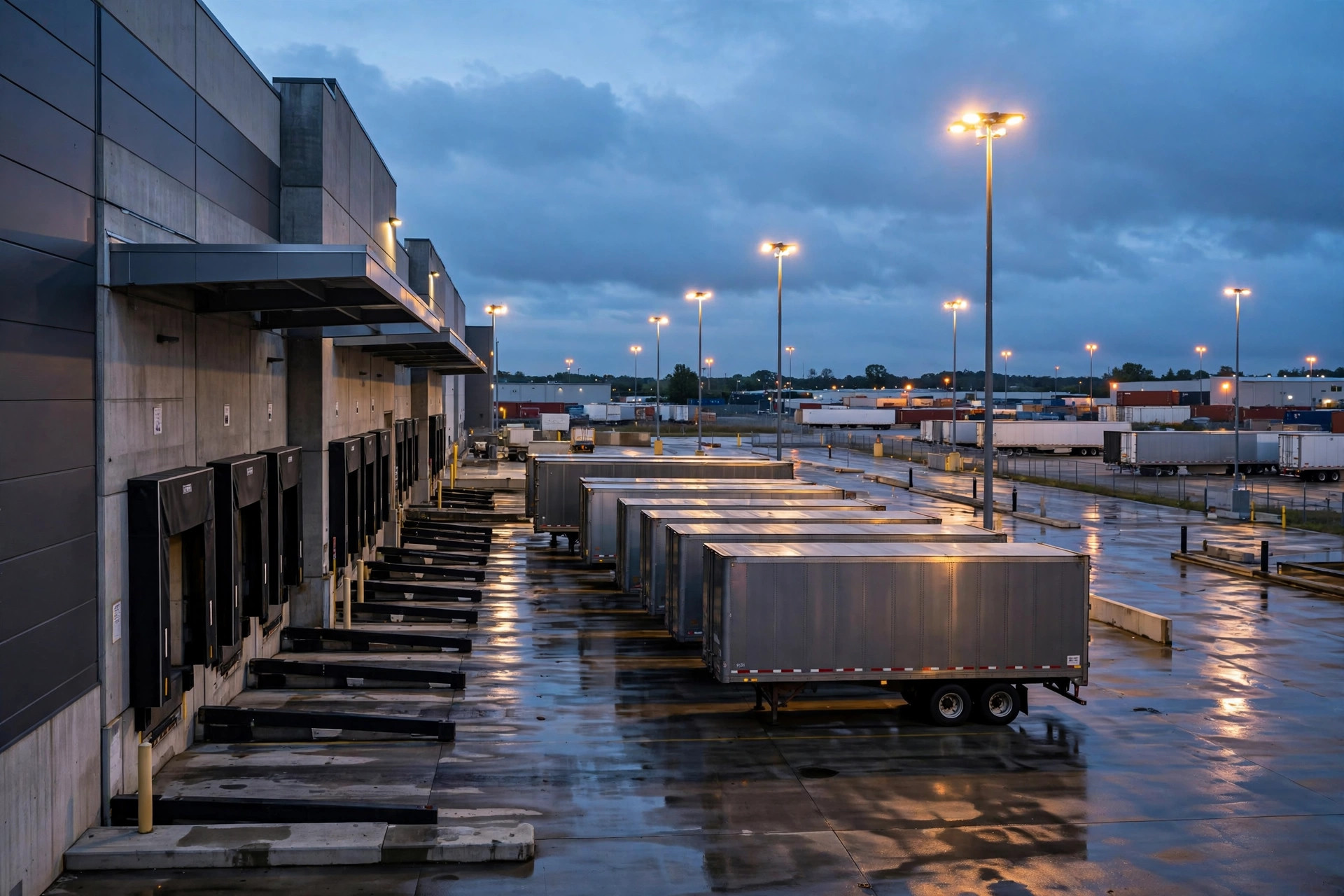
A seasoned logistics manager eyeballing each order works fine at low volume. It falls apart at scale: two hundred orders in a day, weights from a few hundred pounds to tens of thousands, destinations scattered coast to coast, plus pallet counts, freight class, and transit-time requirements. No human reviews every order. So they default — everything LTL to save the hassle, or everything FTL because "better safe than sorry."
The answer is to encode the decision into the TMS and let the system split modes per order automatically, with humans reviewing only the exceptions. The logic is straightforward; the hard part is writing the business rules correctly. A practical decision table works on three dimensions:
| Dimension | LTL wins | FTL wins |
|---|---|---|
| Weight / pallets | Below the lane's breakeven (typically 5–8 pallets, calculated per lane) | At or above the breakeven |
| Lane distance | Short (dense LTL network, few terminal touches) | Long (each touch raises damage/delay risk under LTL) |
| Time / cargo value | Not time-sensitive, can tolerate 3–5 days in transit | Time-sensitive, high value, can't afford repeated handling |
A solid TMS rule engine works in two layers. Layer one is hard thresholds: an order hitting the lane's pallet breakeven goes FTL, below it goes LTL. These thresholds should be re-derived quarterly — fuel surcharges shift, carriers reprice, and a lane that averaged 40 shipments a month can suddenly justify a lower FTL trigger once it hits 90. Stale thresholds quietly rot into gut feel again. Layer two is exceptions: fragile high-value freight gets bumped to FTL even at low volume — the damage claim you avoid costs more than the rate difference. Rush orders skip LTL's standard transit. And orders to the same customer and destination get consolidated by the system — today's 4 pallets and tomorrow's planned 4 pallets merge into one 8-pallet FTL move instead of two expensive LTL shipments.
Both sides matter here. Auto mode selection buys you consistency: every order passes through the same rules, no matter who is on shift. But automatic is not unsupervised — every borderline order needs a human look. The orders sitting one or two pallets above or below the breakeven are where the weirdness lives: seven pallets against a seven-pallet threshold gets FTL by the rule, but two of those pallets are featherweight and the whole thing would have been cheaper split as LTL. A rule engine can't feel that yet.
The contrarian take: the real cost isn't the wrong mode — it's never doing the math
Here's the angle most people miss. Plenty of companies agonize over LTL vs FTL, and when I dig in, the bigger problem surfaces: they can't even tell me what they spent on LTL versus FTL last year. Invoices are scattered across carriers, accessorials are mixed into linehaul, and finance only sees the total. The biggest value of auto mode selection in a TMS isn't the few points of freight savings — it's that every mode decision gets logged. At month end you can pull a clean report: which lanes got split most often, which orders had their mode overridden by a human, and whether those overrides saved or lost money.
Strip it down: the LTL-vs-FTL question looks like a freight question, but underneath it's a data question. With the data, the breakeven is alive — fuel moves, carriers reprice, a lane's volume grows, and the TMS thresholds move with it. Without the data, the breakeven is a guess, and guesses are about as reliable as a coin flip.
One question to take back to your warehouse: who decides LTL or FTL on each order today? If the answer is "gut feel," your freight spend is probably leaking more than you think.
By Lao Mi, Supply Chain Veteran (20 yrs)