We have a client — Chen — selling charging cables and phone accessories out of Shenzhen. In September 2025 he told me, all excited: "Susan, I'm moving to Temu semi-managed. Shipping it myself. Margins go up 15 points!" I asked: "Chen, I believe the 15 points. But have you done the math on warehousing costs and returns?" He paused. "Returns… those are pretty rare, right?"
Three months later, Chen had nearly 40,000 units sitting in our Los Angeles warehouse, sell-through at barely a third of what he'd stocked. Rent kept accruing. Returned goods filled half a pallet position. He called me: "Susan, can you help me clear this inventory?"
Temu's shift from fully-managed to semi-managed looks like a gift to sellers — pricing power back, margins up. But the three things you handed to the platform in the fully-managed era — stocking, fulfillment, after-sales — are now all yours.
First, the Real Math: Fully-Managed vs Semi-Managed Margins
Before you switch, put both formulas side by side.
Fully-managed era: supply price − factory cost − domestic freight to the platform warehouse = your margin. The platform handled pricing, fulfillment, and returns. Near-zero operating cost. The downside: the platform set the supply price, so the bulk of the profit on a hit product never reached you.
Temu semi-managed: retail price − platform commission − first-leg ocean/air freight − US warehouse storage − per-order pick-and-pack fees − last-mile shipping − return losses = your margin. (Rates change — check Temu's official seller policies for the latest. No fixed figures here; stale figures would hurt you.)
I ran Chen's real numbers with him. His 20W fast charger: fully-managed margin about $1.20 per unit, 30,000 units a month — $36,000 a month, rain or shine. After switching, on-paper margin hit $2.10 — but after pick-and-pack fees, last-mile shipping, and an 8% monthly return rate (half of returns only fit for liquidation or scrap), actual margin landed at $1.35. Worse, three months of inventory sat in the US — working capital lock-up more than 4x the old days.
See the pattern? Most of the extra margin from semi-managed gets eaten by warehousing costs and returns. What's left is what you bought with locked-up capital and operational complexity. Switch without doing this math and you're diving blind.
Thing #1: Overseas Stocking — Overstocking Hurts More Than Understocking
Under fully-managed, you never stocked anything. Semi-managed lesson one: keep inventory on US soil. Two questions decide everything: how much, and where.
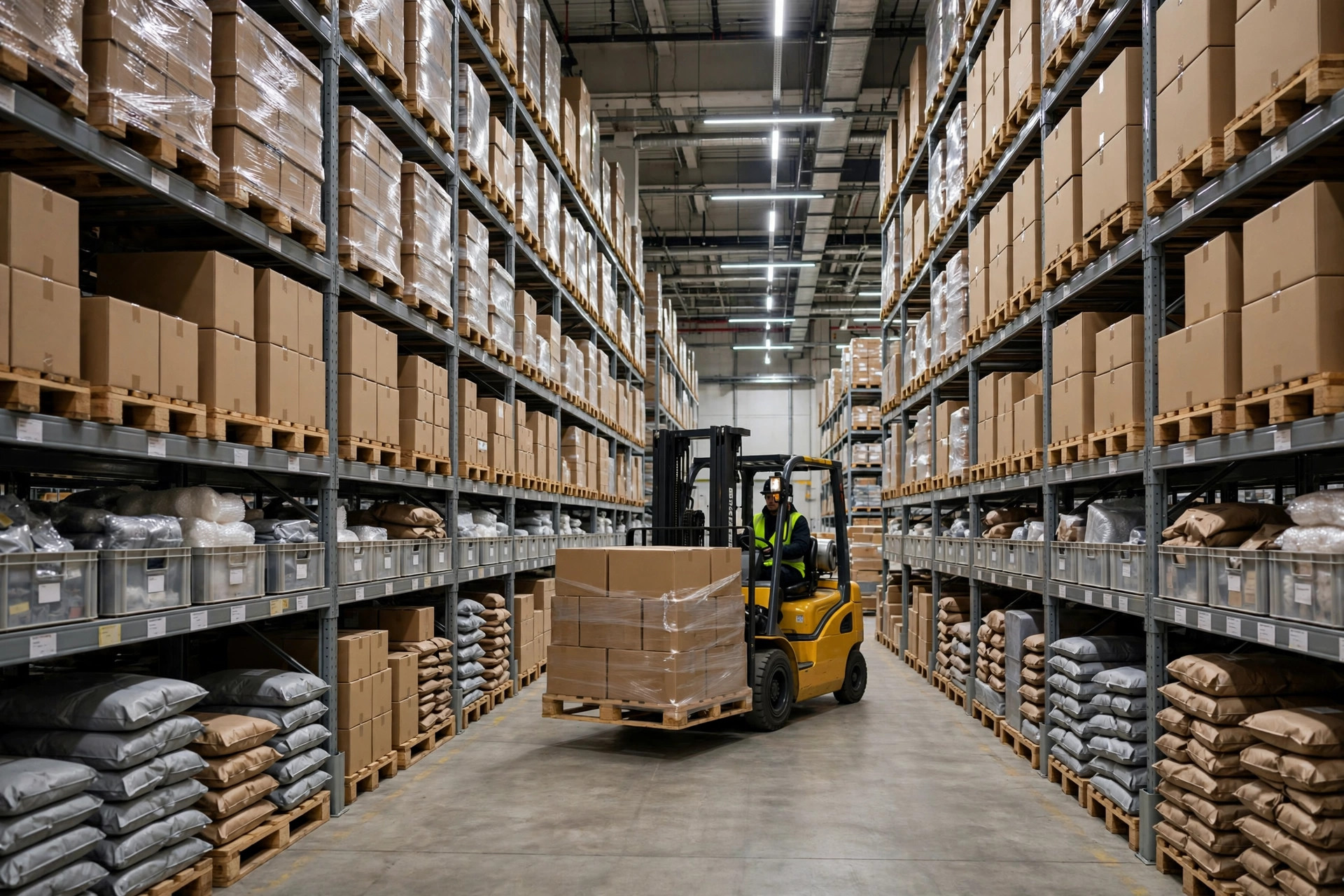
How much is a craft. Another client — Zhang, selling smart pet products from Hangzhou — switched in October 2025 and stocked 90 days based on her domestic e-commerce experience. But traffic allocation on semi-managed behaves nothing like fully-managed. Her hero SKU took two weeks to reach 40 orders a day; 90 days of stock took four months to sell through. Storage billed per pallet position ate 6% of her margin over those four months.
Here's the counterintuitive part: sellers fear stockouts and overstock "just in case." But under semi-managed, overstocking costs far more than understocking. A stockout costs a few weeks of sales at worst — air freight can rescue you. Overstock hits three ways at once: rent, capital interest, clearance losses. Chen's 40,000 charging cables got there exactly that way.
My advice: first batch at 30–45 days of projected sell-through, watch real conversion for two weeks, then replenish. Ocean LCL for the first leg, air freight for emergency top-ups. Mix the two — don't go all-in on one mode.
Where matters just as much. Semi-managed requires US-local shipping that meets the platform's delivery-time requirements (check the official policy for current SLAs), so warehouse location directly sets your last-mile cost. West Coast (Los Angeles) covers California fast but costs more to the East Coast; East Coast (New Jersey) is the mirror image. One warehouse or two? Under 10,000 orders a month, stick with one; past 20,000, then talk split stocking.
Thing #2: Self-Fulfillment — Printing Labels Is More Tedious Than You Think
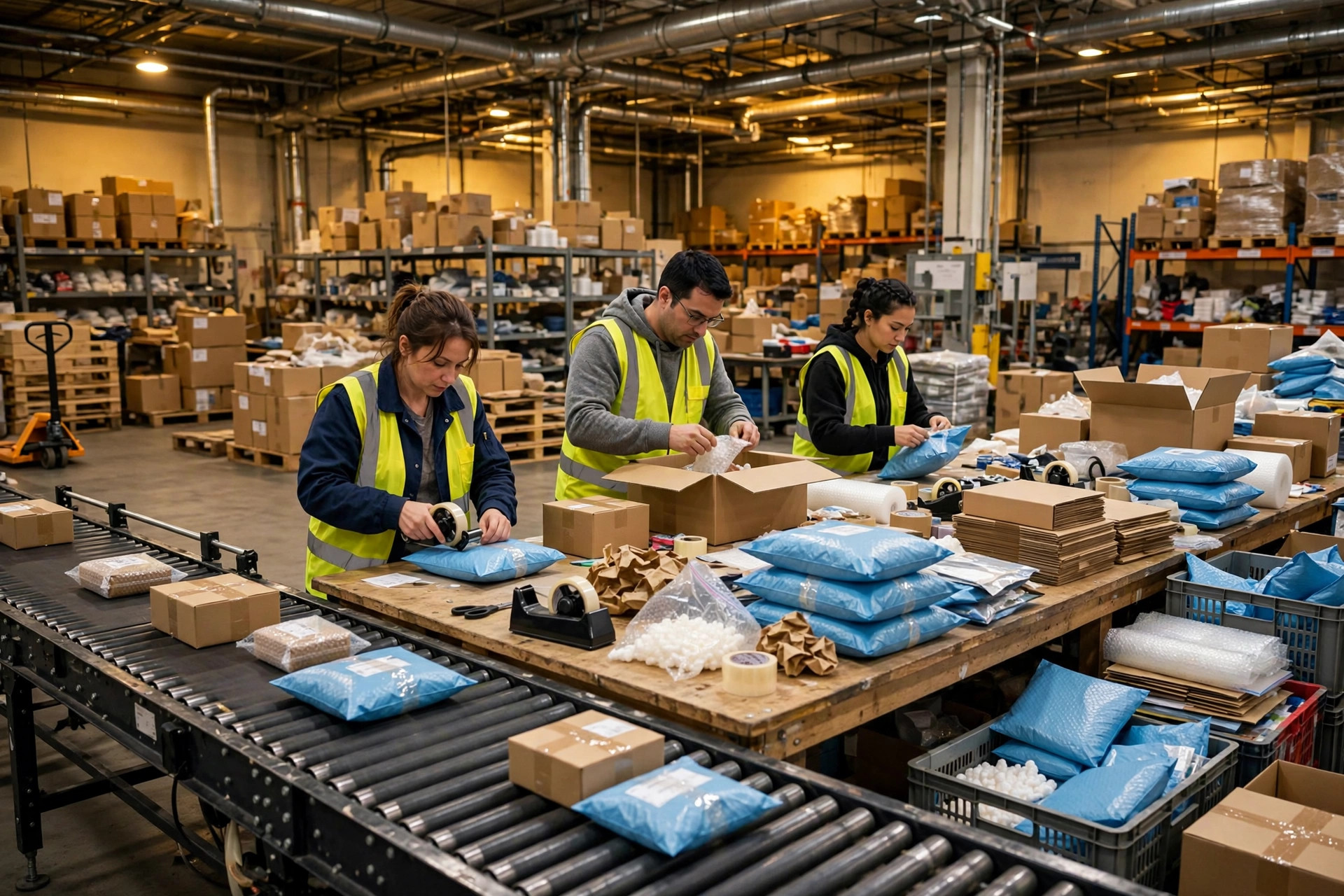
Under semi-managed, label printing, stickers, picking, packing, outbound, and tracking are all yours.
Insider honesty from the 3PL side: the biggest cost in self-fulfillment isn't shipping — it's exceptions. Normal orders run smooth anywhere. What burns money is bad addresses, misprinted labels, lost-parcel claims, "buyer says never received." Chen's first month: 3.2% exception rate, and the back-and-forth between his CS team and our warehouse cost him a full-time headcount.
Three contract clauses to fight over:
- How the pick-and-pack rate is structured — per order or per unit? Small parcels vs. battery products price very differently. Get per-category pricing in writing, or the warehouse will happily bill everything at the top tier.
- Write the outbound SLA into the contract — same-day dispatch or 48-hour? Penalties for misses? Plenty of 3PLs promise "same-day" verbally with nothing in writing. One peak-season surge and your delivery times collapse.
- Exception handling workflow and fees — how are returned-to-sender parcels, address corrections, and re-deliveries billed? This is where 3PLs love to hide margin. Skip this and your month-end invoice will scare you.
Don't cheap out on system integration either: semi-managed orders must flow into the warehouse system for label printing — API vs. spreadsheet upload decides outbound speed. Make the 3PL demo the full flow live before signing; if order-push-to-label-print takes over 10 minutes, walk away.
Thing #3: Returns and After-Sales — Semi-Managed's Most Expensive Hidden Tax
This is the most painful lesson of semi-managed.
Under fully-managed, returns were the platform's headache. Under semi-managed, returned parcels come back to your US warehouse: inspection, sorting, restocking or disposal — all billable. Zhang's smart pet feeder ran an 11% return rate; ~40% of returned units had damaged packaging and could only be discounted, 20% went straight to scrap. Returns consumed 9% of her revenue — more than warehousing itself.
The crueler part is the reverse-logistics death spiral: high-return SKUs lose more the more they sell, but you can't delist them because the traffic weight is there. Plenty of sellers discover three months in that they've been working for their returns department.
Negotiation advice: insist on tiered return-processing fees — Grade A (intact, resellable) inspection only, Grade B (needs repack) inspection plus repack, Grade C (scrap) disposal fee. Never accept flat "X dollars per return" — your Grade A returns would subsidize someone else's Grade C.
Review return data weekly: which SKUs return most and why — wrong size? Quality? Listing mismatch? That's gold for optimizing listings and supply chain. You paid good money for this data under semi-managed; not using it is leaving money on the table.
The Decision Framework: To Switch or Not?
So — switch or not? Score yourself:
| Dimension | Good fit for semi-managed | Poor fit for semi-managed |
|---|---|---|
| Product type | Standardized, low returns (<5%), non-battery | Non-standard, high returns, batteries/special materials |
| Capital | Can float 2–3 months of US inventory | Tight cash flow, lives on fast turnover |
| Operations | Someone can watch fulfillment SLAs and return data | One-person operation, no bandwidth |
| Order scale | Stable 10k+ orders/month to amortize fixed warehousing costs | A few thousand orders, fixed costs eat you alive |
| Pricing power | Category supports brand premium, pricing freedom matters | Pure price-war category, pricing power buys you nothing |
The core trade-off in one sentence: semi-managed trades operational complexity plus locked-up capital for pricing power plus margin headroom. Low return rates, solid funding, staffed operations? Switch. Otherwise, stay fully-managed — or run both: fully-managed for volume drivers, semi-managed for margin plays. That's what Chen does now, and his blended profit beats either channel alone.
Before Your Next 3PL Contract, Ask These Three Questions
From the vendor side of the table — three questions for your next 3PL negotiation:
- "What's the monthly minimum, and what happens if I miss it?" — Pretty pick-and-pack rates often hide a monthly minimum. During ramp-up, that's monthly tuition.
- "Per pallet or per cubic foot — and how are oversized items counted?" — Small parcels and bulky goods bill worlds apart. Leave it vague and peak-season invoices will shock you.
- "Who grades returns A/B/C?" — If the warehouse holds the grading power, they set your return costs. Leave that gate unguarded and every discount you negotiated is Monopoly money.
Switching to semi-managed isn't changing how you ship — it's changing what business you're in. Fully-managed was a job; semi-managed is a startup. Do the math, stock smart, negotiate hard — then jump.
By Susan, 3PL Sales Director
By Susan, 3PL Sales Director