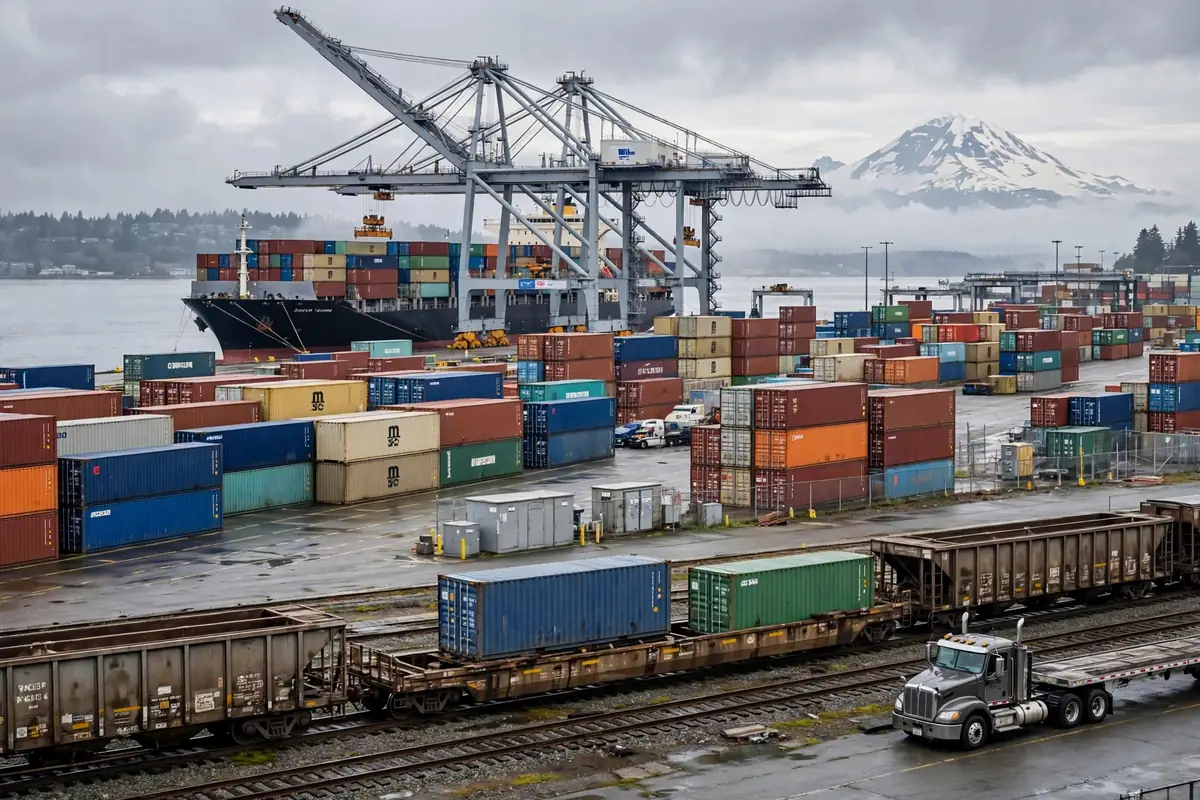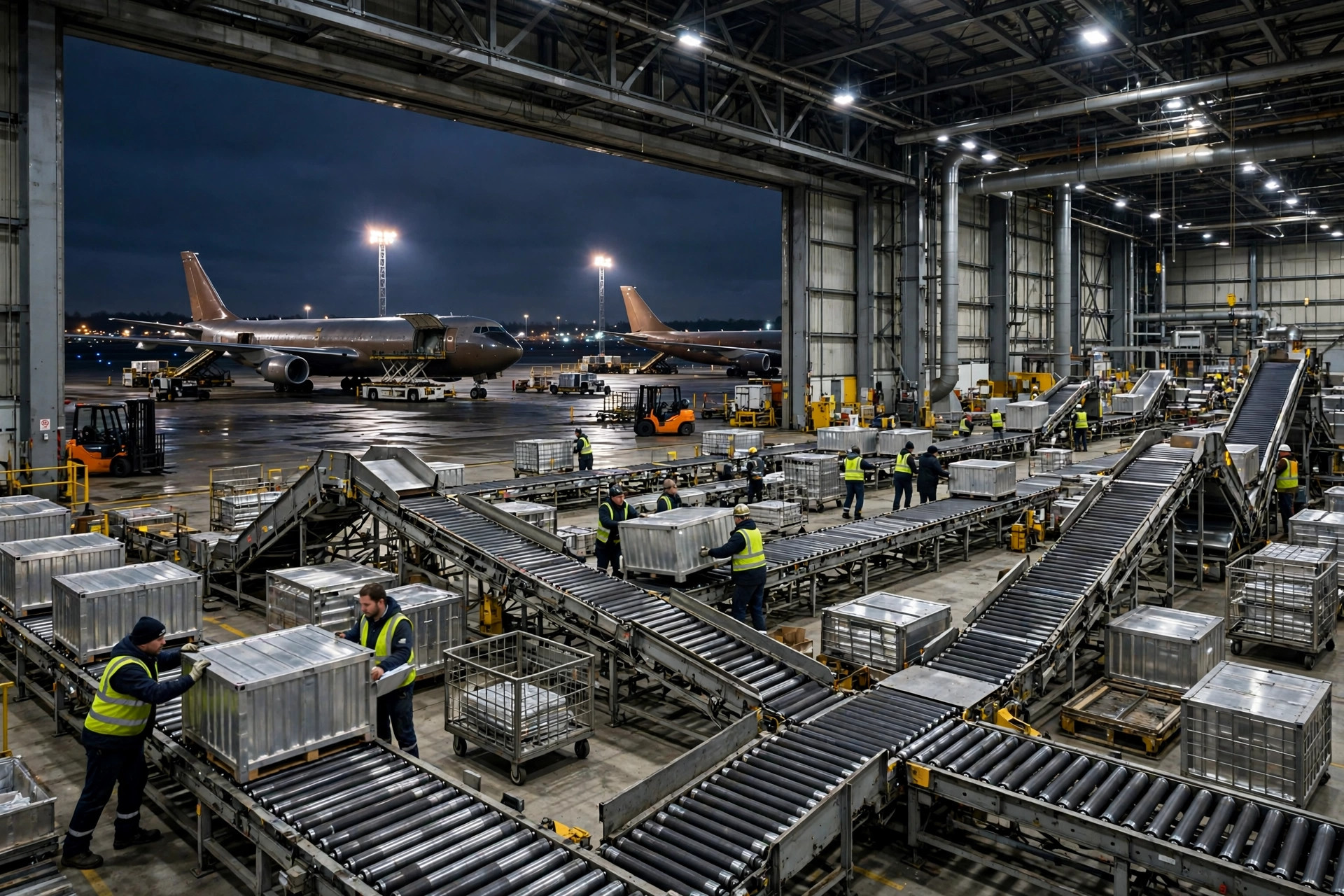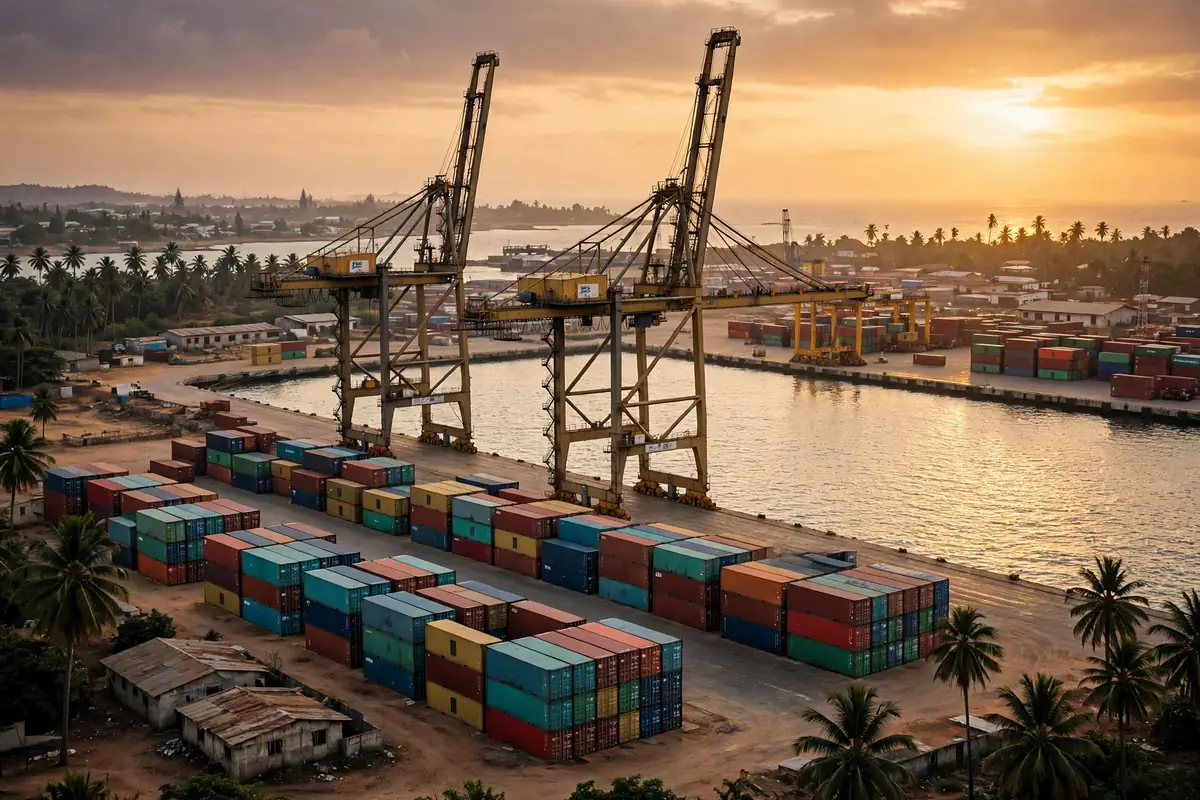
Tema Port is going through the sharpest capacity jump West Africa has seen in years — and its warehousing cost structure has not caught up.
On 13 November 2025, the MPS Terminal 3 container terminal was completed and commissioned. It is operated by a joint venture of the Ghana Ports and Harbours Authority, APM Terminals, and Africa Global Logistics. The scale deserves a careful look: 127 hectares, 1.4 kilometres of quay, four berths, 16 metres of water depth, and a $1.5 billion investment. Annual handling capacity jumped from 800,000 TEU to 3 million TEU, and the terminal can now receive vessels of 24,000 TEU. Public data shows the port handled 2.5 million TEU in 2026, with cargo volume up 22% year on year in the first quarter. On hardware, the story is complete: Tema is now a deep-water port capable of taking West African transshipment volumes.
But alongside the hardware numbers, another set of figures points to a structural contradiction. According to an assessment by the Ghana Shippers' Authority in September 2026, about 70% of containers through Tema are subject to full unstuffing inspection, while the World Customs Organization's recommended level is 10%. In other words, at the same time as throughput capacity nearly quadrupled, seven out of ten boxes are being opened, unstuffed, checked, and restuffed. That ratio is the key to understanding the real cost of warehouse logistics in Ghana.
How Tema Port built its 3 million TEU capacity
Start with the capacity side. The jump from 800,000 to 3 million TEU is an increase of nearly 275%. In April 2026 the terminal took delivery of 16 electric rubber-tyred gantry cranes, with three more ship-to-shore cranes still to be delivered. The electric cranes matter for more than emissions: they are quieter than diesel equipment, and their yard operations integrate more readily with the terminal operating system. Sixteen metres of water depth and 1.4 kilometres of quay mean Tema can berth several large container vessels at once, instead of transshipping ultra-large vessel cargo onto smaller feeders.
Regionally, the investment has a clear direction. West African container volumes have long depended on a handful of hub ports, and Tema's aim is to attract cargo that previously transshipped elsewhere. The 22% cargo growth in the first quarter of 2026 suggests that direction is working in the short term. Handling 2.5 million TEU in 2026 also means the terminal reached more than 80% of its design capacity within a year of opening — a faster ramp-up than most new terminals achieve.
The 70% inspection rate is what actually sets the cost of Tema Port warehouse logistics
The gap between capacity and cost, however, has a name: inspection.
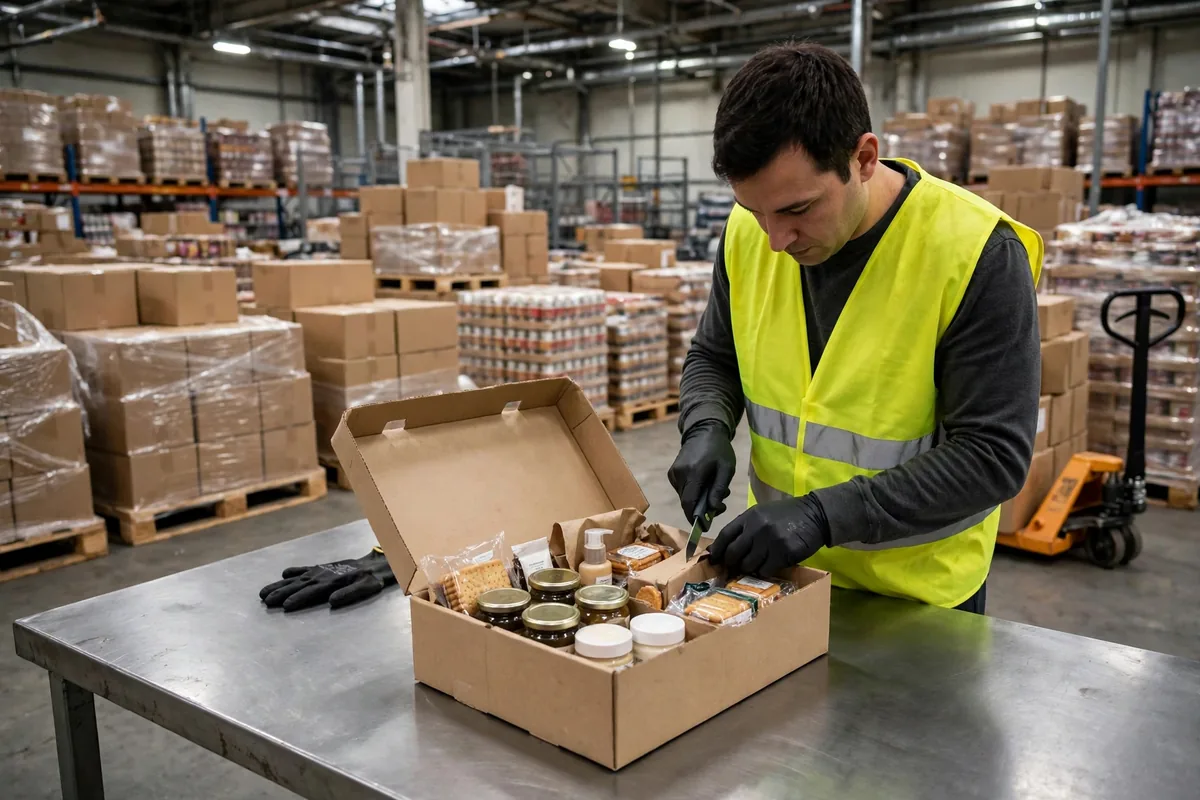
The Ghana Shippers' Authority puts full unstuffing inspection at about 70% of containers. The World Customs Organization's benchmark is 10%. The gap is 60 percentage points, which in practical terms means that six out of every ten boxes that would not need to be opened are being opened. A full unstuffing inspection is not a quick look inside: the box is moved from the stack to the inspection yard, unstuffed, checked, photographed, restuffed, and resealed. Every step takes labour and time. For the cargo owner, the cost shows up in three places: the inspection fee itself, the extra days the cargo sits in the port, and the risk of damage or shortage during unstuffing.
A simple comparison makes the point. Suppose the total port-side cost of a shipment has three parts: terminal handling, inspection fees, and dwell and storage charges. In a port where inspection runs at 10%, inspection and dwell are a minor share and terminal handling dominates. In Tema, where inspection runs at 70%, inspection and dwell carry far more weight, and the gains from faster terminal handling are partly eaten away by the inefficiency of the inspection stage. That is why cargo owners may not feel costs falling even after the hardware upgrade — the bottleneck has moved from "can the ship berth" to "can the box get out."
It is worth noting that a high inspection rate does not necessarily mean weak inspection capability. Customs inspection strategy is usually tied to risk management: the coarser the risk profiling, the wider the inspection net. A 70% rate suggests the current model still relies on broad coverage rather than data-driven targeting. The basis for that reading is that the World Customs Organization's 10% benchmark is itself built on a framework of risk management and selective inspection — inspecting less presupposes inspecting accurately.
Three judgements for warehouse planning in Ghana
From these numbers, three judgements follow for companies running warehousing and distribution in Ghana.
First, the siting logic for warehouses around the port is changing. As terminal capacity rises, demand for bonded and general warehousing near Tema will grow, but site selection has to factor in the location of the inspection yard and its working hours. A warehouse close to the inspection yard, able to respond quickly to unstuffing and restuffing, will turn cargo over measurably faster than a cheaper warehouse further away. A warehouse's value is not only its rent per square metre — it is also how many minutes' drive it is from the inspection yard.
Second, the return on upfront compliance investment is rising. When 70% of boxes are opened, the accuracy of the documentation becomes the most direct cost lever. A shipment with perfectly accurate descriptions, quantities, and values clears inspection far faster than one that needs repeated verification. Money spent on documentation and pre-declaration produces an outsized return in a high-inspection environment. That calculation is worth doing properly: doing compliance up front is cheaper than burning time in the inspection yard.
Third, transshipment cargo and local cargo should be planned separately. Transshipment cargo is the most time-sensitive, and a 70% inspection rate sharply raises the uncertainty of transit times. Local distribution cargo tolerates slower transit but is more sensitive to warehousing cost. Running both through one plan with one service promise concentrates the risk. The more sensible approach is a fast lane for transshipment cargo with inspection buffer time built in, and a cost-first conventional lane for local cargo.
One variable worth watching
The Tema story is far from over. The hardware is in place, and the 2026 volume growth has been delivered. The remaining variable is whether the inspection rate comes down. If Ghana Customs' risk management systems mature and the inspection rate moves from 70% toward 10%, Tema Port's overall competitiveness changes fundamentally — only then does 3 million TEU of capacity turn into a real cost advantage for cargo owners.
If, on the other hand, the inspection rate stays high for a long time, the inefficiency of the inspection stage will keep diluting the capacity gains. Shippers and shipping lines in West Africa will eventually vote with their feet: no matter how large a port's capacity, if boxes cannot get out, cargo will go around it. The observation window for this variable is probably the next one to two years of customs reform. For warehousing companies planning to enter the Ghana market, keeping the distribution plan flexible matters more than locking in long-term warehouse space before that variable becomes clear.
By Dr. Chen, Supply Chain Researcher