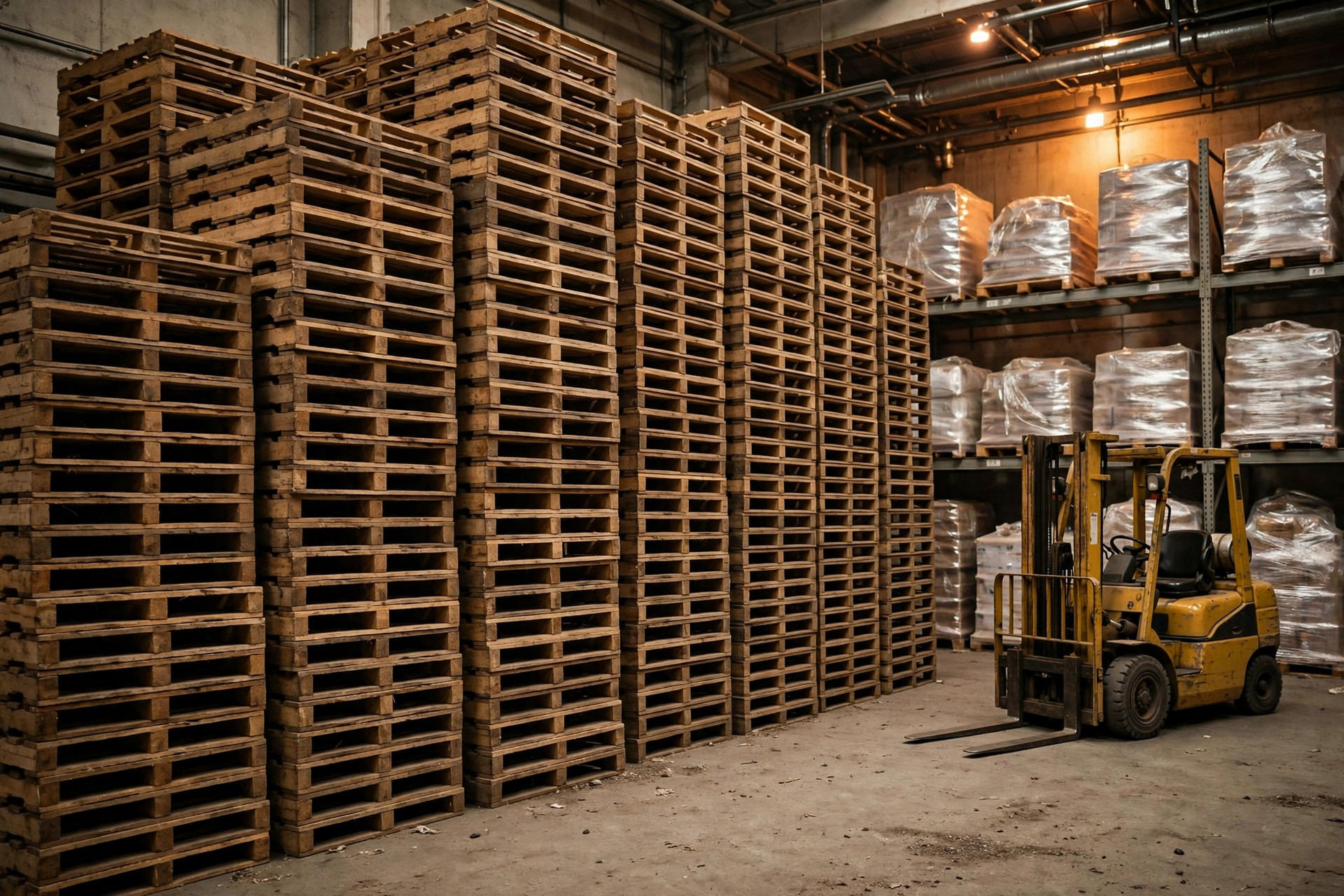
Start with the arithmetic of tariff frontloading. One 40-foot container, $80,000 of goods. If the tariff rate rises from 10% to 25%, that box costs $12,000 more in duty. Bring it in three months early and the extra storage and financing run to roughly $3,000. On that math alone, tariff frontloading looks like free money. But in the 2026 frontloading wave I have watched too many importers do the first sum and get killed by the second and third. (Illustrative example.)
Tariff frontloading: run three ledgers, not one
Whether tariff frontloading pays off cannot be judged from the duty column alone. It takes three ledgers. The first is the duty ledger: bring goods in early and you pocket the gap between the old rate and the new one — the wider the gap and the higher the value, the better it looks. The second is the storage ledger: goods that arrive three months early sit for three months, and pallet positions, labour and insurance are all billed by the month, with peak-season rents climbing on top. The third is the capital ledger: money paid three months early carries financing costs, loan interest and currency risk, and none of it shows up in the duty calculation.
| Ledger | What it counts | What gets missed |
|---|---|---|
| Duty | Rate gap × goods value | Rates change — check the official source, not the rumour |
| Storage | Extra months × pallets × rent per pallet | Peak-season rent hikes, expedited putaway fees, overstay charges |
| Capital | Goods value × cost of capital × months early | Loan interest, currency moves, markdown losses |
The most underestimated item sits at the tail of the third ledger: markdown losses. Goods that arrive early and don't sell are inventory, and inventory in January is a clearance sale waiting to happen. How much of the duty saved ends up paying the warehouse and the bank, and how much gets discounted away at clearance — that is the real total cost of tariff frontloading. There is also a small ledger people forget: insurance. Double the inventory value and the premium follows; three extra months in the building means three extra months of damage, moisture and loss exposure. The money is small. The claims argument is not.
The data gap: peak season arrived three months early
In August 2026, US container imports reached 2,603,709 TEU, up 3.8% on July and 3.3% year on year — the third-highest month on record, behind only May 2022 and July 2025. China-origin cargo was 884,318 TEU, 34% of the total. Those are Descartes' September Global Shipping Report figures. The National Retail Federation's Global Port Tracker put the same month at 2.3 million TEU, down 0.7% year on year — a gap of 300,000 TEU between two authoritative sources. Neither is wrong; the coverage differs. The NRF tracker covers 13 major ports; Descartes counts the whole country. Check the coverage before you quote the number. That is an old rule of mine.
A survey by STG Logistics of 500 US importers in March 2026 makes the picture sharper: 85.6% of shippers frontloaded inventory in response to tariff uncertainty; 52.3% successfully avoided higher duties; but 42.3% reported higher storage and holding costs and 43.7% reported working-capital strain. The survey doesn't break down how many of the shippers who dodged the duty ended up handing the savings to their warehouse and their bank — in the accounts I have worked through, the share is not small. The NRF's full-year forecast tells the same story from the other side: 25.8 million TEU for 2026, up only 1.4% on 2025. Total volume barely grew. It just arrived earlier. Peak season didn't get bigger. It moved three months forward. The NRF forecast also sketches the second half of peak season: September at 2.28 million TEU, up 8.2% year on year; October at 2.25 million, up 8.5%; November falling back to 2.0 million, down 1%. The curve is front-loaded — the goods are already in the country, and import volumes stop growing in the second half. For warehouses that means October onward is not about receiving new freight, it is about replenishment and repositioning, and the thing to measure shifts from intake capacity to turns inside the building.
The warehouse market data backs that up. CBRE's Q3 2026 industrial report put the US industrial vacancy rate at 6.4%, down 20 basis points year on year, with quarterly net absorption of 104.6 million square feet — the strongest quarter since Q4 2022. JLL's report for the same quarter had national industrial vacancy at 6.8%, asking rents up 3.2% year on year to $10.55 per square foot, and vacancy in Class A warehouses over one million square feet down from 9.5% to 5.4% in a year. Goods arrived early, the space got taken first, and rents followed. That is how the storage ledger in tariff frontloading gets inflated.
Tariff frontloading has three traps
The first trap is getting the timing wrong. A home-goods importer I worked with pulled everything scheduled for September forward to May 2026, and the freight sat in an Inland Empire warehouse for ten extra weeks. The duty was saved. But those ten weeks were billed at peak-season pallet rates, plus an expedited putaway fee, while the cash sat in stock doing nothing. The goods sold in peak season, but when we ran the full account, about half the duty saved had gone to rent and financing. Frontloading earlier is not frontloading better — every extra week in the warehouse is money.
The second trap is betting on the wrong product. A small electronics seller brought in six months of stock in one go early in the year to lock in the lower rate. Then the new model launched, the old one stopped moving, and January meant clearance pricing. Most of what the duty ledger had saved went straight back out through markdowns. Tariff frontloading is a bet that this model still sells at year-end. If that judgement is wrong, no duty saving rescues it.
The third trap is the quietest: planning around the de minimis exemption as a fallback. Duty-free treatment for shipments of $800 or less was suspended for all countries from August 29, 2025, and in June 2026 US Customs made the suspension indefinite; the statute behind the exemption is scheduled for repeal on July 1, 2027. Anyone still building a stocking plan on low-value parcels clearing duty-free has been caught out this year — check the official source for the current rules rather than last year's playbook.
Tariff frontloading pays off if and only if: duty saved > extra storage + financing cost + markdown losses. If any one of those three numbers is a guess, don't bet six months of stock on it in one move. Go in stages, keep a fallback, and re-run the numbers every month. Peak-season rhythm has changed. The stocking formula has to change with it.
By Lao Zhou, Logistics Cost Analyst