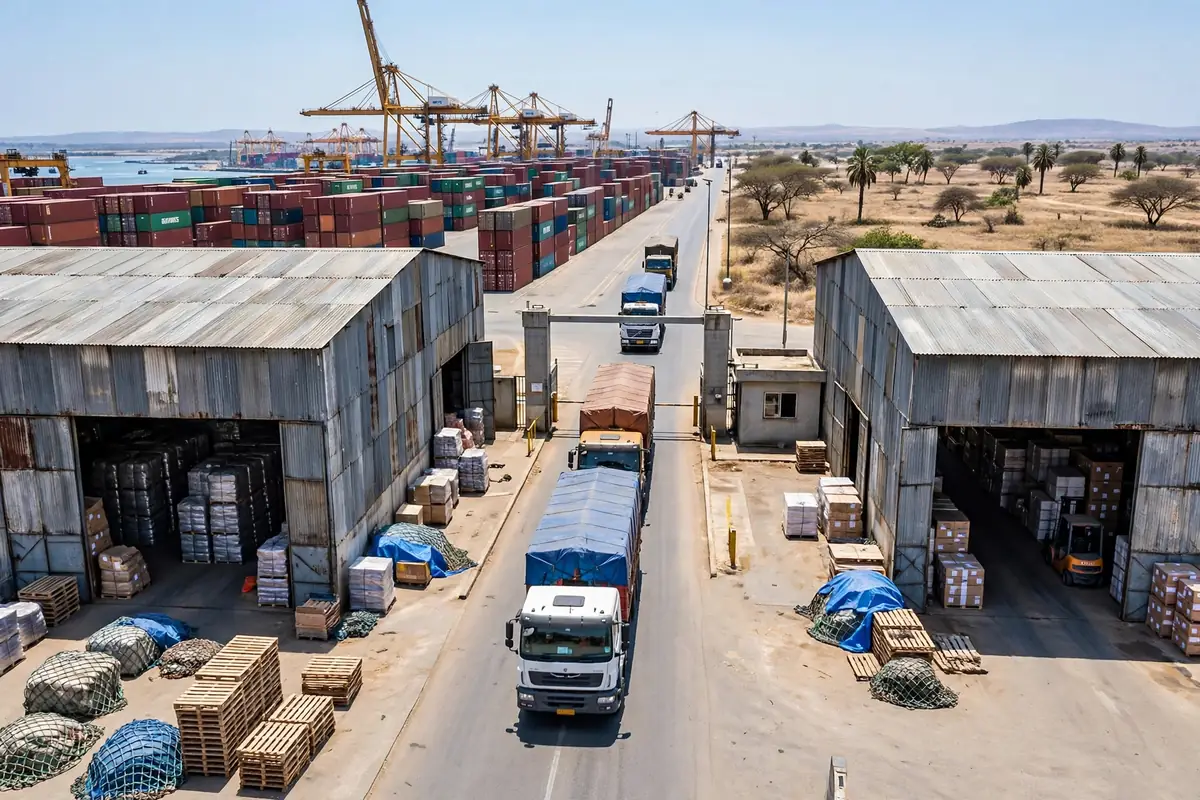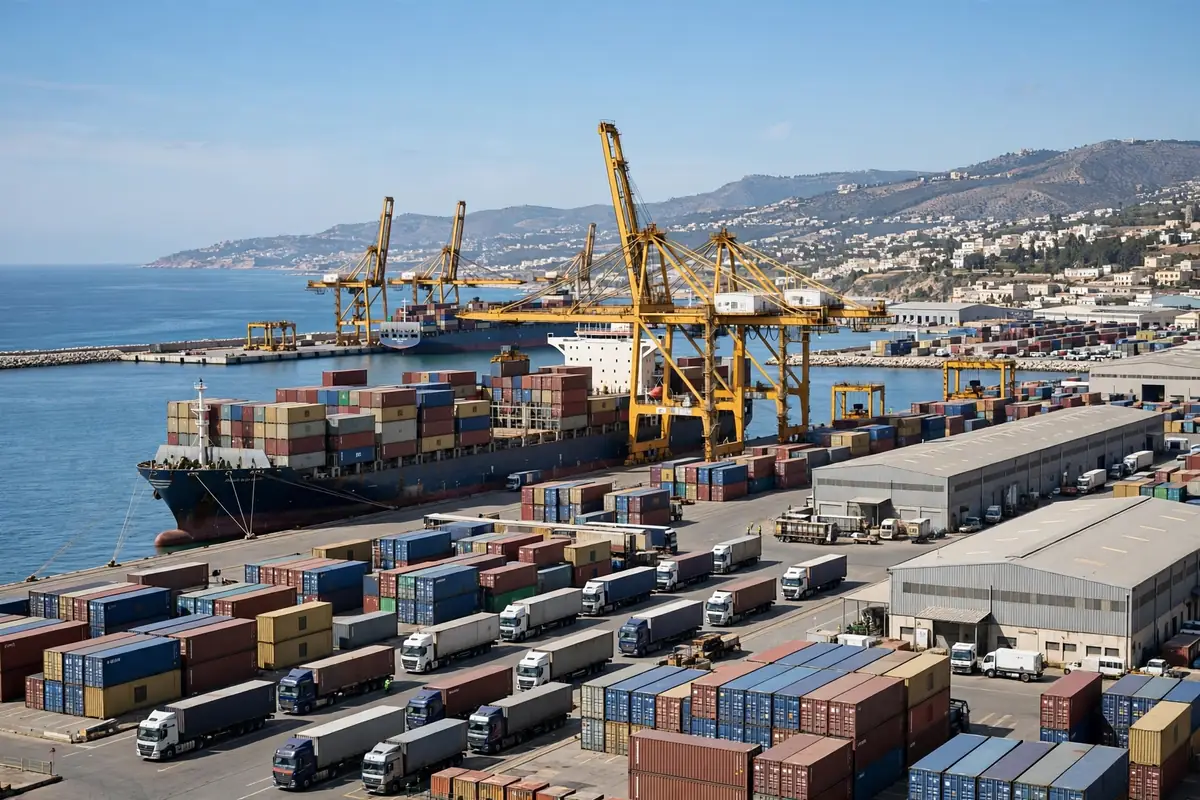
Let me tell you how I learned what tangier med morocco warehouse logistics really means. I was queued outside the port area after dark, sat-nav saying just a few kilometres to go, and the truck in front had not moved in an age. Box trucks heading for the terminal, others for bonded warehouses, others delivering parts to factories nearby — all of us funnelled into the same bottleneck. That night taught me the lesson I still use: in Tangier, the shelves inside the warehouse are the easy part. The hard part is joining up four things — port, warehouse, factory, and the short ferry hop to Europe — without one of them dropping the chain.
I have run trucks for fifteen years, and when I judge a place for warehousing I look at the road before I look at the rent. Tangier Med sits in northern Morocco, across the Strait of Gibraltar from Europe, with free zone and industrial land around the port and automotive and components factories in the wider area. That layout is plain to see and it is why so much cargo passes this way. I will not quote you a throughput figure from memory — check the port authority's latest published numbers if you need one. Drivers and shippers do not live on annual statistics. We live on whether a truck can get in, get loaded, and get out on time today.
Port-side vs inland: doing the tangier med road maths properly
The first thing most owners ask about a port-side warehouse is the rent, and the first instinct is to move inland and pocket the saving. I understand it. I also think it is the wrong maths if you only count rent. You have to count the road account and the warehouse account together.
A Chinese supplier of automotive wiring looms I hauled for a few years ago started exactly that way. Their buffer stock sat well inland because the space was cheaper. Every delivery then became a longer run, and every change of plan became a problem, because the goods, the truck, and the factory were never in the same place. One Friday afternoon the factory pulled its delivery window forward. The parts were still inland. A driver ran through the night and arrived the next morning, and the plant came uncomfortably close to waiting on material. After that, the supplier changed the split: fast-moving parts moved close to the port area, slow movers stayed inland. The emergency night runs mostly disappeared.
That is the trade-off, and there is no perfect answer. Port-side costs more and good space is tight, but you gain short hauls to the terminal and to free zone factories, and you can react the same day when a plan changes. Inland is cheaper and easier to expand, but every extra leg adds a traffic risk, a missed appointment risk, and a driver waiting on somebody else's paperwork.
| Factor | Port-side warehouse | Inland warehouse |
|---|---|---|
| Rent | Higher, good sites are scarce | Lower, more choice of size |
| Time to port and factory | Short shuttle, easy same-day changes | Longer haul, more exposed to road delays |
| Best for | Fast movers, sailing deadlines, factory supply | Slow movers, bulky stock, no hard deadline |
| Hidden trap | Looks expensive if you only see rent | Looks cheap if you forget waiting and rebooking |
My rule is simple: fast freight lives near the port, slow freight lives inland. Put everything in one place and you will either overpay on rent or under-deliver on time.
When I walk a new site, I check four things. Can a truck get in and out cleanly, with a second route when the port roads clog up? How far is it, in a loaded truck, from the factories you actually serve? Can the warehouse handle a late arrival that still needs sorting for an early dispatch? And who owns appointments and paperwork? If nobody owns the conversation with the terminal and the factory, it lands on the driver at the gate — where it always goes wrong.
A short sea crossing, a long chain: morocco warehouse logistics is about connections
Tangier's great advantage is how close Europe is. A short ferry crossing over the strait connects you to the European road network on the other side. That closeness is real, but do not mistake geography for a guarantee. I once hauled a load of Moroccan-made textiles bound for Europe through Tangier. The cargo was straightforward, the loading was tidy, and we still lost the planned connection because the warehouse release paperwork came out late and the details did not line up when the truck reached the gate. We waited half a day and took the next sailing. The shipper was on the phone asking if I could somehow jump the queue. I told him the truth: the strait may be narrow, but if the documents do not match, no driver can drive his way out of it.
So build your timetable backwards. Fix the sailing or the factory window first, then set the warehouse cut-off earlier than feels necessary, then set the picking and loading times earlier still. Drivers do not fear distance. We fear arriving somewhere and discovering we are waiting on a document, a booking, or a release that somebody thought was somebody else's job. Waiting time is fuel burned going nowhere and a driver's legal hours spent standing still — and once those hours are gone, tomorrow's job is compromised too.
The same discipline applies when cargo is landing. Clearance, collection, warehousing, and onward distribution have to be choreographed in advance. I have seen a good shipment lose a day because a collection document went in half a day late, the receiving slot was lost, and the truck had to rebook and queue again. The factory still waited, and the shipper still paid for an urgent replacement vehicle. That is why I tell shippers on this corridor to have a local person who can actually go and sort things out. A tracking screen in another time zone will tell you everything is normal right up until the gate tells you it is not.
For Chinese suppliers feeding factories in Morocco, my advice is to forget the big-batch rhythm you may be used to at home. Plants here tend to call off stock in smaller, more frequent lots, and windows move. Hold a working safety quantity of your fast movers near the port, keep the slower lines inland, and replenish the front stock steadily. Yes, that ties up a little more inventory and a little more rent. Weigh it against a line stoppage or a broken promise to a factory customer. In tangier med morocco warehouse logistics, the cheapest-looking plan is often the one that never priced a single day of disruption.
On paperwork, I will keep it plain, because this is where I see the same wound opened again and again. The documents must travel ahead of the freight. Product names, piece counts, weights, and marks on the warehouse paperwork must be exactly the numbers on the customs paperwork — not roughly, exactly. And book your slots. Terminals and large factories work to receiving and gate windows; turn up unbooked and you queue, and if the window closes you queue again tomorrow, with a driver who has spent a night in the cab and a schedule that is now wrong for the rest of the week. Put one named person in charge of bookings and documents. Do not leave it to the driver to negotiate three organisations from a cab window.
If you are setting up here for the first time, do not start by signing for a big warehouse and filling it. Run one full loop small: cargo in through the port, into the warehouse, out to a factory, and another load out across the water to Europe. Ride the loop yourself, or have someone you trust ride it, and note exactly where it snags. Then decide your split between port-side and inland with evidence instead of hope. tangier med morocco warehouse logistics rewards the shipper who buys a little extra time at every handover. As we say on the road, smooth roads make smooth freight — and smooth roads are mostly just preparation you did yesterday.
By Shifu Zhao, Trucking Veteran (15 yrs)