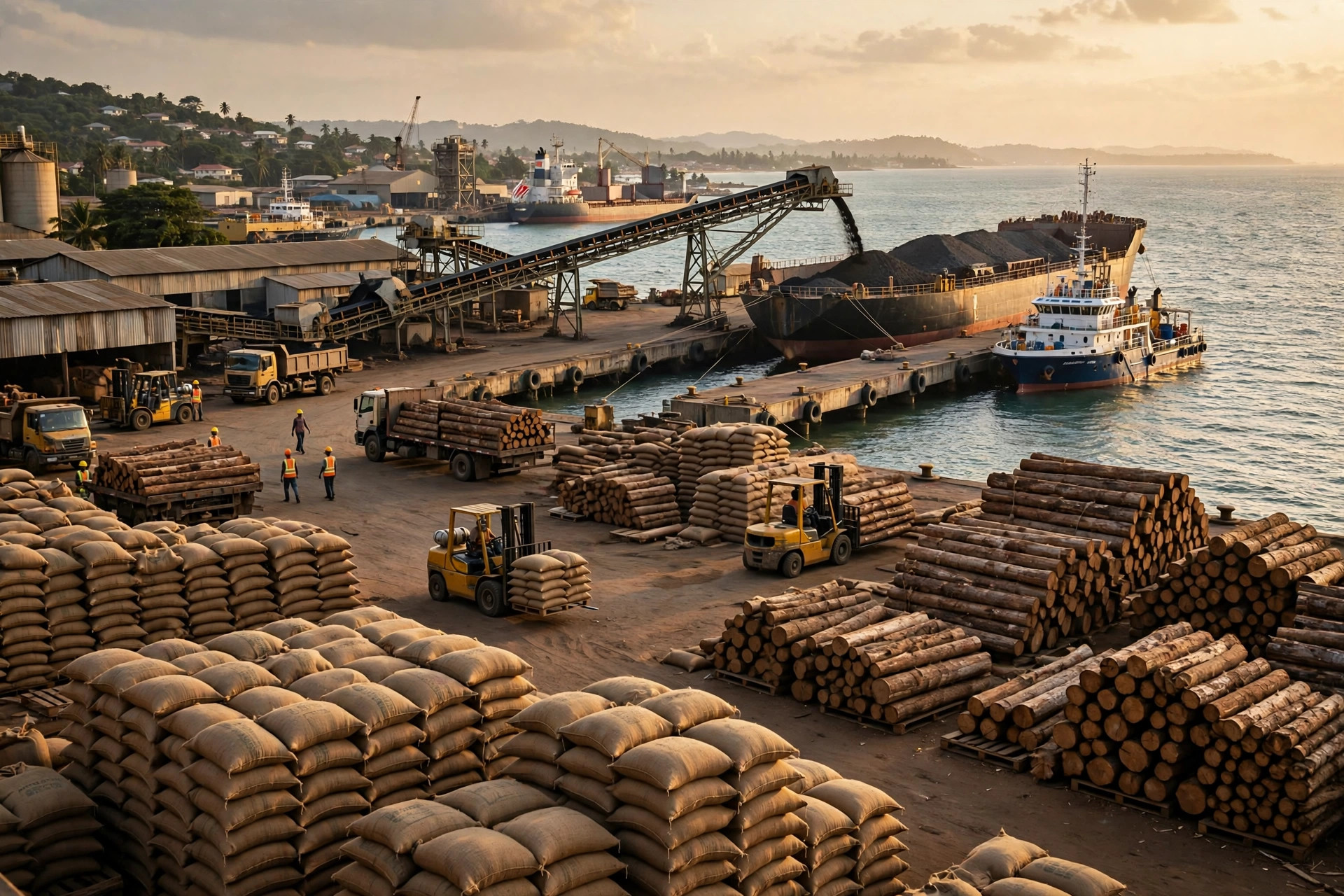
We have a client who exports cocoa, with buying stations in western Ghana. Before he signed with us last year, he asked me one question: "Susan, for Takoradi, should my cargo sit in a warehouse by the port, or should I send it straight to Tema?" I didn't answer directly. I asked him back: is your cargo cocoa, or manganese? He paused. And that question is exactly where the Takoradi Ghana port warehouse logistics story starts.
What kind of port is Takoradi: cocoa, manganese, and oil services sharing one harbour
Takoradi sits on Ghana's western coast, one of the country's two main seaports — the other is Tema. It was born as a raw-materials export port: cocoa, timber, bauxite, manganese have left through it for a century. The Ghana Ports and Harbours Authority's own figures tell the story: in 2024, Takoradi handled 77.4% of Ghana's seaborne exports. In 2025, the port handled 11.17 million tonnes of cargo, 36% of Ghana's total seaborne trade, of which 7.74 million tonnes were exports. This is an export port, built to move things out.
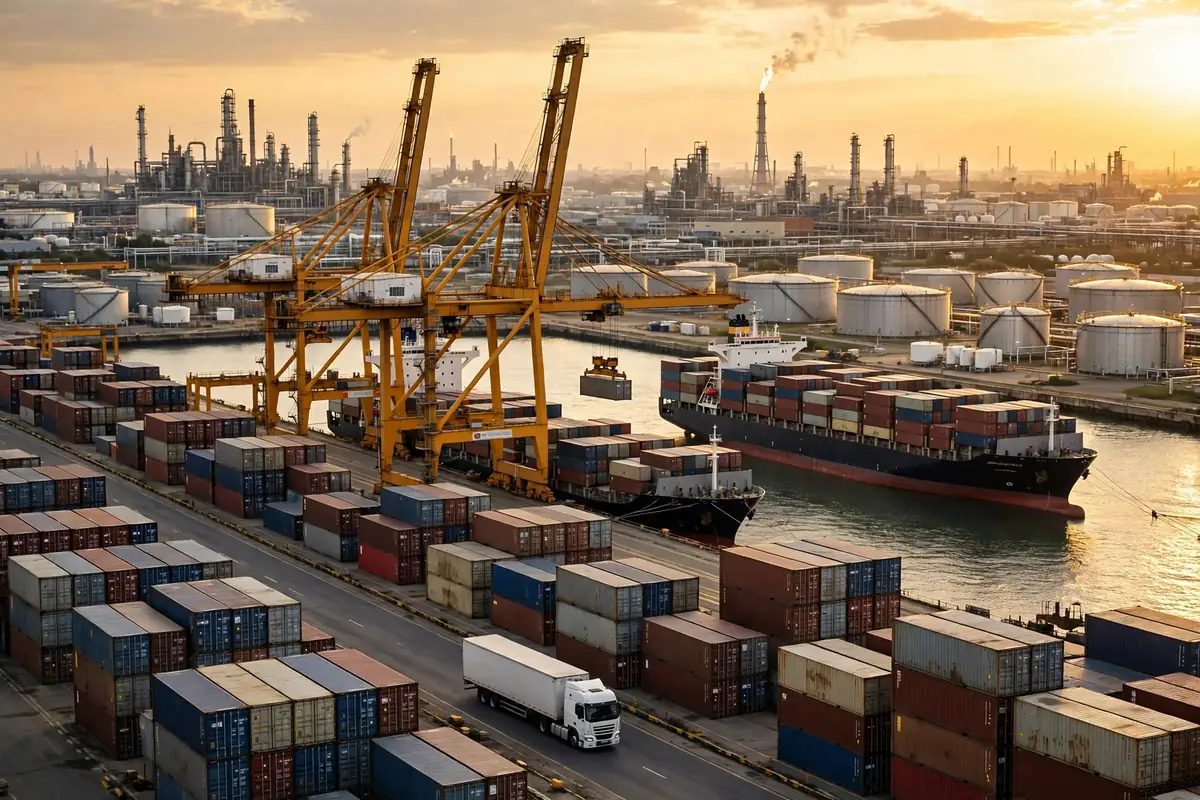
But the port has changed fast in recent years. After oil was discovered offshore in 2007, Takoradi became the closest logistics base to the Jubilee and TEN oil fields. The numbers are striking: vessel calls rose from 485 in 2003 to 1,098 in 2020, and offshore supply vessels went from 11% of all calls to 60% by 2019. In other words, more than half the ships calling at this port were running logistics for offshore oil. At the same time, the dry bulk terminal was transformed: a 600-metre quay, a $475 million public-private project, a conveyor system rated at 2,500 tonnes an hour, billed as the deepest dry bulk terminal in West Africa, with the first phase in operation since September 2024.
Clients often make one mistake: measuring Takoradi with Tema's ruler. Tema is the container port. Takoradi is a bulk port plus an oil-services base. Measure it with the wrong ruler, and the contract is wrong from the first line.
We have a client: a cocoa exporter's warehouse, stuck on the bulk vessel schedule
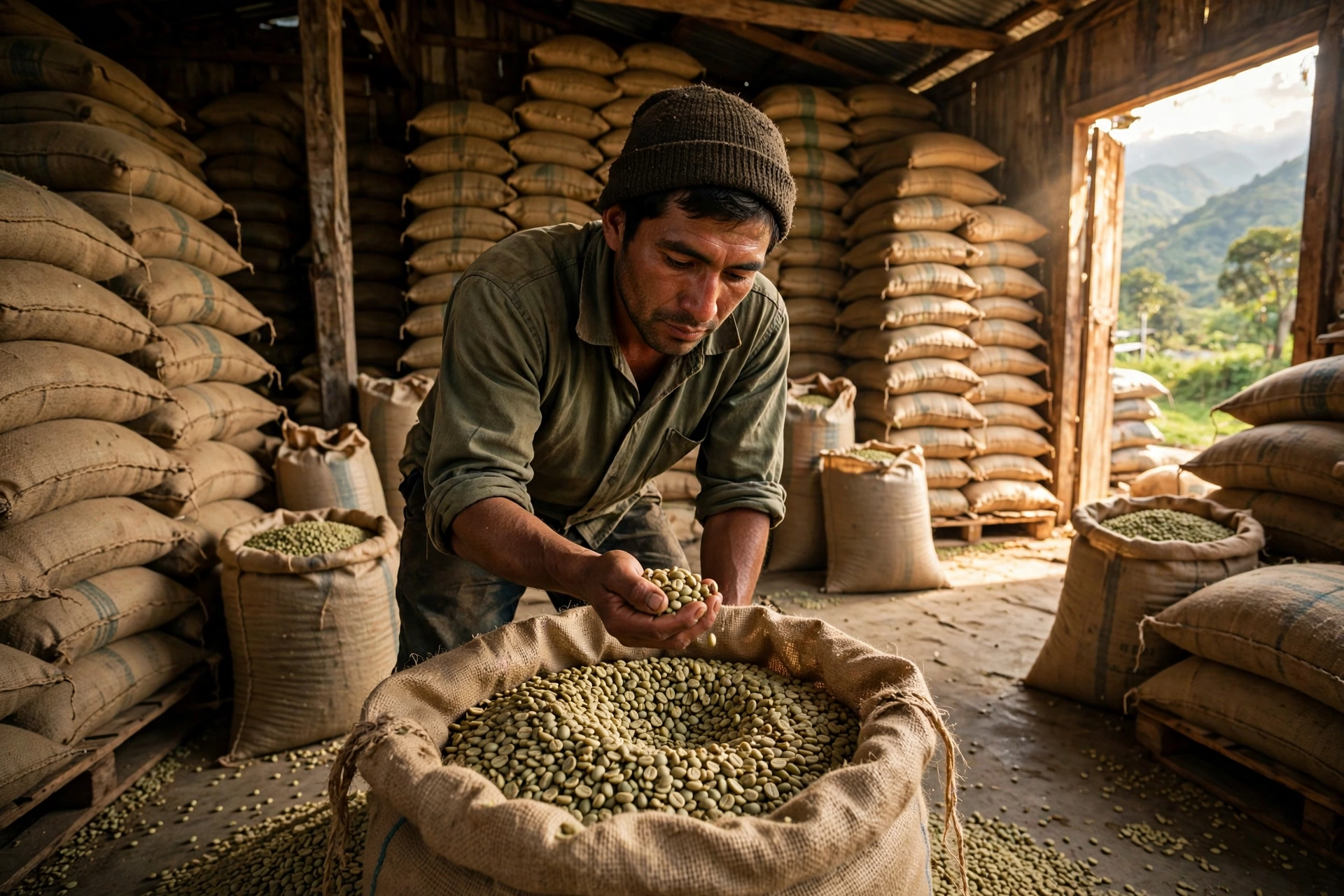
Back to that cocoa client. His beans move through Takoradi every year: collected at inland buying stations, consolidated into full loads at an inland warehouse, then trucked to a port-side warehouse to wait for the vessel. The problem came in the second half of 2024. With the first phase of the dry bulk terminal in operation, manganese and bauxite vessels multiplied, and the whole rhythm of the port-side operation started following the bulk vessel schedule. His cocoa sat in the port-side warehouse for two extra days, the sailing changed, and the next vessel's space had to be renegotiated.
The lesson is practical: in Takoradi, you don't negotiate a warehouse, you negotiate a vessel schedule. When the bulk schedule shifts, the yard, the gate, and the stevedoring gangs all shift with it. Your cargo waits in the warehouse for the ship, the ship waits for a berth, and the berth waits for the previous ship to leave. The contract has to spell out what happens when the schedule slips: beyond how many days of delay, how is storage charged, and who pays the rebooking cost?
There is another detail: cocoa and manganese sharing one port area. The biggest risk isn't competing for berths — it's cross-contamination. Dust, damp, and odours: any of them on cocoa beans, and the whole lot drops a grade. When you pick a port-side warehouse, look first at how far it is from the bulk yard and how its ventilation and damp-proofing work, not at the price per square metre. The cheapest warehouse is the most expensive one when something goes wrong.
Our timber clients face the same logic. Takoradi has always been a timber export port, and sawn timber hates damp, sun, and knocks — its yard management is a completely different discipline from cocoa. We had a sawn-timber client who rented the cheapest warehouse he could find, right next to the bulk yard. One heavy rainstorm in the wet season, the roof leaked, and the bottom two layers of boards were soaked. What he paid in claims would have rented a good warehouse for three years. In 3PL receiving, the words "warehouse condition" have to be checked with your own eyes before they go into the contract. Photos and rate sheets are no substitute.
Takoradi Ghana port warehouse logistics: three warehouses, three fates
Before you take the cargo, do the math. In Takoradi Ghana port warehouse logistics, the bill isn't just warehouse rent — you have to price in the vessel schedule, the inland haul, rebooking, and cargo-damage risk together. The table below is an illustrative scenario, with figures shown as examples; actual rates should be checked against the latest published tariffs from the port and warehouse operators.
| Option | Best for | Advantage | Risk |
|---|---|---|---|
| Takoradi port-side warehouse | Cocoa, timber, manganese and other export bulk and breakbulk | Closest to the berth, fastest connection to the vessel | Heavily exposed to bulk schedule swings, tight space in peak season |
| Tema distribution warehouse | Container cargo, cargo needing consolidation and distribution | More container sailings, flexible distribution | An extra inland haul inside Ghana, adding cost and time |
| Inland warehouse | Buying, primary processing, consolidation | Cheap rent, close to origin | Far from the port, so a schedule change means a rush to the gate |
Here is the counterintuitive judgement: many clients think "the closer the warehouse to the port, the better." In Takoradi, that is only half true. If your cargo is manganese or bauxite, the port-side warehouse is everything — the closer to the berth, the better. If your cargo is cocoa, which fears contamination and damp, the port-side warehouse has to be chosen for position and condition, and a warehouse next to the bulk yard is not worth taking at any price. A warehouse isn't better for being closer. It's better for being right.
The three traps hiding in the contract
Takoradi is in the middle of a building boom, and that is both an opportunity and a contract trap. The Ghana Ports and Harbours Authority has just launched two projects: Berth 19, a $98.41 million, 300-metre quay able to take vessels of up to 75,000 deadweight tonnes, with a 26-month construction period; and a $137 million ship repair yard, an 18-month build under a 25-year concession. The harbour has already been dredged to about 16 metres deep, from roughly 8 metres before, so bigger ships can now call.
The construction period has to be written into the contract, in plain language. First, will construction affect your berth and yard access? Put it in the contract, not in a verbal promise. Second, who carries the cost when bulk schedules slip: if the vessel is three days late, who pays the storage? Third, the priority of oil-field supply vessels: supply vessels once made up 60% of all calls, and in peak season your bulk carrier and the supply boats are competing for the same berths — what are the queuing rules? If you don't ask these three things before signing, you will spend the execution phase arguing about them.
We also have an oil-services client renting a bonded warehouse by the port, supplying spares and consumables to offshore platforms. His logic is the exact opposite of the cocoa client's: supply vessels sail when they sail, so the warehouse has to be able to dispatch 24 hours a day, as close to the quay as possible, and he will pay extra for that. One port, two clients, two warehouses, two contracts. In 3PL receiving, the game isn't warehouse square footage. It's whether you understand the client's vessel schedule and operating rhythm.
The oil-services growth is real. Vessel calls reached 1,098 in 2020, more than double the 485 of 2003, and most of that growth was supply boats running logistics for the oil fields. Oil-field service companies want "on call" — the warehouse contract has to spell out night and holiday dispatch response times. Leave that vague, and one night the phone rings, your team is asleep, and the client's vessel has already sailed.
Next time you negotiate a contract, remember to ask these three questions: first, when my cargo waits in the port-side warehouse and the schedule changes, how is storage charged? Second, how far is the warehouse from the bulk yard, and how does it handle damp and contamination? Third, during construction and the supply-vessel peak, is my berth and yard access guaranteed? Ask those three, and the other side will know they're dealing with a professional — and the padding on the quotation tends to shrink on its own. Takoradi is a port where the opportunity is real and the traps are real too. The difference is whether you asked the right questions before you signed.
By Susan, 3PL Sales Director