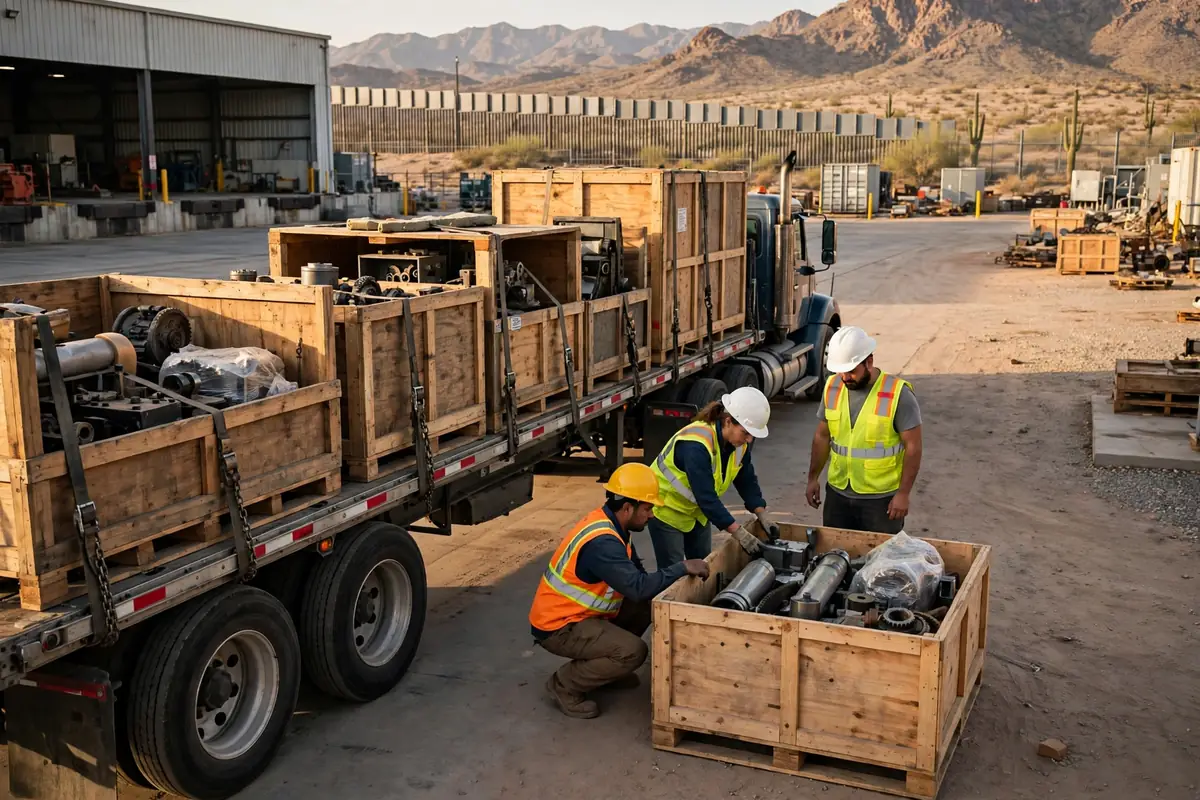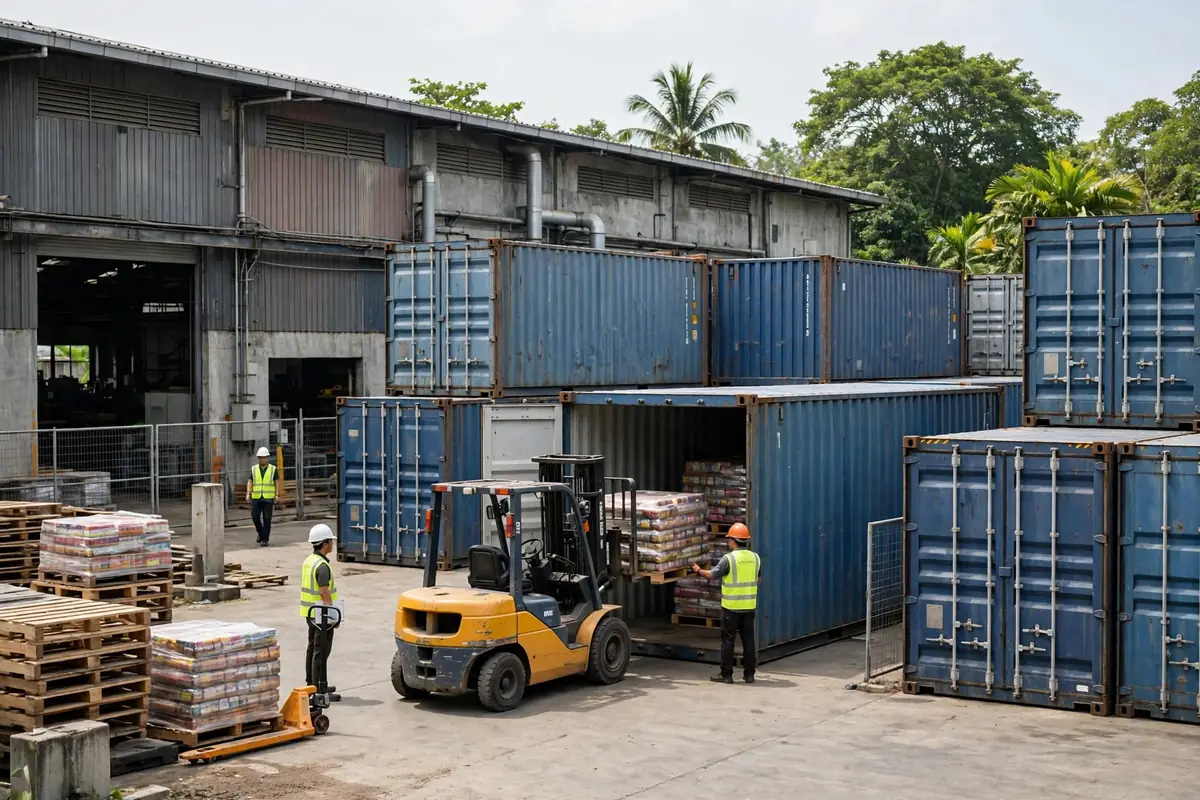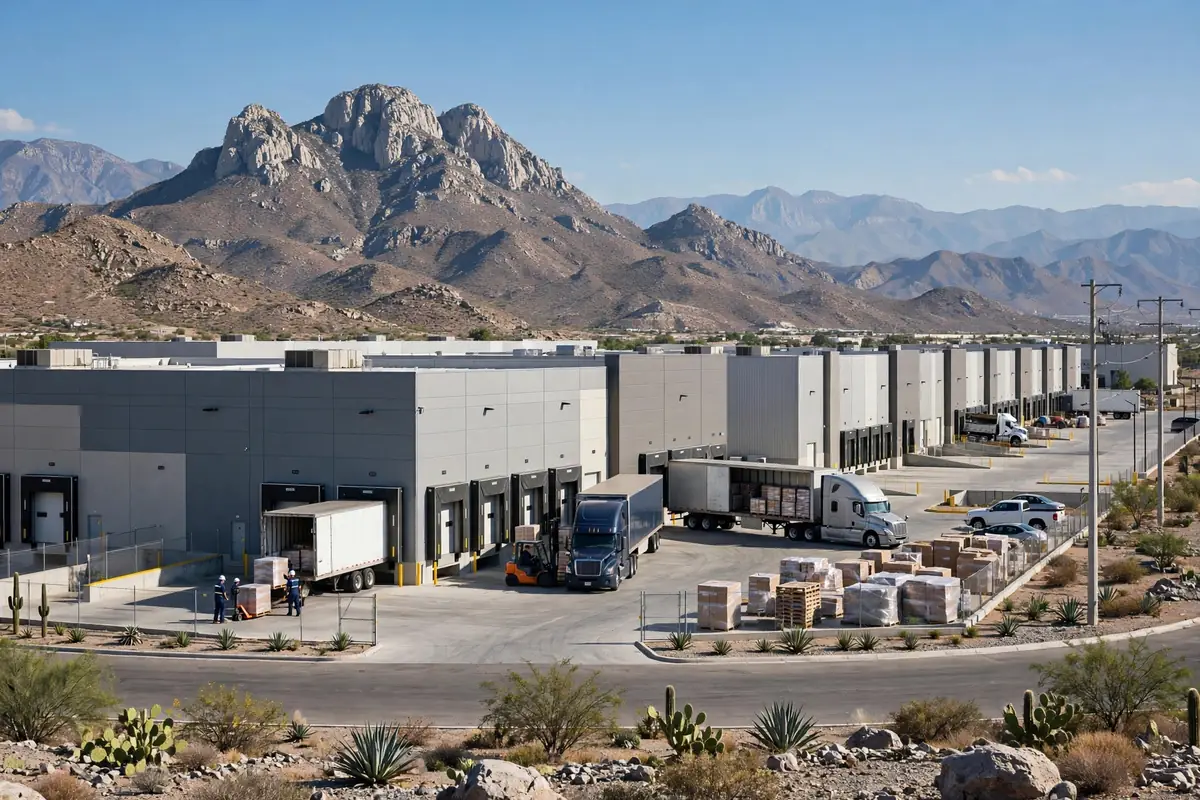
The dock doors in Apodaca were already rolling up before sunrise. That is the first thing you need to know about Monterrey, Mexico, nearshoring warehouse logistics: the work starts early, and the phone calls start even earlier. Lately every other call starts the same way — "Chen, is there still warehouse space in Monterrey?" Let me be straight with you. Yes, there is space. But not the kind of space people imagine when they hear the word "nearshoring."
Here is the geography, because everything else follows from it. Monterrey sits about 140 miles south of the Laredo–Nuevo Laredo crossing, the largest commercial land port in the United States by trade value.
Monterrey Mexico Nearshoring Warehouse Logistics: Read the Vacancy and the Rent First
Do not listen to the conference panels. Listen to the numbers. At the end of 2025, Monterrey's industrial stock stood at roughly 120.5 million square feet, with vacancy at 7.5%. Put it next to the historic low of about 2.5% in 2022 and the picture changes. Vacancy climbed from 2.5% to 7.5%, which tells you two things: new warehouses got built, and the wildest scramble for space is over. This is no longer a year when money cannot buy a lease. It is a year when you can lease, but you have to choose carefully.
Rent tells the same story. Average rent runs about $6.66 per square meter per month, still above the roughly $4.10 level from before the nearshoring boom. Industrial rents in Mexico have risen about 50% in five years. Let me be straight: anyone who goes to Monterrey expecting "cheap Mexico" will get a shock when they see the quote. Cheap is relative. Compared with before the boom, it is not cheap. Compared with the United States, the math can still work — but you have to do that math honestly.
Let me give you a scene from the floor. In 2025 an auto parts customer came to us wanting a Monterrey warehouse to serve assembly plants in the United States. Automotive takes about 25% of leased space, and manufacturing as a whole takes 52%, so the customer figured everyone was already there and he had to be too. We walked Apodaca and Santa Catarina with him. Space was available. The docks and the clear height were fine, and the rent landed near the average. But he did not sign in a hurry. Keep reading and you will see why.
Here is another number that explains a lot: in 2025, about 70% of new industrial activity came from expansions by companies already operating locally. The growth in Monterrey Mexico nearshoring warehouse logistics is mostly incumbents adding space, not newcomers arriving. Incumbents expand because they already have people, suppliers, and customs brokers in place. A newcomer pays tuition in the first year, and that tuition is not small. From 2022 to 2025, Nuevo León attracted record foreign investment, ranking among the top two states in Mexico. From 2021 to 2024, Monterrey took about 22% of all nearshoring investment in Mexico. The money really did arrive. But money arriving does not mean every newcomer makes money right away.
Power Is the Real Bottleneck in Monterrey Nearshoring Warehousing
So what stopped that auto parts customer? Power. Energy supply is the biggest operating bottleneck in Monterrey, and a high-voltage connection can take 12 to 24 months to wait for. This is not a queue you can buy your way out of. You can sign the lease, bring the equipment in, and then sit there waiting for power while the rent keeps running and the orders do not wait.
This is where warehouse projects flip over in real life. Plenty of people budget for rent and labor and forget to budget for the time it takes to get power. Our rule in the warehouse is simple and a bit old-fashioned: ask about power before you look at the building. How long is the wait for a high-voltage connection? Is there a written schedule? Is there an interim solution? Get it in the contract before you argue about rent. If power is not settled, a cheap rent is worth nothing.
Here is a second scene, also from 2025. A customer found a warehouse in Escobedo that he liked on every front. Before signing, we sat him down with the local power and municipal contacts and went through it line by line. The high-voltage connection fell squarely into that 12-to-24-month wait. He changed his mind on the spot and took a smaller warehouse with power already in place as a bridge, planning to move into the bigger building once the power queue cleared. A warehouse that can move freight beats a big warehouse that cannot.
How We Do It in Our Warehouse Now
Here is the checklist we actually use internally for Monterrey Mexico nearshoring warehouse logistics. Take it and walk through it before you sign anything:
| Check | How we see it |
|---|---|
| Distance to the border | Monterrey is about 140 miles south of the Laredo–Nuevo Laredo crossing. Trucks heading north are the advantage — but count the border queue and customs clearance time, not just the miles |
| Vacancy | About 7.5% at the end of 2025, looser than the roughly 2.5% low of 2022. You can choose now, but good locations are still tight |
| Rent | Average about $6.66 per square meter per month, above the pre-boom level of about $4.10. Do the math against US alternatives, not against "cheap" |
| Who is expanding | About 70% of new industrial activity in 2025 was incumbents expanding. A newcomer should look for a partnership with an incumbent first, not go it alone |
| Industry mix | Automotive is about 25% of leased space and manufacturing is 52% overall. Whether your customers sit inside that circle decides how easy hiring and suppliers will be |
| Power | A high-voltage connection takes 12 to 24 months. Get the schedule in writing before you commit to anything else |
| Submarkets | The core four are Apodaca, Santa Catarina, Escobedo, and García. Start inside those four and do not chase cheap land far outside them |
There is a counterintuitive judgment in that table, and plenty of people do not want to hear it: the nearshoring heat in Monterrey is real, but the biggest winners so far are the companies that were already there. About 22% of Mexico's nearshoring investment from 2021 to 2024 landed in Monterrey, and Nuevo León's foreign investment from 2022 to 2025 set records. Those numbers are real. But for a newcomer, the real barriers are not rent. They are power, people, and local relationships. Having veteran staff train the new hires matters more in Monterrey than anywhere else. Hire a room full of rookies with nobody to lead them, and one peak season will drag the whole warehouse's morale down. Equipment and systems can be bought. A proven local crew cannot.
So here is my conclusion, in one line: Monterrey is worth going to, but do not go there hunting for a bargain. Run the numbers against US costs, plan power on a 12-to-24-month horizon, and look for a partnership first. Start with a smaller warehouse as a bridge, then move into the big one. The heat is real. What is hollow is the idea that you rent a warehouse and the orders just show up.
One more thing from the floor: people are harder to find than space. Monterrey's manufacturing circle is only so big. Automotive is about 25% of leased space and manufacturing is 52% overall, so everyone is hiring from the same pool of experienced forklift drivers and customs paperwork staff. Our way is to lock in one veteran who can run a shift, build the roster around that person, and then bring in new hires under them. Veterans train the rookies, someone experienced watches the night shift, and the error rate stays down. Do it the other way around — fill the building with new hires and then go looking for a shift leader — and the roster is a piece of paper by the time peak season hits. That is also why I tell newcomers to partner with an incumbent first: what you are buying in a partnership is not just space, it is a crew that already works together.
A last reminder for fellow operators: before you go to Monterrey, write three things down — do you have the power schedule in hand, is your customs partner at the border settled, and where does your first batch of veteran staff come from? If any one of those three is not settled, do not rush into a long lease. Warehouse space can wait. Power and people cannot.
By Chen Feng, Warehouse Operations Manager