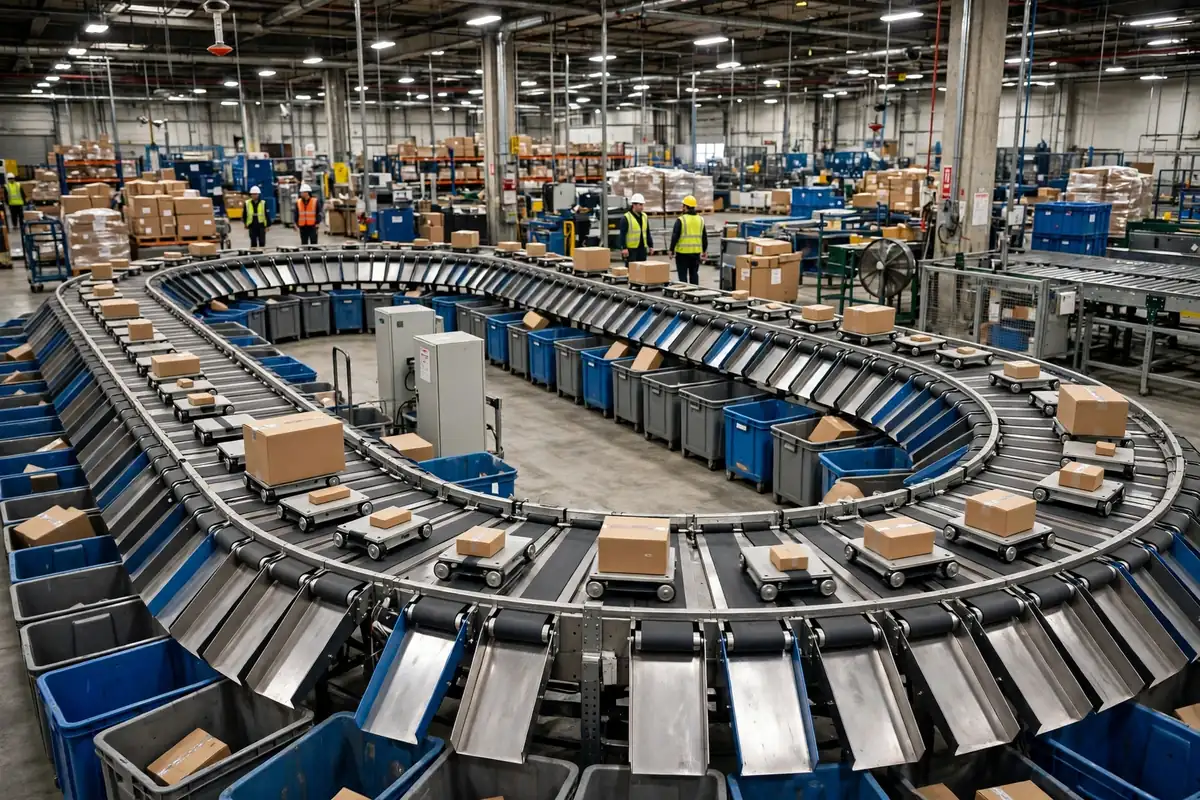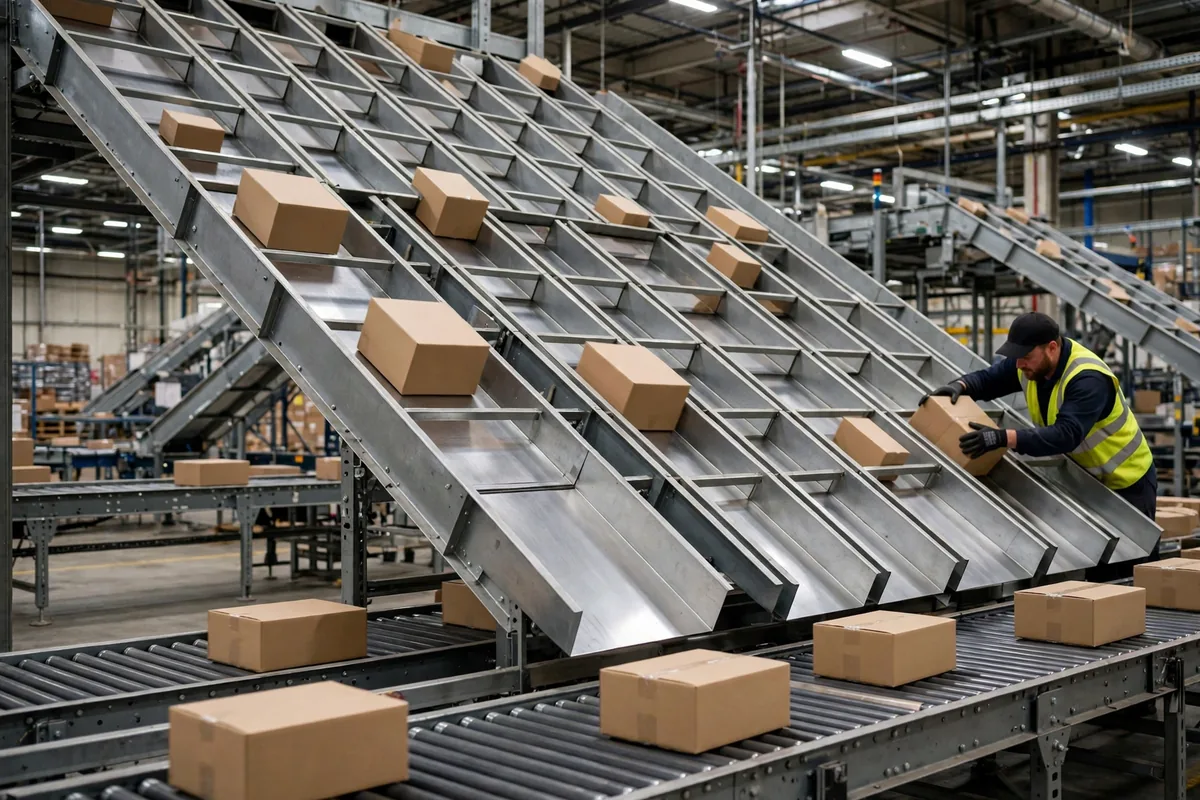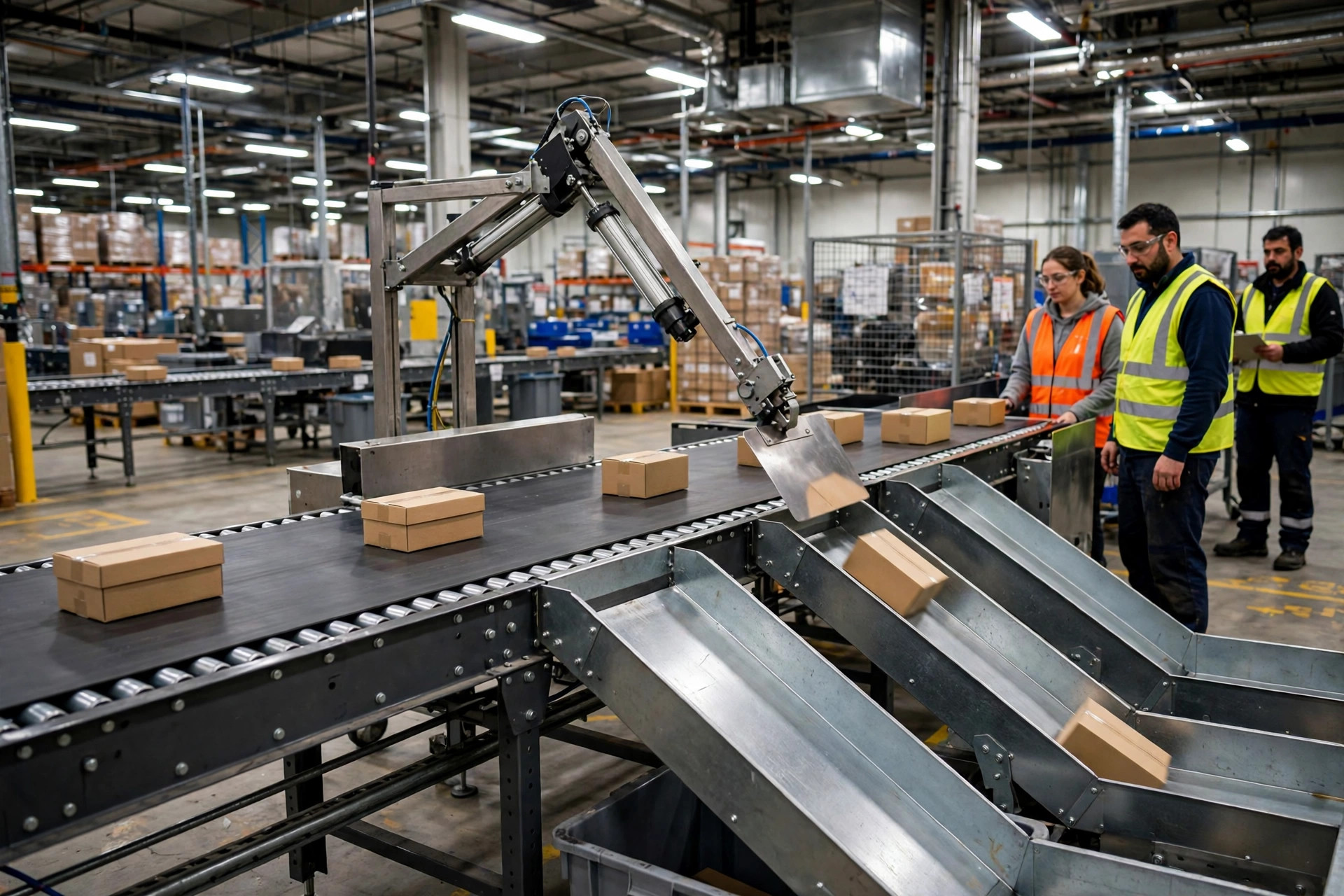
A swing arm sorter is easy to explain in one sentence: parcels run along a belt, and when one reaches its destination chute, an arm swings out and pushes it off into that chute. Think of it as a conveyor that has grown a row of hands, each hand responsible for exactly one destination. It has no independent drive car for every parcel the way a cross-belt does, and it does not rely on friction shoes the way a sliding-shoe sorter does. That simpler structure is why it costs less, and why small parcel warehouses keep buying it. But simple structure does not mean forgiving operation. Belt speed, arm timing, and parcel spacing have to agree with each other on every cycle, and when any one of them drifts, jams arrive.
Start with a cautionary case. In 2023, a small parcel warehouse in eastern China handling household goods, running only a few thousand orders a day, watched a competitor install a sorting line and followed suit, opening more than forty chutes. In the first month after go-live, waves never filled up, and the line spent more time idling than sorting. Worse, parcel types were mixed — soft pouches, odd-shaped boxes, and small cartons on the same belt — and the arm deformed soft pouches or wedged them against the chute edge. For most of the day the line sat idle while staff went back to manual sorting. The warehouse had bought a morning-only display piece. The lesson is blunt: a sorter solves a large and stable volume problem, not a desire to look modern.
The Swing Arm Sorter Volume Threshold: Count Orders First, Then Parcel Types
The first number to check is not the machine's rated speed. It is your own order structure. Daily volume that stays stable for months, waves that fill reliably, and a reasonably fixed set of destinations — all three must hold before equipment talk makes sense. Volume that swings wildly, a few thousand one day and double the next, punishes a fixed line twice: idle in the trough, and at risk of exceeding the arm's rhythm at the peak, when jam rates climb. Parcel type matters just as much. Regular cartons of similar size are ideal for arm diverting. Soft pouches, overlong items, overweight items, and slick-surfaced parcels land unpredictably, and chutes either fail to catch them or demand a second manual pass.
The second check is the true cost of manual sorting. Warehouses that only count sorter headcount miss the real bill: mis-sort rate, re-checking, rework, and night-shift premiums. Manual sorting is genuinely flexible at low volume — a person can switch chutes instantly and handle an odd shape without reprogramming anything. At higher volume, the cost of one mis-sorted parcel, with customer service and reshipping, quietly overtakes depreciation. So the threshold is not a single magic daily order count. It is an equation: when mis-sort rework plus hiring difficulty plus night-shift cost persistently exceeds depreciation plus maintenance plus floor space, the purchase conversation becomes serious. Fill every term with your own last few months of data, not with numbers from a vendor brochure.
| Dimension | Swing-arm sorting | Cross-belt sorting | Manual sorting |
|---|---|---|---|
| Suitable volume | Medium and stable | Large and still growing | Small or highly variable |
| Parcel adaptability | Best for regular small parcels | Broadest range | Most flexible for odd shapes |
| Footprint and investment | Moderate, one line | Largest, highest investment | Minimal, near-zero investment |
| Main failure cost | Arm and belt upkeep, jams | Car and track upkeep | Mis-sorts dominate |
| How to expand | Limited extra chutes or speed | Add cars, extend the loop | Add people, if hiring allows |
Swing Arm Sorter Jams: Check Spacing, Parcel Type, and Chutes First
Jams rarely have a single cause. They usually stack three factors: spacing, parcel type, and chute design. Spacing too tight means the next parcel arrives before the previous one has fully cleared the arm, so the arm is pushed back or drags a parcel sideways. The fix is not simply running faster; it is stabilising the infeed rhythm, adding an evening-out section upstream if needed. Mixed parcel types cause a different failure: soft and lightweight parcels flip or slide when struck, missing the chute mouth. The fix is pre-sorting by parcel type upstream, pulling arm-unsuitable items out to a manual chute before they reach the line. Chute design matters too. A chute too deep forces staff to reach in and retrieve parcels; a chute too shallow lets parcels bounce back onto the main belt, creating a second sort pass for the same parcel.
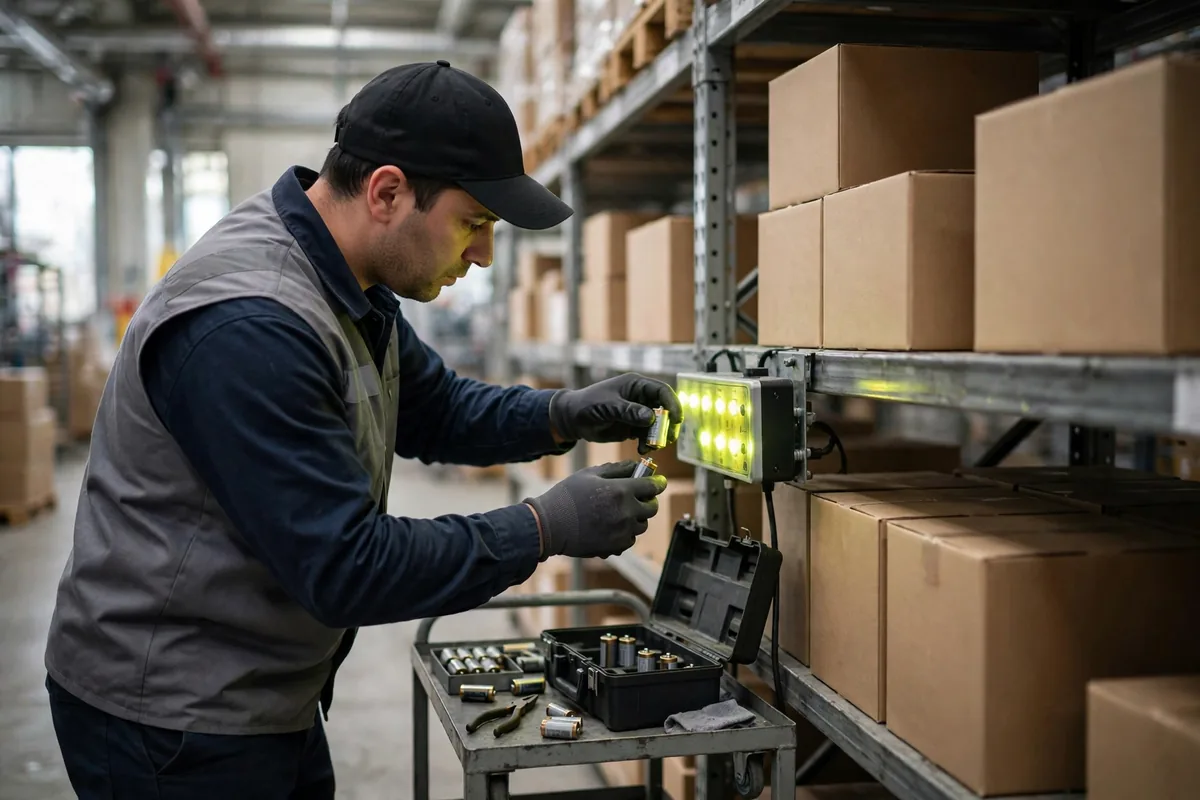
Maintenance pitfalls are equally concrete. Arm cylinders or motors, belt tension, and sensor dust are the three items on the daily checklist. In a dusty warehouse, sensor false readings make the system believe a chute is full or a parcel has arrived when it has not, and the sorting logic falls apart until the line is stopped and reset. Do not write "inspect regularly" on the checklist. Write exactly what gets checked each shift, each week, and each month, and at what measured value a part gets replaced, using the manufacturer's manual and your own measurements as the reference. One more item gets forgotten constantly: spare parts. Keep arm assemblies and sensors in stock. Waiting two weeks for an imported spare in peak season costs far more than the spare itself.
A positive case shows what "buy after the line is crossed" looks like. In 2024, a southern China small parcel warehouse waited until daily volume had stabilised in the tens of thousands of orders, with destinations fixed at around thirty chutes, before installing an arm line — and it spent two weeks screening parcel types first, diverting soft pouches to a separate flow. After go-live, night shifts dropped from two to one, mis-sort rates fell noticeably, and peak season was covered by extending running hours instead of scrambling for temporary staff. The same class of machine was a decoration in the first warehouse and a workhorse in the second. The difference was not the machine. It was timing and the screening work done before purchase.
Before signing, run one more test that vendors rarely volunteer: feed the line your own real parcels for at least one full wave on a test rig or demo unit, not just standard cartons. Record three things: which parcel types jam, whether chute output needs a second manual tidy, and how long clearing the line between waves takes. Many procurement disputes trace back to acceptance tests run only on ideal cartons, with every real-world problem appearing in the first live week. Put the test parcel list in the contract, and let acceptance run against that list — fix shortfalls before signing, not after. Look upstream and downstream as well. If infeed cannot keep up, the fastest line still idles; if packing and checking cannot keep up, full chutes stop the line anyway. A sorting line is one link in a flow, never a standalone purchase, and judging it by arm speed alone guarantees the real bottleneck stays hidden.
So, is the money worth it? Judge it by one number: across the coming year, on how many days do your volume and parcel mix both sit inside the machine's comfortable range? If that is less than half the year, do not buy yet. Sort out your waves, your parcel-type pre-split, and your manual chute layout first. Equipment can always be bought later; a wrongly bought line is expensive to dismantle.
By Da Liu, Automation Engineer