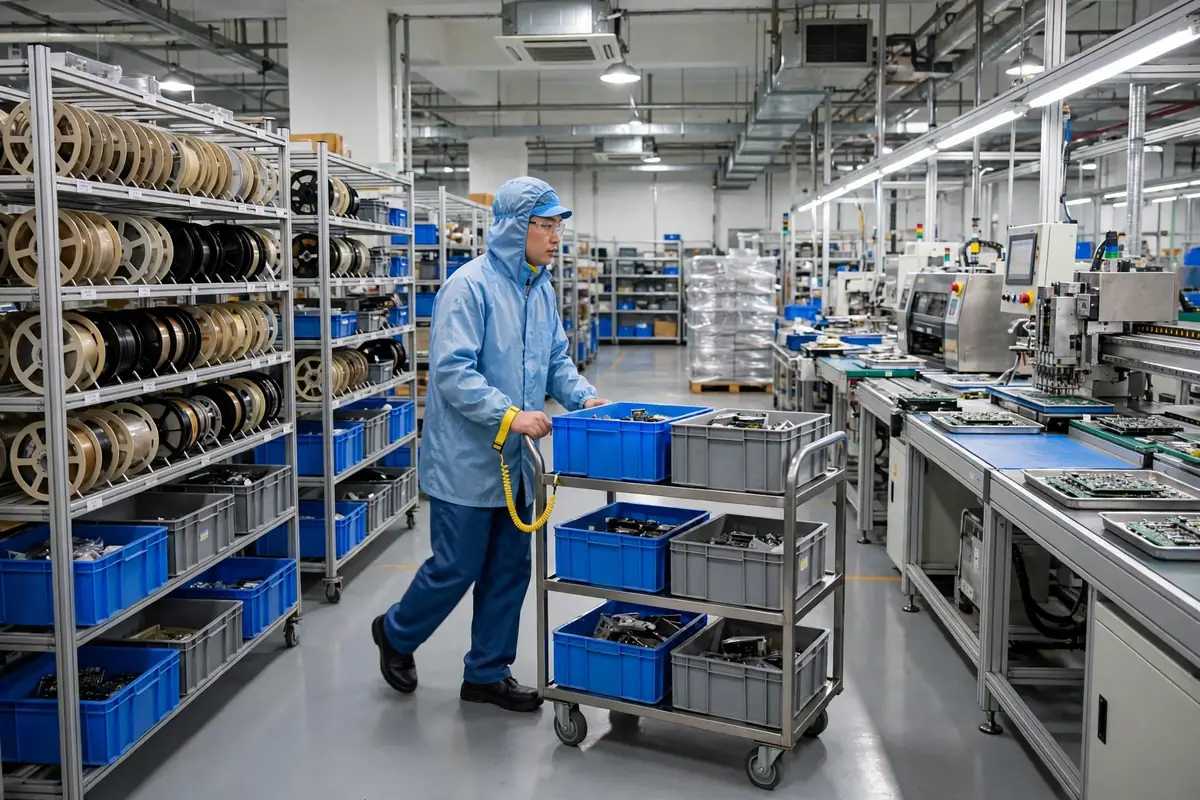
Factory tours in Suzhou used to bore me. Nice machines, warm tea, a group photo, and then my goods would still ship late. That changed once I started treating suzhou warehouse logistics manufacturing as one connected system instead of a factory problem. If the warehouse stalls, your lead time is fiction, no matter how fast the production line runs.
I sell online for a living, so I think about factories differently from a buyer who only chases unit price. A supplier can finish production on schedule and still miss your vessel, your consolidation cutoff, and your overseas restock window. The delay usually hides in receiving, line-side storage, inspection, outbound batching, or paperwork. Walk those areas first and you will learn more in twenty minutes than in a two-hour presentation.
suzhou warehouse checks start at the line side
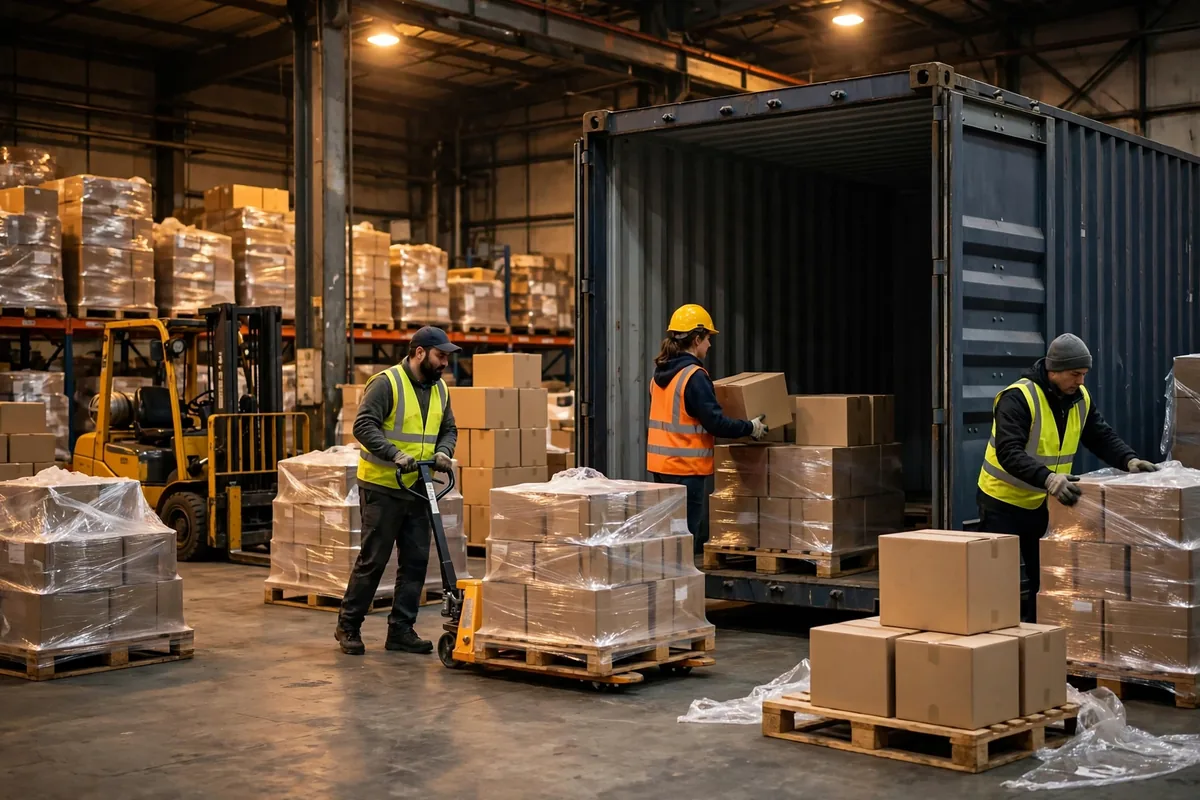
Around Suzhou Industrial Park and Kunshan, electronics and precision factories rarely run one simple warehouse. Raw materials come into a receiving area. A line-side store feeds each shift. Semi-finished parts pause between processes. Finished goods wait for inspection, labeling, and packing before they reach the outbound dock. Each handoff is a chance to lose half a day without anyone calling it a delay.
Last year I visited a Kunshan plant that builds control boards for small appliances. The line looked clean and quick. Then I stood by the line-side store during a changeover. Leftover material from the previous job had not been returned. Material for the next job was already pushed into the same narrow space. Operators were digging through cartons and shouting across the aisle. The plant had enough machine capacity on paper, but every changeover burned time on searching and re-counting. I told my partner that day: fine for small trial orders, risky for a peak-season replenishment unless we pad the schedule.
Here is the counterintuitive part. A fast line does not guarantee a stable lead time. In my experience the root cause is often warehouse rhythm. Incoming parts wait too long for inspection. Kitting runs half a shift behind. Finished cartons sit in a gray zone between done and cleared to ship. One small pause per step quietly adds up to several days, and sellers usually blame the wrong step because production was the only part they watched.
Vendor-managed inventory adds another trap. A supplier may keep stock near the factory or in a marked area inside it, and the factory draws against actual use. That sounds safe. But ask whether your material is locked for your orders or sitting in a shared pool. In peak season a shared pool goes to whoever shouts loudest or pays fastest. If the system cannot show a lock against your purchase order, treat the words we have stock as a hope, not a plan.
logistics manufacturing delays are often paperwork delays
One autumn order taught me this the hard way. A precision hardware supplier in Suzhou Industrial Park finished my goods two days early, and I was feeling smug. Then the shipment froze. The finished-goods team only processed outbound batches on set days. Part of the material was bonded and part was not, so the documents had to match two different outbound paths, and one field in the export paperwork was wrong. The cartons sat in the warehouse while I argued in a group chat. We missed the consolidation cutoff and waited for the next sailing. The overseas warehouse received everything late, my ads kept spending against thinning stock, and the whole launch rhythm slipped.
Bonded material and export consolidation deserve direct questions, not polite assumptions. Ask who prepares the customs documents, who checks them, and what happens when a field is wrong. Ask for the actual consolidation cutoff, the dock closing time, and whether a one-day slip means a faster option or a full week of waiting. Rules and local requirements change, so check the latest official guidance rather than trusting a sales rep who says they do this all the time.
That is the lens I bring to every visit now: suzhou warehouse logistics manufacturing is one chain, and the weakest link is almost never the machine in the middle of the hall. My inspection routine now fits on one phone note, and it works.
| Stop | What I ask | Red flag |
|---|---|---|
| Line-side store | How early is kitting done, and who chases shortages? | Leftovers never returned, staff searching by memory |
| Finished goods | How soon after inspection can cartons ship? | Produced and shippable tracked as the same thing |
| Outbound dock | How many shipping batches run each week? | One fixed batch day for everything |
| Documents desk | Who prepares and who reviews export papers? | One person doing and checking their own work |
At the finished-goods area, pick one carton at random and ask for its order, inspection status, and planned ship date. If the answers line up with the paperwork, the warehouse and the office are running one set of books. If people start guessing, you have found your future delay while it is still cheap to fix.
Now the money part, with a simple assumption you can replace with your own quotes. Assume a shipment misses consolidation and you either pay more for a faster route or accept a later arrival at your overseas warehouse. Either way the real cost is bigger than a freight difference. It includes lost sales days, wasted ad spend, and the emergency reorder you place at a worse price. Compare that with the cost of prevention: half a day walking the warehouse and asking awkward questions. That is why I treat suzhou warehouse logistics manufacturing as a single buying decision. The cheapest unit price from a factory with a sloppy outbound rhythm is rarely the cheapest order.
My restocking rhythm changed too. I split lead time into four blocks when I negotiate: queue time before production, production itself, inspection and finished-goods clearance, and outbound plus consolidation. Each block gets an owner and a confirmation point. I also define delivery in writing as goods loaded and gone, not goods produced. That one definition has saved me more arguments than any discount. For bigger orders I split the shipment in two, a base quantity first and a top-up second, so one slow outbound batch cannot empty my store completely.
Geography helps and hurts at the same time. Suzhou and Kunshan have dense supplier networks, so substitute materials and spare capacity are easier to find than in isolated regions. But density means everyone peaks together. In busy months you are competing for line time, dock slots, and consolidation space with every other buyer in the park. Order earlier than the factory calendar suggests, and confirm the outbound plan again a few days before completion, not on the morning the truck is due.
So my factory tour route is fixed now. Receiving and inspection first, then the line-side store, then finished goods for a random carton check, and only then the meeting room for price and terms. I pin down three things in the order notes: outbound batch days, consolidation cutoff, and who reviews the documents. If a factory owner thinks I am being difficult, I honestly relax a little. It means someone there knows the warehouse deserves scrutiny. In the end, suzhou warehouse logistics manufacturing rewards the seller who watches how goods move, not just how they are made. Skip a couple of group photos on your next visit and stand in the warehouse instead. Your lead-time forecasts will get embarrassingly more accurate. This trick has worked for me every single season since I started using it.
By Ah K, E-commerce Seller (5 yrs)