Our little warehouse could never afford to burn money like that — that is the whole story, up front. Last year a friend in African trade asked me to think through his Cameroon cocoa export warehouse storage logistics line: buy around Yaoundé, haul inland to Douala port, stuff containers, ship out. I laughed. I run a 3,000-square-meter small warehouse; my daily worries are carton stacks and keeping the forklift off the racking. I said yes, not because I know cocoa, but because I know one thing: for any cargo that hates moisture, the math is always the same.
First, the size of the trade. According to FAOSTAT, Cameroon produced 320,000 tonnes of cocoa in 2024, sixth in the world at roughly 6.1% of global output. Cocoa bean exports in 2024 were about 239,000 tonnes, worth around 1.17 billion US dollars. In the 2024-25 season, production entering formal channels reached 309,500 tonnes, exports 192,000 tonnes, revenue about 732.2 billion Central African CFA francs. Cocoa has overtaken crude oil as Cameroon's number one export. For a small player, that means the big boys are all over this trade — but hold the line on moisture and mold, and there is money to be made. The Cameroon Chamber of Agriculture is building two cocoa warehouses of 1,000 square meters each in the Douala port area, with total capacity of about 11,000 tonnes and a target of moving roughly 100,000 tonnes per season.
Cocoa Export Warehousing: What Cocoa Fears Most Is Mold
Cocoa is a fussy cargo. What it fears most is not theft. It is damp, and mold. A bag of beans dried nicely at the farm gate can catch one rainstorm on the road, and in Douala you open the bag to find white fuzz on the surface. That shipment is finished. Buyers do not care how hard your journey was. They check whether the beans are dry, moldy, or smelling wrong.
My friend learned this in his first year: he bought a load at farm gates that looked dry enough, bagged it in jute sacks, and sent it on the road. The rainy season hit, the truck lost an extra day inland, and the bottom layers soaked up moisture. In Douala, nearly a third of the load had gone moldy — that proportion is his own account, and I cannot verify his numbers, but the lesson is real: mold losses are not linear. The whole shipment's reputation goes moldy with it. The buyer sends it back, and next season they do not call you at all.
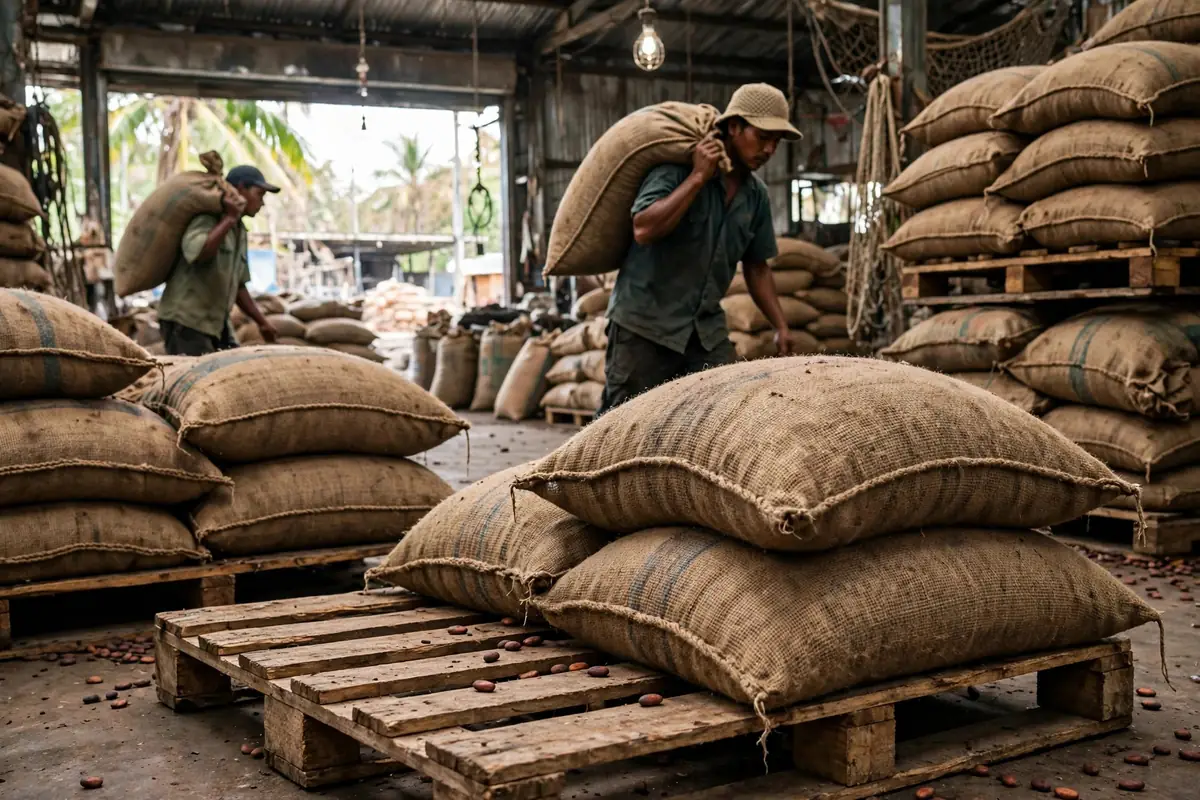
The first entry in the Cameroon cocoa export warehouse storage logistics ledger belongs to moisture control. Fermentation and sun-drying have to be done properly at the buying points — if the beans do not get dry enough there, every dollar downstream is wasted. Jute sacks look old-fashioned, and that is exactly why they work: they breathe. A sack that picks up damp can let it back out, which beats a sealed plastic bag trapping moisture and breeding mold inside. Prevention is not one heroic step. It is every step from farm gate to port holding the line.
Here is the counterintuitive part. Most people think cocoa warehousing means finding the cheapest warehouse, stacking the bags, and waiting for the ship. Wrong. A cheap warehouse that does not keep cocoa dry costs more in moldy beans than you ever saved on rent. My friend worked it out once — a hypothetical example, made-up numbers to show the structure, not real data: for a 20-tonne lot, the farm-area warehouse charged about 30% less per tonne per month, but one extra month cost him 5% of the goods to mold, and the spoiled beans ate four or five months of rent savings. Cheap rent, expensive spoilage. That is the math of this trade.
Five Checkpoints on the Cameroon Cocoa Export Route
Five checkpoints on this Cameroon cocoa export warehouse storage logistics route, each with its own low-cost fix and its own trap.
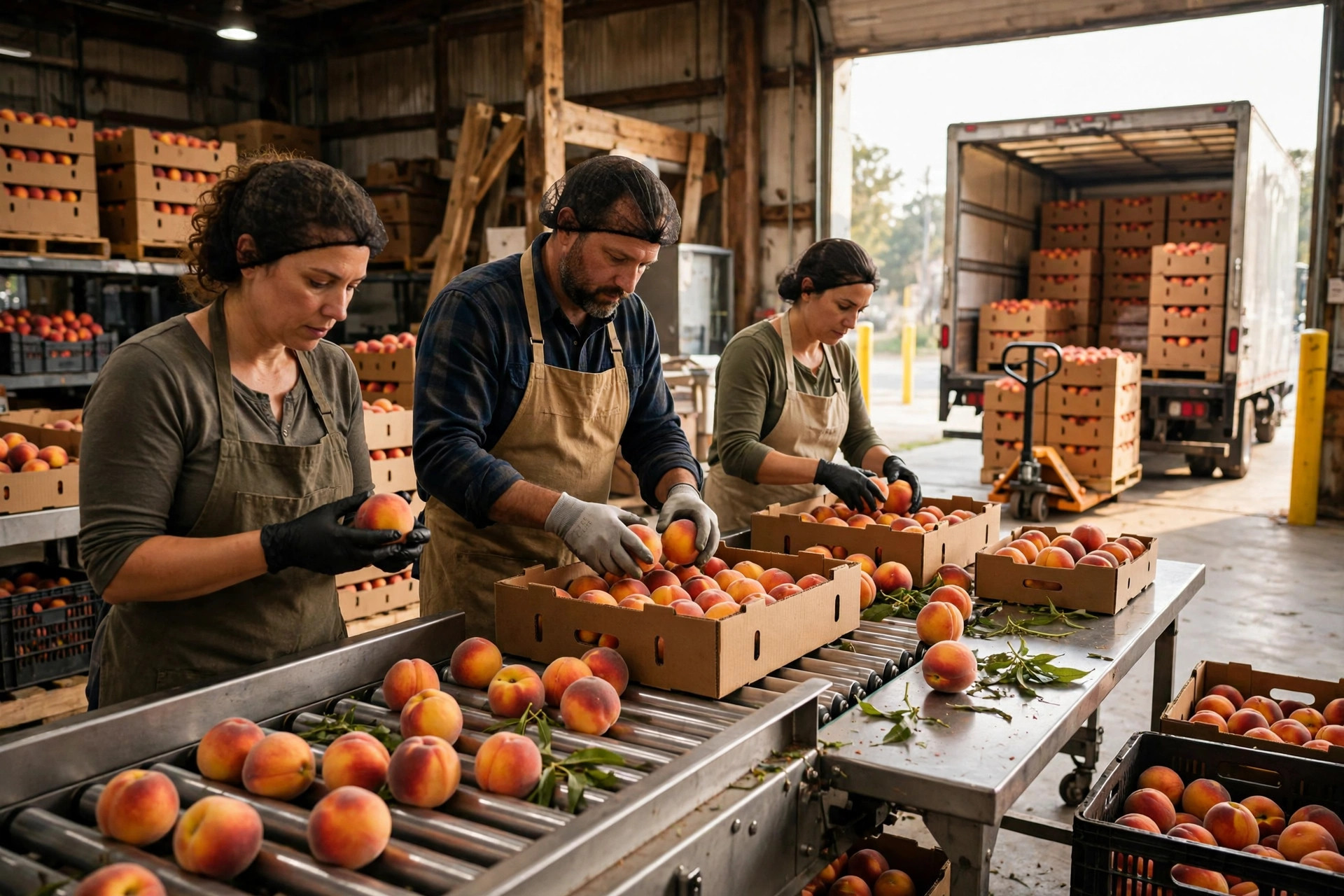
Checkpoint one is the buying point. Fermentation, sun-drying, grading — all of it is decided here. Drying yards should be raised off the ground; never spread beans on the dirt, because one downpour can undo half a day's work. Local operators use wooden racks with tarpaulins: spread out in the sun, covered within ten minutes when rain comes. It costs almost nothing, and it works.
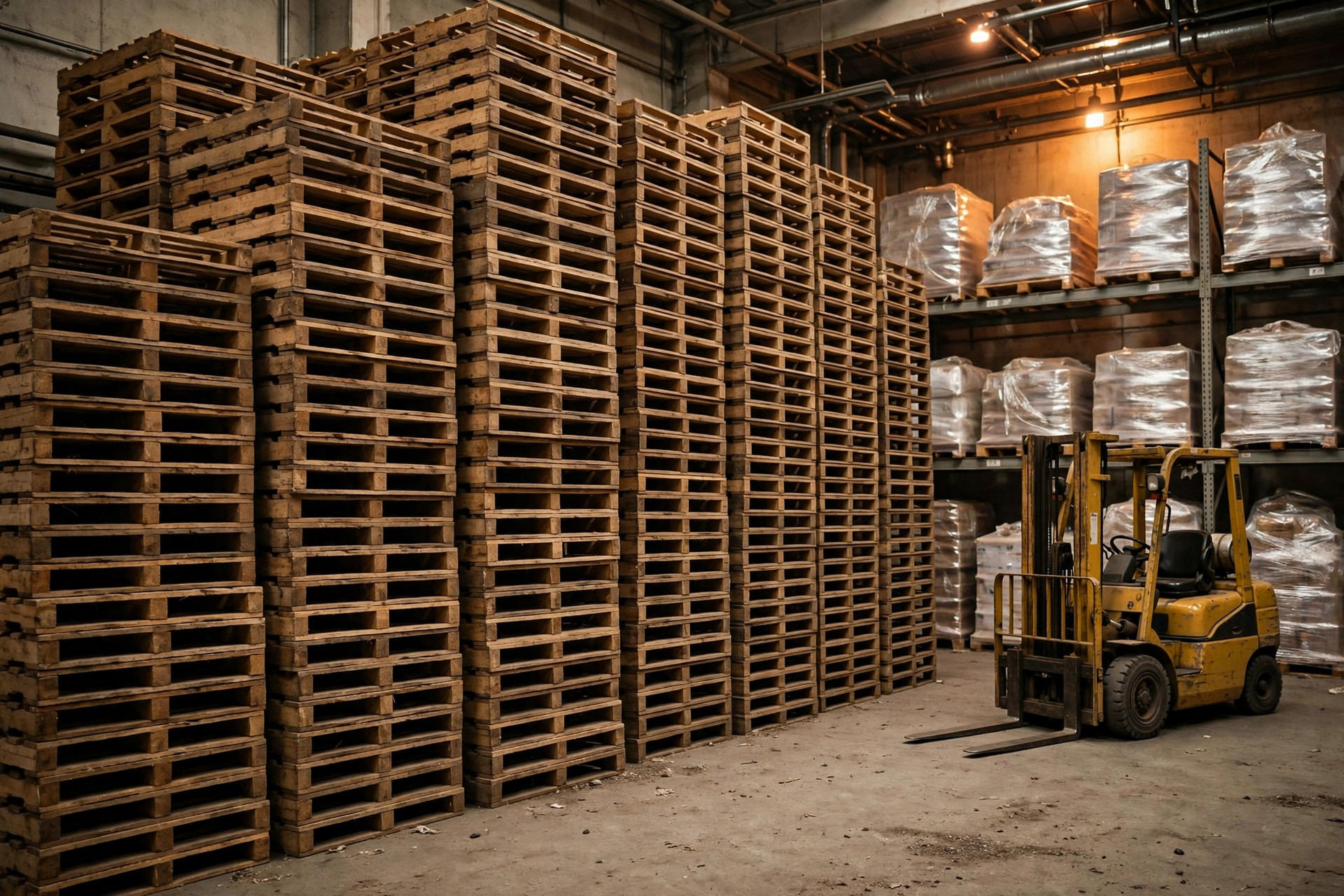
Checkpoint two is bagging and stacking. Keep jute sacks off the floor and off the wall: pallets underneath, air gaps between stacks. Same with cartons in my warehouse — the side touching the wall always goes damp first. Stack too tight and the middle suffocates. Mold starts in the heart of the stack, and by the time you can smell it, it is already too late.
Checkpoint three is the inland haul from Yaoundé to Douala. Transit time belongs in the warehousing budget: truck condition, the rainy season, road conditions all stretch the journey. Checking the forecast before dispatch is not fussy, it is cost control. In the rainy season, an extra tarpaulin costs next to nothing next to a truckload gone moldy.
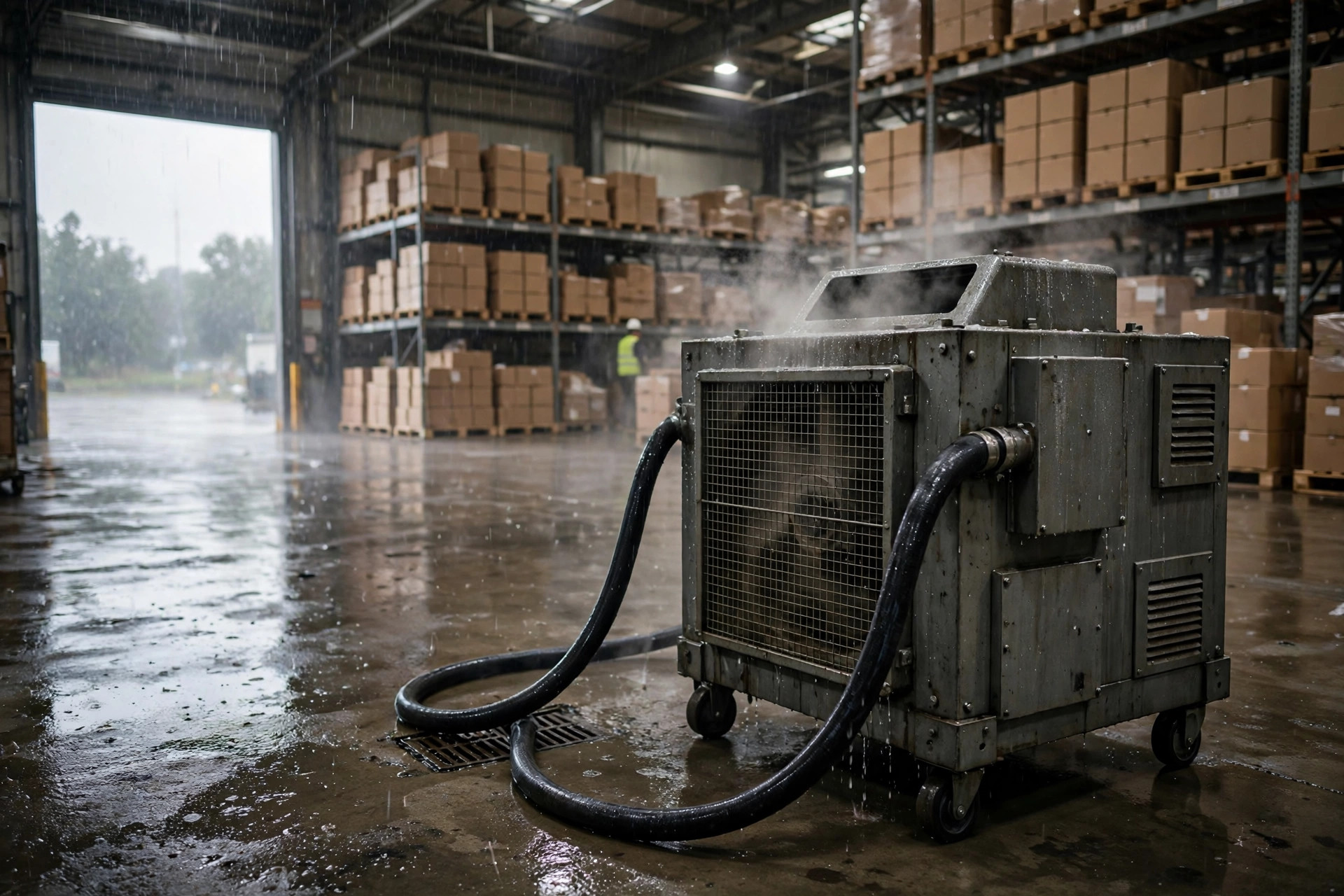
Checkpoint four is temporary storage at the Douala port warehouse — the most critical stretch of the route, and exactly where the Chamber of Agriculture is adding capacity. A port warehouse exists to buffer: ships do not wait, cargo arrives and cannot be loaded the same day, so it sits for days or weeks. Moisture control, ventilation, and regular inspection during that wait is the real warehousing work. Two new warehouses of 1,000 square meters each, about 11,000 tonnes of capacity, targeting roughly 100,000 tonnes per season: the game at the port is how fast you turn it over, not how much you stack.
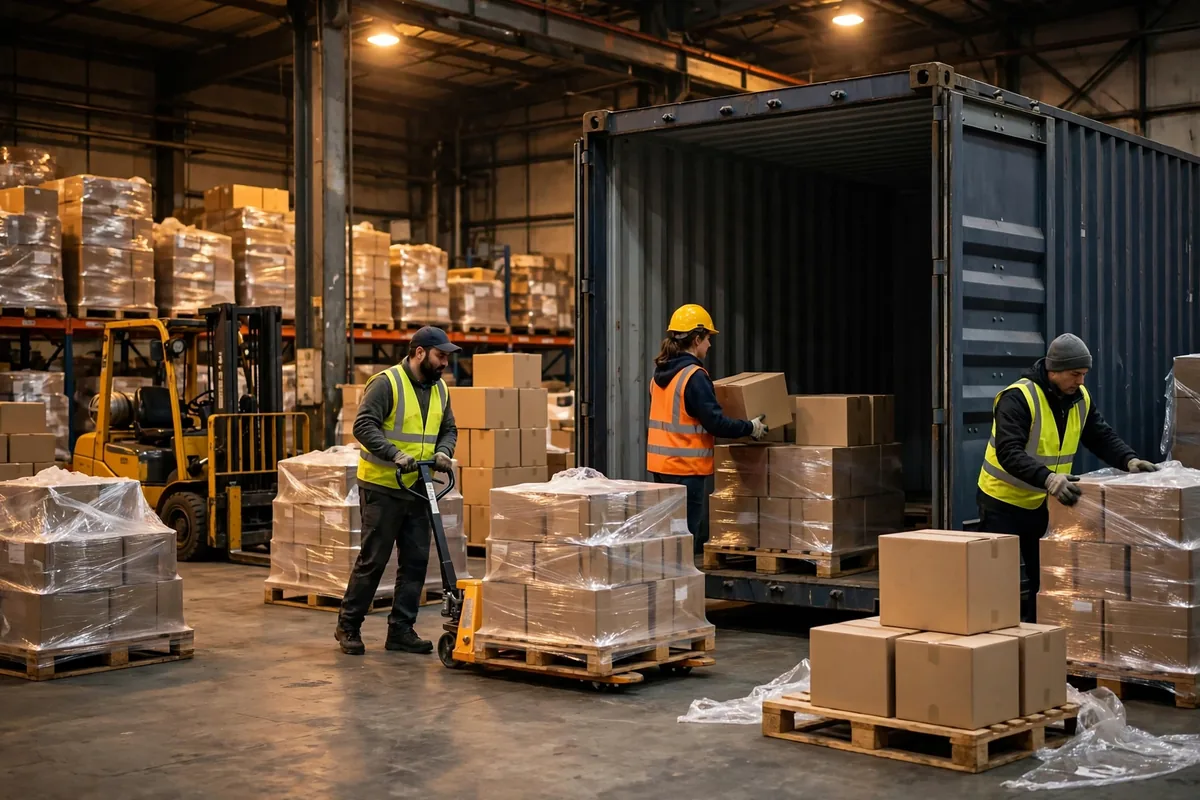
Checkpoint five is stuffing the container. Inspect the box before loading: clean, watertight, what did it carry last time? Once the doors close, the container becomes its own climate for weeks at sea. Desiccants belong inside — do not skip them. Mold that grows inside a sealed box is only discovered at the destination port, when nothing can be done about it.
Consolidation and Warehouse Choice for Small Shippers
Now the part I actually know: small shippers. Most of my customers ship small lots that cannot fill a container, so you consolidate — several small shippers share one box and split the freight. But cocoa consolidation has one rule: only consolidate cargo of the same kind and the same dryness. One shipper's under-dried beans, sealed in the same box, can drag everyone else's cargo down with them. Inspect before consolidating. It is not distrust. It is protecting everyone in the box.
Choosing a warehouse comes down to port versus farm-area. The farm-area warehouse is close to the cargo with cheap rent. The port warehouse is close to the ship, ready when the sailing comes, but rent is higher and space is tight. My view: small shippers should not chase the cheap rent upcountry. An extra month in a farm-area warehouse, with mold risk and tied-up cash added together, usually costs more than the port warehouse premium. A port warehouse turns cargo over fast — a few days, then onto the ship — and the risk window stays small.
| Warehouse choice | Rent | Mold risk | Turnover |
|---|---|---|---|
| Farm-area (near Yaoundé) | Cheaper | Higher — longer storage, more rain exposure | Slow, cash tied up |
| Port (Douala) | Higher | Lower — a few days, then onto the ship | Fast |
But that advice changes with the season.
Rainy season: tighten up. Buy more slowly, buy less rather than buying damp cargo, and speed up turnover at the port warehouse. Dry season: open up. Drying conditions are good, you can buy more and hold more — but hold it at the port warehouse, close to the ship, ready to move. Rainy season is about not having an accident; dry season is about turning stock fast. Never take dry-season courage into a rainy-season gamble.
One more story, from my friend's second year. He got smart: at the farm gates he only bought and did the first drying — no stockholding. Buy a lot, ship a lot. In Douala he rented port warehouse space for no more than two weeks and loaded as soon as the sailing came. That season his spoilage rate dropped to a level that surprised even him — the exact figure is his claim and I will not vouch for it, but the direction is right: fewer stages, fewer chances for something to go wrong; shorter storage, less time for mold to grow. Put that next to the first-year story, and the conclusion writes itself: in cocoa export warehousing, you are not budgeting rent. You are budgeting spoilage.
Small warehouses have their own way of surviving. We will never match the big players on scale or capital. But we can guard every checkpoint and spend every moisture-control dollar where it counts. The big players play for volume. Small shippers play for steadiness. Hold steady, and there is a next season.
By Xiao Ma, Small Warehouse Owner