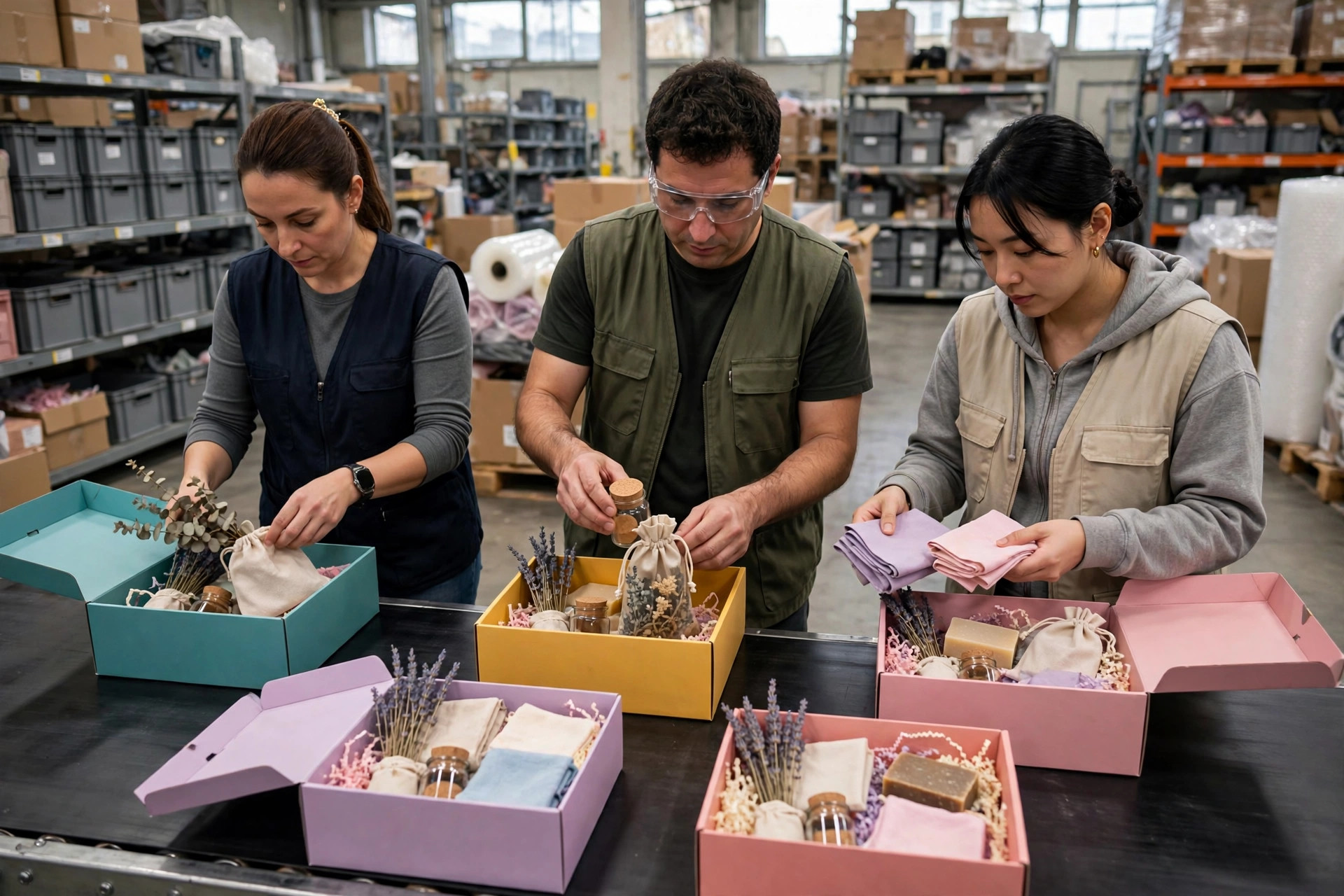
When I first took on subscription box fulfillment, I thought I'd found free money: a few thousand identical boxes every month, rain or shine, way better than chasing one-off orders all day. Then my first run nearly buried my 8,000-square-foot warehouse. Three years in, I've learned the truth: the money in this business isn't in shipping. It's in two ledgers nobody talks about — replenishment rhythm and the assembly line. Here's my open book.
The First Run: 2,400 Boxes That Almost Closed Me Down
Fall 2023. A pet-treat subscription seller from LA came to me — started on Etsy, just moved to her own site, roughly 2,400 boxes a month, six treats plus a card and some filler per box. I quoted it like a normal ecommerce job: receive, put away, pick, pack, ship. Easy money, I told myself.
Day one, reality hit. One of the six SKUs — the dog chews — arrived four days late. So 2,400 boxes' worth of product sat in my assembly area, five SKUs stacked up, one missing, the whole line dead. When everything finally landed, we discovered the real problem: six items, a card, and filler into a box takes one person about 40 boxes an hour. Four of us ground through three full days and still only shipped half before the carrier cutoff. The client drove over at midnight and hauled the remaining 900-odd boxes away herself.
Labor ate every cent of margin on that job, plus two days of overtime I paid out of pocket. I sat there among the unshipped boxes thinking: the big-warehouse playbook doesn't work for shops like mine — they have planning teams chasing suppliers; I'm the owner, the account manager, and the forklift driver.
Scrappy Fix #1: A Replenishment Rhythm Calendar
The biggest trap in this business isn't slow assembly. It's incomplete inventory. One late SKU and your entire 2,400-box run is held hostage. My fix is embarrassingly low-tech, and it hasn't failed me in three years.
On the 1st of every month, I get the seller's packing list (the BOM): how many SKUs, dimensions, packaging, anything fragile. Then I back-schedule a hard deadline: latest arrival date = ship date minus 7 days of assembly minus 2 days of buffer. Whoever's late past that date owns the consequences — written right into my quote notes, in plain language.
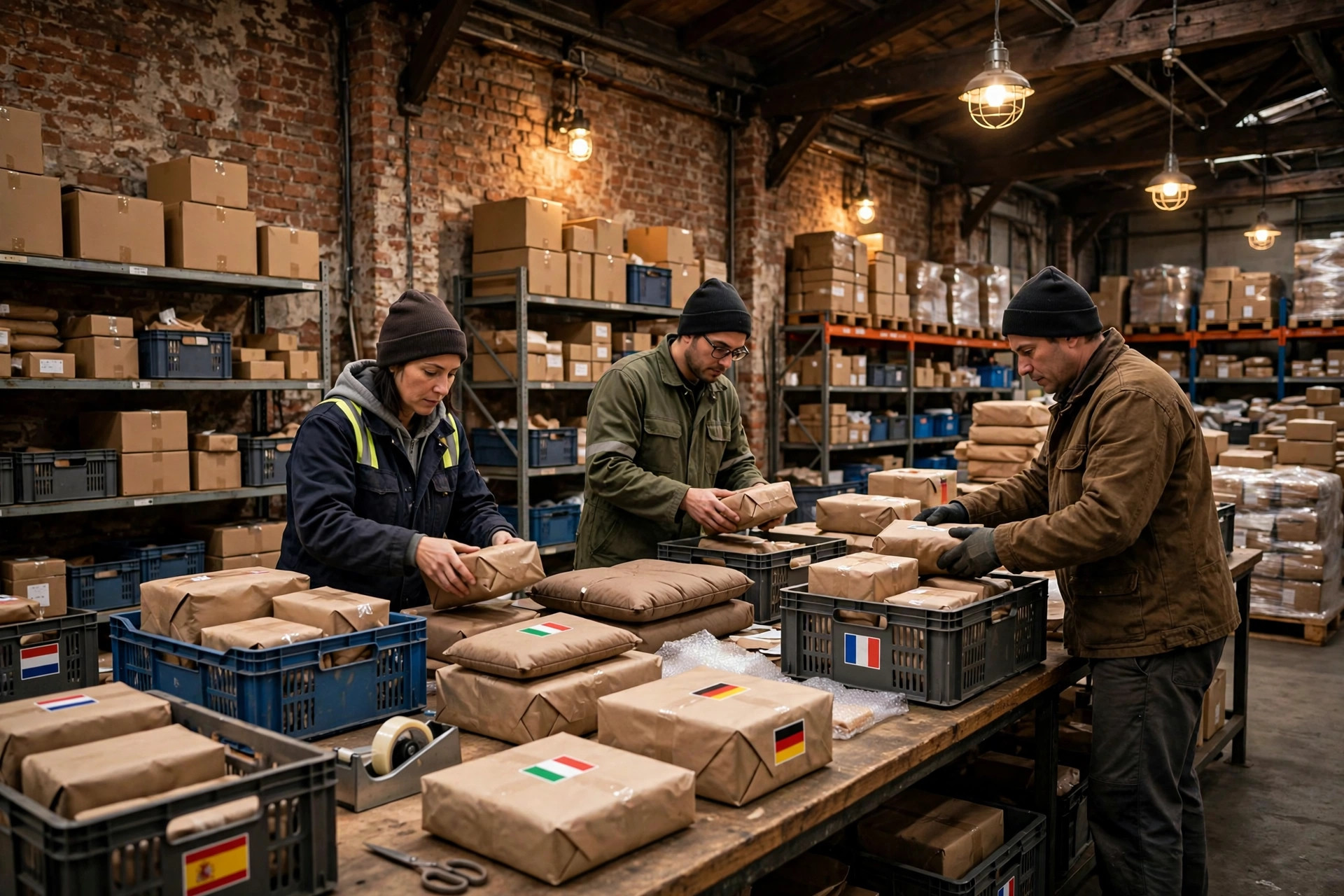
One more trick: I ask sellers to ship SKUs separately, each labeled on arrival. One mixed pallet of six SKUs costs me half a day of sorting labor. Separate arrivals go straight to their slots, and on assembly day we just wheel them out. Sellers push back until I show them the math — mixed pallets mean a half-day sorting fee; separate shipments make it disappear. They always agree.
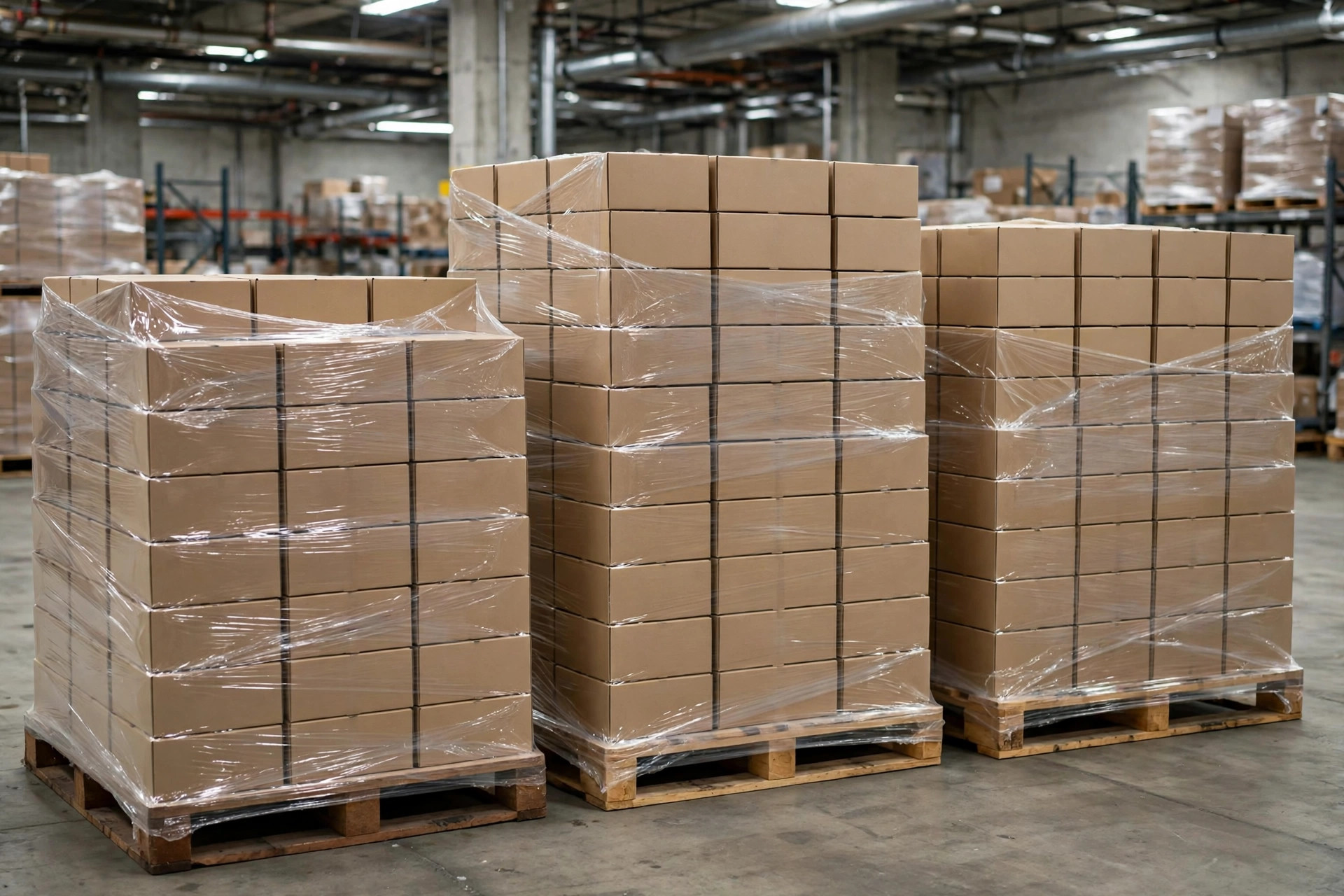
Scrappy Fix #2: The Assembly Line Is Two Folding Tables
Whatever you do, don't buy a conveyor belt or an auto-sealer for this. We small warehouses can't burn that kind of money — and a subscription box line only runs a few days a month. Equipment that sits idle eleven months a year is just expensive scrap metal.
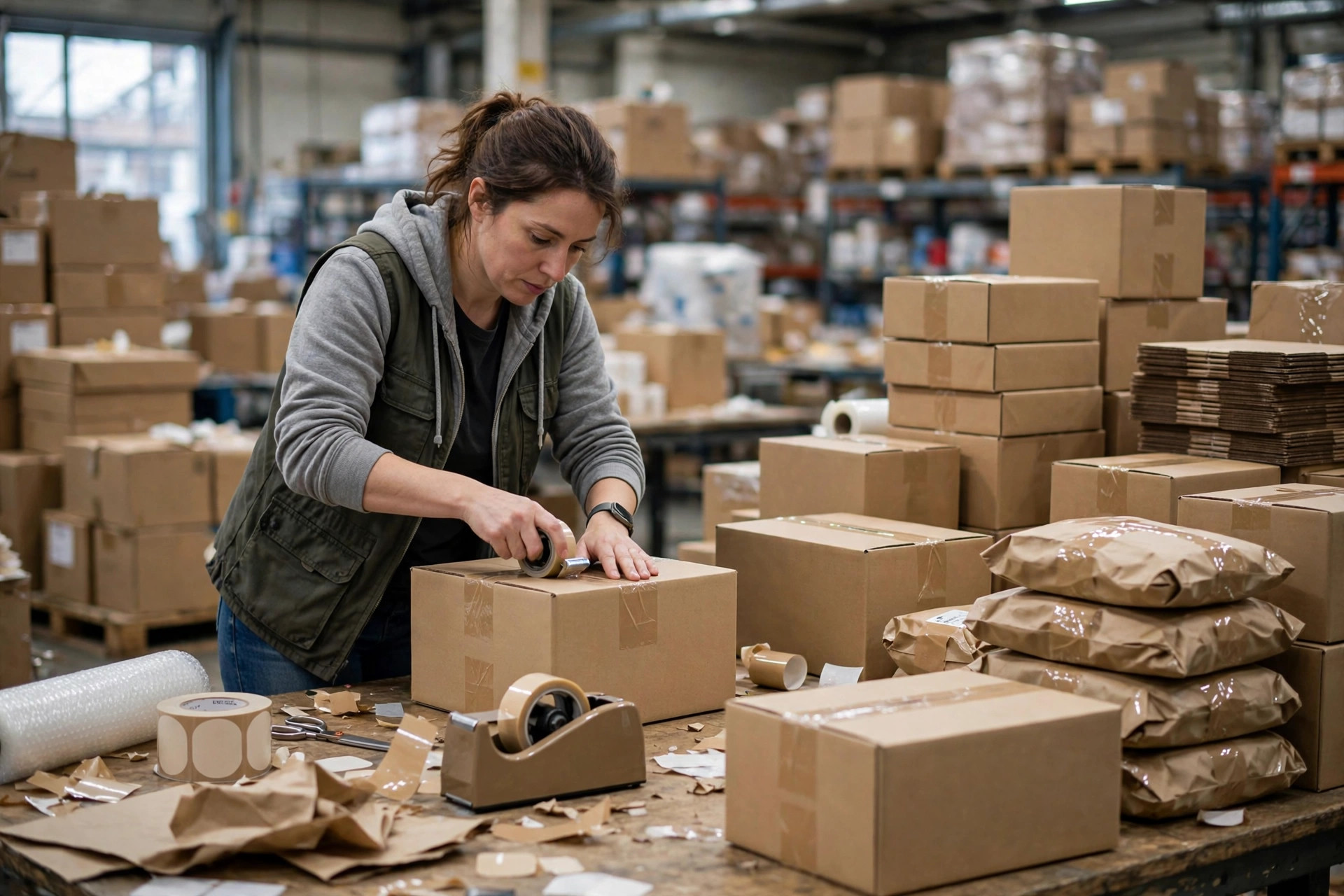
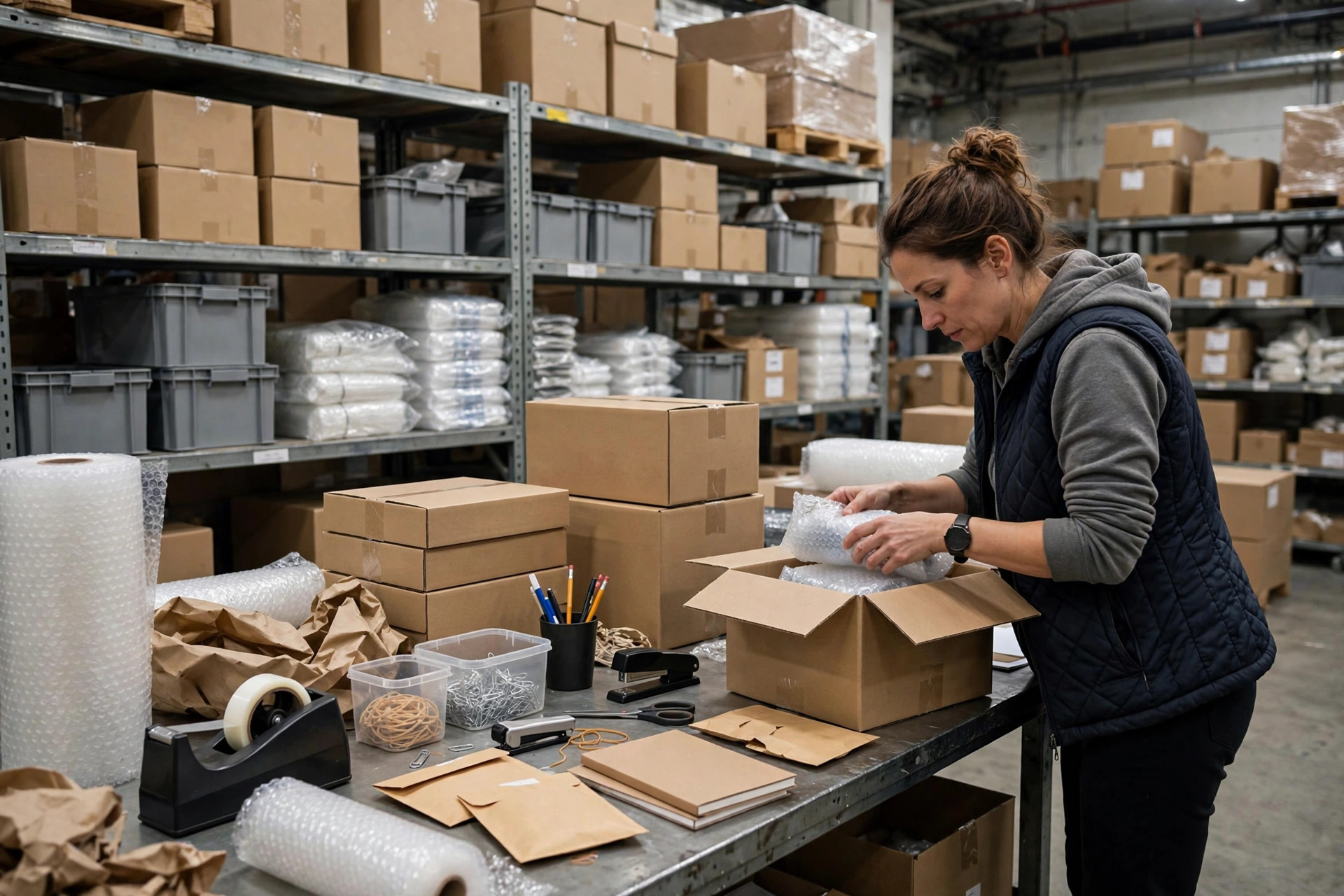
My assembly line is two 8-foot folding tables pushed together, bought at a warehouse club for under a hundred bucks each. The six SKUs line up along the table in pack order; a box travels from one end to the other and comes out finished. We call it the "banquet line." Once the crew gets the rhythm, one person does 70 to 80 boxes an hour — double our speed on that first disastrous run.
And I never keep full-time assembly staff. I have a deal with a temp agency nearby: 4 to 6 people on fixed days each month, booked two weeks out, gone when the run's done. Local market hourly rates, still less than half what idle full-timers would cost.
One detail that matters more than you'd think: the packing list gets printed and taped to the head of the table. First finished box gets photographed and sent to the seller for sign-off — the "golden sample." The other 2,399 follow it exactly. On run number one, we reworked over ten percent — cards inserted backwards, filler missing, dumb mistakes. With the golden sample, rework is basically zero. Don't shrug at ten percent: reworking 240 out of 2,400 boxes eats two people's entire day.
The result? The same 2,400 boxes now take 3 people two days. Per-box assembly labor dropped from nearly $3 (all overtime, that first run) to a little over $1.
The Math: What One Subscription Box Really Costs
For a typical 2,000–3,000-box monthly subscription program, here's roughly how one box breaks down:
| Cost item | Share (feel) | Notes | | Assembly labor | The big one, ~60–70% | Temp crew + overtime; the only line item you can really optimize | | Packaging | ~20–30% | Printed boxes, filler, cards — usually supplied by the seller | | Storage footprint | ~10–20% | Components + finished goods + packaging, sitting for weeks | | Parcel shipping | Pass-through | Actual postage plus a few dimes per order handling fee |
See the pattern? Labor is two-thirds of the game, so every optimization should target labor: the banquet line, the golden sample, never starting until all SKUs are in. Every one of those saves labor hours. Packaging, on the other hand, is the seller's problem — don't volunteer. When sellers ask me to source packaging for them, my rule is a 15% sourcing surcharge, take it or leave it. Sourcing is the most thankless work: a slightly off color, a fraction off in size, and all the back-and-forth eats your time.
The Uncomfortable Truth: These Aren't "Stable" Orders — They're Pulses
Everyone says subscription boxes are great because they're "fixed monthly shipments, rain or shine." Three years in, my take is the opposite: they're pulse orders, not stable ones.
Thirty days in a month, and you're only really shipping for 5 to 7 of them. The other three weeks, your floor is buried in inbound: six SKUs of components, printed boxes, filler — then finished goods waiting for the carrier. You're trading three weeks of floor space for one week of assembly output.
Miss that trade-off and your quote will bleed. I've watched fellow small operators quote box programs like normal ecommerce: X per unit received, Y per order packed. Sounds reasonable — except it gives away three weeks of storage for free. I quote in four separate lines: receiving (per SKU, per pallet), storage (by footprint, by full month — never per unit, or you lose), assembly (per box, tiered so volume gets cheaper), and shipping (postage pass-through plus a small handling fee). Four transparent lines. The seller gets it, and I don't lose money.
The Second Trap: SKUs That Change Overnight
Last year I took on a beauty box — 5 SKUs at signing. A week before ship date, the seller casually mentioned "we added 3 samples this month." Eight SKUs showed up on delivery day and I found out when the truck opened. The line had to be re-laid, we needed a longer table, more temps, and the box size barely fit.
Lesson learned, now in every contract — three red lines, non-negotiable: a BOM lock date (add SKUs after it, pay a line-change fee); 30 days' written notice for any SKU count or dimension change; if materials aren't complete by the deadline, ship date slides and I carry zero liability for rush charges. Sellers actually cooperate better with rules up front than with arguments after the fact.
And one more: never take a "we need to ship next month" rush job from a first-timer. A seller who hasn't run their replenishment rhythm with you for one full cycle will almost certainly burn you. Let them ship one month themselves, get the BOM straight, then hand it over. I say it politely. I mean it bluntly: untested sellers always arrive short.
Four Notes for Fellow Small Warehouses
First, quote in four lines: receiving, storage (by footprint, full month), assembly (per box, tiered), shipping (pass-through). Bundle them together and you're donating margin.
Second, the three contract red lines: BOM lock date, 30-day change notice, no-liability slide on incomplete materials. Ugly words up front beat ugly fights later.
Third, don't buy equipment for the assembly line. Two folding tables plus temp labor is the cheapest "automation" there is. We small warehouses can't burn money on machines that nap eleven months a year.
Fourth, the replenishment calendar matters more than anything. This game isn't won on ship speed — it's won on having every SKU in the building. Complete inventory turns assembly into pure muscle work. Incomplete inventory and nobody on earth can ship on time.
Three years on, these programs are the steadiest in my warehouse: fixed rhythm every month, a cooperative seller, 3 people done in two days, better margins than scattered one-off orders. But only because I finally did the math on replenishment rhythm and the assembly line. Skip the math and it's a trap. Do the math and it's steady income.
Small warehouses have their own way of surviving.
By Xiao Ma, Small Warehouse Owner