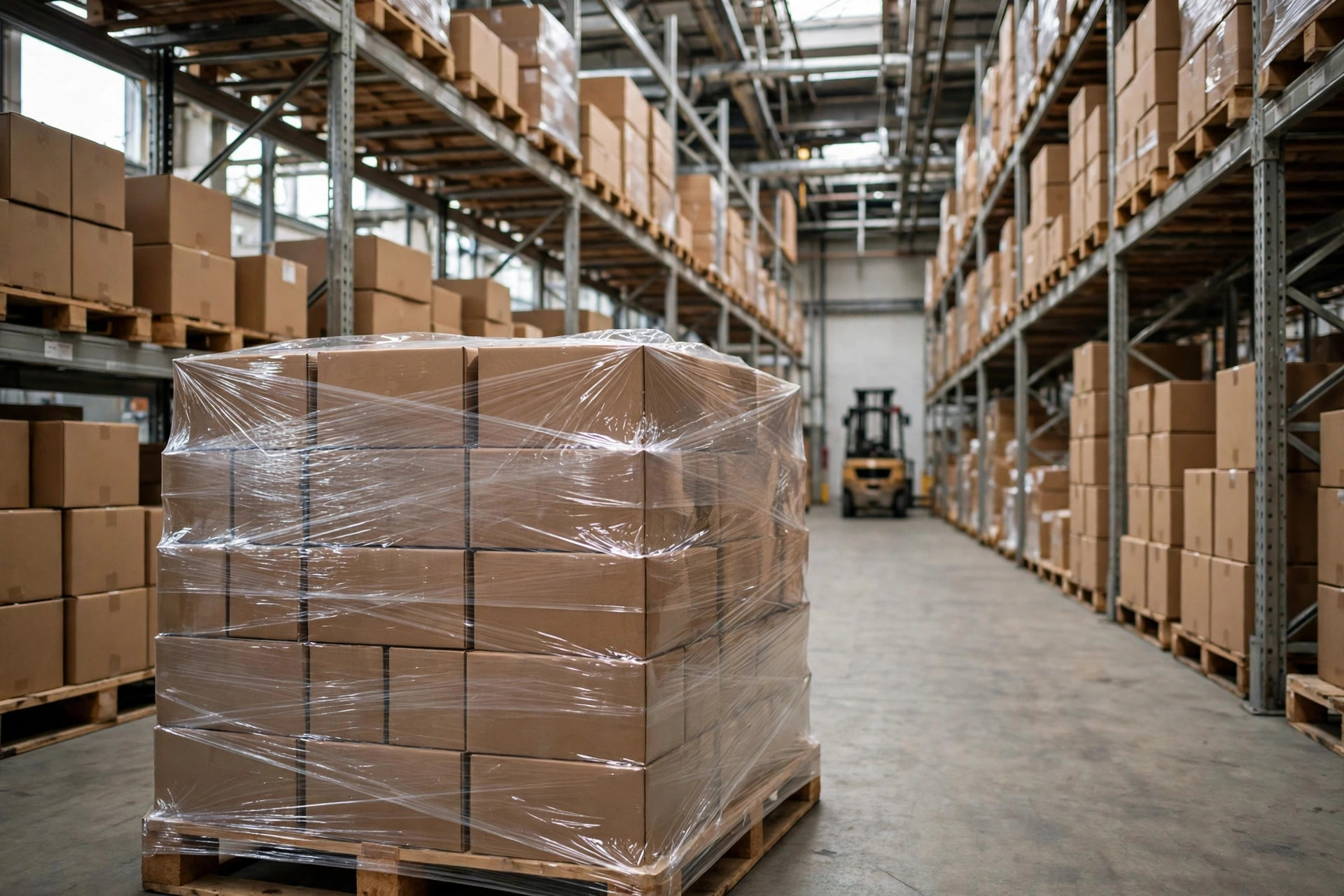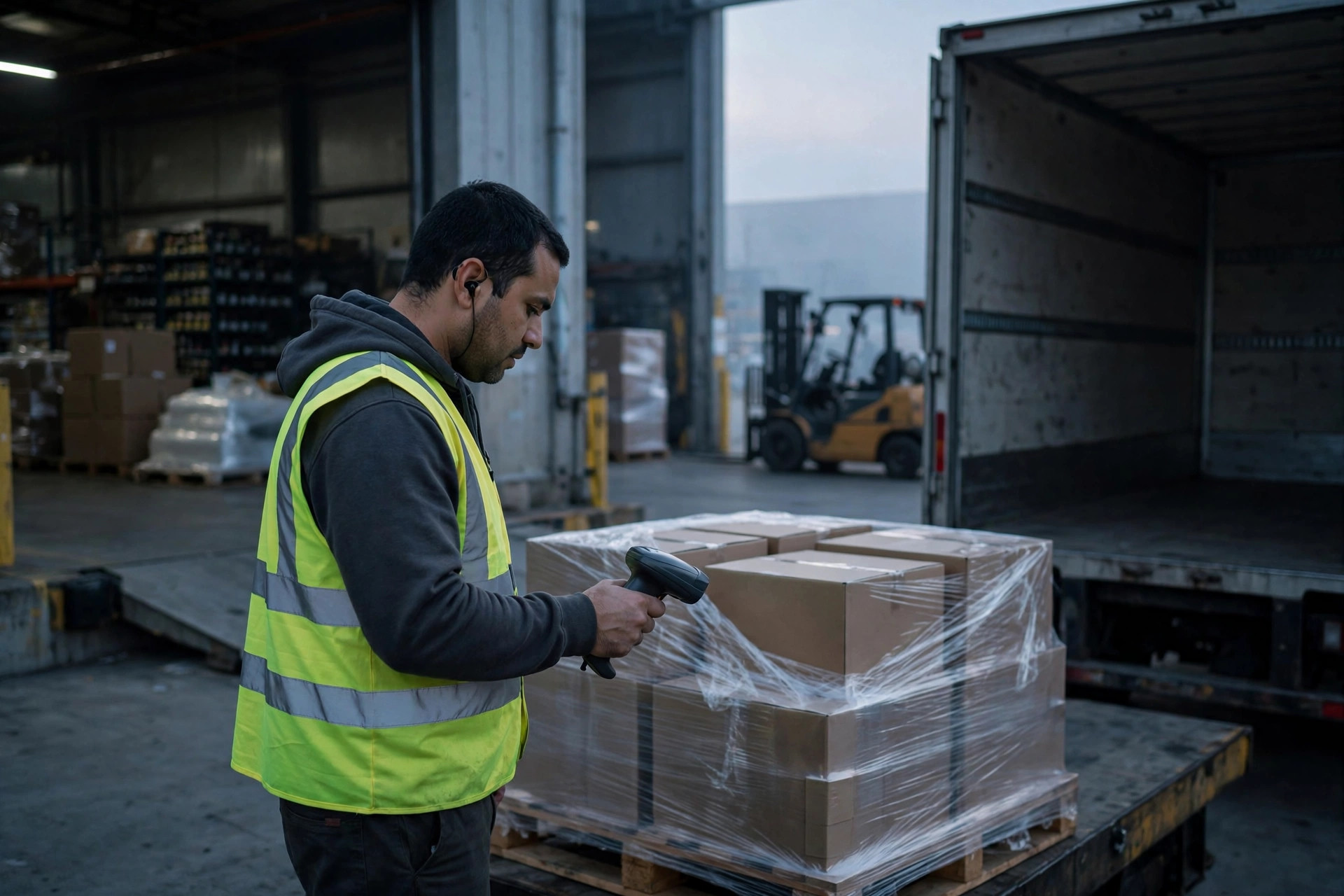
Bottom line up front: every pallet going to a US retail distribution center needs its own SSCC-18 barcode label — that is the whole game of sscc-18 barcode label requirements. Eighteen digits, application identifier 00 in front, printed as GS1-128. Since 2023 Walmart has required one on every pallet, and the number on the label must match the EDI 856 ASN character for character. Three rules: the numbers match, two adjacent faces, outside the stretch wrap.
I'm Lin Xiao, a WMS implementation consultant with 30+ go-lives behind me. Labels were never supposed to be my problem — but labeling mistakes have caused refused loads and chargebacks on three of my projects. This is my crossover piece: I usually write about system implementations; today it's label practice, written the way I write implementation checklists — conclusion first, steps spelled out.
The Cheapest Thing in the Warehouse Causes the Most Expensive Trouble
Here's the counter-intuitive part: a pallet label costs less than a dime, but one wrong label can get an entire trailer refused at a Walmart DC. The cheapest thing in the warehouse causes the biggest trouble.
Here's what happens on the receiving end. The DC gets your 856 ASN ahead of the truck. When the trailer arrives, the receiver scans the SSCC on each pallet, and the system matches every scan against the ASN — one match, one release. A mismatch gets the load held, or refused outright. Since 2023 Walmart has tightened this matching as receiving gets more automated, leaving less room for a human to wave a problem through. To the system, a label that doesn't match the ASN means "this is not the pallet you said it was."
May 2024, Dallas, Texas. I was implementing WMS for a 3PL serving Walmart.com sellers — 100+ pallets a day out the door. Their label room pre-printed stacks of generic SSCC labels, and whoever wrapped the pallets just grabbed one off the pile. The ASN, meanwhile, carried system-generated numbers from the WMS. Two numbering sources, each doing its own thing.
One day a 42-pallet load arrived at a Walmart DC. The receiver scanned, the SSCCs in the 856 didn't match the labels — all 42 pallets refused at the door. Reappointment took a week, and the client's finance lead told me that single shipment lost nearly nine thousand dollars. The owner yelled for half an hour, then asked what to do. I said: kill the pre-printing habit — numbers come from the WMS and nowhere else.
They changed the process: the WMS generates one unique SSCC per pallet, feeding both label printing and the ASN. Half a year, zero repeats.
Second story, Ontario, California, early 2025. A 3PL running about 180 pallets a day for Costco and Target. Before the fix, someone maintained the number range in a spreadsheet — two or three ASN/label mismatches every month, either a reused number or an ASN sent before the label was printed. After we wired it up — WMS generates the SSCC, triggers printing automatically, writes the same number into the 856, re-scans at ship confirm — six straight months, zero mismatches. The ops manager said the avoided reappointments alone paid for the project.
Do the math: a pallet label — stock plus ribbon — costs less than ten cents. One ASN mismatch costs a reappointment truck move plus DC chargebacks. That Dallas shipment was nine thousand dollars — at ten cents a label, that's ninety million labels. Same lesson from both stories: SSCC compliance doesn't run on people remembering. It runs on the system. One numbering authority — the WMS — feeding both the printer and the ASN.
SSCC-18 Barcode Label Requirements: Taking the 18 Digits Apart
SSCC stands for Serial Shipping Container Code. It is not the product barcode — that's the GTIN. It's the shipping unit's own ID number. Eighteen digits, structured like this:
| Segment | Digits | What it is |
|---|---|---|
| Extension digit | 1st digit | 0–9; use 0 in practice |
| GS1 company prefix | 7–10 digits | The prefix GS1 assigned to your company |
| Serial number | The remaining digits | You assign it. One rule: never reuse it |
| Check digit | Last digit | Calculated with the GS1 Mod10 algorithm |
A worked example (illustrative number): 0 0614141 123456789 5 — leading 0 is the extension digit, 0614141 is the GS1 company prefix, 123456789 is the serial number, and the trailing 5 is the check digit. What the scanner actually reads is application identifier 00 followed by those 18 digits — the 00 tells the system "what follows is an SSCC." The symbology must be GS1-128 (formerly UCC/EAN-128).
Three hard rules, in implementation-consultant voice:
- Never reuse a serial number. The number pool needs a uniqueness constraint; test and demo numbers stay out of the production range. Two warehouses sharing one range — I've seen that exact failure three times. Two designs work: split ranges by warehouse (simple, but mind the boundaries) or run one central pool (recommended — mandatory for multi-warehouse clients).
- Let the WMS calculate the check digit. Hand-built numbers and spreadsheet formulas get Mod10 wrong; it's one of the most common ways to void a whole batch of labels. It's a standard WMS function — switch it on. My first question when reviewing any numbering scheme: who calculates the check digit? "A spreadsheet formula" is the wrong answer.
- Leave the extension digit alone. Zero works in 99% of cases unless your GS1 advisor explicitly tells you otherwise.
The 7-Step SSCC-18 Labeling Checklist: From Pallet Build to Load
This is the checklist I use to make sscc-18 barcode label requirements stick at go-live. Take it:
- Generate the SSCC in the WMS. The moment the pallet record is created: extension digit + company prefix + serial + check digit, all computed at once, the serial marked used in the pool.
- Print to spec. GS1-128 symbology, barcode height about 1.25 inches. Don't cheap out on label stock — a smeared thermal label is the same as no label.
- Label two adjacent faces. Every pallet gets the label on two adjacent sides, so it's scannable from any approach direction.
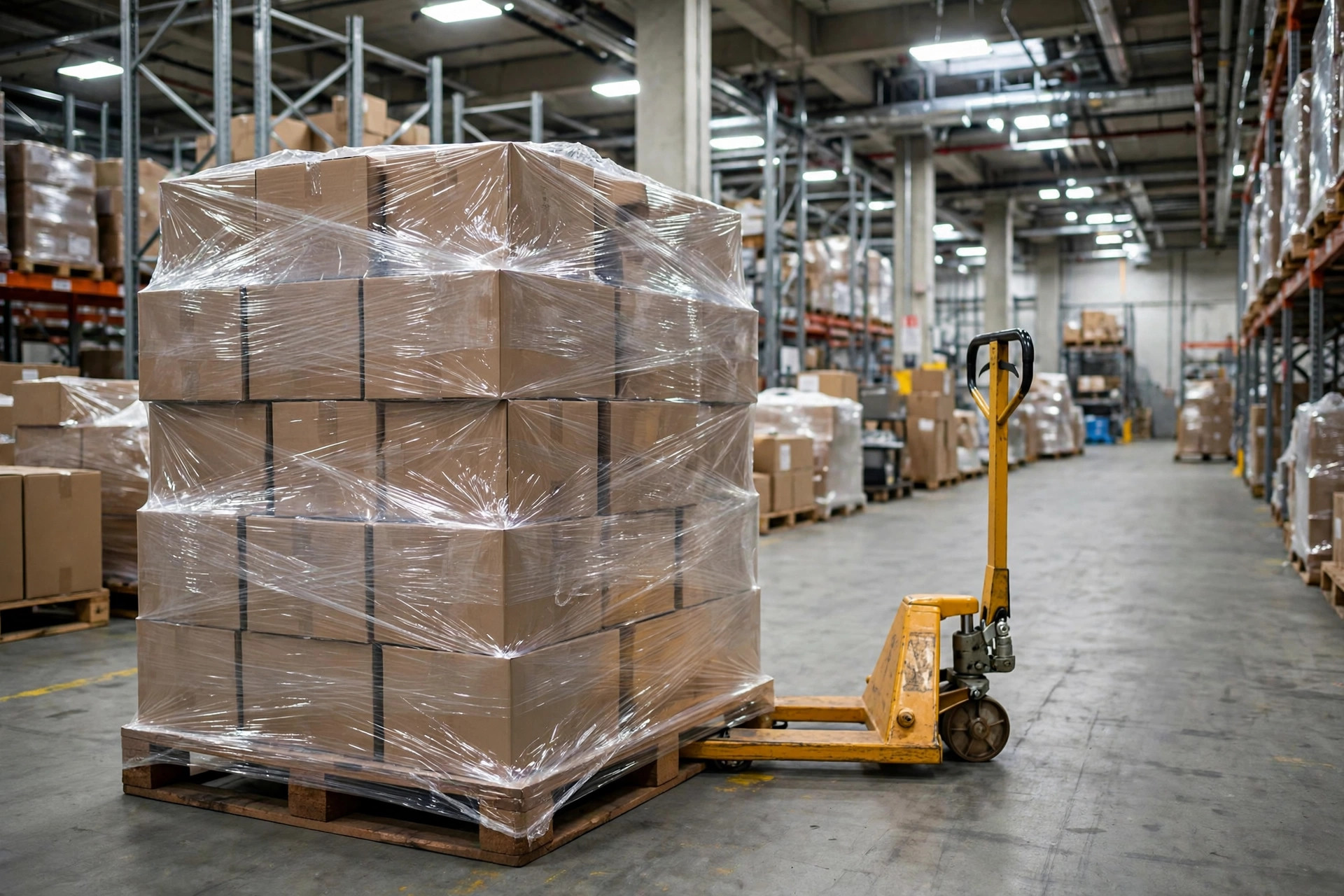
- Outside the stretch wrap. The classic failure zone. Film is reflective; a label under the wrap drops the receiver's scan rate off a cliff. The spec says outside the wrap — follow it.
- 400–800mm off the ground. Roughly eye level for a standing person, easy reach for a seated forklift driver. Too high means tiptoeing, too low means crouching — a receiver scanning hundreds of pallets a day will not bend over for you.
- Match the ASN. The SSCC in the 856 must equal the label, character for character. Let the WMS carry the number through, and disable anything that lets people hand-edit ASN number ranges. I write this into UAT: deliberately change one number — if the system doesn't block it, you don't go live.
- Spot-check before loading. Pull 3–5 pallets at random and scan the label SSCCs against the ASN one by one. A few minutes of checking catches most problems before they leave the dock.
The Failure List: I've Seen This Exact Pit Three Times
- Pre-printed generic labels. The label room prints a stack; the wrapper grabs whatever's on top. Two pallets end up with the same number while the ASN lists two different ones. Cure: print per pallet, with the print job triggered by the WMS shipment.
- ASN sent, label never applied. The ASN goes out early; the labels are still queued in the print room. Lock the process: no label-print confirmation, no ASN transmission.
- Label under the wrap. Said it above, saying it again, because people keep doing it.
- Duplicate serial numbers. No uniqueness constraint on the pool, or test data leaked into production. Put a unique index on the pool table and give test environments their own prefix.
- Hand-calculated check digits. A copied spreadsheet formula off by one digit voids the batch. Let the system do the math.
- Creative extension digits. Someone thinks 1 looks more professional than 0. It doesn't. Use 0.
Before you leave today, do this one thing: walk to your label room and look — are pallet labels pre-printed in generic stacks? If yes, do two things tomorrow. First, switch on SSCC auto-generation in your WMS (any WMS with a retail-compliance module has it). Second, point both ASN numbering and label printing at the same WMS number pool.
That one change kills half the failures above. Getting sscc-18 barcode label requirements right isn't about sticking labels carefully — it's about locking the process down. The label is the cheapest thing in your warehouse. Don't let it cause the most expensive trouble.
By Lin Xiao, WMS Implementation Consultant