Start with a number: $187,340.
That was the total on a fire sprinkler retrofit quote last fall. The quote sat in the middle of a conference table. On one side, the landlord. On the other, the tenant. They were staring at each other, and both faces said the same thing: you're paying for this.
I sat between them. And in that moment I knew exactly what went wrong — one sentence that never made it into the lease.
Where the Violation Notice Comes From
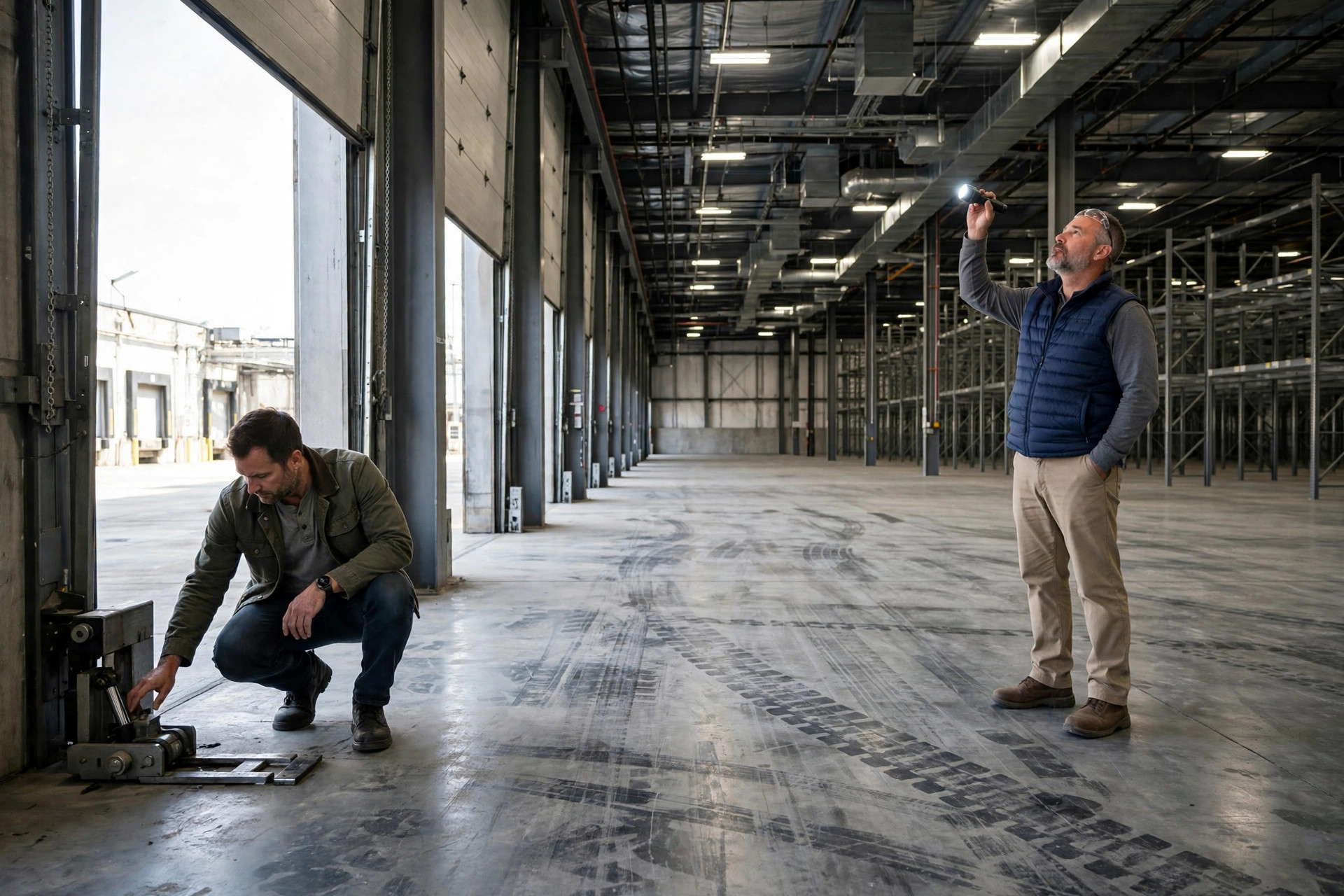
Back in 2023, a client of mine leased a 60,000-square-foot warehouse in Ontario, California, 32-foot clear height, running e-commerce fulfillment. The previous tenant was a carton wholesaler — everything floor-stacked to about 8 feet, and the sprinkler system was designed for ordinary storage: standard control-mode heads, untouched for years.
The new tenant's business was different. They installed five-level heavy-duty racking and stored up to 20 feet. Three months after the racks went in, the fire department showed up for its annual inspection. The inspector walked the floor, pointed at the racks, and said the storage height was over 12 feet — the existing system couldn't protect that configuration. A violation notice was issued on the spot: 30 days to fix it, or fines, and in serious cases, restricted use of the building.
There are three things that trigger a retrofit. Memorize them before you sign a warehouse lease.
First, changing storage height. This is the most common one. Twelve feet is the line — above that, the fire code treats it as high-piled storage, and the original sprinkler design probably doesn't cover it. Go from 8-foot floor stacking to 20-foot racking, and the fire department will find you.
Second, changing commodities. Switch from cartons and apparel to plastics, lithium batteries, or aerosols, and the hazard classification jumps. The sprinkler requirements jump with it. Some commodity changes even force in-rack sprinklers.
Third, the fire inspection itself. Departments inspect annually now. If they see that what's in the building doesn't match what was permitted, the notice goes up. A lot of tenants first hear about sprinkler retrofits in exactly that moment.
My client hit the first trigger. Racks were up, business was running, and then the fire code caught up. No good way forward, no good way back.
Where the $187,000 Actually Goes
The fire protection contractor came in and priced it out. The quote was detailed; here's where the big money went.
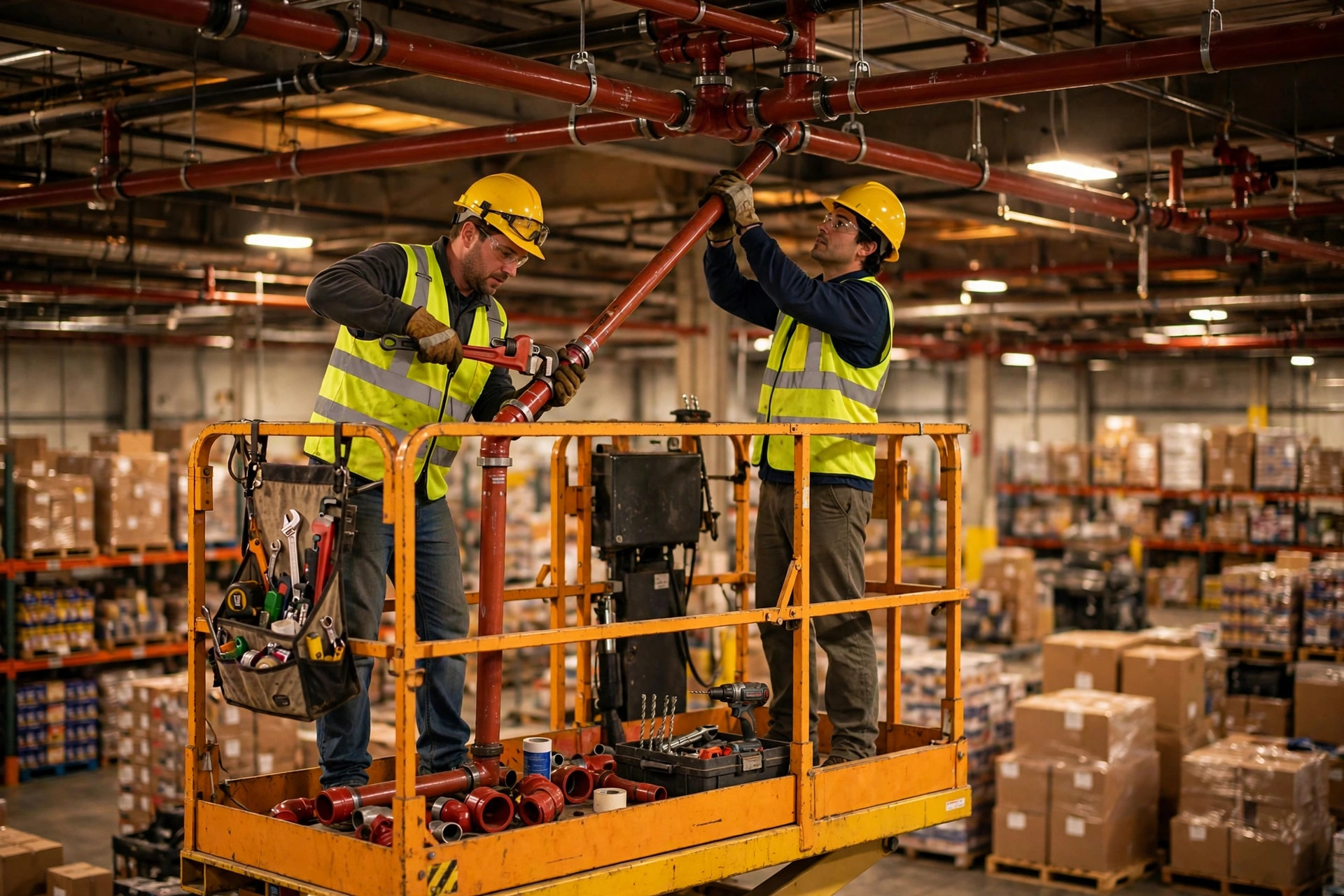
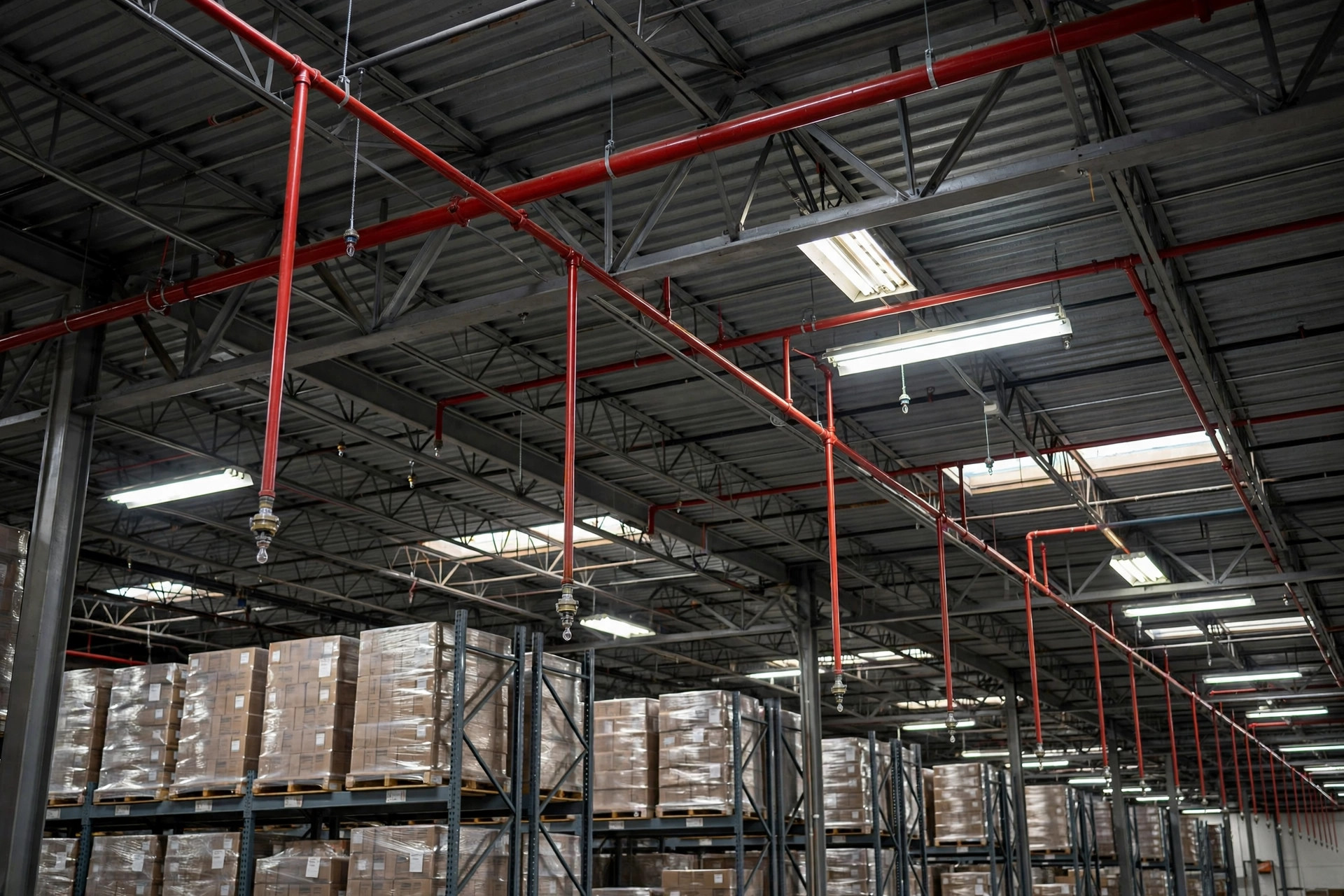
The biggest chunk was head replacement. Several hundred standard heads had to be swapped for ESFR heads — Early Suppression Fast Response. Installing one runs about $180, roughly double a standard head. A few hundred of them, and you're past $100,000.
The second chunk was in-rack sprinklers. At 20 feet of storage, the code demands special protection for rack storage 15 feet and above — sprinkler lines inside the racks themselves. Billed per head, about $100 a point, and rows of racks add up to more than $20,000.
The third chunk was hydraulic calculations, drawings, and the permit. You can't just hook up pipe — the whole system has to be recalculated to prove pressure and water supply are adequate, then submitted to the fire department for approval. That engineering and permitting work, plus possible upgrades to the fire pump supply, came to just under $60,000.
All in: $187,340. Over 60,000 square feet, that's a little over $3 per square foot. Retrofits on older warehouses typically run $2 to $7 per square foot, so the quote wasn't outrageous. But for the tenant, it was money that never appeared in any budget when the lease was signed.
The moment the quote landed, the fight started. The landlord's logic: you changed the storage configuration, you triggered this, and the lease says the tenant handles interior modifications. The tenant's logic: sprinklers are part of the building's fire protection system, like the roof — the building owner's problem.
Both sides had a point. Which was exactly the problem — the lease never settled it.
The Four Clauses the Lease Must Have
It took two months of arguing before I helped them land an amendment. Four clauses, each one paid for with money and pain.
First, who's responsible — defined by what triggers the retrofit. If the building's fire protection was inadequate to begin with (a 32-foot-clear warehouse with only ordinary-hazard sprinklers), the base building work belongs to the landlord. If the tenant's storage method or commodities exceed the original design, the tenant-specific portions belong to the tenant. That negotiation ended roughly 60/40: the landlord took the base system, the tenant took the in-rack portion. Defining the trigger matters more than naming a payer.
Second, a cost cap. Retrofit projects are notorious for the invoice looking nothing like the quote. The amendment should say what the budget is based on, who absorbs overruns, and in what proportion. My advice: set a hard cap, above which the tenant can stop the work and renegotiate.
Third, rent abatement for construction delays. A sprinkler retrofit tears up the ceiling. For two months, forklifts had to stay clear and rack zones kept getting emptied. The agreement should spell out: while construction disrupts operations, rent is abated — by the day, not by vague promise. That deal included two full months of free rent before the tenant would sign.
Fourth, an exit clause if the system fails final inspection. This is the one everyone forgets. If the retrofit is finished but the fire department won't sign off, the tenant must be able to walk away — deposit and prepaid rent refunded. Without it, a failed inspection traps the tenant's money and time with no way out.
Tie the payment schedule to inspection too. We negotiated three installments: 30% at mobilization, 40% when the piping was done, 30% after the fire department passed the system. Money still owed is your only leverage over the contractor — and over the outcome.
The amendment was signed, the crew moved in, and two months later it passed inspection on the first try. That warehouse runs normally today, racks still at 20 feet, ESFR heads overhead. The client sleeps well.
Five Questions to Ask the Landlord Before You Sign
If you're about to lease a warehouse, take these five questions to the landlord and don't sign until you have answers.
One: what type of sprinkler system is in the building, and what storage height was it designed for? Ask for the original fire acceptance documents — not a verbal "it's fine."
Two: has the fire department ever issued a violation or correction notice here? Can I see the history? A building with a violation record is a building the department watches closely.
Three: if I raise the racks or change commodities, who pays for the fire protection upgrade? The answer goes in the lease itself, not in an email.
Four: can I operate normally during construction? If not, how is rent abated — by the day or the month? Pin it down.
Five: if the retrofit fails final inspection, can I terminate the lease with no penalty? Do I get my deposit and prepaid rent back?
Sprinklers are the kind of thing you never look at — until they decide your fate. Warehouse tenants trip on two things: staring only at the rent per square foot, and assuming fire protection is the landlord's problem. Remember this: fire code compliance always lands, in the end, on whoever actually uses the building. One extra question before you sign can save you six figures and months of fighting.