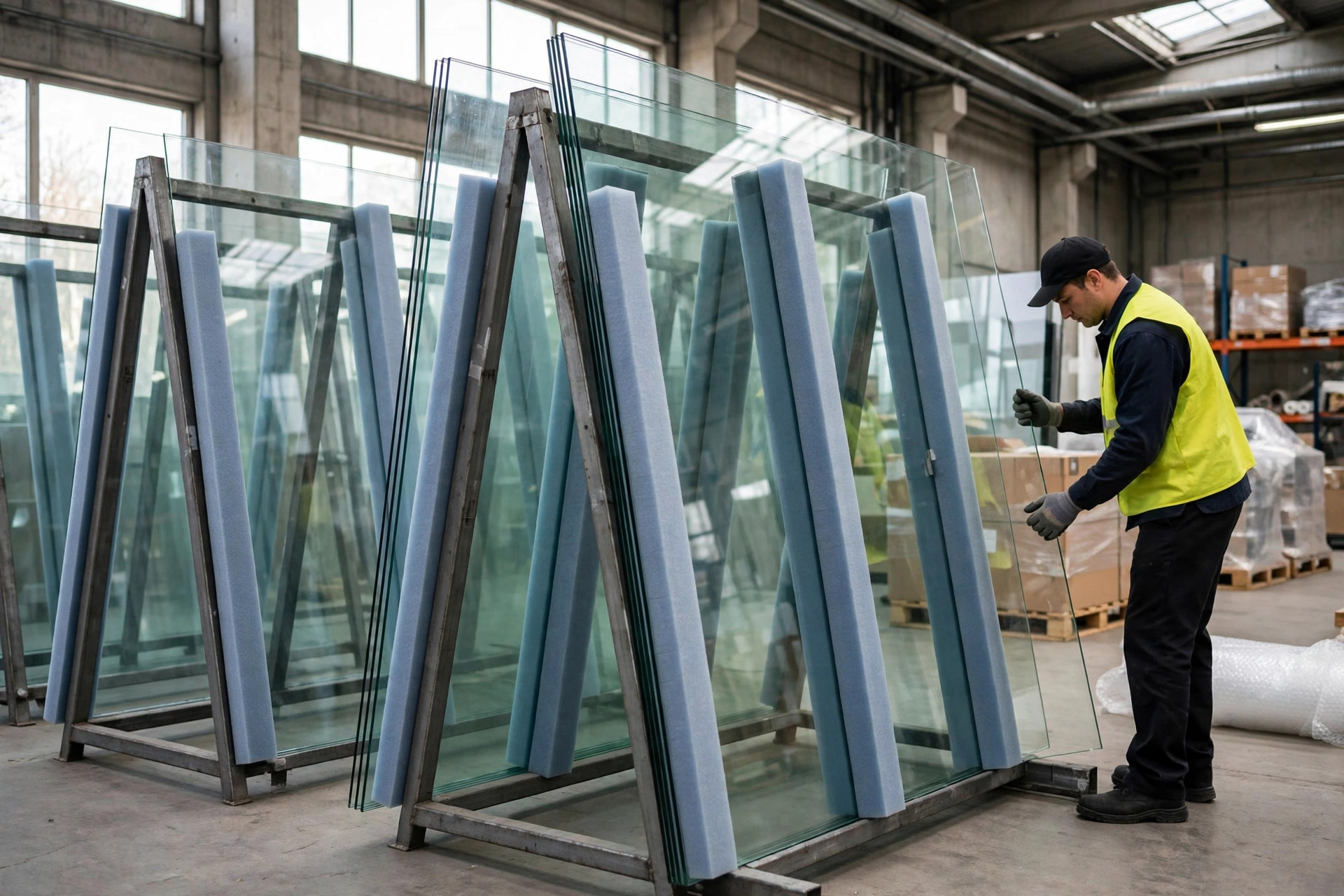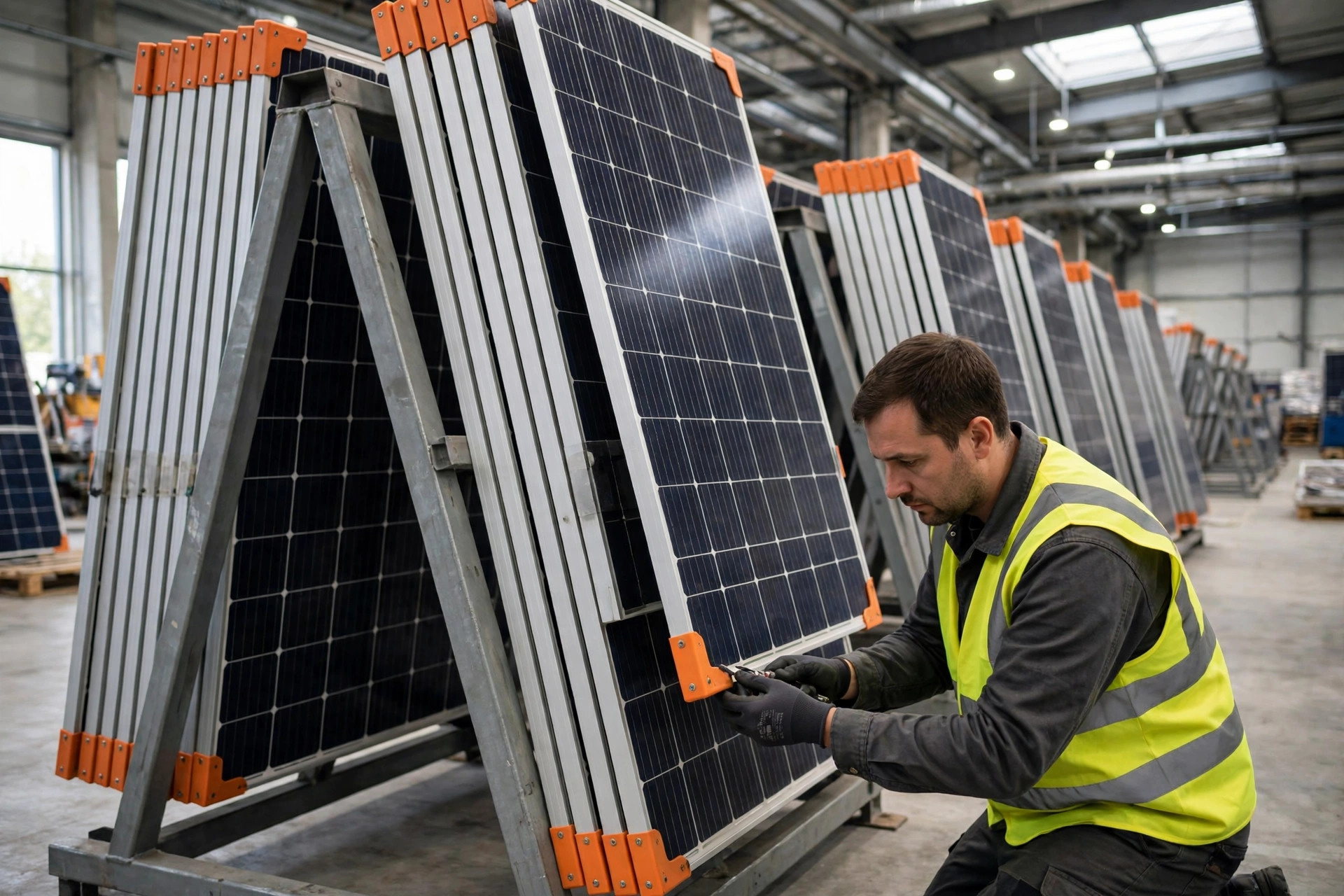
Solar panel warehouse storage handling starts from a simple physical fact. Think of a panel as a large sheet of glass held in a frame. It does not fear weight in the abstract. It fears uneven load and corner impact. Lay panels flat in a stack and the lower panels carry the weight of everything above them, plus any unevenness in the pallet below. Over time, that uneven load can hide micro-cracks inside the panel while the surface still looks fine. Stand panels upright instead, like books on a shelf, and gravity travels down through the frame rather than pressing across the glass. That is the whole reason vertical storage became standard practice. The principle matters because once you accept it, corner protection, spacing, and the damage ledger stop looking like bureaucratic rules and start looking like consequences.
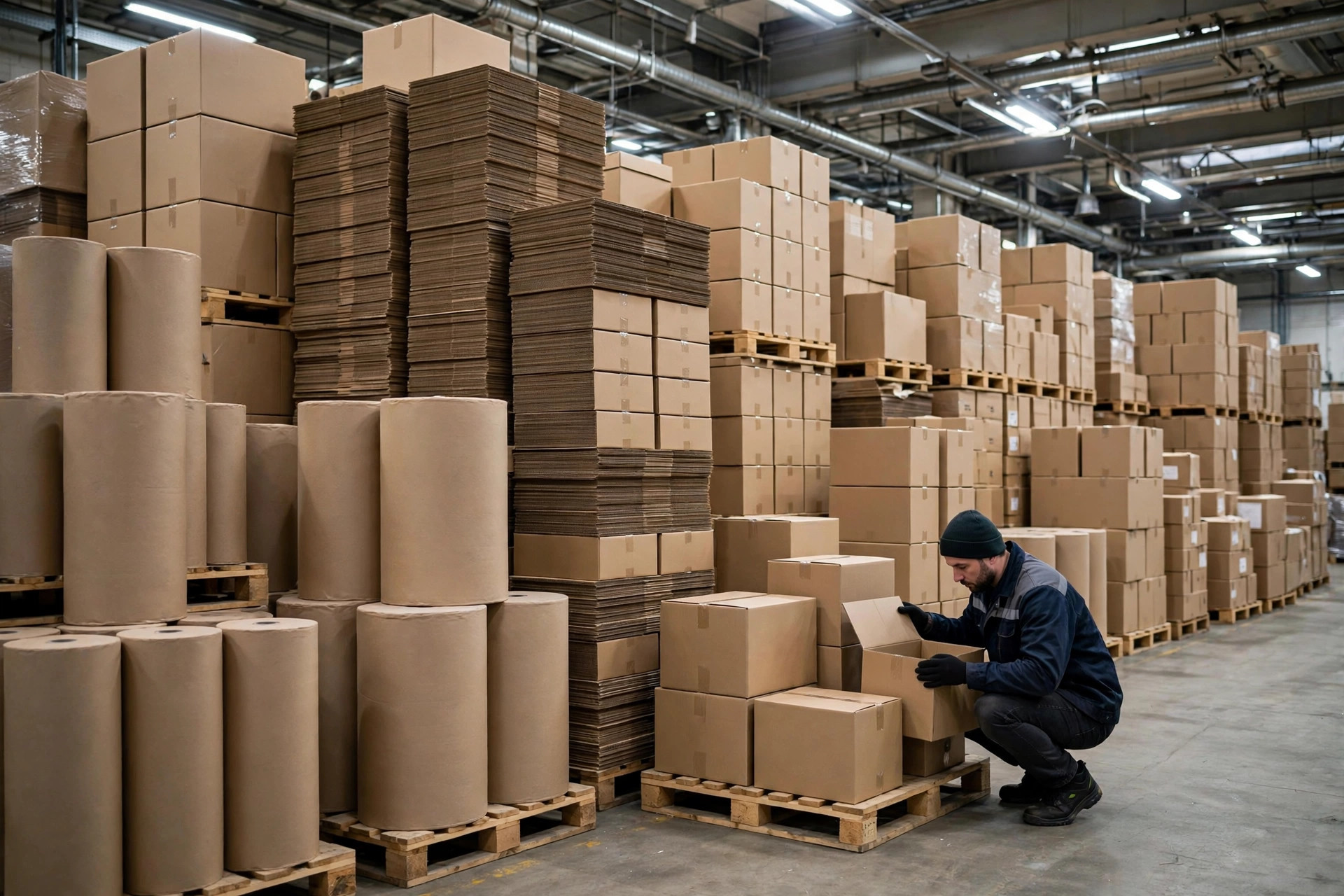
An inbound dock tells you quickly whether a panel warehouse knows its job. Before a truck is unloaded, the crew should check outer packaging for damage, pallets for deformation, and straps for looseness, photograph what they find, and only then start unloading. That order cannot be reversed. In another warehouse, forklifts moved cargo straight into racking, broken outer packaging went unrecorded, and when a corner-damaged panel turned up at dispatch, nobody could say whether the damage happened in transit or inside the warehouse. Inbound inspection is not fault-finding for its own sake. It freezes the condition of the panels at arrival, and every later damage record has to be measured against that frozen starting point. The inspection record should note panel model, batch, outer packaging condition, and pallet condition, in enough detail that warranty and claim discussions later do not have to rely on memory.
Solar Panel Warehouse Storage Handling: Vertical Racking and Corner Protection
Vertical racking is not a matter of leaning panels against a wall and calling the job done. The tilt of the rack, the flatness of the backing board, and the gap between panels all need to be right. A backing board that is not flat creates local pressure points. Gaps that are too tight invite corner collisions during picking. Gaps that are too wide waste rack space. The dividing line between those outcomes has to be set by measurement on site, not by feel. Corner protection is the partner of vertical racking. The four corners of a panel are its weakest points and the first places to suffer in handling and placement. You can think of corner protectors as protective gear for the panel. The protectors themselves cost little, but the single impact they absorb can be the difference between a shippable panel and a scrapped one, or between a clean delivery and a customer complaint. There is also a pseudo-requirement worth calling out directly. Some warehouses wrap every panel in excessive extra packaging to look professional, then add extra handling steps when the packaging has to be removed for inspection. More handling means more chances to bump a corner, so over-packaging in this case is not protection. It is a new source of risk.
Solar Panel Warehouse Storage Handling: Damage Ledger and Warranty Triage
The damage ledger is the most valuable book in a panel warehouse, and its value lies in pattern, not in totals. Corner impact, glass cracking, frame deformation, and junction box faults each point to different causes and different handling paths, so the ledger should record damage by type, linked to batch and location. That linkage is what reveals whether damage clusters around one batch or one handling step. A damaged panel must be isolated immediately, marked, and kept away from good stock, because mixing damaged and good panels together forces a full re-check at dispatch, and the time and labour spent on that re-check are pure waste. Warranty triage follows the same logic. Transit damage, in-house handling damage, and incoming defects travel down different paths. Transit damage needs transport documents and inbound photographs. In-house damage needs handling records. Incoming defects need batch records. When triage is unclear, every party in the chain pushes responsibility back to the previous step.
Picking sequence is another detail that gets overlooked in panel warehouses. Vertically stored panels should be picked in inbound batch and dispatch order, from the outer side inward, rather than pulled from the middle to save a short walk. Pulling from the middle removes support from neighbouring panels and raises the risk of toppling and corner impact in one move. Writing the picking sequence into the work instruction works better than telling people to be careful, because carefulness is an attitude and sequence is a system, and attitudes fluctuate while systems hold. Routine inspection should also cover racks and backing boards, since loosening and warping develop gradually. Tightening a rack and noting it during inspection costs far less than recovering from a panel fall that could have been prevented.
The costing framework can be built from your own ledger rather than borrowed from a vendor brochure. Damage rate equals damaged panels in a period divided by total panels received in the same period, and that ratio should be calculated by batch and by handling step, not only as a single total, because a single total hides where the problem actually sits. Damage prevention spending should be judged the same way, with spending on corner protection, racking improvement, and inspection labour divided by the damaged panels avoided and the rework time saved. Vendor damage figures are marketing figures and should not be quoted as facts. Specific values should follow the manufacturer's own testing and the contract terms, while the warehouse's own ledger data provides the strongest evidence in any negotiation. Here is the counterintuitive part. The warehouse with the lowest damage rate is not necessarily the slowest warehouse, because a warehouse that inspects carefully and keeps a good ledger dispatches faster. Problem panels are already isolated, so dispatch does not turn into an emergency search through the whole warehouse. Speed and quality are not opponents here. The ledger is what connects them.
So is this money well spent? Look at this one number: damaged panels in a period divided by total panels received in the same period, tracked over time. If that ratio keeps falling, vertical racking, corner protection, and the ledger are genuinely working together. If it stays flat or rises, some step is only being performed on the surface, whether protectors are not fully fitted, isolation is not enforced, or ledger categories are too coarse to show where damage concentrates. Panel warehouse damage prevention has no shortcut. Vertical racking fixes the direction of load, corner protection fixes corner impact, and the ledger fixes responsibility and trend. Miss any one of the three, and the damage account will not add up.
By Da Liu, Automation Engineer