Here is the conclusion first: for outbound liquid goods, a plastic bag is the least valuable layer of defense. What actually works is three things, in order: caps and seals that pass inspection, secondary containment inside the carton, and carton orientation and stacking done right. Shipping a bottle in a bag and hoping for the best puts all your faith in the thinnest layer of plastic you own. I have seen too many warehouses learn this the hard way, and the goods involved were never anything exotic. It was always detergent, cooking oil, beverages, the ordinary liquids that move every single day.
Let me tell you about one I watched happen. A few years ago, a California home-care warehouse shipped a batch of large laundry detergent refill packs during a promotion, the kind with a built-in handle. The packing team, trying to save time, set the bottles upright in cartons, tucked in some bubble wrap, and sealed the boxes. In transit, two cartons at the bottom of a pallet deformed under the load, caps loosened, and detergent seeped through the carton seams. Eleven of the 40 cartons on that pallet had soaked outer boxes, and the customer rejected the entire pallet. The loss was not two leaking cartons. It was the nine contaminated cartons, the return freight, the reshipment freight, and a dent in the customer's trust in that warehouse. Afterward, the review found all three defenses missing: caps never rechecked, no containment inside the cartons, and too much weight on the bottom layer.
Caps and Seals: Check Them by Hand Before They Ship
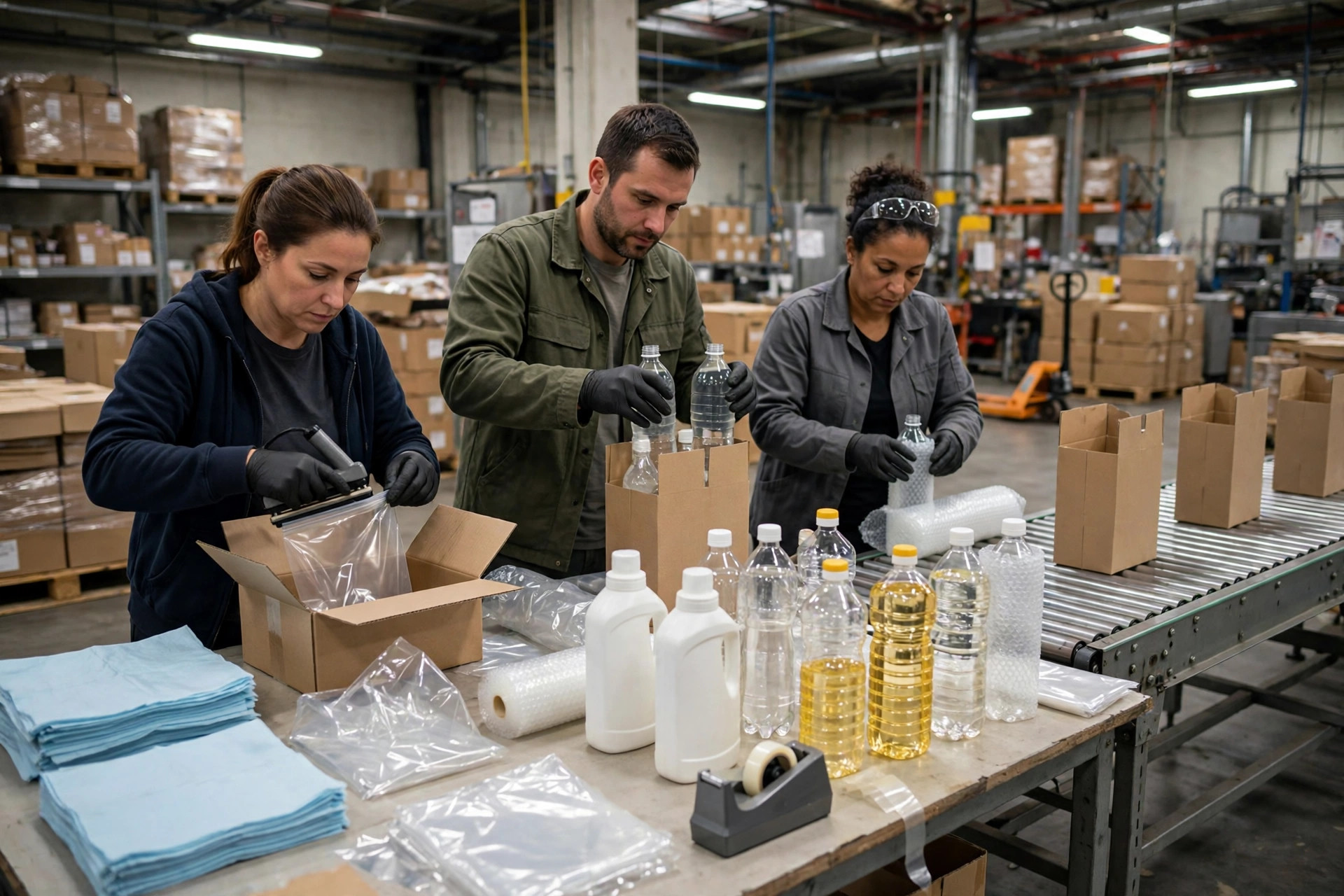
The first line of defense is rechecking, not trusting. Inbound inspection is one thing. A second pass at the packing bench is another, because handling, movement, and temperature swings can all loosen a cap that arrived tight. My rule at the bench is a short checklist by product type: twist caps get a full twist to confirm, pump heads get pressed to confirm they lock, handled bottles get lifted once to confirm the handle root has no cracks. Any cap that feels loose, any seal film that is broken, any bottle with a cracked body goes straight to the exception flow. Never pack it on a "probably fine."
Cooking oil and beverages deserve one extra look. Cooking oil bottles have thin walls and hate pressure. Carbonated drinks hate shaking and heat, so summer outbound loads should avoid the hottest loading hours. None of this is advanced science. It is ten extra seconds at the bench, and ten seconds is cheap insurance against a whole rejected pallet.
Secondary Containment for Leak Prevention: If It Leaks, Keep It in the Box
The second line of defense is secondary containment, which means this: even if a bottle leaks, the liquid stays inside its own carton and never reaches another one. The method is not complicated, but the material has to match the volume. Small single bottles ship fine with a sealed inner bag and an absorbent pad. Multi-bottle cartons need inner bags by compartment, with pads under and between bottles. Large refill packs need a leak-proof liner or plastic sheet at the carton bottom, plus dividers so bottles never knock against each other.
There is a trade-off here, and it is worth naming honestly. More containment material means higher cost per carton and slower packing. But compare that against the cost of one leak spreading across a pallet, and the math is not close. In that detergent case, a few cents of inner bag and absorbent pad per carton would have limited the damage to one carton interior instead of eleven soaked boxes. Saving pennies on packing to lose a pallet is the most common foolish bargain in liquid outbound.
Carton Orientation and Stacking for Liquid Leak Prevention: The Arrow Is Not Decoration
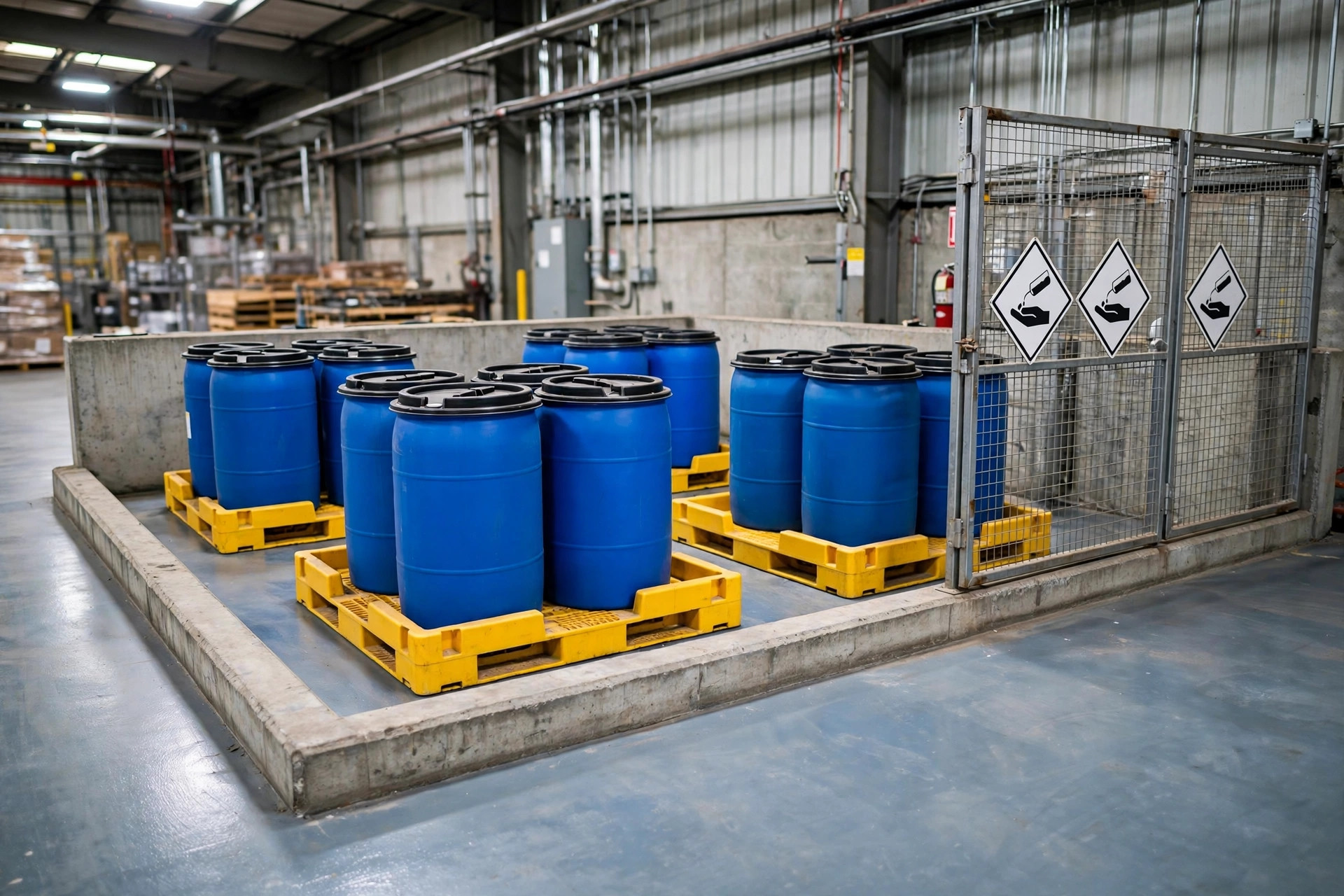
The third line of defense is orientation and stacking. Caps up is a hard rule, cartons carry a this-side-up mark, heavy cartons go low and light ones high, and liquid cartons never sit at the very bottom of a pallet taking the full load. Bottom-layer pressure is exactly what defeats caps first. On mixed pallets, liquid cartons and water-sensitive goods like paper products and powders go in separate zones with a waterproof sheet between them, so a leak has a buffer before it spreads.
One detail that gets missed too often: tape the carton in an H pattern, and give the carton bottom an extra pass. A soaked carton bottom is the first thing to split, and an H seal buys time for receiving and handling before the whole box gives way.
Different Bottles, Different Containment
Liquids are not one product, and the leak point changes with the bottle. A small table at the bench beats relying on memory, especially for new hires:
| Bottle type | Most likely leak point | Containment move |
|---|---|---|
| Screw-cap bottles (detergent, cooking oil) | Loose cap, pressure on the carton bottom | Cap recheck, inner bag, absorbent pad at the bottom |
| Pump bottles (hand soap, conditioner) | Pump not locked, pressed in transit | Lock confirmation, bag over the pump head, dividers between bottles |
| Handled refill packs | Cracks at the handle root, heavy single units | Handle check, individual inner bag, never mixed with heavy goods |
| Carbonated drinks | Shaking, heat expansion | Avoid hot loading hours, fix bottles within carton compartments |
Post that table at the bench and a new hire can avoid most of the traps that experienced staff dodge by feel. That is what a process is for: it should not depend on one particular person being in the room.
Loading and Sign-Off: Do Not Skip the Last Gate
Once cartons are sealed, there is still loading. Wrap liquid pallets tightly, not for appearance but to stop cartons shifting and toppling in transit. Load liquid pallets in the middle and lower layers: never at the very bottom taking the full load, and never at the very top where they sway the most. On hot summer days, check the trailer temperature before loading, and keep heat-sensitive and carbonated liquids out of midday loading in direct sun.
Sign-off matters just as much. The outbound sheet should name the liquid products and carton counts, and any exception gets a photo on file. If a leak shows up at delivery, photos, carton numbers, and batch records are what make a claim stand up. Without documentation, a leak dispute usually ends with the warehouse eating the loss, even when the damage clearly happened in transit, simply because there is no evidence to show otherwise.
So here is the one-line version to take back to your packing bench. For liquid outbound, do not ask whether the packing is cheap enough. Ask where the damage stops if something leaks. If it stops at the cap, perfect. If it stops inside the carton, acceptable. If it escapes the carton and soaks a pallet, the packing process failed. Check your bench against that standard, find the missing layer, and fix it. You can start tomorrow.
By Lao Mi, Supply Chain Veteran (20 yrs)