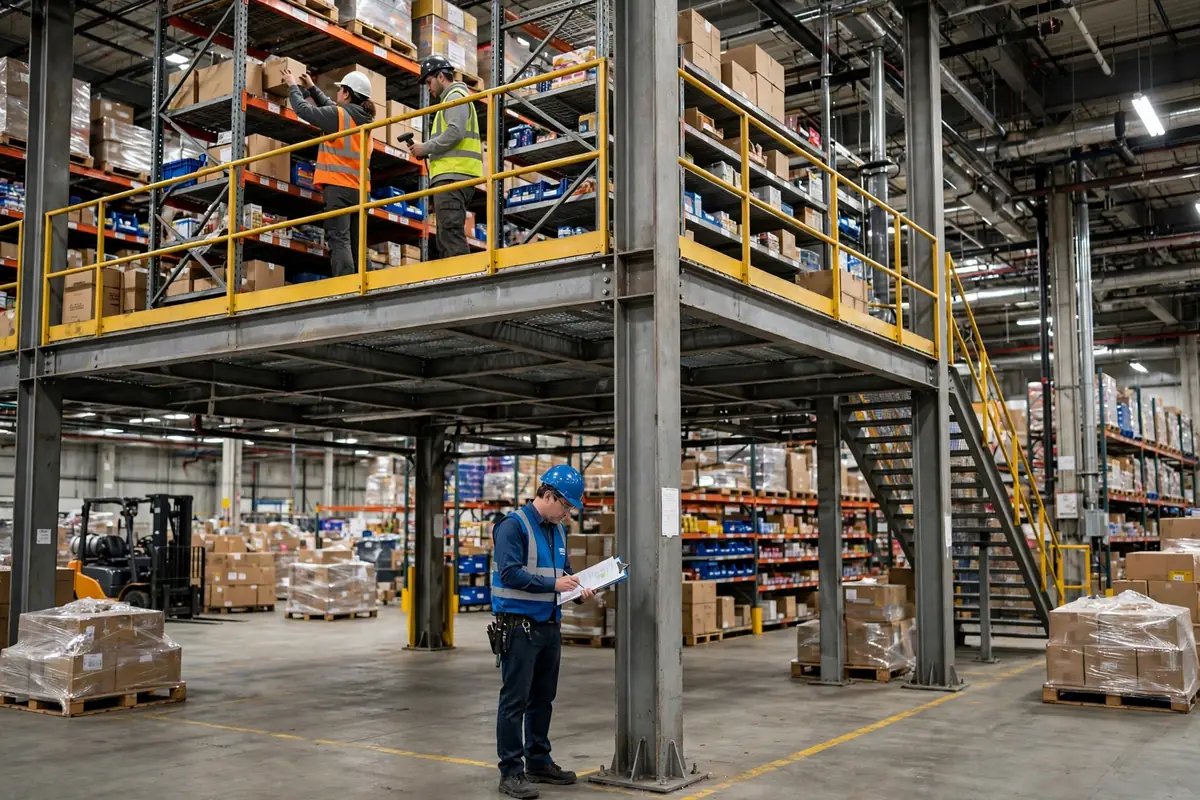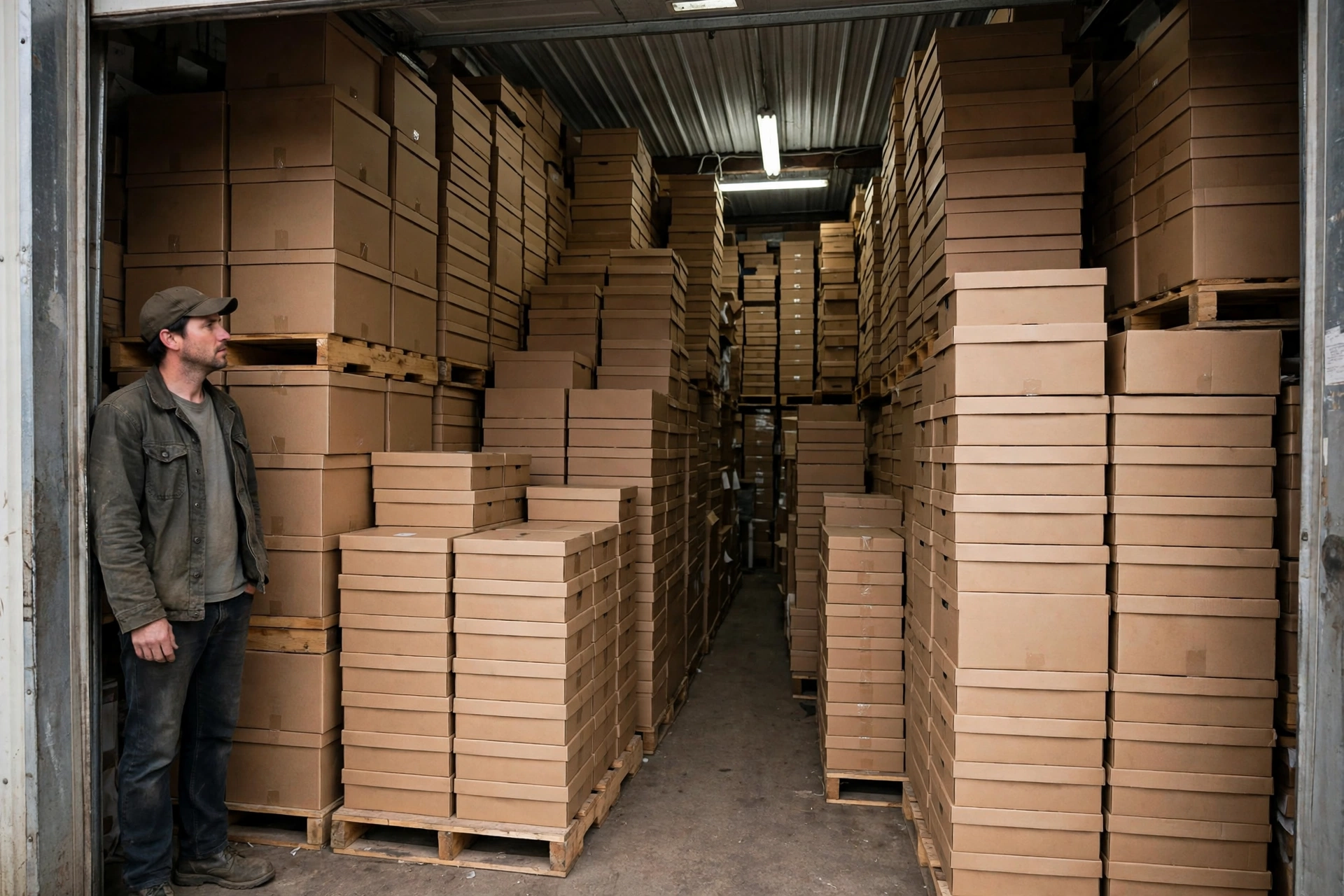
Let me start with our embarrassment. In a three-thousand-square-metre warehouse like ours, returns are not a department. They are weather. On a normal day a few parcels drift in. After a big promotion, they block the doorway. Talking about small warehouse returns processing layout sounds like a big-warehouse planning course, but our real problems are embarrassingly basic. Return and outbound vehicles fight for the same dock. Returned cartons pile up next to cartons waiting to leave. Our one experienced hand packs in the morning, gets pulled away to open returns in the afternoon, and is called back to packing halfway through. Outbound slows, returns slow more, and resalable goods lose condition for every day they sit in a box. We cannot afford to burn money like that, so my conclusion is simple: the returns area may be small, but its boundaries must be unmistakable.
small warehouse problems start when returns and shipping share everything
Returns and shipping compete for more than a dock. They compete for attention. Outbound orders have a cut-off time and customers who chase them. Returns have nobody chasing them, so they always come last. Yet the longer they wait, the worse they get: supplier windows close, resalable stock misses the next sales wave, and disposal goods take up space and risk being shipped by mistake. I learned this one Monday morning, when post-promotion returns arrived with the weekend's outbound backlog. Returned cartons were stacked beside the packing bench to save effort. A temporary worker treated one as outbound stock, resealed it, and nearly sent it to a different customer. Only a failed scan stopped it. After that day I made one rule absolute: a returned item, even a single pair of shoes, never enters the shipping area. It goes into a returns square first.
Our dock solution is equally low-tech. If you cannot have two docks, divide the day. Returns are unloaded and labelled first, the return vehicle cleared before noon, and outbound vehicles use the dock in the afternoon. The schedule goes on a whiteboard everyone can see. If a large vehicle tries to jump the queue, we ask one question: must this load leave tonight? If not, it waits. The rule is not sophisticated, but it beats shouting every morning.
returns processing in four squares: staging, grading, restocking, and disposal
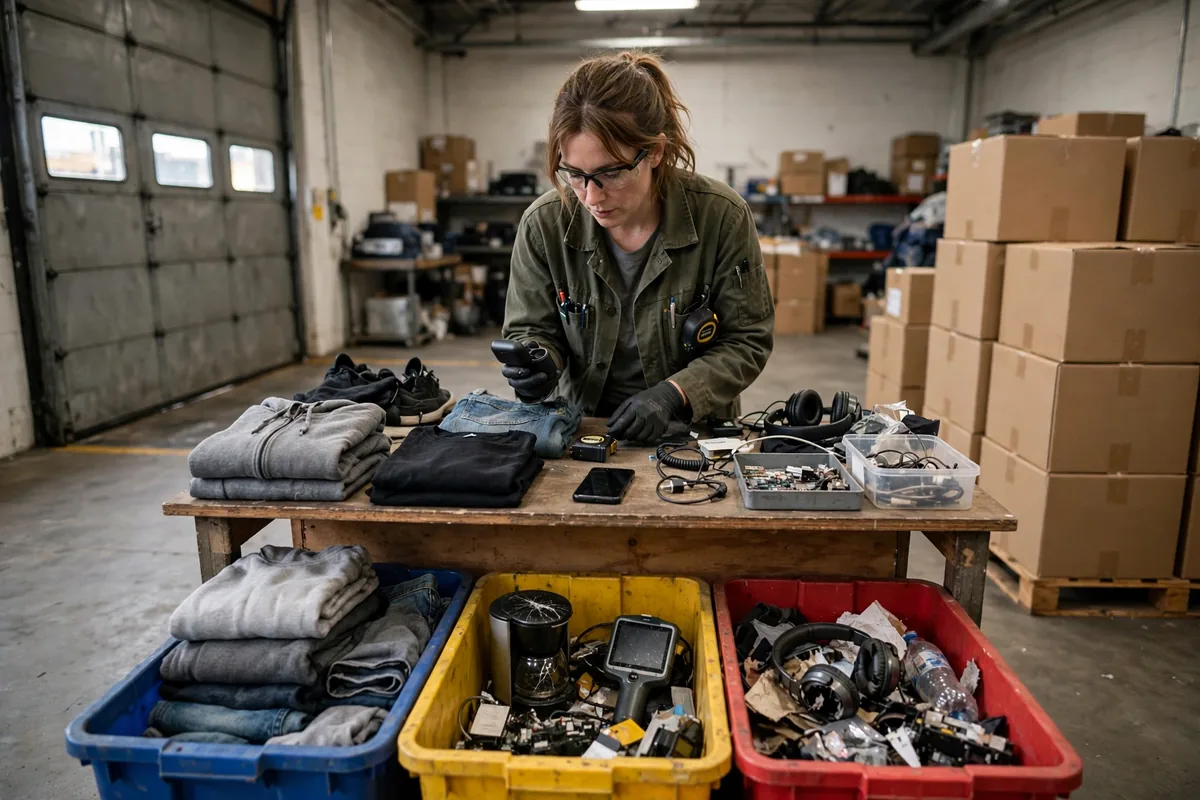
Our four squares are floor tape, old shelving, and tote boxes in different colours. The first square is receiving staging. Every return arrives here unopened. We scan the carrier number, register it, photograph the outer carton, and queue it by arrival date. This gives each return an identity before anyone touches it, so nothing becomes ownerless stock.
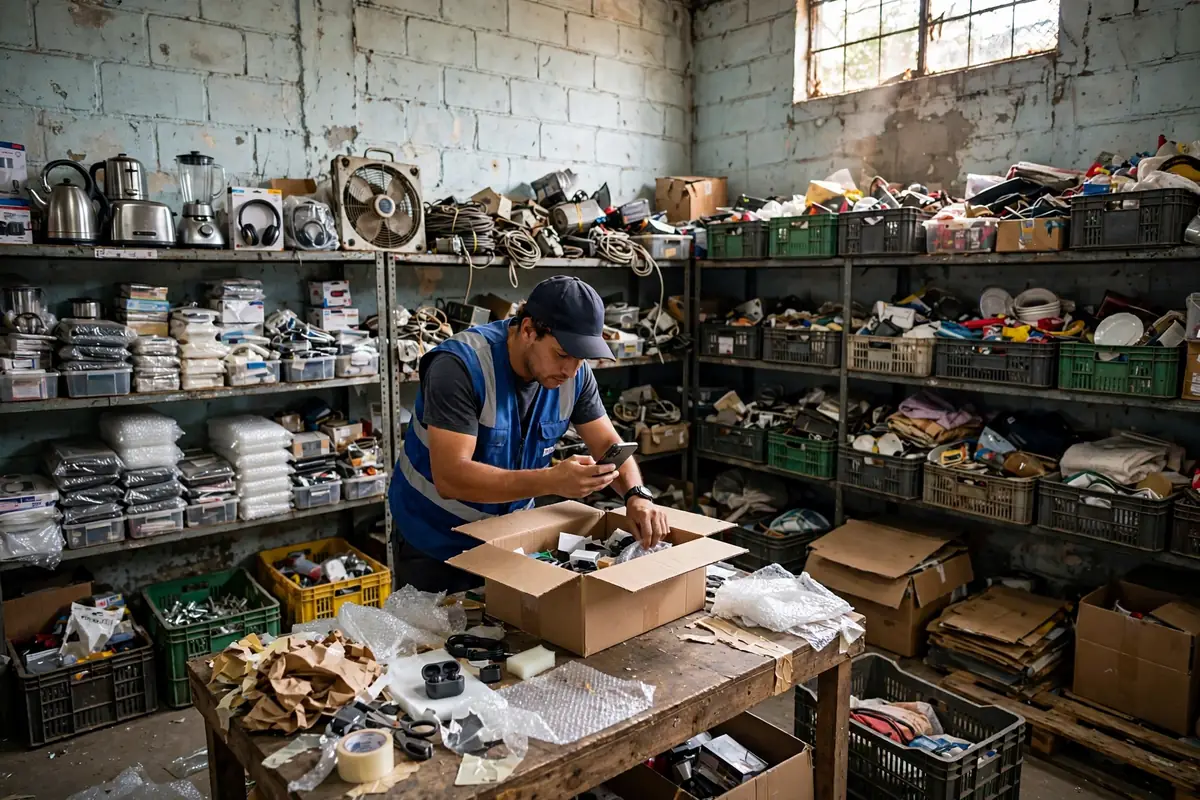
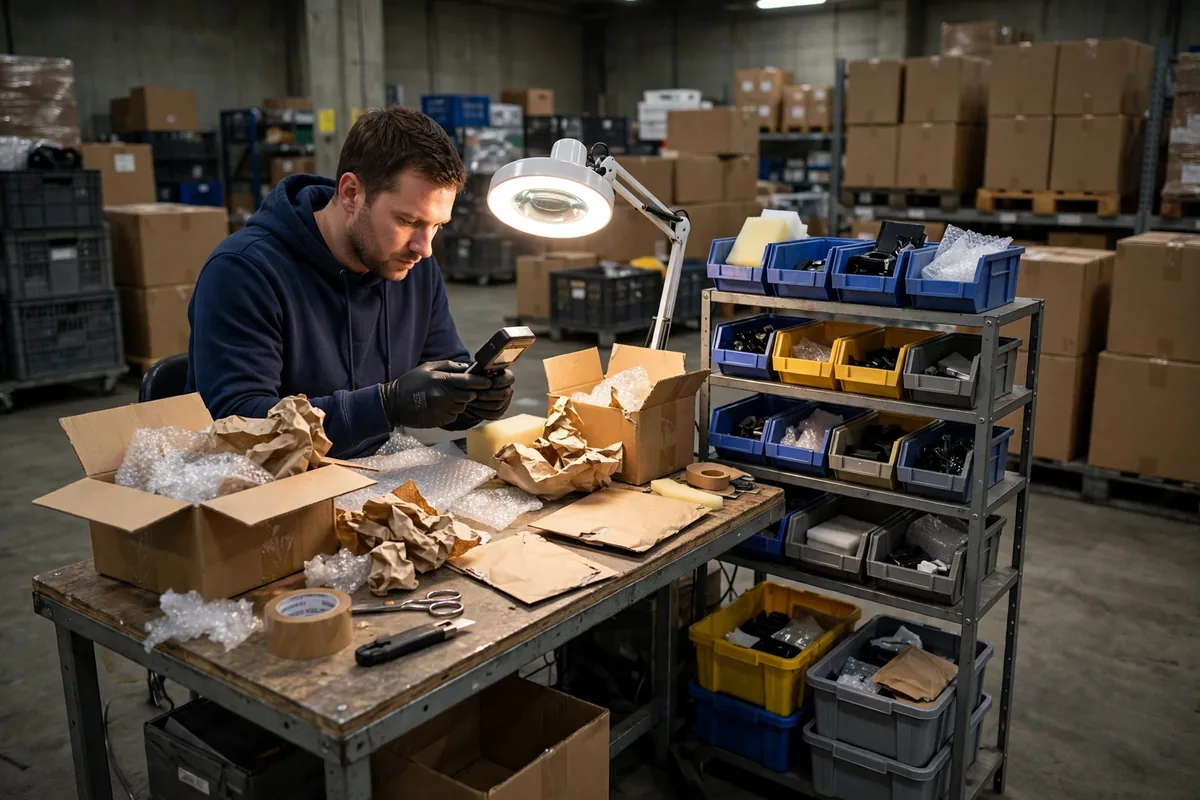
The second square is inspection and grading. Here we open the parcel, check appearance, test basic functions, and look for damage or missing accessories. Grading has only three levels: resalable as it is, resalable after cleaning, repacking, or a price reduction, and not resalable at all. The standard is on the wall in plain language with photographs, so a new starter compares against pictures instead of learning only by watching an old hand. The third square is waiting for restocking. Passed items are relabelled, repacked if needed, and held until the system status is corrected, then one person takes a full trolley to the shelves in a single trip. Running back and forth with one or two items wastes legs and invites wrong locations.
The fourth square is disposal and supplier returns. It is taped off in red, ideally locked, and nothing inside it may be touched without a signed list. This is the square people most want to skip, because waste feels like it can sit anywhere. It is the most dangerous square to skip: I have seen usable parts thrown away as waste and defective goods quietly returned to a shelf. Once the four squares exist, small warehouse returns processing layout becomes real, not because it looks professional, but because every item knows where it stands and where it goes next.
The hardware costs very little: floor tape, labels, a few totes, and a whiteboard. The expensive option is having no zones at all. Its costs hide in searching time, compensation for wrong shipments, and resalable goods turning into write-offs at month end.
Here is an illustrative example with assumed numbers, only to show the method. Suppose one hundred returns arrive each day in the week after a promotion, handled by one person who also packs. If zoning saves two minutes of searching per item, that is two hundred minutes a day, roughly half a person's working time. If it also prevents one or two wrong shipments, the saved compensation and freight already outweigh the tape and totes. The saving is not really minutes. It is fewer apologies and fewer payouts.
processing layout needs an elastic edge: expand after promotions, shrink back after
Returns volume is unstable, which makes the layout difficult. Four squares are enough on a normal day and far too few after a promotion. Sized permanently for the peak, the area wastes storage space most of the month; sized for a normal day, it bursts at the first peak. Our answer is an elastic edge. The row beside staging normally holds empty totes. At peak, the totes move out and a dashed line on the floor becomes temporary staging for uninspected returns, fed forward by arrival date. We expand staging only, never inspection, because inspection depends on people and people cannot be expanded with tape. That is the counter-intuitive point: at peak, the line worth defending is not speed. It is the line between checked and unchecked, because once it is crossed, every minute saved earlier is repaid twice.
When one person covers several jobs, the walking route matters even more. That person unloads, registers, opens, inspects, labels, and restocks; if those points are scattered, the job becomes a walking exercise. Our points follow one line: staging by the dock, the inspection bench two steps ahead, restocking on its right, disposal behind it on the left, scanner and printer on the bench itself. The person rarely backtracks. Restocking is the only long walk, so we wait until a trolley is full and bring empty totes back on the return trip. The line is not clever, but it is kind. A small team fears disorder more than volume; volume tires the body, disorder drains morale.
Three things are not worth saving money on. The first is lighting. Inspection depends on eyes, and under dim light scratches, colour differences, and stains disappear, so goods get graded wrong. Returns areas are often pushed into the darkest corner, which is exactly backwards; one wrong grading costs more than several lamps. The second is scanning. Registration and restocking checks must be scanned, never handwritten, because one wrong digit makes an item vanish in the system. The third is photographic evidence. A quick photograph of a damaged carton or missing accessory, saved under the return number, settles later arguments with customers, suppliers, and carriers better than ten explanations. None of these is expensive. Custom shelving, dashboard screens, and automated sorting lines are big-warehouse ornaments; we admire them from a distance.
My advice to other small operators is three plain sentences. First, divide the squares before chasing efficiency, because optimising an undivided pile is polishing chaos. Second, protect shipping first, but give returns a fixed slot and a named person daily, even one person for two hours. Third, write every standard down and put it on the wall; a standard that lives only in the owner's head takes a holiday whenever the owner does. In the end, small warehouse returns processing layout is not a planning problem. It is a survival problem: spend the least possible so every returned item has a name, a square, and a way forward.
Small warehouses have their own way of living. We do not have the systems or headcount of a big site, but we are close to the goods and can turn around quickly. If the squares are clear and the rules hold, returns can be handled calmly. If a salesperson offers me a complete returns suite tomorrow, I will invite them to look at my four taped squares first. The system can come later. The squares work today.
By Xiao Ma, Small Warehouse Owner