Our warehouse has no loading dock, and we load trucks anyway — "warehouse without loading dock" is a phrase I only learned after three years of paying tuition in sweat.
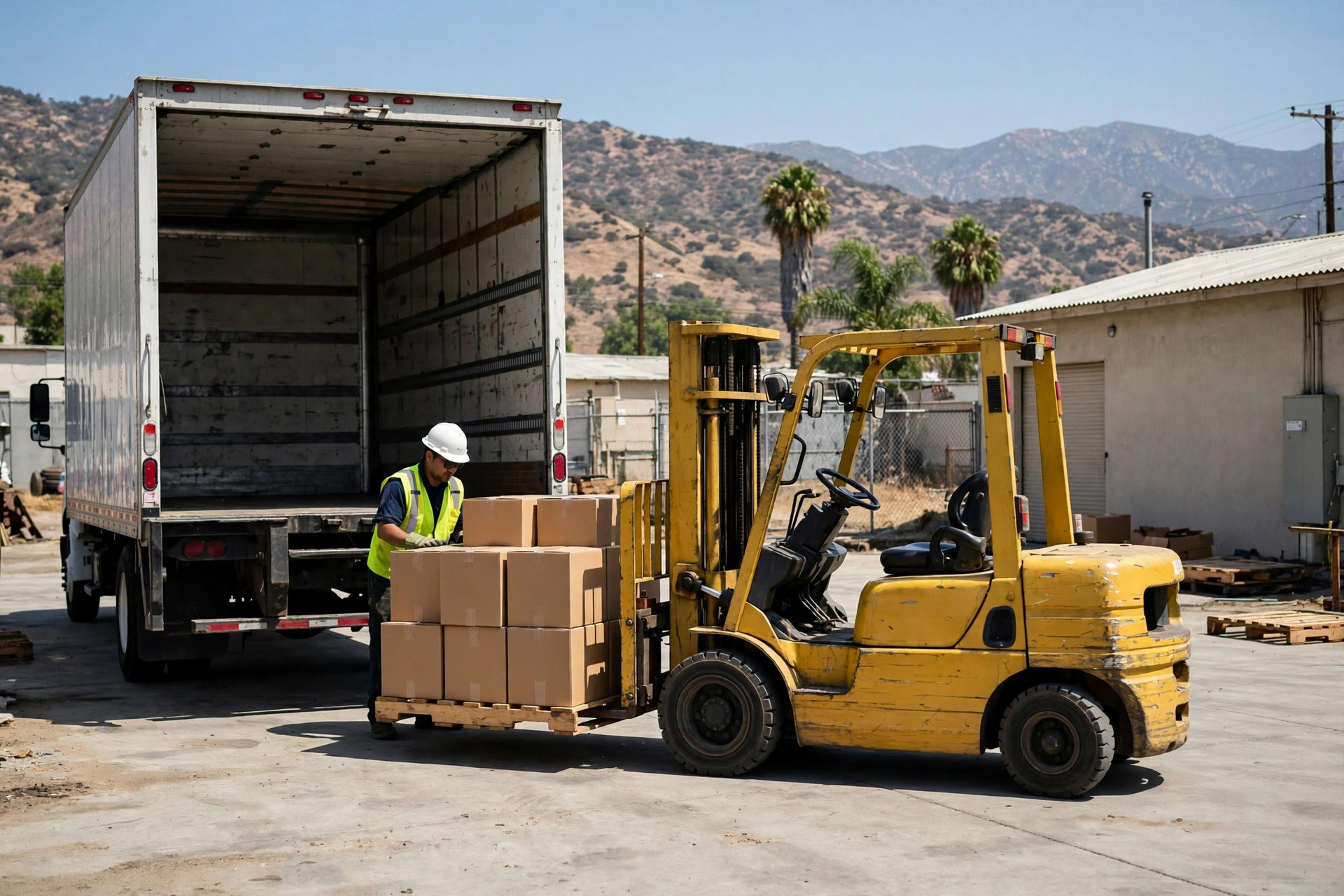
Let me start with our original handicap. In 2023 I leased a 3,000-square-meter unit out in Southern California's Inland Empire — grade-level, not a single dock door in sight. The broker slapped the lease on the table and said, "Small warehouses are all like this, you'll be fine." Then the first shipment arrived and I learned how wrong that was: a 53-foot trailer with its bed four feet off the ground, and our forklift, parked on the asphalt, couldn't reach the trailer floor even with the forks all the way up. That afternoon, me and Old Chen — my warehouse guy — just stood there staring into the open trailer. We hand-jacked twelve pallets down one at a time. Three hours. The driver watched, grinning: "Brother, no dock is a real workout."
Back then we called it "the truck's here and the freight won't come down." Three years later, our scrappy system runs smooth. Here's everything we learned, for fellow small operators who can't afford dock-high rent either.
Warehouse Without a Loading Dock, Lesson One: Rank the Workarounds Before Buying Anything
We can't burn money like the big guys, so rule one is: spend little, rent before you buy, buy used before buying new. Getting freight between a four-foot-high trailer bed and the ground comes down to three moves:
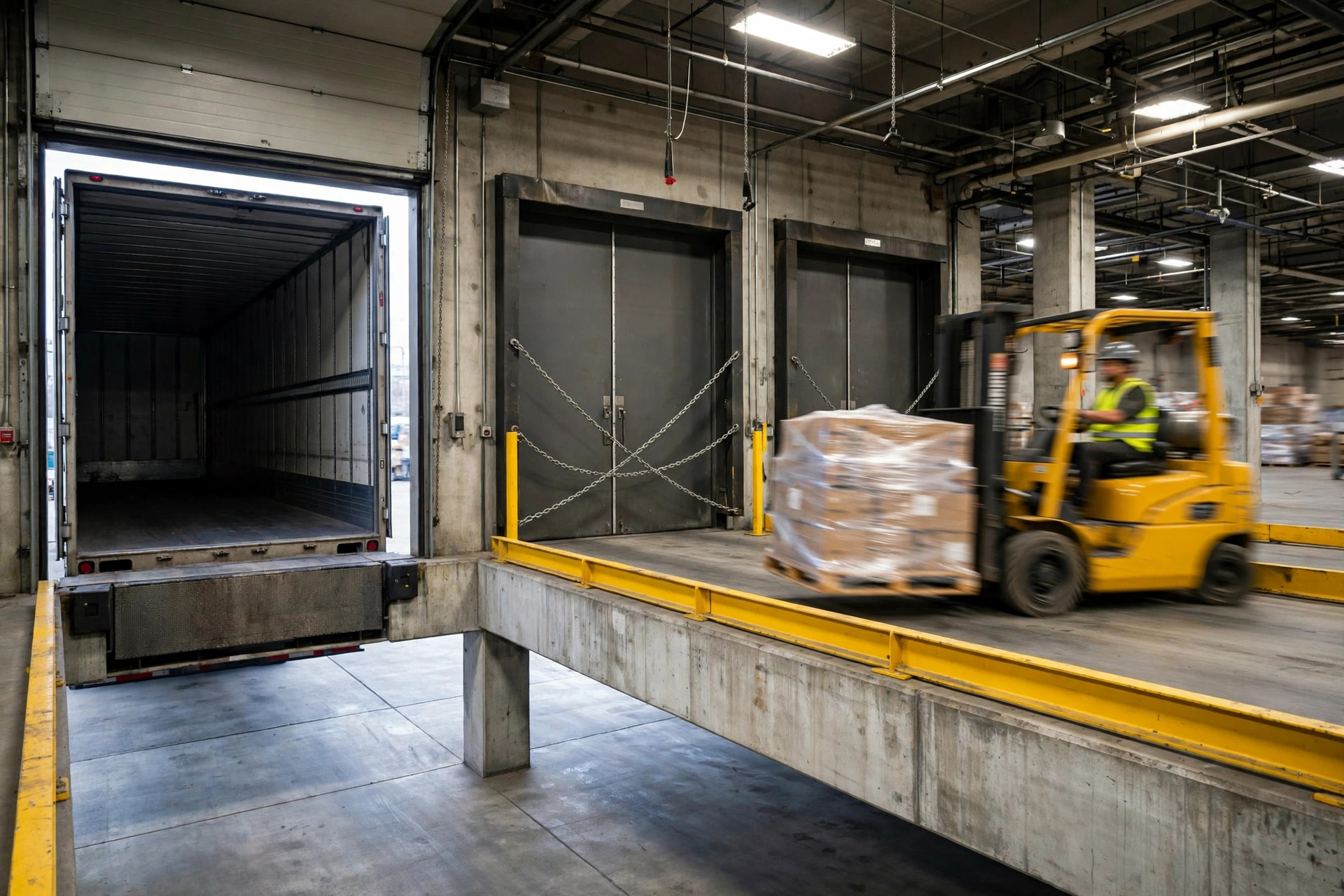
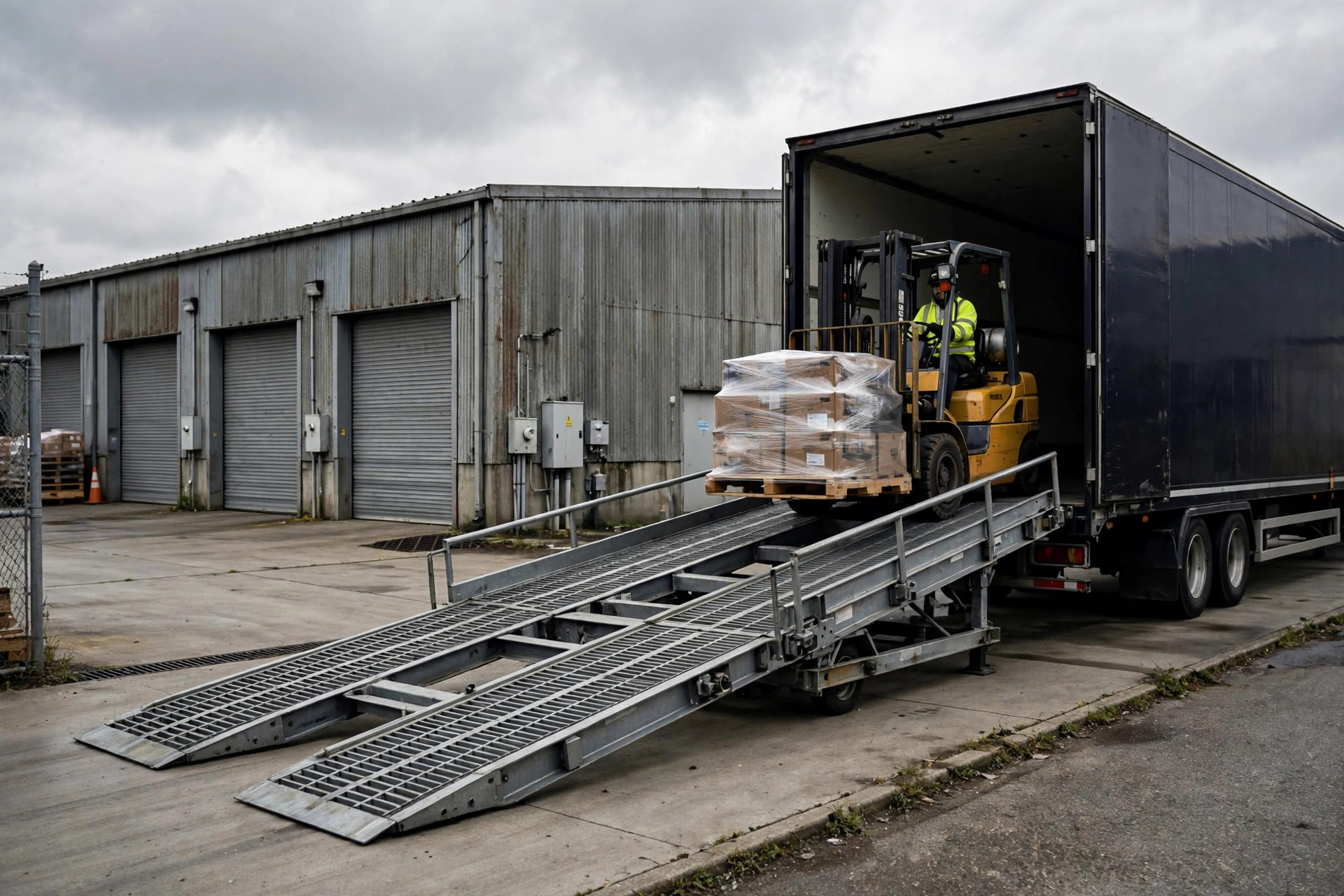
Move one: a mobile yard ramp — our workhorse. A steel ramp on wheels. One end sits on the ground, the other goes into the trailer, and the forklift drives straight up into the box. We bought ours used for under ten grand, rated for 15,000 pounds — plenty for our 5,000-pound forklift plus a loaded pallet. A new one starts at twenty to thirty thousand. Yeah, we went used.
Move two: liftgate trucks. The truck has a powered platform on the back — it drops to ground level, you roll the pallet jack on, and it lifts to the trailer bed. Great for small LTL drops of three to five pallets. But heads up: liftgate service costs extra, roughly a hundred bucks or more per shipment, and it lowers one pallet at a time. Slow. Painfully slow.
Move three: a dock plate plus a homemade pad, for emergencies. A dock plate is a steel plate costing a few hundred dollars. We poured a knee-high concrete pad by our door. The truck backs up to it, we lay the plate across, and the forklift drives on. Ugly as sin, but it has saved us more than once.
How to choose? Our dirt-cheap decision framework: more than five 53-foot trailers a week — get the yard ramp, no question. Mostly small LTL drops — liftgate plus ground receiving is cheapest. An occasional big trailer — rent a ramp by the day, still cheaper than buying. During our slow season we even rented our used ramp to the warehouse next door for two days. Made a little money back.
The Math: Dock-High Rent vs. Our No-Dock Setup
People always ask: why the trouble? Why not just lease a place with docks? We asked that too — right up until we saw the quotes.
| | Dock-high small warehouse | No dock + workarounds (us) | | Monthly rent | Way higher, same area, same size | Cheaper, and the landlord negotiates | | Upfront investment | Zero | Used ramp under $10k, dock plate a few hundred | | Unloading one 53-ft trailer | Dock door straight through, about 20 minutes | Up and down the ramp, 40 minutes to an hour | | Small LTL drops | Business as usual | Liftgate surcharge, about $100+ per shipment | | Lease terms | Usually 3–5 years, rigid | 1–2 years, flexible |
See the trick? With a dock-high unit, you're not paying for the concrete — you're paying the premium baked into the words "with docks." What we save on rent each year would buy two or three used ramps. And the extra unloading time? We get a handful of trucks a day, not dozens queued at dock doors like the big operations. Twenty extra minutes per truck is nothing.
Here's the counterintuitive take, the cure for dock anxiety: going dockless isn't necessarily a disadvantage. Dock-high buildings make trucks queue for dock doors — early or late, everybody waits for a slot. We have no dock, so trucks unload the moment they arrive. Drivers actually like us; nobody sits at our gate for two hours. And the lease is flexible — business dips, we can move; business grows, we can upgrade. The big-company "must be dock-high" standard was designed for operations pushing hundreds of trailers a day. Copying it at our scale is just burning money.
3 Pitfalls of Running a Warehouse Without a Loading Dock — We Hit Every One
The workarounds function, but the pitfalls are real. Three we collected over three years, so you can dodge them.
Pitfall 1: Get the ramp grade wrong and rain will nearly flip your forklift
March 2024, a spring rain in SoCal. Our ramp has a steel grate surface — never seemed slippery. That day the forklift carried a loaded pallet, close to 8,000 pounds all-in, and halfway up the wheels spun. The machine lurched sideways. Old Chen went white; my legs went to jelly. After that we did three things: welded anti-slip strips onto the ramp; set a rain-day speed limit and a rule that heavy loads back up the ramp, counterweight downhill; and added guard rails on both sides. A ramp isn't plug-and-play. Grade, capacity, traction — skip any one and you're gambling with lives.
Pitfall 2: Liftgate trucks charge per shipment — and take forever
Peak season, end of 2024: an 8-pallet LTL shipment, and we booked a liftgate truck. One driver, one pallet per cycle — lower, roll in, raise, repeat. Five or six minutes a pallet, nearly an hour for eight. Detention billed on top, and the hundred-plus-dollar liftgate fee still applied. Since then: anything over five pallets, we'd rather pay more for a ramp-friendly truck than book a liftgate. Liftgate for small drops saves money. For big drops it burns money and the whole afternoon.
Pitfall 3: Freight buried deep in the trailer, and scheduling by shouting
The hidden one: a 53-foot trailer loads freight to the nose, and from the back the forklift sees half of it. Our fix is two manual pallet jacks — one person inside dragging freight to the tail while the forklift receives below. But that needs the driver parked straight, brake set, wheels chocked. Once a driver skipped the chocks; the trailer settled, ramp and trailer bed parted by an inch, and a pallet nearly dropped into the gap. Ever since, every driver hears Old Chen's welcome speech: "Chocks down! Brake on!" A dockless warehouse needs louder safety routines than a big facility — nobody's covering for you.
Three Tips for Fellow Small Warehouses
Three years in, three tips for small operators going dockless:
First, rent before you buy. Rent a yard ramp by the day for two weeks. Confirm it fits your truck types and volume, then buy used. That's what we did, and it saved us from buying the wrong length — too short means too steep, and the forklift can't climb it.
Second, don't cheap out on safety. Anti-slip strips, guard rails, wheel chocks, hi-vis vests — under a thousand dollars all-in, covering your biggest risk. A small warehouse cannot survive one serious injury. Seriously.
Third, be good to the drivers. Half of a dockless operation is equipment; the other half is driver cooperation. We keep cold water and an open restroom. A driver who'll wait ten extra minutes makes a hundred small frictions disappear. Skip the big-company cold scheduling system — being human is our advantage.
Going dockless isn't about equipment. It's about mindset. Big companies afford full dock packages, powered doors, scheduling software. We can't burn money like that — but we have workarounds, flexibility, and drivers who know us by name. Real dollars saved on rent beat "looking professional" every time.
Small warehouse, small-warehouse rules. The truck shows up, the freight comes down, the money stays in our pocket.
By Xiao Ma, Small Warehouse Owner