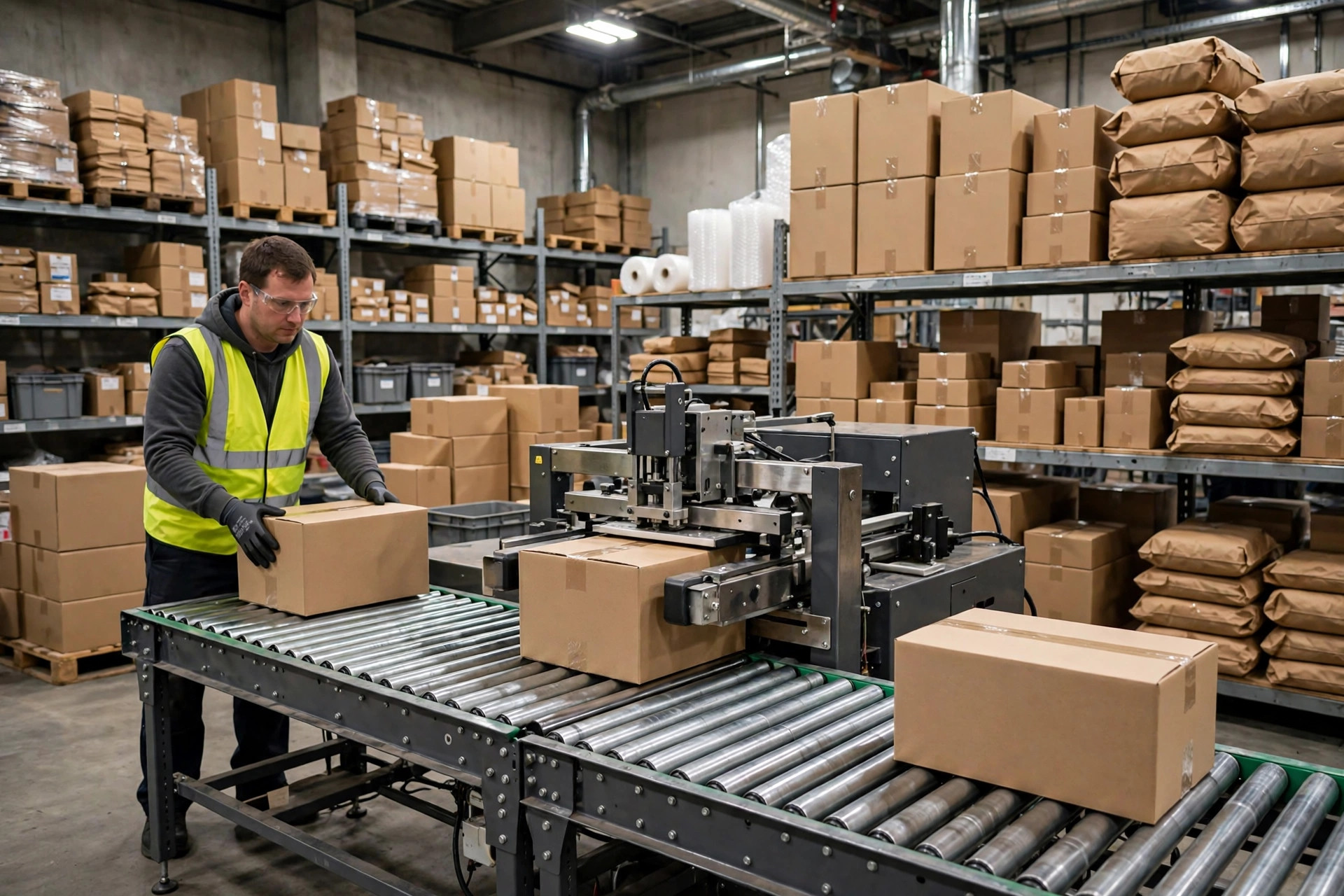
We small warehouses cannot afford to burn money on an auto carton sealer like that. I repeat that sentence to myself three times every time I walk into an equipment expo, because otherwise some salesperson will walk me straight into a purchase with one line: "Boss, this auto carton sealer seals two thousand cartons a day." Sounds great. Except my little 3,000-square-meter warehouse ships three or four hundred cartons on a good day, and barely over a hundred on a slow one. A machine designed for two thousand cartons spends most of its day idling at my place — and idling still takes floor space, still needs maintenance, still depreciates.
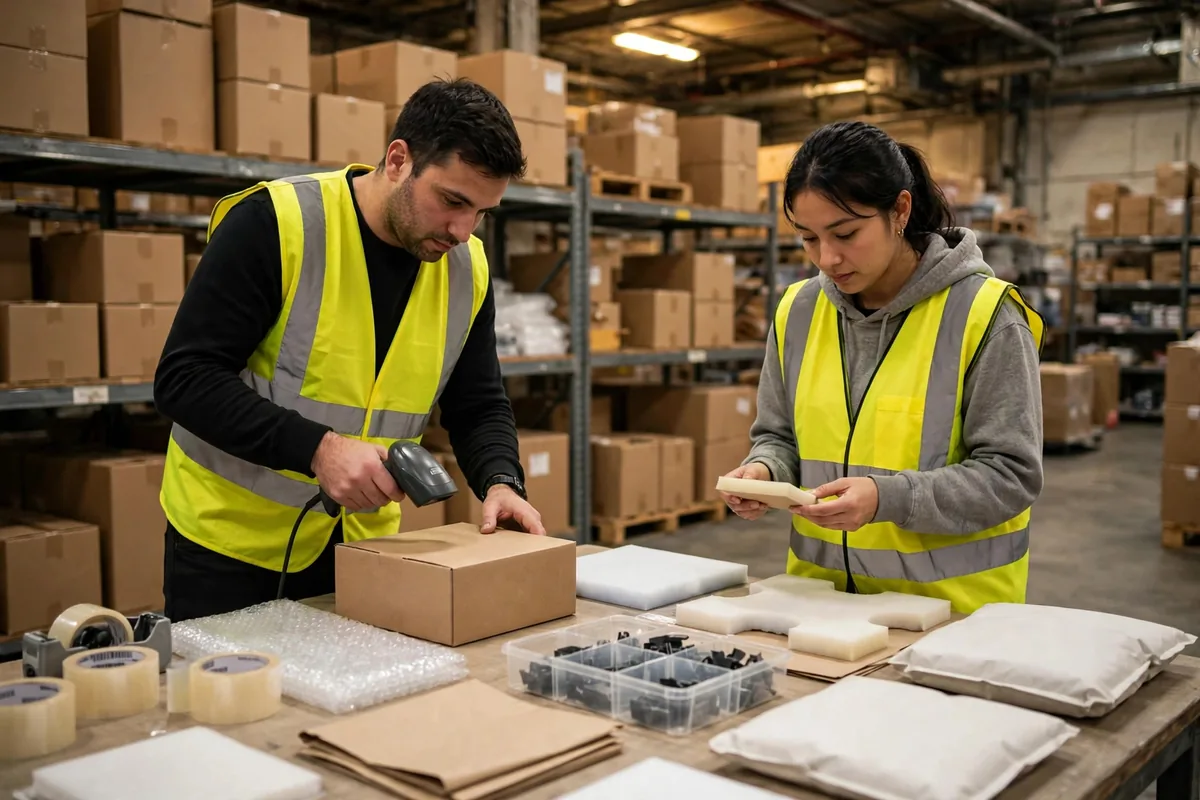
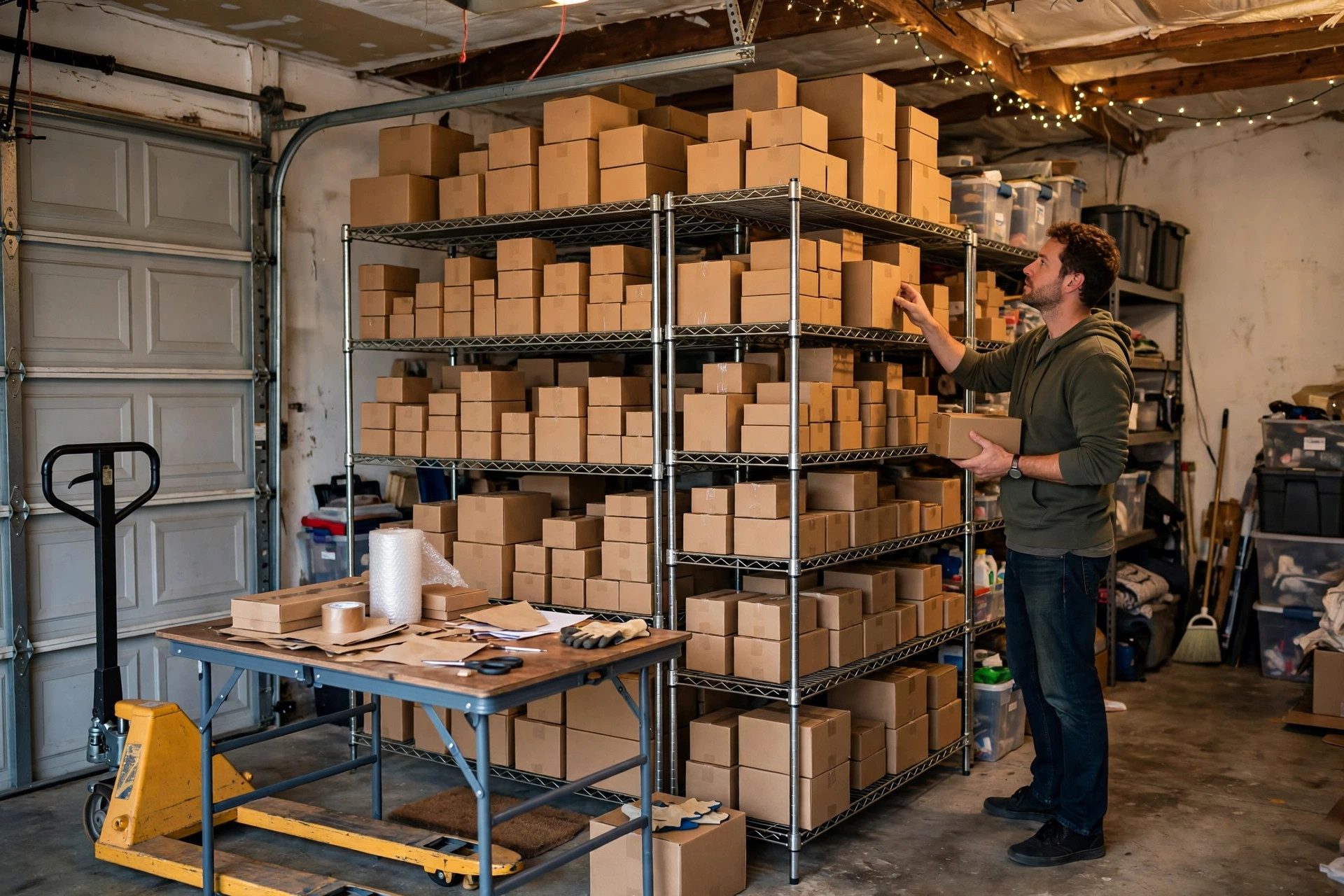
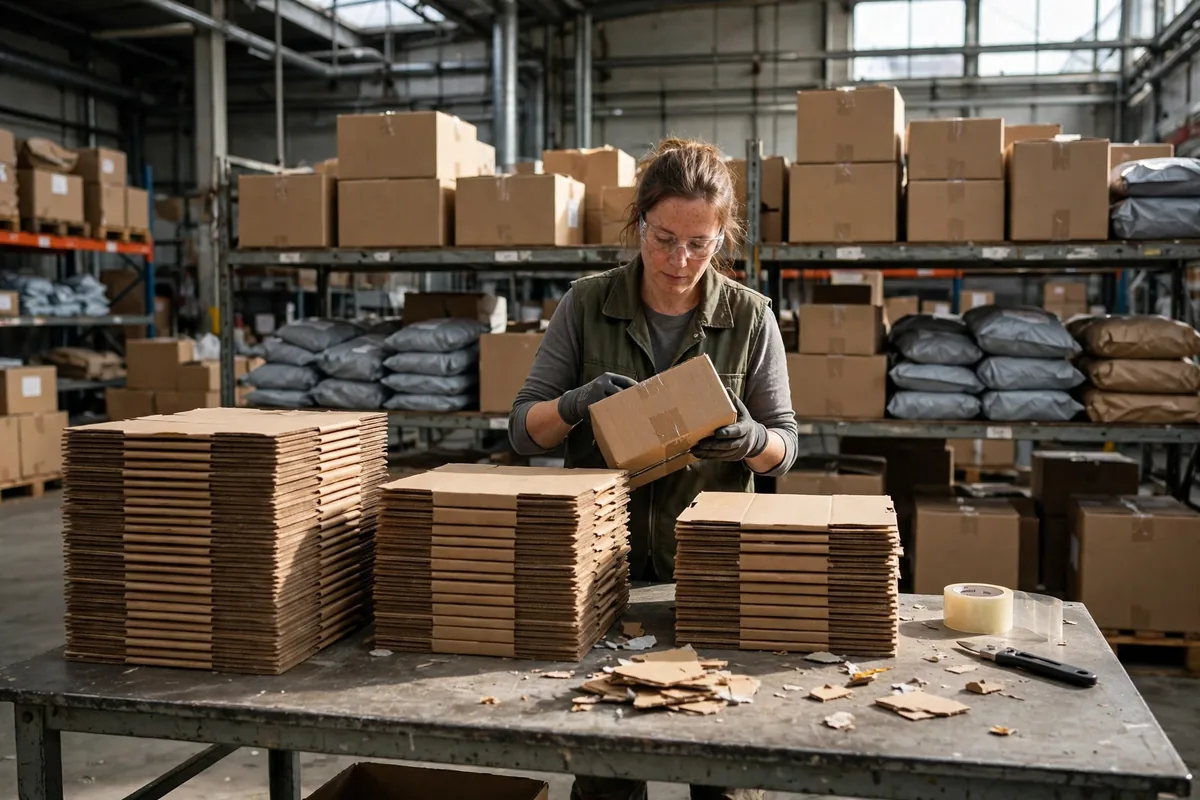
Let me lay out what my warehouse actually is: 3,000 square meters, a dozen or so people, three packing benches, usually two running, all three only during peak season. Sealing used to be fully manual: one person with a tape gun, two strips across the box, and big cartons needed two people to handle. I always thought sealing was too small a job to justify equipment. Then in the summer of 2025 I ran a calculation that startled even me, and I started looking at sealing machines seriously.
The First Bill for an Auto Carton Sealer: Tape Is Not Pocket Change
The first thing an auto carton sealer saves is not labor. It is tape. Manual sealing means tape length is pure feel — a generous pull when you are in a good mood, a short one when you are not, and half the time there is a little tape tail dangling off the edge of the box. A machine seals with a fixed tape length and a fixed seal position, every single carton.
I measured a month of both. Manual sealing: one roll of tape got through roughly 120 to 130 cartons. Machine sealing: the same roll covered 170 to 180. Tape looks cheap per roll, but spread across several hundred cartons a month, the difference is real money. More important, machine seals are neat, so fewer cartons pop open in transit, which means fewer customer complaints to untangle. No salesperson will run this calculation for you. You have to do it with your own month of data.
But here is the counter-intuitive judgment: the more tape you save, the less it proves the machine is worth it. Tape savings only hold if your carton sizes are fairly fixed. If your cartons change size five times a day, the machine stops for width and height adjustment every time — a few minutes per change, and across a day, those stops eat every cent of tape savings. This kind of machine fits a small warehouse with few carton types and steady volume best. A warehouse with mixed carton types is often better off staying manual. No salesperson will ever tell you that.
The Second Bill for an Auto Carton Sealer: Jam Rate Matters Ten Times More Than Machine Price
When I buy an auto carton sealer, I watch exactly one metric: the jam rate. The price is negotiable. A bad jam rate is not — buy it and you have invited an ancestor into your packing line that demands constant attention.
In the autumn of 2025 we tried a used machine. The price was so tempting it was less than half of a new one. Day one of the trial gave it away: a slightly soft carton, or one packed slightly too full, and the conveyor jammed. Every jam stopped the whole packing line while someone dug the carton out. Seven or eight jams a day, three to five minutes each — slower than manual work, once you added it up. I sent the machine back the same day and ate the freight cost as tuition.
That gave me a homegrown test method: never trial a machine with standard empty cartons. Trial it with the hardest cartons in your warehouse — the fullest, the softest, the most awkward size. Run fifty of each of the three types, and count every single jam. Whatever jam rate the salesperson quotes verbally does not count. Only the rate you see on your own floor counts. And one more thing: does clearing a jam need tools, and can one person do it alone? A machine that needs two people and a wrench to reset is an automatic no for a small warehouse.
Here is the decision table I use now. Take it and apply it directly:
| Situation | Recommendation |
|---|---|
| Under 150 cartons/day, mixed carton types | Stay manual, do not buy |
| 150–400 cartons/day, fairly fixed carton types | A semi-automatic sealer is enough — start cheap and learn |
| Over 400 cartons/day, fixed carton types | A fully automatic sealer is worth costing out, with jam rate as the key test |
| Carton types change 5+ times a day | Standardize carton types first, whatever your volume |
| Budget only stretches to a used machine | Only buy one you can trial on site; walk away if the measured jam rate fails |
The most important line in that table is the principle behind the last row: used machines are not off-limits, but they are never to be bought blind. A small warehouse's money all has somewhere to be. The cost of buying the wrong machine is not just the machine price — it is line stoppages, returns, and rework labor, which together can cost more than a new machine.
New vs Used: Small Warehouses Buy Differently From Big Ones
Big warehouses buy equipment on brand, service contracts, and capacity headroom. Small warehouses buy on three things: can I trial it on site, can it be fixed the same day it breaks, and are the wear parts generic.
New machines bring peace of mind — warranty coverage while it lasts, uniform part specs. The downside is price, plus a pile of features we never use. Automatic width adjustment, automatic flap folding — sounds advanced, but my warehouse runs two main carton sizes, and a manual knob adjustment takes ten seconds. No reason to pay extra for that.
Used machines have exactly one advantage: they are cheap. The disadvantages stack up: no warranty, belts and blades possibly worn, and the previous warehouse's carton sizes differ from yours, so all the calibration starts over. My rule is that a used machine must pass three conditions before I even consider it: first, the seller agrees to a full-day trial in my warehouse; second, wear parts like belts and blades are available as generic parts, not waiting on the original manufacturer; third, the price is no more than half of the same model new — above half, buy new, because peace of mind is also money.
One cost most people overlook: floor space. A sealer plus its infeed and outfeed conveyors easily runs two to three meters long. My packing area was already tight, and fitting one machine meant moving a packing bench — effectively losing one manual station. Measure the floor and mark the layout before you buy, not after the machine arrives and you discover nobody can turn around.
What My Warehouse Actually Ended Up With
We ended up with a semi-automatic sealer, not a fully automatic one. The reason is simple: three to four hundred cartons a day, two main carton types, and a semi-automatic machine costs a fraction of a fully automatic one while capturing most of the tape savings. When it jams, a person lifts the carton out and the line keeps moving — no stoppage. On our own volumes, the payback period came out under a year. Your volumes and tape prices will differ, so run the payback on your own numbers rather than copying mine.
One unexpected bonus: after the machine went in, the sealing station went from two people to roughly one person, and the freed-up person moved to checking and labeling — and our mis-shipment rate actually fell. The real gain from sealing automation sometimes is not in sealing itself. It is in freeing people to do work that actually needs people.
So my advice to a small warehouse on sealing machines comes down to one sentence: count the tape first, test the jam rate second, and look at the machine price last. Standardize carton types before you buy anything, do not buy before your volume justifies it, and never buy a used machine without an on-site trial. Small warehouses have their own way of surviving. We do not out-equip the big warehouses. We out-think them on every cent.
By Xiao Ma, Small Warehouse Owner