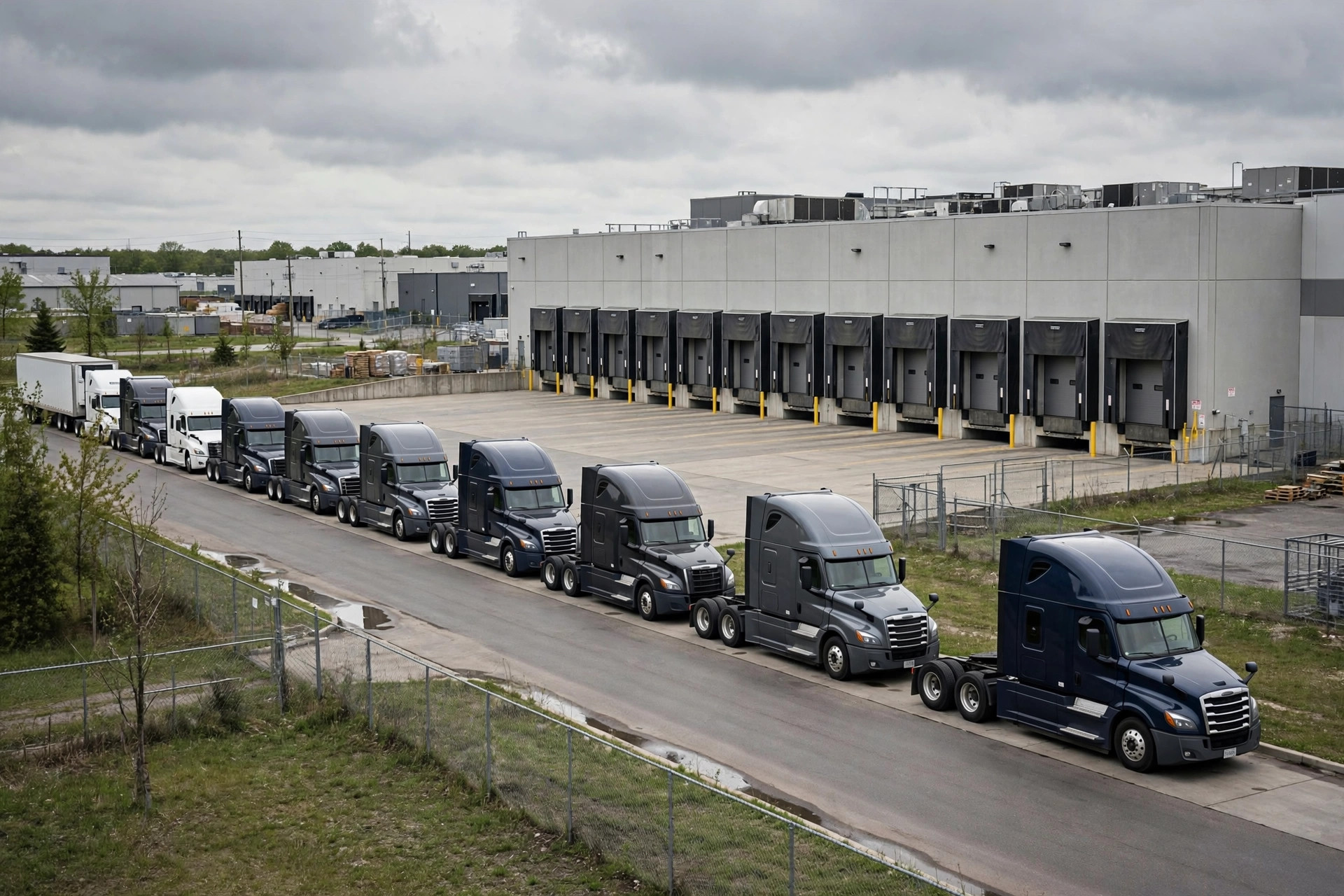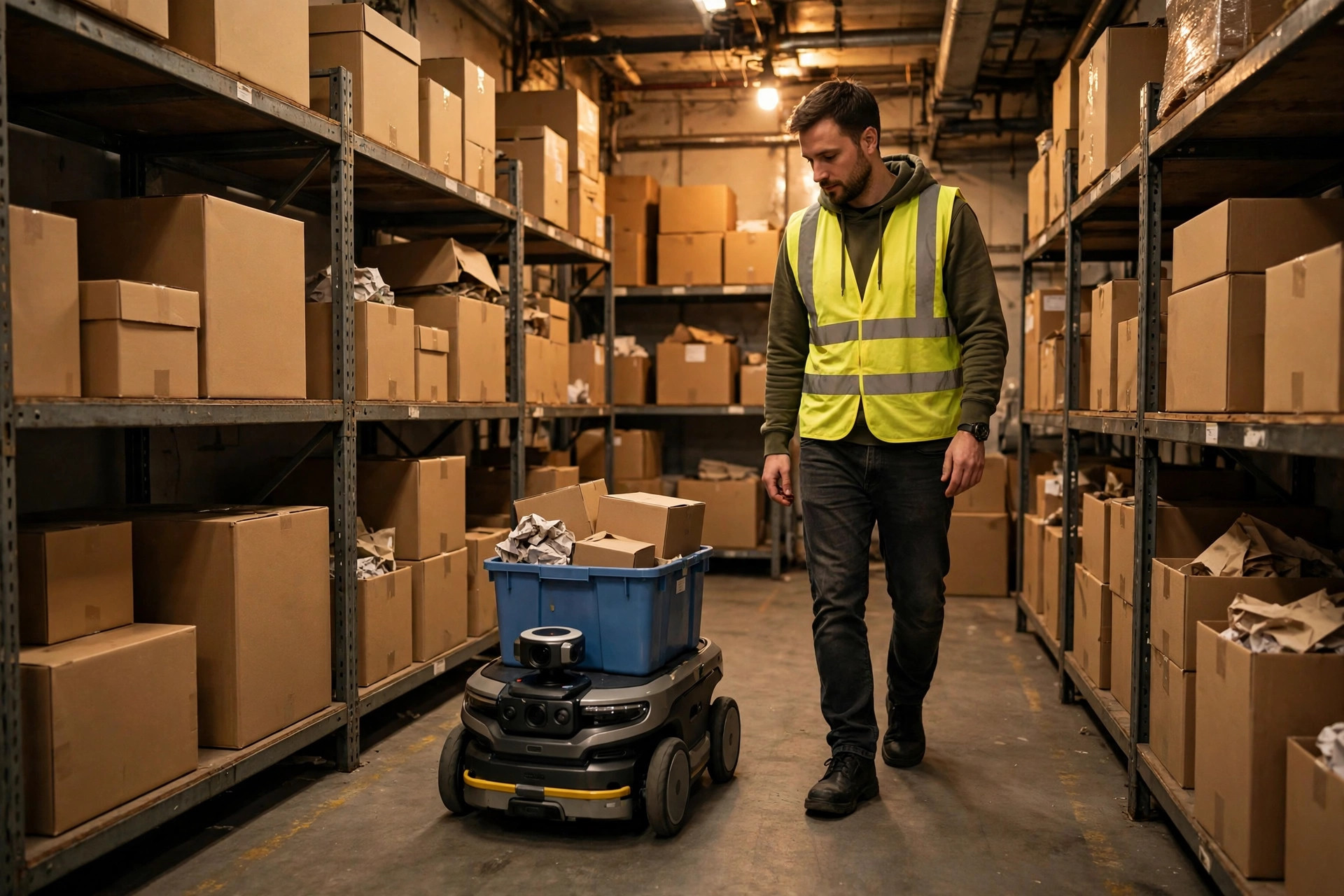
"Is AI just burning money for a small warehouse?" My answer: it depends entirely on which AI you're buying.
This year alone, three small-warehouse owners asked me some version of that question. In their heads, AI is one thing: a six-figure fleet of AMRs, or hiring a data science team to train models from scratch. Played that way, sure — most mid-size 3PLs couldn't afford it either, let alone a small shop. But here's the reality: AI hasn't been a single species for a while. Over the last two years, I've watched the cost curve drop to a level where a warehouse shipping a few hundred orders a day can reach it. You just have to know which tier you're buying.
Tier one: someone else built it, you rent it monthly
This is the only tier small warehouses should take seriously right now.
Nearly every mainstream WMS vendor is stuffing AI features into their product: smart replenishment suggestions, demand forecasting, automated pick-task assignment, abnormal-order alerts. You don't need to understand algorithms. You don't need to buy servers. It's part of your subscription, or an add-on module billed monthly. For a small operation, that turns AI from a scary capital expense into a predictable operating cost. That distinction changes everything.
Here's a real example. Last year I visited an e-commerce warehouse in Rancho Cucamonga — about 800 orders a day, twelve people on the floor. Their WMS came with a stockout-warning feature that flags SKUs likely to run dry in the next two weeks, based on sales history and inbound inventory. The owner told me he used to prep for peak season on gut feel. Before the 2023 holidays he misjudged two hot SKUs — one stocked out and cost him orders, the other is still sitting in overstock. With the feature, replenishment went from guesswork to having a second opinion. He still makes the final call, but at least there's a basis for it. The extra monthly cost? Less than half a headcount.
Same logic applies to voice-assisted picking at the phone-app level — not the six-figure voice-picking hardware suites, but scan, listen, confirm, with an instant buzz when you grab the wrong item. For a warehouse under a few thousand orders a day, shaving one point off the mispick rate pays for itself in avoided customer service tickets and reships.
My verdict on tier one is simple: if it's built into your WMS, billed monthly, and doesn't require you to hire a tech team — turn it on now. Don't wait.
Tier two: off-the-shelf AI, fitted to your process
Tier two is semi-finished AI. The vision models and conversational models already exist; you pay someone — an integrator or the vendor's implementation team — to wire them into your workflow. A camera over the receiving dock that reads pallet labels, counts cartons, and flags quantity mismatches on the spot. Or feeding your daily parcel invoices to AI that highlights suspicious accessorial charges.
This tier is project-based, typically in the thousands-to-tens-of-thousands-of-dollars range, with implementation measured in weeks, not years. The payback logic is clean: it replaces repetitive human inspection work.
But I've watched small-warehouse owners step on two landmines here.
Landmine one: garbage data. Garbage in, garbage out hits small warehouses hardest. If your inventory accuracy is 85%, every "smart replenishment" calculation just compounds the error. I saw this play out last year — an owner paid for a visual cycle-counting setup, the cameras were sharp, recognition rates were solid, and then they discovered the system locations didn't match physical reality. The AI was counting location A while the product sat in location C. He spent three months doing a full wall-to-wall count and cleaning up master data before the AI actually worked. Get the sequence backwards and the money is wasted. My rule: if your inventory accuracy isn't above 95%, don't talk AI — talk cycle counting.
Landmine two: vendors selling dreams. The POC phase is always magical — free trial, 99% accuracy. Then the contract arrives with customization fees, implementation fees, annual service fees stacking up. The defense is old-fashioned but effective: put performance-based terms in the contract, or at minimum write the acceptance criteria — the metrics the system must hit within three months of go-live — into the deal. Any vendor who gets vague at that point, walk away.
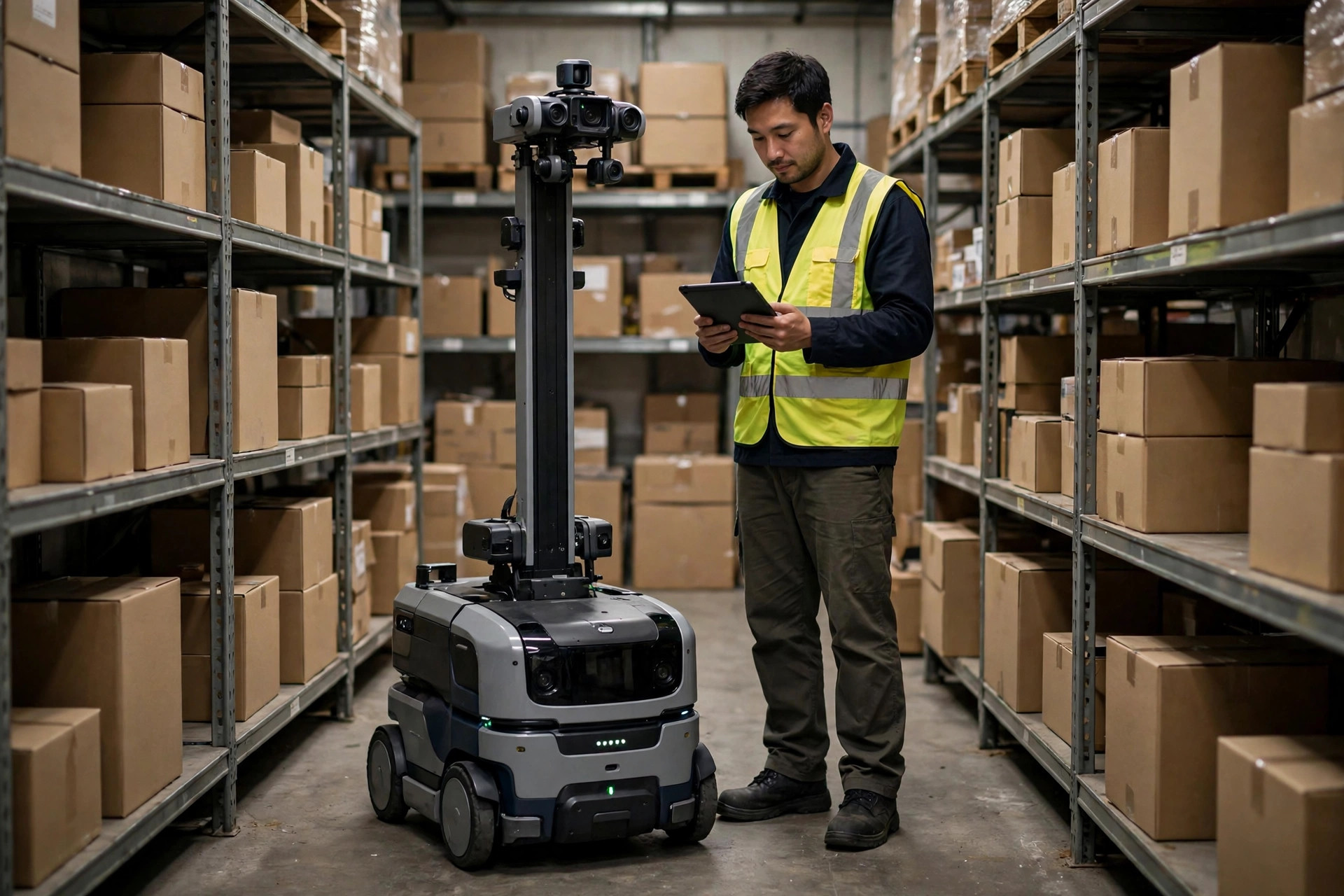
Tier three: build it yourself — small warehouses, stay out
Tier three is your own algorithm team, your own trained models, your own private deployment. The price tag starts in the hundreds of thousands of dollars and it's measured in years. It's also a bottomless pit: models need constant tuning, data needs constant labeling, and the people you hire may not know the first thing about warehousing.
Direct verdict: if you're shipping under a few thousand orders a day, don't touch this tier for the next three years. Not because AI is bad, but because your volume can't support the math. The giants build tier three because they ship hundreds of thousands of orders daily — a 1% efficiency gain is astronomical money. You ship 800 orders a day; a 10% pick-path improvement saves less labor than one data scientist's salary.
So why has the cost curve been falling? Three reasons. First, cloud compute got cheaper — both training and inference. Second, off-the-shelf models keep getting better, so vendors aren't starting from zero. Third, the WMS and equipment vendors are in an arms race — AI features are shifting from expensive options to standard equipment, the way barcode scanning did decades ago. Together, those forces mean tier one keeps getting cheaper and better, while tier three stays a giants' game.
Where should a small warehouse actually start? Three entry points, in priority order.
First, stockout warnings and replenishment suggestions. Lowest risk, most visible payoff, and mistakes aren't fatal — you still hold the final decision.
Second, intelligent pick-task assignment. Don't underestimate this one. Above roughly a thousand orders a day, having the system auto-wave orders and auto-assign tasks beats manual dispatch on time saved and on error reduction.
Third, visual assistance at receiving. Counting cartons, matching labels, photographing exceptions for the record. Receiving is where disputes start, and an objective record settles a lot of arguments.
Now the cold water. AI will not manage your warehouse for you — that's the expectation to kill first. A warehouse with chaotic processes just makes mistakes faster and more automatically with AI. Every successful AI deployment I've seen shares one trait: the owner had solid fundamentals first. Clean location coding. Regular cycle counts. SOPs people actually follow. AI is an amplifier — it amplifies whatever management level you already have. Good gets better. Bad gets worse, faster.
I'll even give you a timeline. From 2026 through 2028, tier-one AI becomes standard issue in small-warehouse WMS platforms, and shops that skip it will fall behind on labor cost. Tier two keeps getting more plug-and-play, with the implementation bar dropping further. Tier three stays none of your business. My practical suggestion: call your WMS vendor this week and ask which AI modules you're already paying for but haven't switched on. For a lot of small-warehouse owners, their first AI step is already sitting inside their subscription — nobody just told them.