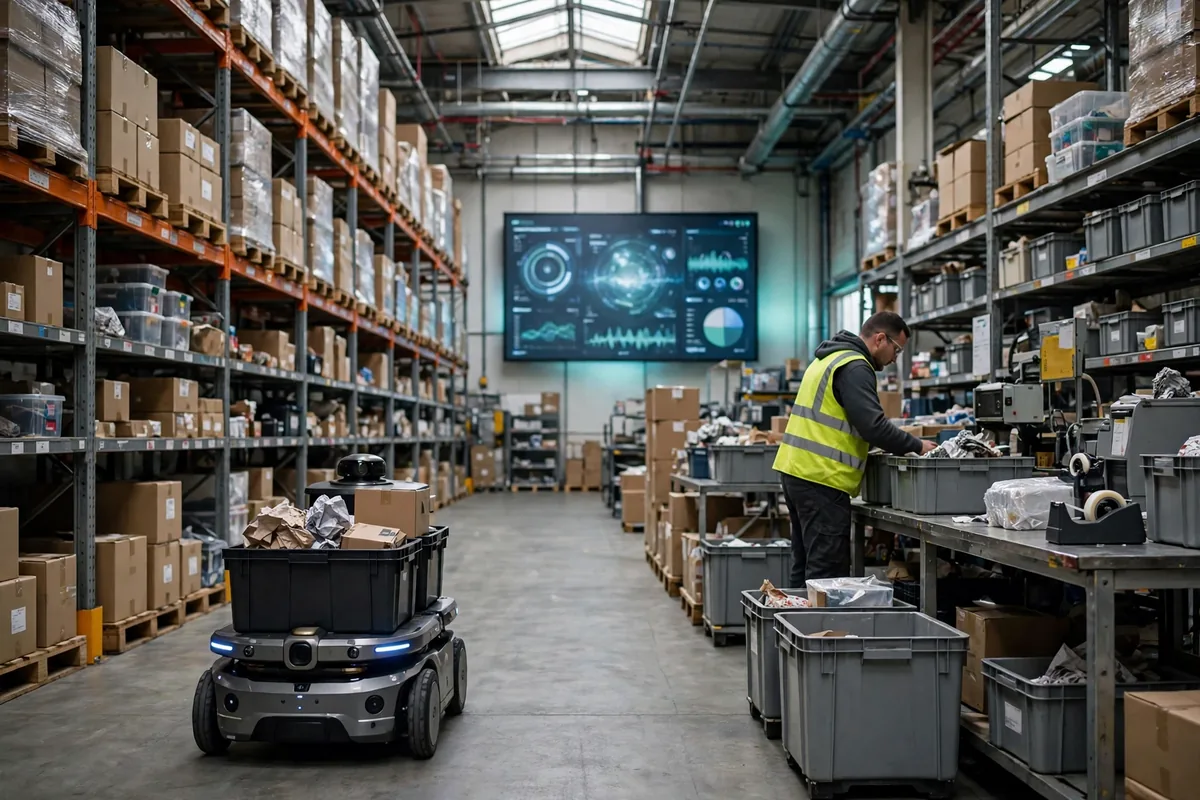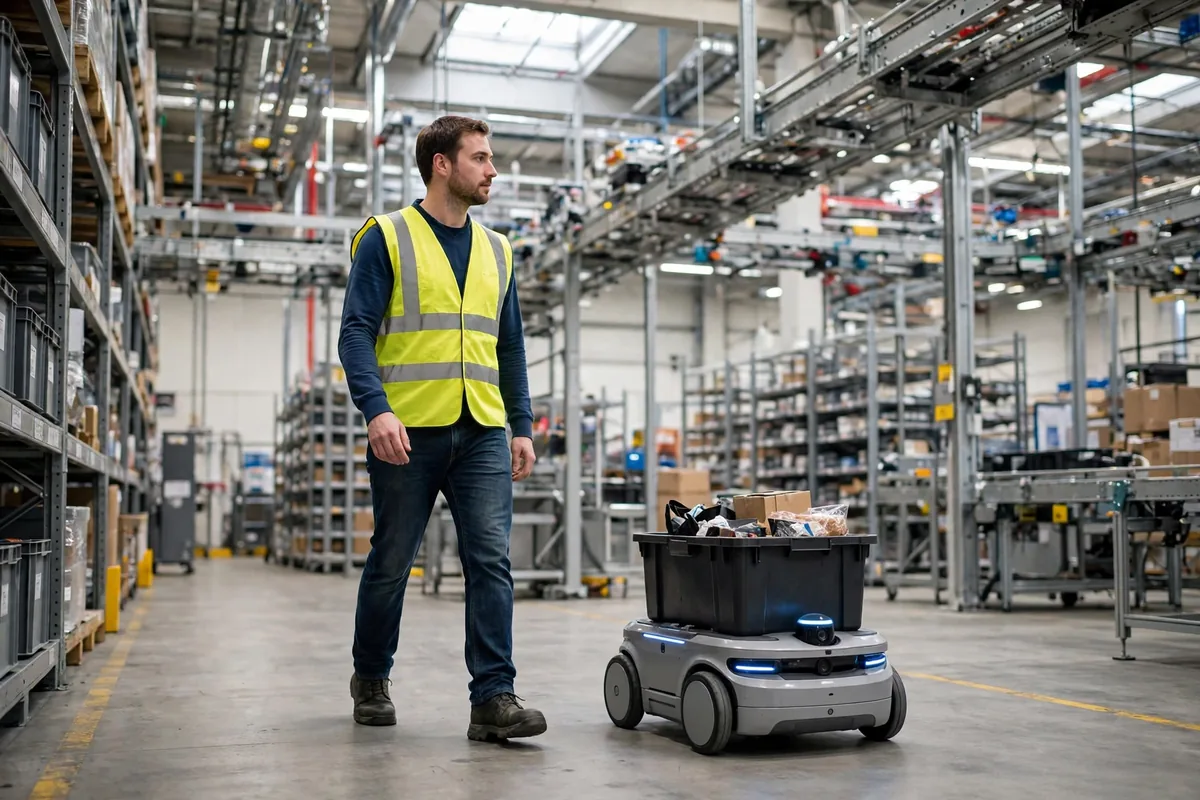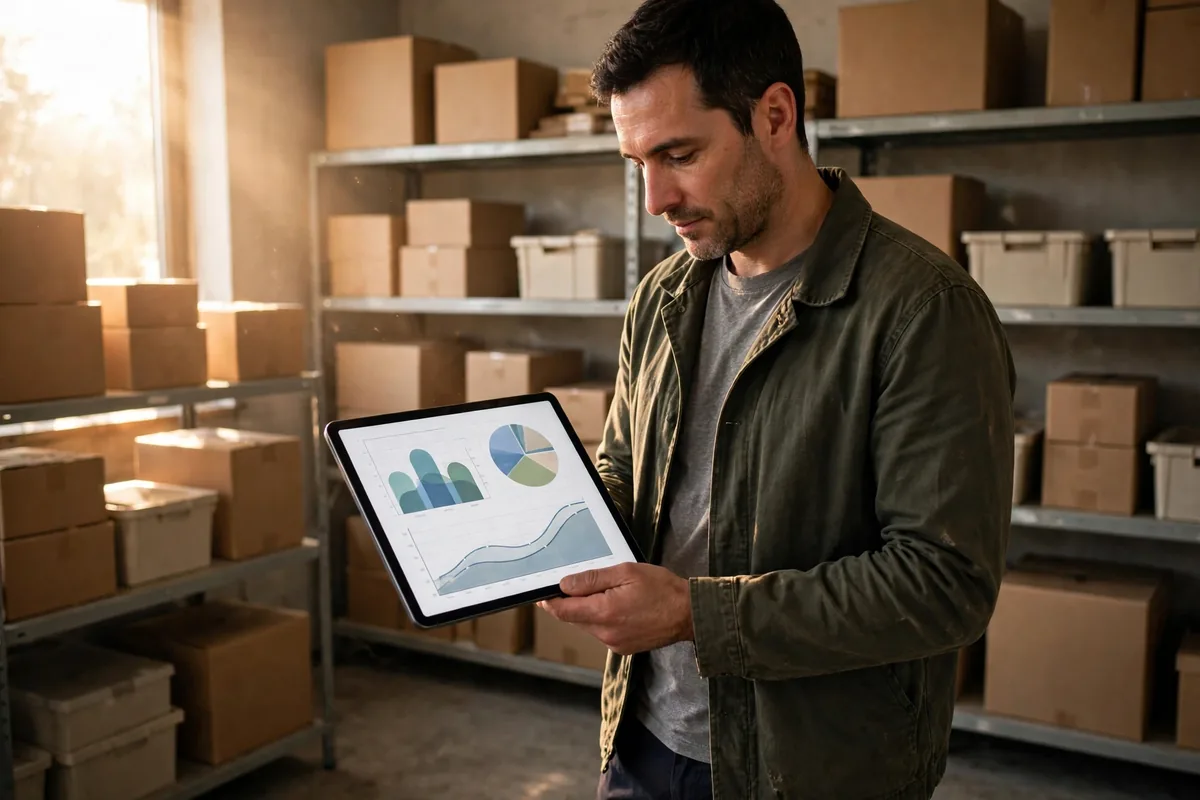
Is small warehouse AI cost affordable? That is the question I keep coming back to, because we small warehouses cannot afford to burn money like that. I have said it so many times I have lost count. Every time someone brings up small warehouse AI, the picture in my head is a gleaming big-screen demo in some corporate showroom, a six-figure project, and a team of consultants in suits. What does any of that have to do with our 3,000-square-metre warehouse? So is small warehouse AI cost affordable for a warehouse our size? That was the question I kept dodging, until the numbers forced me to answer it. We have a dozen people. The boss doubles as customer service and picker, and in peak season he is on the floor picking orders himself. AI sounds like the rich neighbour's toy: nice to look at, not to touch.
Then last year I touched it anyway. Not because I was brave, but because I had no choice. Let me start with our predicament. A few hundred orders a day, documents checked by hand, and one wrong order meant one angry customer. Pallet counts never matched the system, and stocktaking swallowed whole evenings. Customer messages kept coming past midnight, and slow replies sent buyers elsewhere. Hiring was hopeless, and overtime had already pushed the team to the edge. Right then, a fellow small-warehouse owner told me he had put a small OCR tool on his shipping documents for a few hundred yuan a month, and his document errors had dropped sharply. My first reaction was disbelief. My second was: for a few hundred a month, maybe we can try.
Small Warehouse AI Starts With Tools That Need No Hardware
The first rule for a small warehouse using AI is simple: if it needs new hardware, in-house development, or a process overhaul, put it aside. We cannot afford that game. What works is lightweight, subscription-based, and runs on the phones and computers we already own.
First, OCR for documents. Inbound receipts, return slips, courier labels: snap a photo or scan, and the system reads the order number, product name, and quantity, then matches them against the system and flags mismatches in red. This used to be the most mind-numbing job in our warehouse, one person squinting at paperwork all day. Now the machine does the first pass and humans only review the flagged items. In our illustrative trial in September 2025, the first week caught more than a dozen quantity errors caused by sloppy handwriting, errors the old way would only have surfaced through customer complaints.
Second, visual counting of pallets and cartons. Take a photo of a stack and the tool estimates how many cartons are there, then compares it with system stock and warns you when the gap looks wrong. Note the word estimates: accuracy figures should be taken from the vendor's measured results and your own pilot data. Do not expect it to replace your books. Its job is to tell you this pile looks wrong so you do not count it box by box.
Third, demand forecasting to help with stocking. Do not be scared by the word forecasting. The small-warehouse version is simple: feed it a few months of outbound data and it tells you which items may sell well next month and which may pile up. Treat it as an adviser, not an oracle. In an illustrative scenario from last November, ahead of a big promotion, the tool warned us that a hot item had only a week's stock left. We restocked in time, stayed in stock through the promotion, and watched a neighbouring warehouse run out for three days.
Fourth, automated customer replies. Most midnight messages are repeats: where is my parcel, can I change the address. An automated reply handles those first, and a human takes the complicated ones. Customers do not wait until morning, and we do not climb out of bed at 2 a.m. to answer.
Small Warehouse AI Cost Affordable? Count the Savings First
The big-company playbook does not work for us, and I will keep saying it. They talk about digital transformation. We talk about losing a little less money this month. So the maths has to be small-warehouse maths: count what you save before you count what you spend.
Here is a worked example, all figures illustrative. Picture a 3,000-square-metre warehouse with about a dozen staff, spending roughly 1,500 to 3,000 yuan a month on four lightweight AI tools. What comes back? Document review saves about two hours a day, worth roughly 1,500 to 2,500 yuan a month. Wrong-order and mis-shipment after-sales costs fall by roughly 1,000 to 2,000 yuan a month. Night customer-service cover saves roughly 800 to 1,500 yuan. Add it up and the savings clear the spend by a decent margin. Every warehouse is different, so redo this maths with your own order volume and labour cost.
| Tool | Monthly spend (illustrative) | What it saves |
|---|---|---|
| OCR document reading | About 300–800 yuan | Review time, wrong-order after-sales |
| Visual pallet counting | About 500–1,000 yuan | Stocktaking time, inventory gaps |
| Demand forecasting help | About 400–800 yuan | Stockout losses, tied-up capital |
| Automated customer replies | About 300–500 yuan | Night staffing, lost customers |
Here is the counterintuitive part: the biggest cost of AI for a small warehouse is not the monthly subscription. It is the belief that AI means no humans needed. Wrong. AI takes repetitive work off people's hands; it does not take responsibility. OCR misreads something, a human must review it. A forecast misses, a human must decide. A chatbot cannot answer, a human must step in. People who expect AI to run the warehouse by itself end up disappointed and go around saying AI is a scam. It is not a scam. The expectation was.
Small Warehouse AI Cost Affordable: What to Avoid Right Now
The usable list needs a do-not-touch list beside it. First, do not touch anything that needs in-house development. Hiring algorithm engineers and training your own models is a big-company game. We cannot afford the team, and we could not keep them if we hired them. Second, do not touch anything that demands big data. Tools that want years of clean history and a full system replacement before they work should be shown the door; our data is messy to begin with, and the basics come first. Third, do not touch anything that demands a process rebuild. Anything that asks everyone to stop work and rebuild how the warehouse runs will most likely end in a mess. A small warehouse cannot survive that kind of disruption, and one bad disruption in peak season can break the business.
The test is one sentence: can this AI stick onto your existing process, or does it force you to tear the process down and rebuild it? If it sticks on, pilot it. If it demands a rebuild, leave it alone.
Pilot One Scenario, Run It Three Months, Then Decide
The rollout path I recommend has exactly one step: pilot one scenario, run it for three months, then decide whether to expand. Do not be greedy. Do not launch four tools at once. Pick your single most painful problem. For us, the pain was document errors, so OCR went first, alone, for three months.
Month one, do not look at money saved. Look at two things: is the tool stable, and does the team actually use it? If it breaks every other day, or people quietly work around it because it is a hassle, the pilot has failed. Swap it out early. Month two, look at the numbers: how many fewer wrong orders, how many review hours saved. Write them down; do not trust your gut. Month three, do the full maths: do the savings cover the subscription? If yes, keep it and pick the next scenario. If no, stop it. No shame in that. A pilot exists to find out what does not work.
The beauty of this path is that the risk stays small. A tool costing a few hundred a month, tried and dropped, costs a few hundred. That beats signing a big contract on day one by a mile. Small warehouses have their own way of surviving. We do not compete with big companies on showmanship. We compete on who stays alive longer and whose cash flow never breaks. AI is not beyond our reach. The honest answer to small warehouse AI cost affordable is yes, with a small cut, slow steps, and careful maths. Get one scenario running smoothly first, then talk about the next one. At the end of the day, AI is not here to save the small warehouse. It is here to be its helper. And a good helper frees the boss to do the work that actually makes money.
By Xiao Ma, Small Warehouse Owner