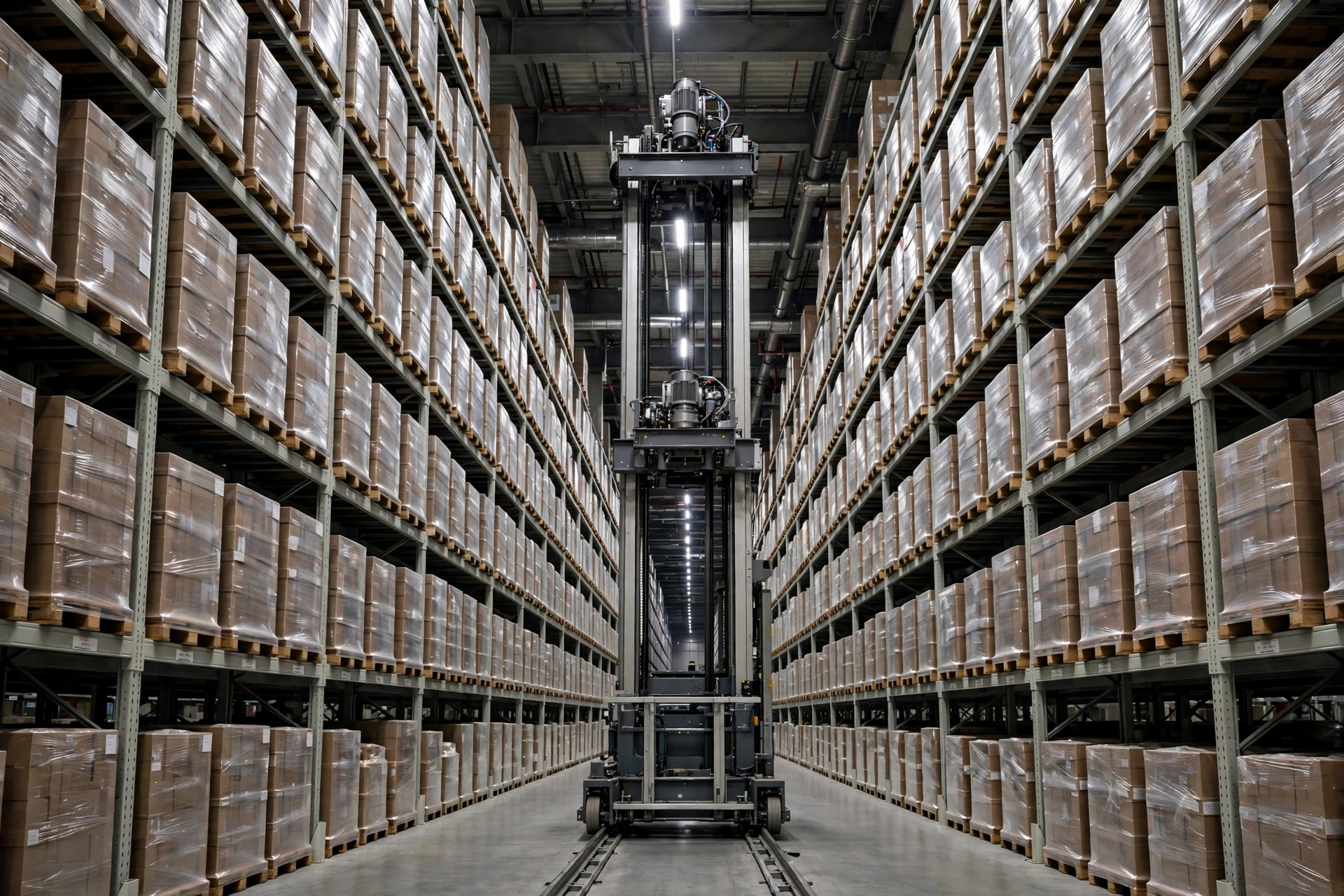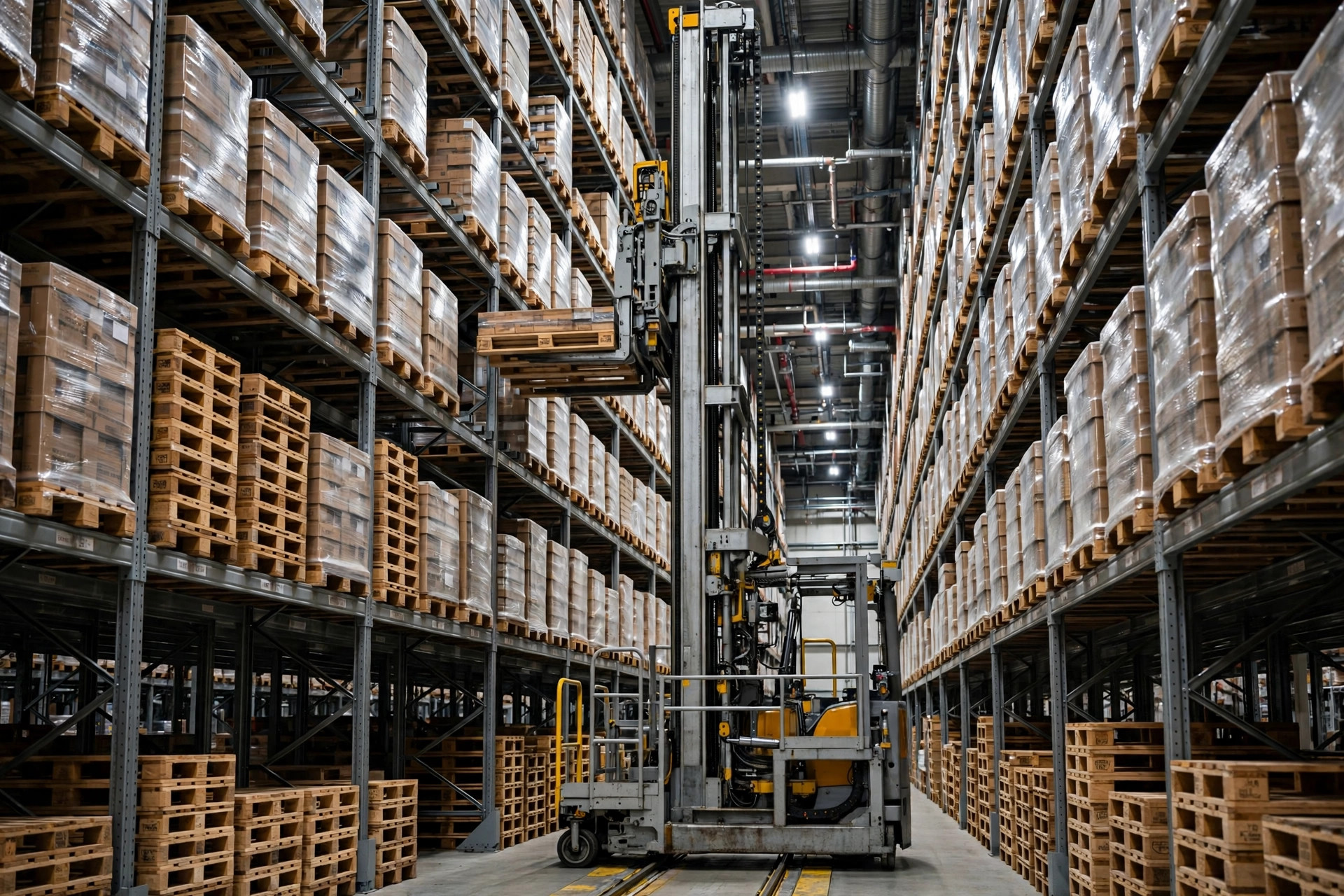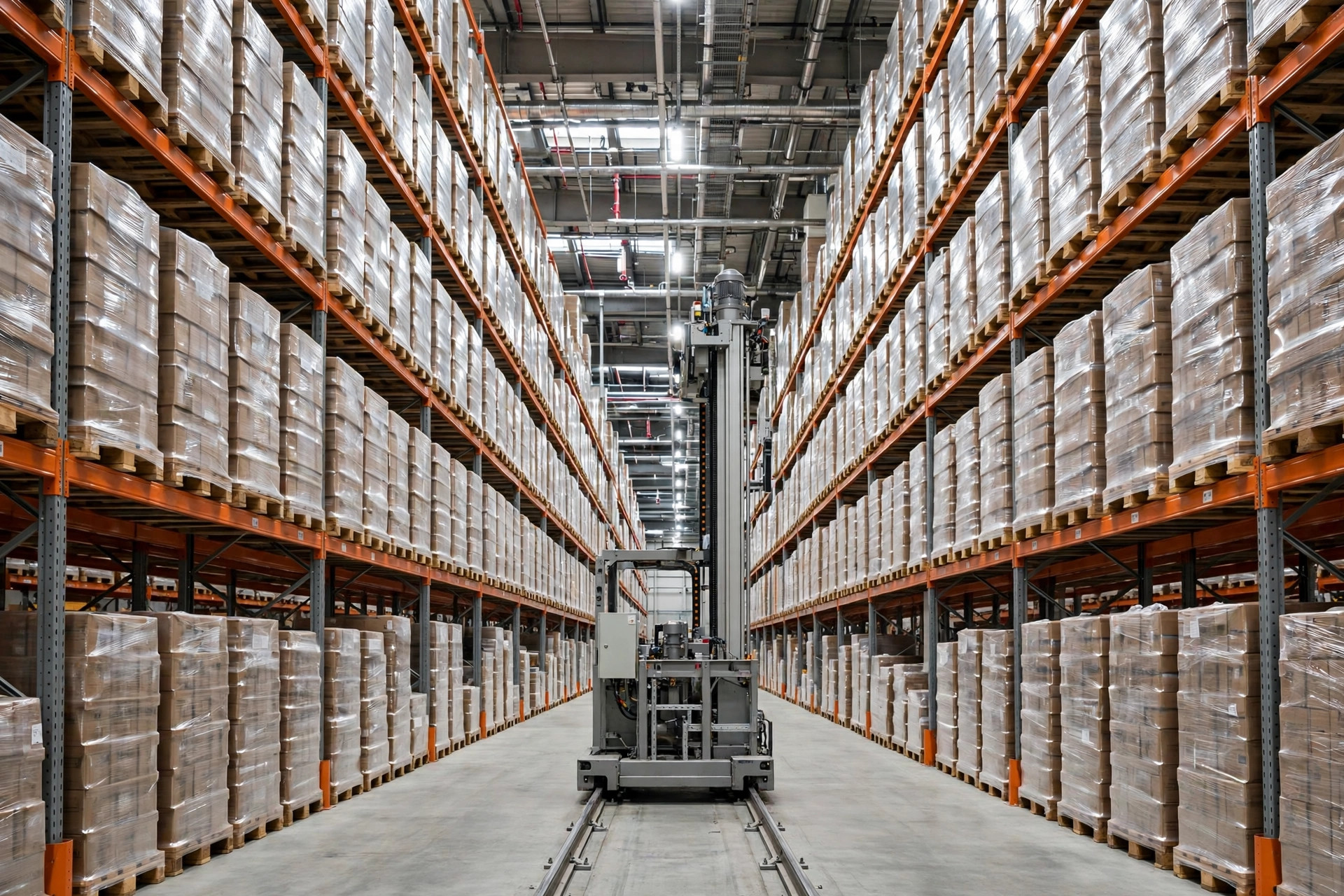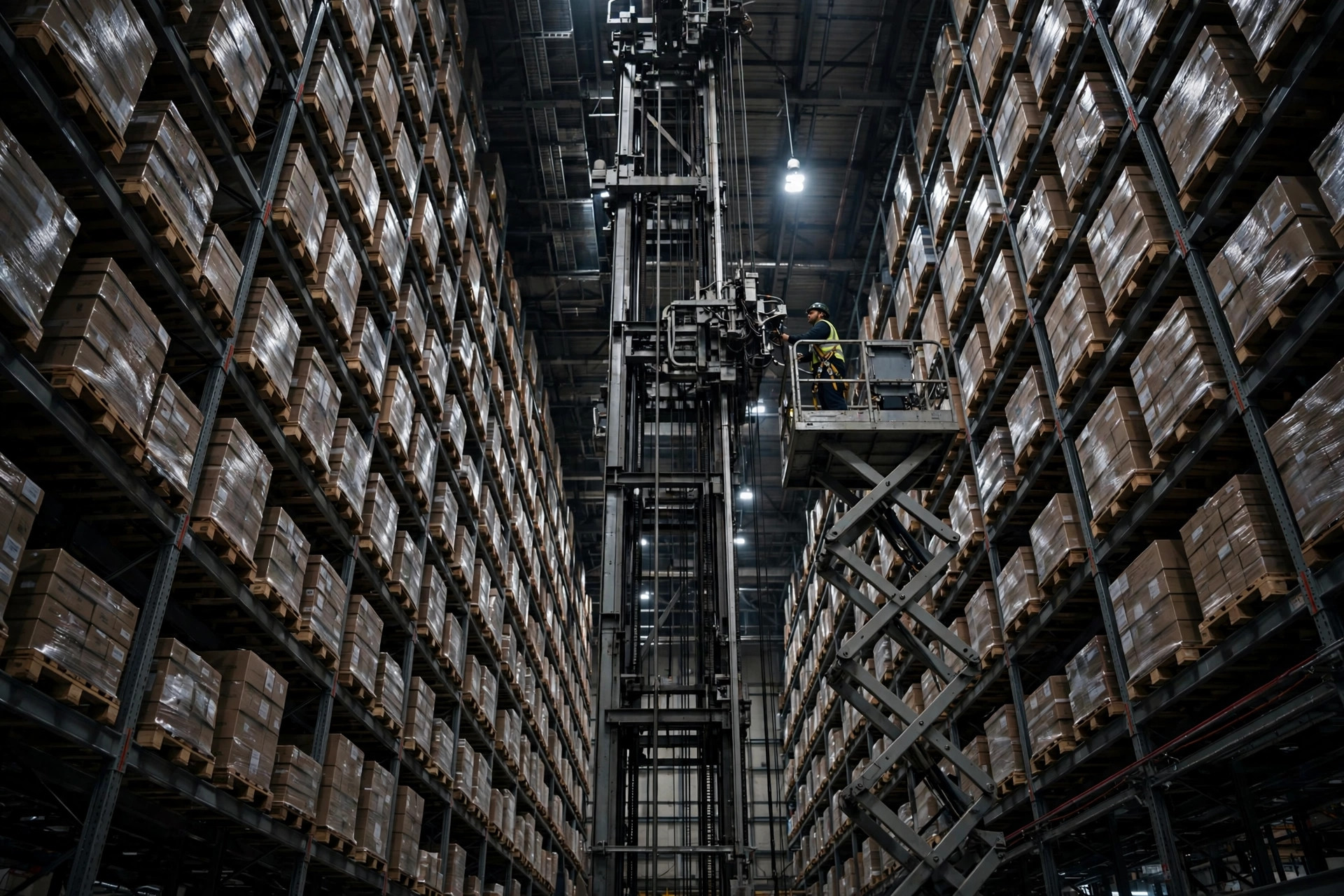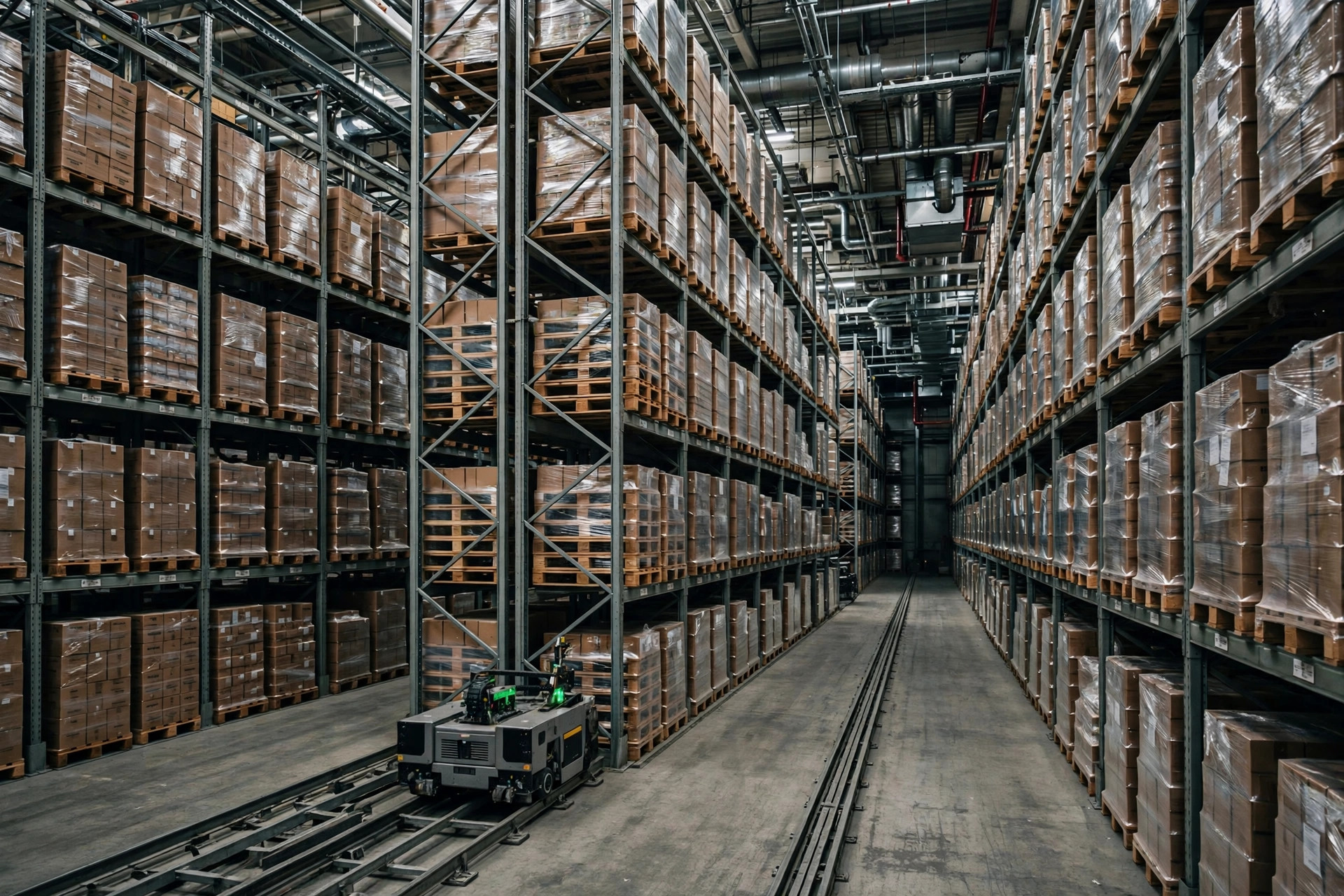
For the same 10,000 pallet positions, a stacker-crane ASRS and a shuttle-board dense warehouse can differ 2x in cost and 3x in throughput — and the side that picks wrong will want to kick itself reading the P&L three years later. I reviewed two projects last year: Warehouse A had 800 SKUs averaging 40 pallets each and chose a stacker-crane ASRS. Warehouse B had 6,000 SKUs averaging under 5 pallets each and chose shuttle boards. Both picked backwards. A's stacker cranes spent their days doing work shuttles should have done; B's shuttles shuffled around deep inside the racking, slower than plain selective rack would have been.
Dense-storage selection comes down to one thing: your SKU profile. Get these three dividing lines straight and your selection meetings get cut in half.
Dividing line one: pallets per SKU
This is the hardest line. Shuttle boards trade depth for efficiency: one lane can go 20 to 30 pallets deep, with the shuttle running back and forth. But there's a fatal weakness — one lane holds one SKU (or strictly one lot). To reach pallets in the back, everything in front has to move first.
So the math is simple: compute your average pallets per SKU. Above 15, shuttles start making sense. Above 30, they're probably the better answer, with cost per pallet position 30% to 50% lower than a stacker-crane build. Below 8, don't touch shuttles — lanes never fill, all that depth is wasted, and a crane's independent access to every slot wins outright.
Warehouse B died on this line: 5 pallets per SKU average, shuttle lanes built 20 deep, chronically half empty. One retrieval meant the shuttle making several trips, and per-pallet cycle time came out slower than a crane.
Dividing line two: throughput and peaks
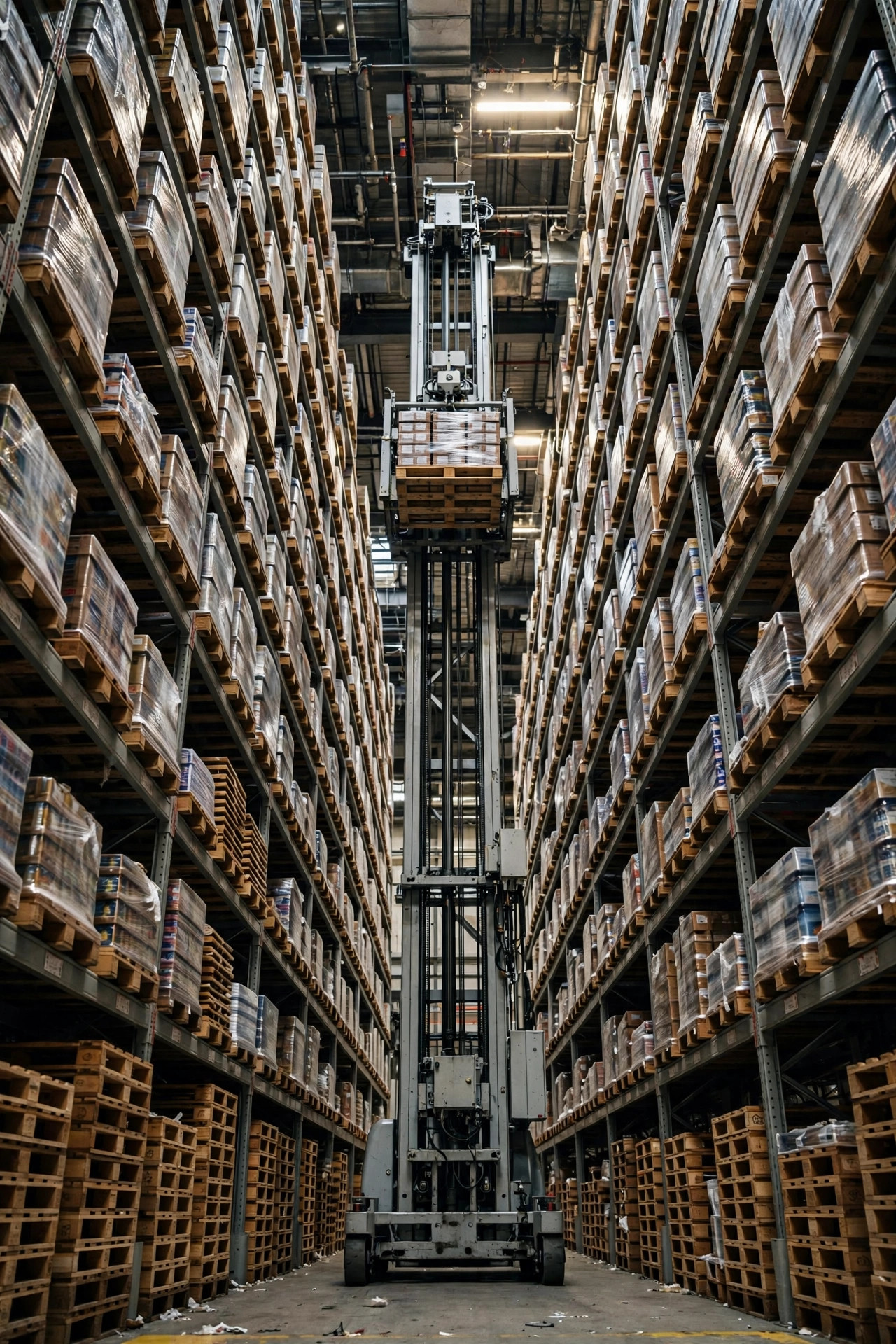
Stacker cranes are the "every slot independent, very fast" play: one aisle machine runs several cycles a minute, ideal for high-frequency, fragmented orders. Shuttles are the "batch in, batch out" play: blazing on full-batch moves, miserable at piece picking.
Watch one number: pallets per hour per lane. A crane aisle typically does 40 to 60; a shuttle lane (with 2 to 4 shuttles) does roughly 20 to 35 — but shuttle lanes are cheap to multiply. Conclusion: big volume in big batches favors shuttles winning on "many cheap lanes"; high frequency and fragmented orders make the crane's per-aisle speed irreplaceable.
One underrated factor: peaks. Adding shuttle capacity means adding shuttle vehicles at tens of thousands of dollars each. Adding crane capacity means adding an entire aisle — an order of magnitude more. If volume might double in three years, the shuttle's scalability is a genuine advantage.
Dividing line three: height and building constraints
Stacker-crane ASRS usually needs 20-plus meters to pencil out; below 15 meters the crane cost per pallet stops being attractive, and you're into floor-loading and fire-protection complications. Shuttles are far less picky — an 8-to-12-meter conventional high-bay works fine, with much lower building-modification cost.
This line matters most for leased buildings. Leased at 10 meters clear height and dreaming of a stacker-crane ASRS? The landlord probably won't let you touch the slab or the sprinklers, and you'll restore everything at lease end anyway. Shuttle racking is demountable — you take it when you move. In 3PL, that flexibility is a hard requirement.
Do the math right: don't compare equipment quotes alone
Here's a costing framework you can use immediately. Three cost buckets, side by side:
First, cost per pallet position including racking, equipment, controls, and installation. Shuttles usually run 30% to 50% below cranes — but that's calculated full. Under-filled lanes need a discount applied.
Second, annual operating cost per pallet: power, maintenance, labor. Shuttles are simple to maintain, and one dead vehicle doesn't stop the system; one failed crane aisle stops the whole aisle, and spares are expensive. Cranes run 15% to 25% higher here per year.
Third, space utilization. Same footprint, shuttle dense storage typically holds 2 to 3 times the pallets of selective rack; crane ASRS wins on height, and in low-clearance buildings it can actually lose to shuttles.
Weight the three and the answer computes itself. My verdict for clients is never "which equipment is better" — it's "which equipment fits your SKU profile." Equipment has no rank, only fit. The owners of Warehouses A and B understand that now. The tuition was just a bit steep.
How many pallets per SKU does your building average? Get that number first, then talk selection.