Let me say the quiet part out loud: the worst stage of running a Shopify store isn't zero orders. It's being stuck at 30 to 80 orders a day — too many to pack yourself without losing your mind, too few to feel good about handing it to a 3PL. You're trapped in the middle, and both options feel wrong.
I've lived in that trap. Here's the full story, with real numbers from my own store.
How I Got Here
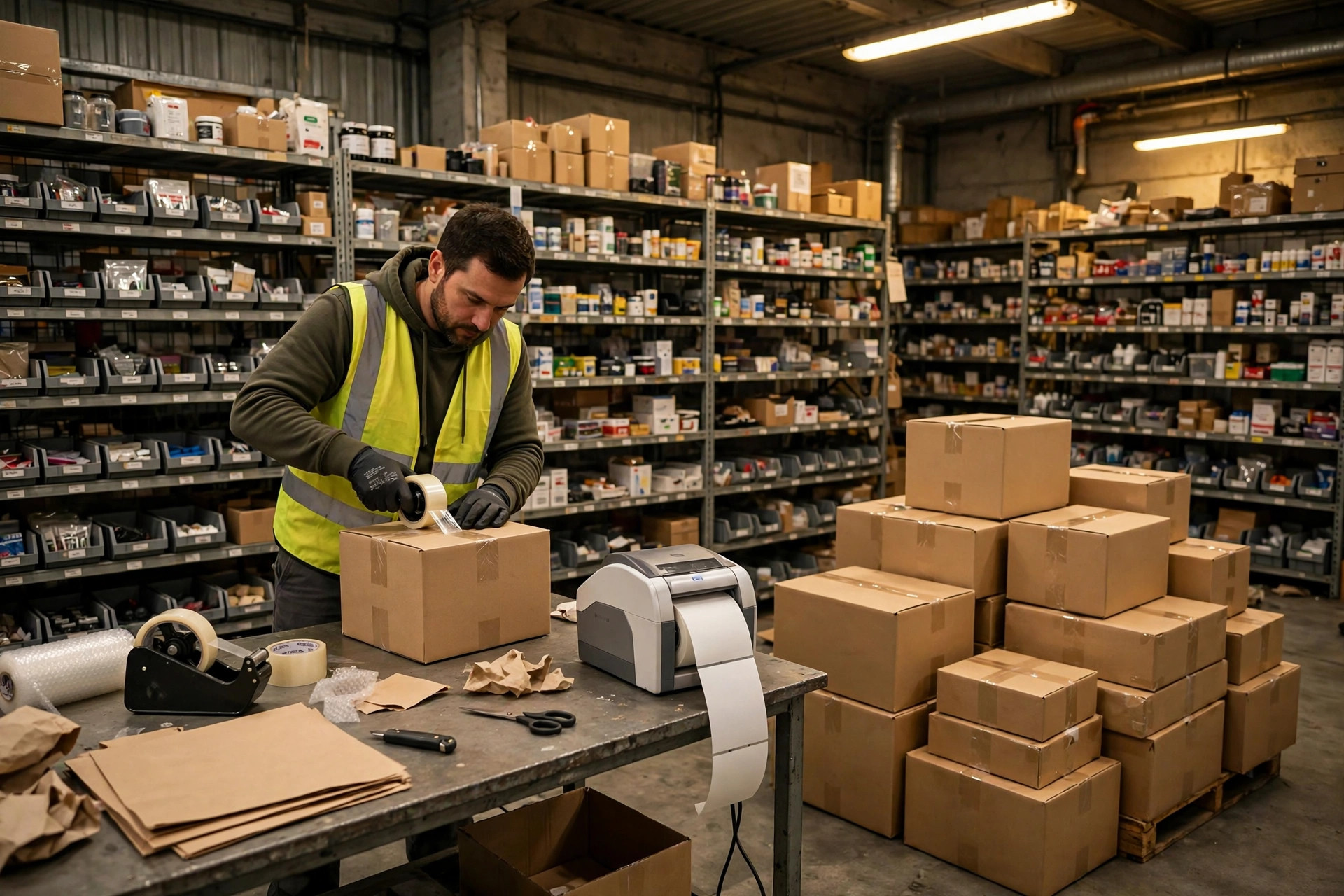
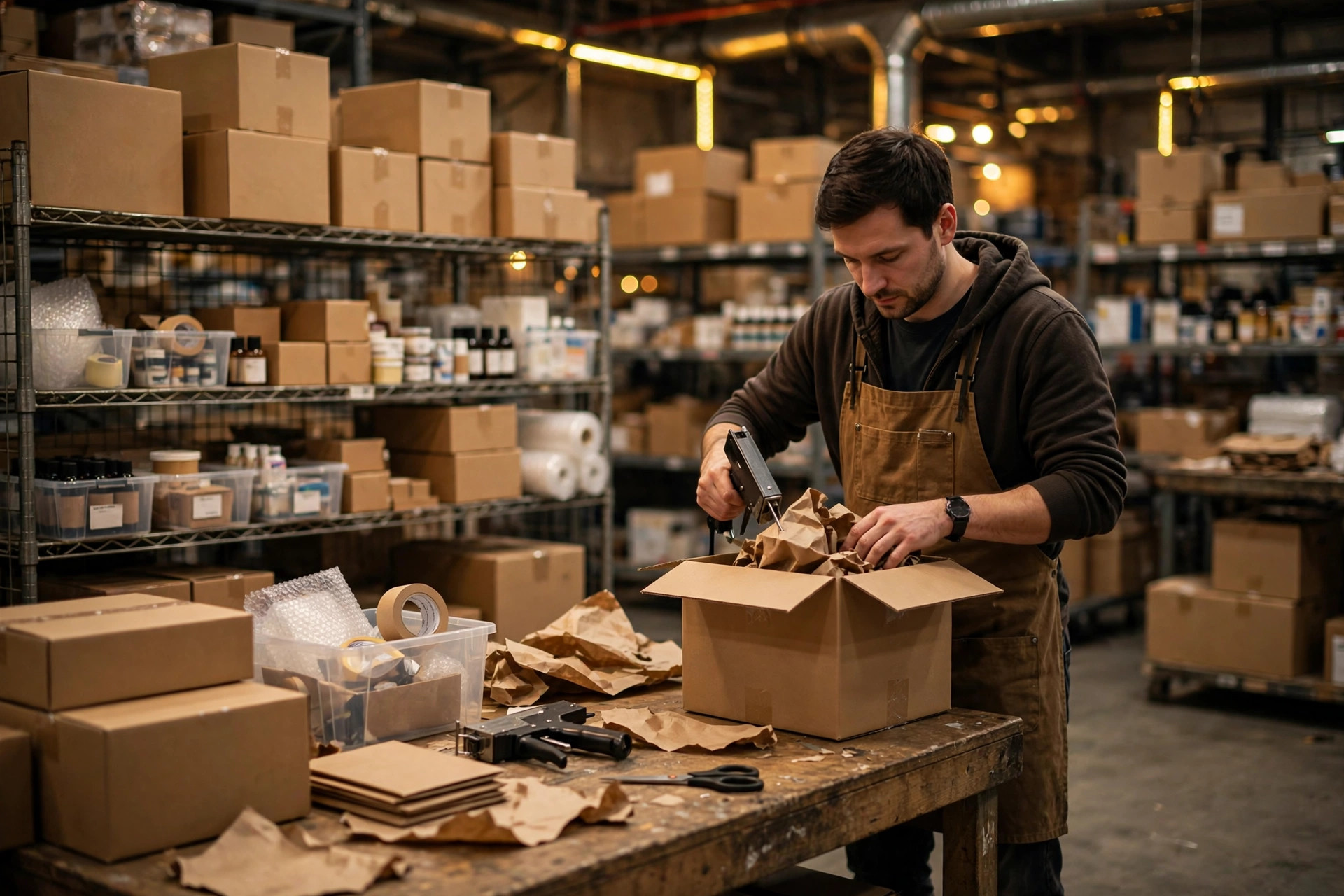
Late 2023, my store was doing about 40 orders a day. I rented a small garage in LA as my warehouse. Every night at 8 PM the routine started: print labels, fold boxes, wrap products in bubble mailers, stick labels on. Done by 11. My per-order shipping cost looked cheaper than every 3PL quote I'd gotten, so I told myself self-fulfillment was the smart-money move.
It was the most expensive "saving" I've ever made.
Four costs I wasn't counting.
First, time. Three hours of packing a day is 90 hours a month. Put those 90 hours into ad optimization and product testing instead, and the return is easily ten times the packing labor. I was treating myself as free labor and feeling good about it.
Second, mistakes. Packing solo, I mis-shipped 2 to 3 orders a month. Return shipping on me, bad reviews on me. The worst one: I swapped two customers' orders. Round-trip shipping cost me over $60, plus a 1-star review that sat on my store for months.
Third, space. The garage was $800 a month. Add shelving, a thermal printer, labels, and bulk boxes, and the fixed costs were very real. At low volume, those fixed costs spread across each order were brutal.
Fourth, spikes. Black Friday 2024, I got hit with 300+ orders in a single day. I dragged two friends in to help pack. The mis-ship rate went through the roof, and that week's support inbox made me want to quit e-commerce entirely. When I tallied it up afterward, that one week's mis-ships and returns cost more than two months of the 3PL premium I was supposedly "saving."
In March 2025, I moved fulfillment to a local 3PL in California. I was at 120 orders a day by then. The first month, my per-order fulfillment cost ran slightly higher than self-shipping. But I got three hours back every single day, and I poured all of it into ads and sourcing. My store's ACoS dropped from 28% to 21% — pulled straight from my own ad dashboard, not made up. The extra profit covered the 3PL premium several times over.
The Math: Where Exactly Is the Line?
Conclusion first, methodology after. After two years of running both sides, here's the line as I see it:
| Cost item | Self-fulfillment | 3PL |
|---|---|---|
| Per-order shipping | Your own carrier discounts; little leverage at low volume | 3PLs pool volume for better rates |
| Pick & pack labor | Your time (the "free" illusion) | Per-order pick & pack fee |
| Storage | Fixed garage/warehouse rent | Per-pallet or per-shelf billing |
| Supplies | Bought in bulk yourself | 3PL bulk purchasing, shared across clients |
| Mis-ships | You eat 100% of the cost | Contractual reimbursement terms |
| Hidden fees | None | Inbound fees, long-term storage, returns processing, monthly minimums |
My rule of thumb:
- Under 50 orders/day: self-fulfillment usually wins — but only if you price your own time at zero. That's the early stage, where you are the free labor.
- 50–150 orders/day: the gray zone. Pull your last 30 days of real data, fill in the table line by line, and let the numbers decide. No gut calls.
- Over 150 orders/day: 3PL economies of scale almost always win. Self-fulfill labor, errors, and space costs spiral, and one promo spike breaks the whole operation.
A concrete example from my books: at 40 orders a day, the 3PL's all-in quote ran about $1 more per order than my self-ship cost. That's $40 a day, roughly $1,200 a month extra. But the 90 hours I got back each month only needed to generate more than $1,200 in additional profit — through better ads, new product tests — to break even. In the first month after switching, the profit lift from the ACoS improvement alone blew past that number.
Before deciding, ask yourself three questions. One: what's your hour actually worth? Three hours of packing times your real hourly rate is the true labor cost of self-fulfillment — most sellers skip this step entirely. Two: how many SKUs? Past about 30 SKUs, self-pick error rates climb noticeably; a 3PL with barcode verification is steadier. Three: how spiky is your demand? Volatile categories make 3PL monthly minimums dangerous, which brings me to the pitfalls.
Pitfalls: The Fine Print Nobody Reads
Choosing a 3PL doesn't mean signing blind. The per-order rate on the quote is the opening line — the real bill hides in the back pages.
Inbound and receiving fees. Getting your goods off the truck and onto shelves costs money — some charge per pallet, some per carton. Ask before you ship a single unit in.
Long-term storage fees. Inventory sitting past a set number of days gets surcharged at higher tiers. Slow movers become rent-paying tenants in someone else's warehouse.
Returns processing. DTC return rates aren't low, and inspecting plus restocking a single return can cost more than shipping the original order out.
Monthly minimums. This one bites hardest. A seller friend of mine — home decor, signed his 3PL contract in peak season 2024 at 200 orders a day with a great negotiated rate — watched volume drop to 60 a day in the off-season. The monthly minimum spread the fixed fees so thin that his per-order cost more than doubled. He regretted every penny of that "great rate."
Exit terms. Notice period, de-racking fees, how you export your data — negotiate all of it before signing, not during the breakup.
And one non-negotiable: demand a monthly inventory count report, and spot-check it yourself. In 2024 I lost 20+ units at a warehouse and spent two months arguing before the contract's reimbursement terms kicked in. Count reports are the floor, not a favor.
The Counterintuitive Part
Everyone says "switch to a 3PL once you're big enough." I think it's backwards: you don't use a 3PL because you're big — you get big because you got off the packing table.
Three hours a day on packing is three hours not spent on ads, product testing, or supplier negotiation. The money self-fulfillment "saves" is paid for with your own growth. Most sellers do this math in reverse.
The reverse is equally true, by the way: at a dozen or two orders a day, with a handful of SKUs and time that's still cheap, pack it yourself. 3PL overhead at tiny volumes is genuinely expensive. Don't upgrade to "look professional" ahead of schedule — you'll just end up working for the warehouse.
So here's the move: pull your last 30 days of real orders (split peak and off-peak), fill in the table above with your own numbers, and the line draws itself. Don't guess, and don't trust the sales rep's slide deck. Numbers don't lie. This one's tested — by me, the hard way.
By Ah K, E-commerce Seller (5 yrs)