Let me be blunt: most sellers lose money on Shopee Brazil not because the market is bad, but because their Shopee Brazil seller warehouse fulfillment plan was built on vibes instead of arithmetic. Stock too little and you go out of stock mid-campaign. Stock too much and returns pile up in the local warehouse while your cash sits in boxes you cannot sell. Today I will walk through the three gates that actually decide whether Brazil makes you money: customs clearance, returns, and local invoicing.
The uncomfortable truth first. Brazil is not "just another Southeast Asia." Its clearance, tax, and returns rules play by their own logic. If you copy your Shopee Malaysia or Thailand playbook straight into Brazil, you will get stuck at every gate. The buyers are real and the demand is real — but so are the frictions.
Shopee Brazil Seller Warehouse Fulfillment Starts at Customs, Not at the Listing
My first shipment to Brazil taught me this the hard way. It was about 800 pieces of home storage goods, split into two shipments. I assumed that a commercial invoice and a packing list would be enough, the way they were on other sites. The clearance broker came back saying the product descriptions did not match the local classification, and we had to submit supplementary materials. The goods sat at the port for nearly two weeks and only cleared a week before a big sale. The ads were already scheduled, but the warehouse had nothing to sell.
Now I do three things before any shipment. First, I go through every product description, material, and use case with the broker line by line, and I never copy marketing copy from the listing straight into the declaration. Declaration language follows clearance requirements, not ad copy. Second, I confirm in advance whether the shipment needs any extra local certification or permit, and if I am unsure, I test with a small batch first instead of pushing a large one. Third, I build clearance buffer time into the replenishment cycle: supplier lead time, transit, clearance buffer, plus another 10 to 15 days of slack on top. Check the official source for the latest rules on duties and documentation — rates and requirements change, and a forwarded fee table from a seller group chat is not a source.
Here is the counter-intuitive part: slow clearance is often not the broker's fault. Vague descriptions, mixed product names, and inconsistent units of quantity force round after round of supplementary filings. Sellers who hand over clean paperwork clear faster. Spending half a day checking documents upfront saves two weeks of port delays and stockouts. That is the cheapest time you will ever buy.
Returns in Shopee Brazil Seller Fulfillment: Budget for Them Like a Cost Line, Not a Surprise
The second gate is returns, and on Shopee Brazil you have to take the return rate seriously as a real number in your budget. Size-sensitive categories like apparel and footwear return at a visibly higher rate than standard goods. A friend selling women's clothing once saw returns reach roughly one in five units sold in a single month, and part of what came back had tags removed or packaging damaged — unsellable at full price, only good for clearance pricing.
My formula treats returns as an input, not an afterthought: replenishment quantity = expected sales x (1 + returns buffer) - in-transit stock - sellable stock already in the local warehouse. I use my own store's illustrative buffers: 5 to 8 percent for standard goods, 15 to 20 percent for size-sensitive goods. Those are example figures from my own shop, not platform statistics — use your own seller dashboard data for your numbers.
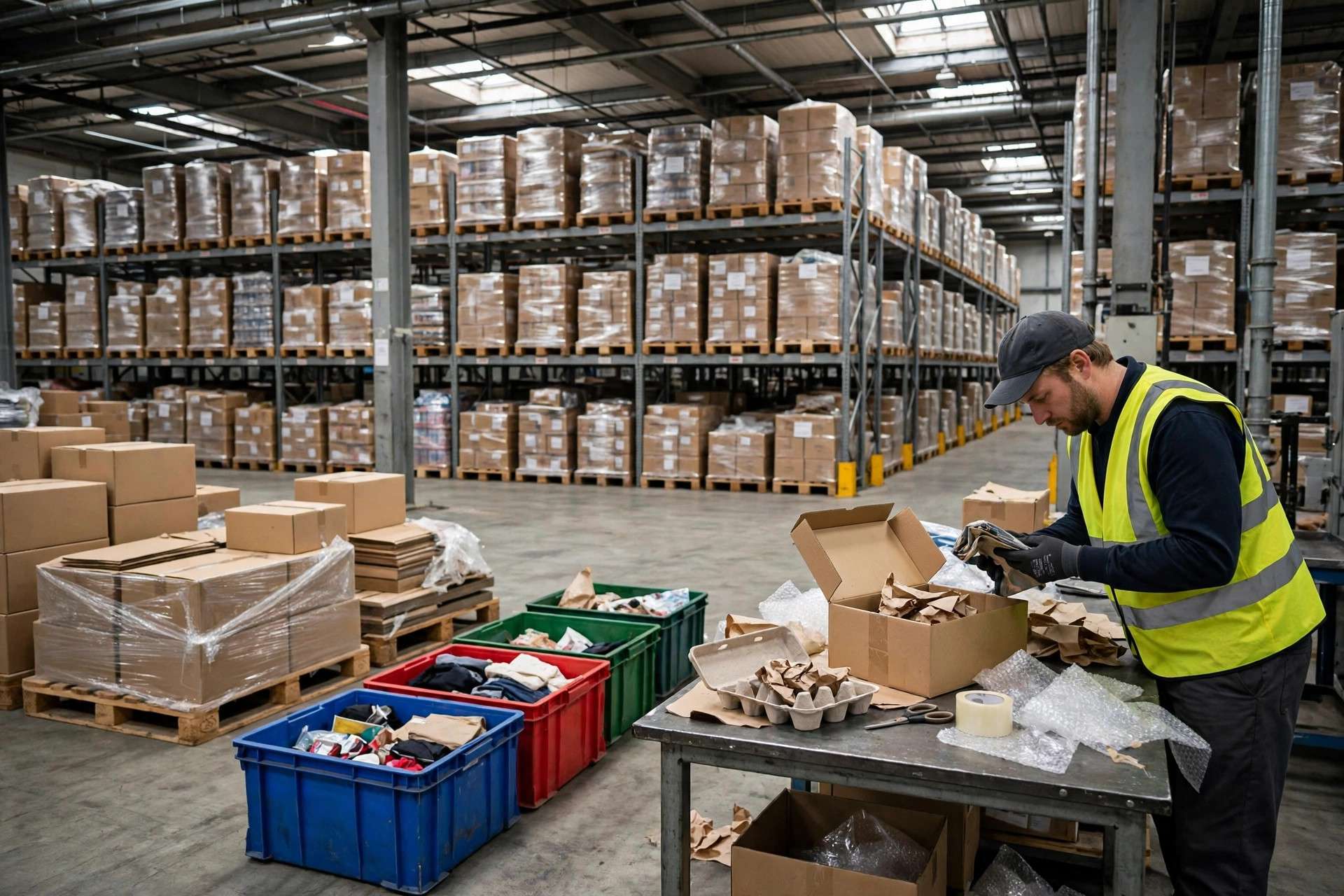
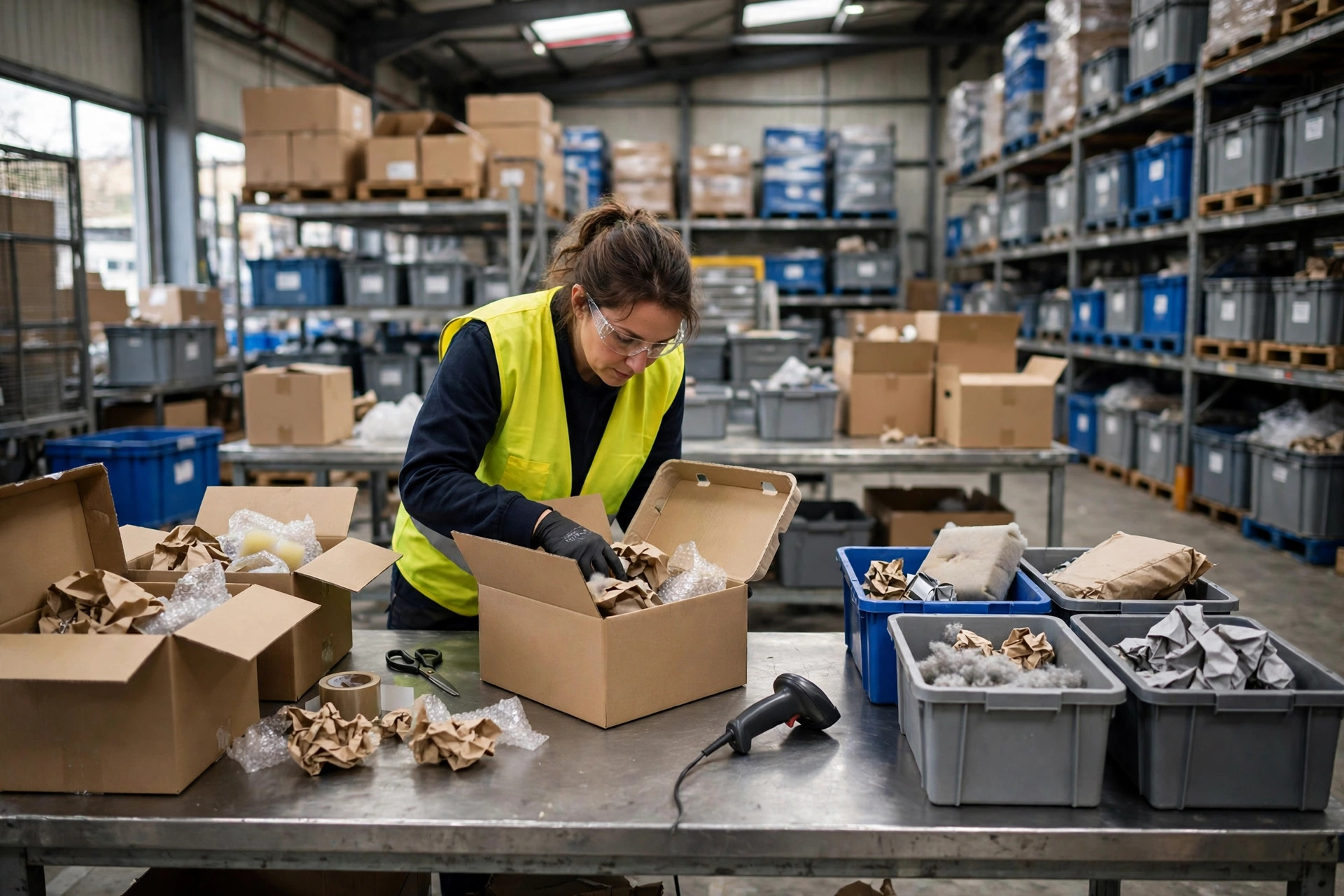
Returns handling also needs a workflow agreed in advance. I sort returned units into three grades: Grade A, intact and ready to relist immediately; Grade B, packaging damaged but product fine, repack and relist; Grade C, unsellable at full price, route to clearance or local disposal. Write the grading standard into your agreement with the local warehouse before the returns start arriving, not after they pile up. And track return logistics and warehouse handling costs as their own ledger line. If you lump them into "miscellaneous," you will never know which product actually makes money.
| Replenishment approach | Best for | Upside | Risk |
|---|---|---|---|
| Small batches, frequent top-ups | New products, testing phase | Low inventory exposure, controllable return losses | Higher per-shipment clearance cost, stockout risk |
| One large bulk shipment | Proven bestsellers | Lower per-unit logistics cost, no stockouts | Return pile-up, cash and invoicing pressure |
| Local warehouse + rolling top-ups | Steady sellers with stable volume | Fast turnover, timely returns handling | Needs a responsive local warehouse, higher management effort |
Local Invoicing for Shopee Brazil Sellers: Get the Paperwork Right or the Sale Does Not Feel Like a Sale
The third gate is the one most sellers ignore until it bites: local invoicing. Brazil's commercial invoice system has its own rules, and if invoice details, tax IDs, or product line items do not match, you get delayed settlements at best and held goods at worst. Do not treat invoicing as "something the broker sorts out after shipping." Before stocking, confirm three things with your broker and warehouse: who the invoicing entity is, how product line items are described, and how return invoices are reversed.
A seller I know in phone accessories learned this the expensive way. His goods sold well, but the invoicing product descriptions did not match the clearance declaration wording, and reconciliation dragged on for over a month. He fixed it by adopting one normalized description set used everywhere — listing, declaration, and invoice — with marketing flair kept only in the ad copy. It looks boring. It saves weeks of arguing.
My pre-shipment checklist, the one I actually use:
- Replenishment cycle = supplier lead time + transit + clearance buffer + 10 to 15 days of slack. Never plan on ideal numbers.
- New products ship in a small test batch first; scale only after clearance, returns, and invoicing all run clean end to end.
- Returns buffers are set per category from your own store data, never one flat rate for the whole shop.
- Return grades A/B/C are written into the warehouse operating agreement in advance.
- One normalized description set across declaration, invoice, and listing product data.
- Duties, taxes, and platform fees: check the official source for the latest rules. Never trust an old fee screenshot.
One more trade-off sellers agonize over: stock more or stock less? My answer is that it depends on the product. For a proven bestseller, I would rather overstock by 10 percent — a stockout costs ranking and ad weight that is worth more than the carrying cost. For a new product, I would rather understock, learn the true return rate, and then scale. Replenishment is not won by being bold. It is won by doing the math.
One last detail: big-sale timing. Brazil's sale events spike hard and fade fast. My rule is to lock sale inventory six weeks out, and the goods must already be inside the clearance process four weeks out — not still waiting on the supplier's production schedule. I once scheduled a sale shipment too tight and the stock arrived when the sale was already half over. Every ad dollar spent before the stock landed was wasted. Now my replenishment sheet has a "latest arrival date" column, and every step is reverse-scheduled from it. Any step that slips triggers a plan change immediately, not a last-minute panic.
This trick I have personally tested and it works: turn clearance, returns, and invoicing into a one-page pre-shipment checklist and tick every item before goods leave. It is the backbone of a solid Shopee Brazil seller warehouse fulfillment routine. It is only a dozen or so lines, but since I started using it, I have never been stuck at a port over paperwork, and returns have never piled up beyond handling capacity. Brazil pays sellers who turn the annoying parts into standard operating procedure.
By Ah K, E-commerce Seller (5 yrs)