About a week ago, FreshPlaza reported that a USD 35 million cold chain logistics hub is planned for Naivasha, Kenya, with financial close targeted for 2027. The headline is not the hub itself — it is the location. Naivasha sits inland, hundreds of kilometers from the Port of Mombasa. When capital starts betting on cold chain infrastructure far from the quayside, it tells you where the real bottleneck has moved. And behind that bottleneck is one commodity: the avocado. Understanding Kenya avocado export cold chain logistics starts with that geography.
Kenya ranks among the world's leading avocado exporters. Europe has been the anchor market for years; around 2022, access to China opened another door — and another multi-week ocean voyage. For a Hass avocado, the temperature curve from the moment of harvest determines its value on arrival in Rotterdam or Shanghai. The hardest segment to control is not the weeks at sea. It is the 9 to 14 hours by road from packhouses around Murang'a to the Port of Mombasa — hours spent, all too often, under an equatorial sun and in port queues.
Why the Cold Chain Math Matters Now
Export growth is the best argument for cold chain investment. European demand for Kenyan avocados has grown for years, and the China opening added a destination that takes weeks to reach by sea. The longer the voyage, the more pre-loading temperature discipline matters: fruit that will "sleep" in a reefer for weeks must be brought down to the right temperature before the doors close, or the whole container wakes up as a loss.
Infrastructure has not kept pace. Pre-cooling capacity at packhouses, refrigerated truck availability, and the number of reefer plugs at Mombasa have all grown more slowly than export volumes. The Naivasha hub plan — USD 35 million, financial close in 2027 — reads as capital's first formal pricing of that gap: a bet on the long-term returns of an inland cold chain node.
Where Kenya's Avocado Cold Chain Actually Breaks: the 9–14 Hour Land Leg

Two scenes recur in industry fieldwork. The first is at a packhouse around Murang'a in peak season. Fruit harvested in the afternoon sits in the receiving area under the sun while the pre-cooling chamber works through a queue. A gap of several hours between harvest and pre-cooling is routine — and an avocado's respiration heat peaks right after picking. The slower the field heat comes out, the shorter the shelf life that follows. That is break point number one, and it happens before the "cold chain" officially begins.
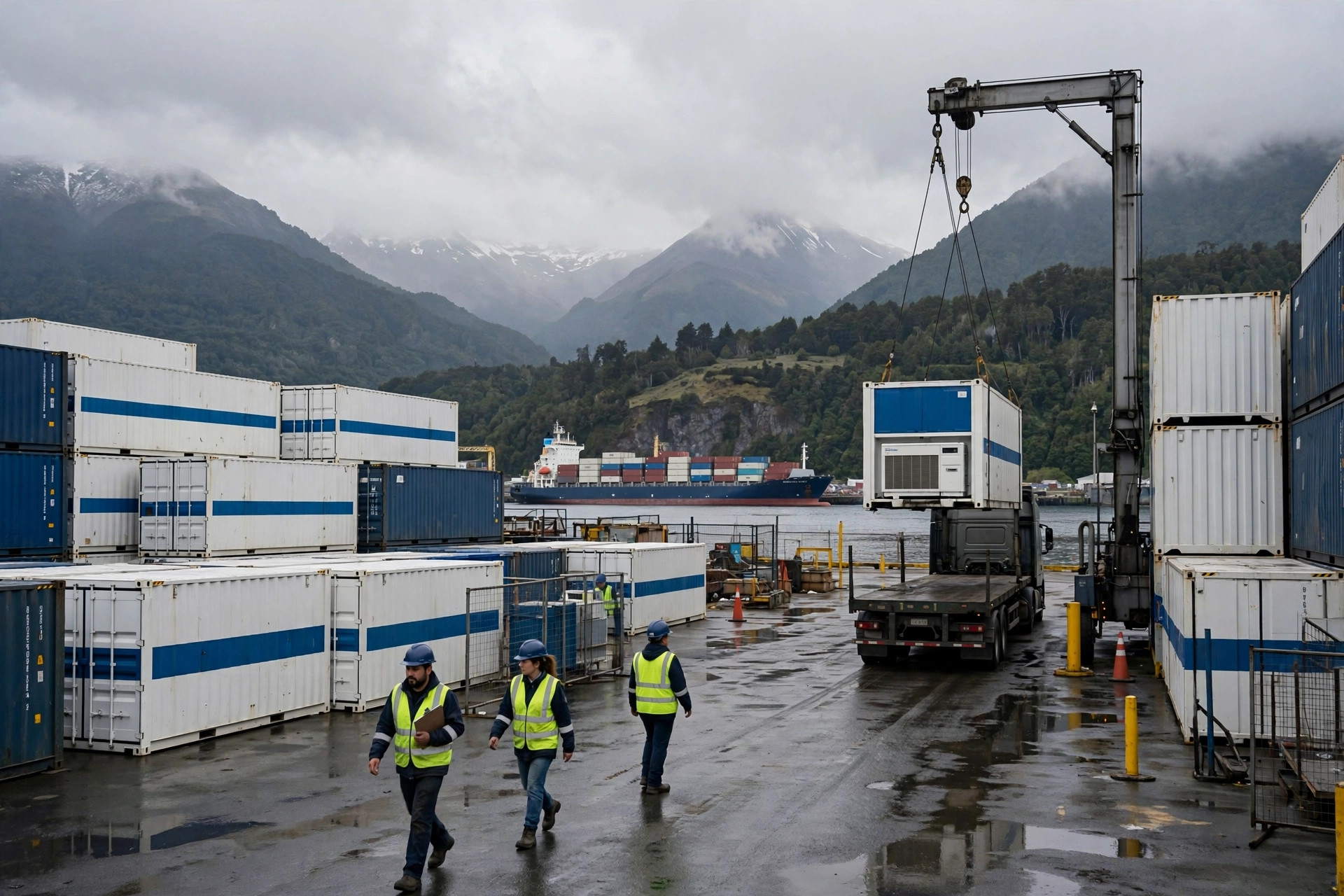
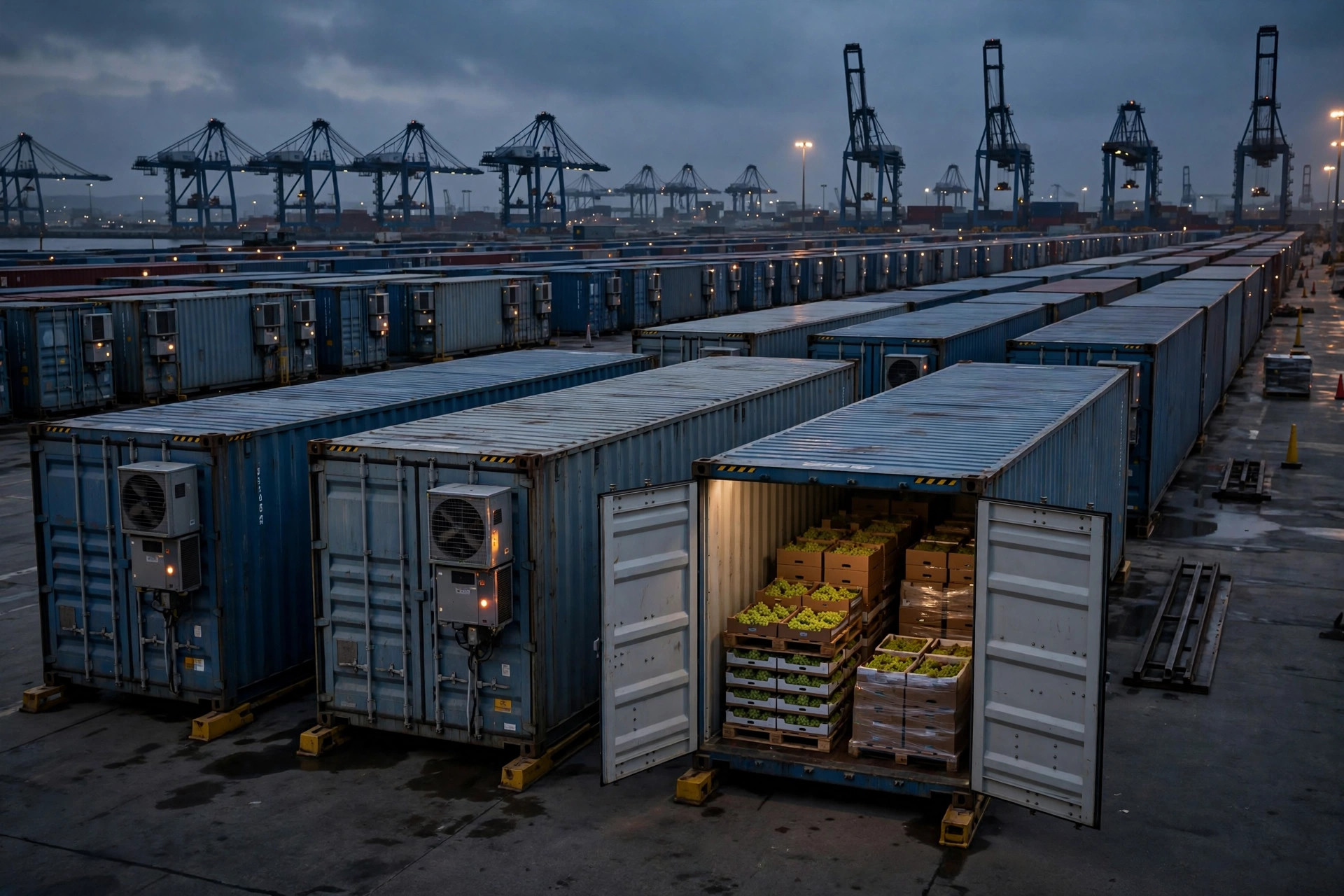
The second scene is at Mombasa. Reefer containers gated in early, waiting for their vessel window. When yard plugs run short, a box has to ride on insulation alone. Mombasa stays hot and humid year-round, and a reefer baking in the sun warms faster than most people expect. That is break point number two — inside the segment everyone assumes is the safest.
Here is the counter-intuitive read: the ocean leg is the least of your worries. Modern reefer containers hold temperature with remarkable precision. The real risk concentrates at the two ends — the first mile out of the growing region and the waiting time at the port. Most of the work of keeping the chain unbroken happens before the ship sails.
Reefer Truck vs. SGR Rail: the Kenya Avocado Export Warehouse Logistics Trade-off
From the growing region to Mombasa, exporters effectively choose between two options: a reefer truck straight to the port, or a reefer container on the standard-gauge railway (SGR). The choice shapes the temperature curve of those 9 to 14 hours — and the warehouse logistics cost structure behind it.
| Dimension | Reefer truck (road) | Reefer container (SGR rail) |
|---|---|---|
| Transit time | ~9–14 hours, volatile with road conditions and checkpoints | Fixed schedule, predictable — but needs drayage at both ends |
| Temperature continuity | One vehicle door-to-door, no intermediate handling | Two transfers (packhouse to rail terminal, terminal to port), each a break risk |
| Flexibility | High — dispatch when the fruit is ready | Low — miss the slot and wait for the next one |
| Cost structure | Sensitive to fuel and driver costs; spot rates spike in peak season | Stable linehaul, but drayage and storage fees stack up |
| Carbon footprint | High | Low — and European buyers increasingly care |
The trade-off is clean: road wins on flexibility and door-to-door continuity, loses on volatility; rail wins on stability and carbon, loses on the two transfers at each end. My working judgment: large exporters with regular, high-volume shipments should migrate toward rail; smaller, multi-batch, time-sensitive shipments are still better served by road. One often-overlooked line item is insurance and claims: temperature logger data is more complete on rail, which makes evidence easier when something goes wrong. That belongs in the total-cost math.
There is also a technical trade-off worth stating plainly: colder is not better. Hass avocados are chilling-sensitive; too low a setpoint causes chilling injury — blackened flesh that never ripens. Container setpoints must follow the shipping line's technical specification and the buyer's receiving standard, not anyone's rule of thumb about "two degrees lower for safety." Pre-cooling is not a race to the bottom either — uniformity matters more than speed. If core and surface temperatures of a pallet diverge too far, ripening comes out uneven.
Where the Trend Points: Pre-Cooling Moves Toward the Farm
Put the threads together and the direction is clear. First, if inland nodes like the Naivasha hub land on schedule around 2027, Kenya's cold chain center of gravity keeps moving inland, and some port pressure gets absorbed upstream. Second, SGR reefer services will add frequency as export volumes grow, gradually patching rail's flexibility deficit. Third — and most important — pre-cooling capacity is migrating from the port toward the packhouses. Whoever pulls field heat out within hours of harvest wins a visibly higher arrival pass rate at destination.
All three point to the same conclusion: competition in Kenyan avocado exports is shifting from "who can win the order" to "whose cold chain is more complete." Orders can be negotiated. Temperature curves cannot.
The open question for practitioners: if the Naivasha hub really opens in 2027, do you keep trucking straight to Mombasa, or move pre-cooling and consolidation inland? The answer may decide who captures the next round of market-access dividends — and who watches from the sidelines.
By Dr. Chen, Supply Chain Researcher