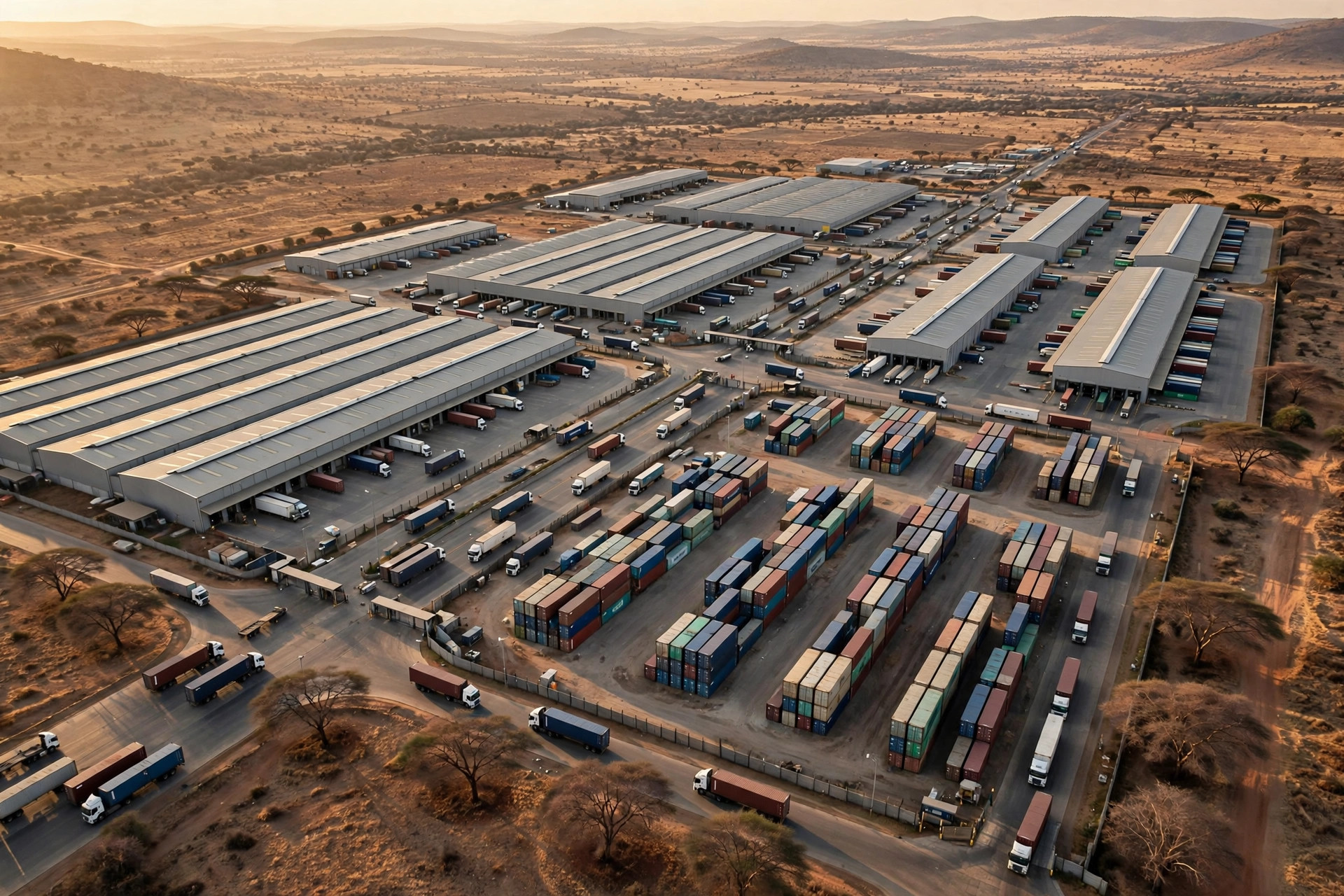
We have a client, Mr. Koh, who runs a semiconductor component distribution warehouse in Penang — Bayan Lepas, 50,000 square feet. Last fall he called me, annoyed: "Susan, my customer says my quote is too high. The general-cargo warehouse next door is half the price. What exactly am I charging for?"
Fifteen years selling warehouse services, and that one question stopped me cold. I flew to Penang, spent three days inside the building, and came back with the answer: in penang semiconductor warehouse esd logistics, the expensive half of the quote is never the rent. It's static electricity and humidity — two invisible things that can turn a whole batch of components into scrap.
ESD: The Most Expensive Part Isn't the Floor — It's People's Habits
Let me start with a claim that cost real money. In early 2024, an OSAT plant (outsourced assembly and test) handed a batch of packaged MCUs to a 3PL for warehousing and distribution. The building was new: ESD flooring, grounded bench mats, ionizers — the quote had a clean ESD line item. Two months after shipments started, the end customer reported spiking failure rates. Root cause: pickers wore their wrist straps but never snapped the other end onto the ground terminal. Straps on, protection off.
ESD damage is latent. The boards passed power-on tests, then failed in the field weeks later. That single incident cost over RM 90,000 in compensation — and the OSAT customer walked away. Every cent of the ESD hardware was in place; the failure was the human link.
That loss sent me reading ANSI/ESD S20.20, the electronics industry's ESD control program standard (check the current published text for the exact clauses). The big realization: the standard doesn't regulate floors, it regulates a system. Flooring, workstations, packaging, personnel grounding, training, test records — break one of the six, and the money spent on the other five is wasted. The most expensive part of ESD protection was never the flooring. It's habits: one minute at shift start to test a wrist strap, changing shoe covers at the EPA boundary. Those boring rituals are the line between a claim and no claim — and the clearest difference between a serious penang semiconductor warehouse and a general warehouse wearing an ESD badge.
So now, whenever a customer wants an electronics warehouse, my first question is: "Can you show me your ESD training and test records?" If they can't, I won't take the business at any price. When a shipper complains about the cost, I tell this story. Dropped cartons are visible; ESD is slow poison — by the time you find the damage, the whole batch has shipped.
Humidity: The Invisible Killer in a Tropical Warehouse
Penang is tropical. Humidity sits around 80 percent all year, and for electronic components that's a permanent steam bath. Moisture-sensitive devices are graded by MSL under IPC/JEDEC J-STD-033 — each level has a defined floor life after the bag is opened, after which parts need baking before reflow. Check the standard's current text for the exact numbers.
In 2023 we handled another one: a Penang distributor left a batch of MSL-3 parts on ordinary racking for two weeks after opening. The humidity indicator card next to the reels had turned from blue to pink — the industry's universal alarm that the parts have absorbed too much moisture. The distributor shipped anyway. At the customer's reflow oven, the packages "popcorned" — cracked and bulged en masse. The entire batch had to be downgraded, wiping out about 30 percent of its value.
Here's what I learned: humidity, like static, is invisible — but it's more vindictive. An ESD failure at least leaves room to argue about which step failed. A pink humidity card is hard evidence, with the timeline baked in. The dry-storage playbook in an electronics warehouse has three pieces: dry cabinets for low-humidity storage, nitrogen cabinets for high-value parts (at a notably higher operating cost), and moisture-barrier bags with desiccant and indicator cards traveling with the goods. Check the card at inbound, check it again at outbound — two records, and responsibility is unambiguous.

And here's the counter-intuitive part: most owners think humidity protection means buying a few dry cabinets. It doesn't. In Penang, warehouse dehumidification never stops — a two-hour power outage and cabinet humidity starts climbing; during monsoon season, every door opening for receiving nudges the whole zone upward. The biggest cost of humidity protection isn't equipment. It's operational discipline: never lose power, minimize door openings, log everything. Equipment is a one-time purchase; discipline burns money every single day.
Electronics Warehouse vs. General Warehouse: Where the Quote Gets Heavier
Back to Mr. Koh's question: why does a semiconductor warehouse in Penang cost more than a general-cargo one? I broke down that Penang quote into this comparison. The numbers are from that specific deal — ratios vary by operator — but the line items don't lie:
| Cost item | General warehouse | Semiconductor electronics warehouse | Notes |
|---|---|---|---|
| Rent (per sq ft/month) | Baseline | Roughly 25–35% higher | Amortized ESD flooring and climate-controlled zones |
| ESD program investment | None | Upfront build + annual audits | Flooring, grounding, benches, S20.20 certification and re-audits |
| Humidity equipment | None | Dry/nitrogen cabinets + 24h dehumidification power | In the tropics, the power bill never stops |
| Consumables | Cartons, stretch film | Shielding bags, humidity cards, desiccant, ESD trays | Consumed per reel/batch, and not cheap |
| Labor | General operators | ESD training + certification + daily testing | Training and test time are real costs |
| Damage exposure | Drops, loss, mis-ships | ESD latent failure, moisture downgrade | Invisible damage, and disputes cost more |
See the pattern: electronics warehouses are expensive in invisible costs. General-cargo damage is visible — dropped, lost, mis-shipped, easy to assign blame. Electronics-warehouse damage is invisible — static and humidity, hard to prove, expensive to argue. So the quoting logic has to change: ESD and humidity costs should either be folded into the rent or listed as a separate "electronics handling fee." Never hide them inside a general-cargo price to win the bid — the day you hide them is the day you start losing money.
Three Questions for Your Next Electronics-Warehouse Contract
Mr. Koh's deal closed in the end. We rebuilt the quote with ESD and humidity costs as explicit line items, walked the shipper through each one, and they signed — they didn't want cheap, they wanted the premium explained. As always, here are my three contract-survival questions for anyone in this business:
One: "Who pays for ESD program certification and the annual audits?" S20.20 isn't a one-time fit-out; it's ongoing spend. If the contract is silent, year two's audit fee becomes year two's fight.
Two: "How do we define liability for ESD and humidity damage — and do humidity cards and test logs count as evidence?" Invisible damage without evidence rules is a lawyer's full-employment program. Write the evidence rules first.
Three: "Are dry-cabinet power and ESD consumables inside the rent or billed separately?" Both burn continuously. Burying them in fixed rent means you're underwriting the shipper's volatility for free.
This business has a real moat, and it isn't the building. It's whether you can control the invisible things. Control them, and shippers will pay the 30 percent premium without blinking. Can't — and no discount is cheap enough to save you.
By Susan, 3PL Sales Director