The Temptation of One Big Leap
Everyone planning automation faces the same existential question: go all-in on full automation now, or start semi-auto and upgrade later?
The one-leap temptation is strong: it's the most "complete," with no transitional mess. But reality bites: full-auto costs 3–5× semi-auto, takes 12–18 months to implement while the business can't wait — and worse, the business changes. The AS/RS you design for today's SKU profile may run half-empty aisles two years later after a category overhaul.
My position is clear: 90% of warehouses should go phased. Not because full-auto is bad, but because phased has the better risk-return profile: every step validated, every step paying back, every step leaving interfaces for the next.
1. The Semi-Auto Playbook: Small Money, Big Wins
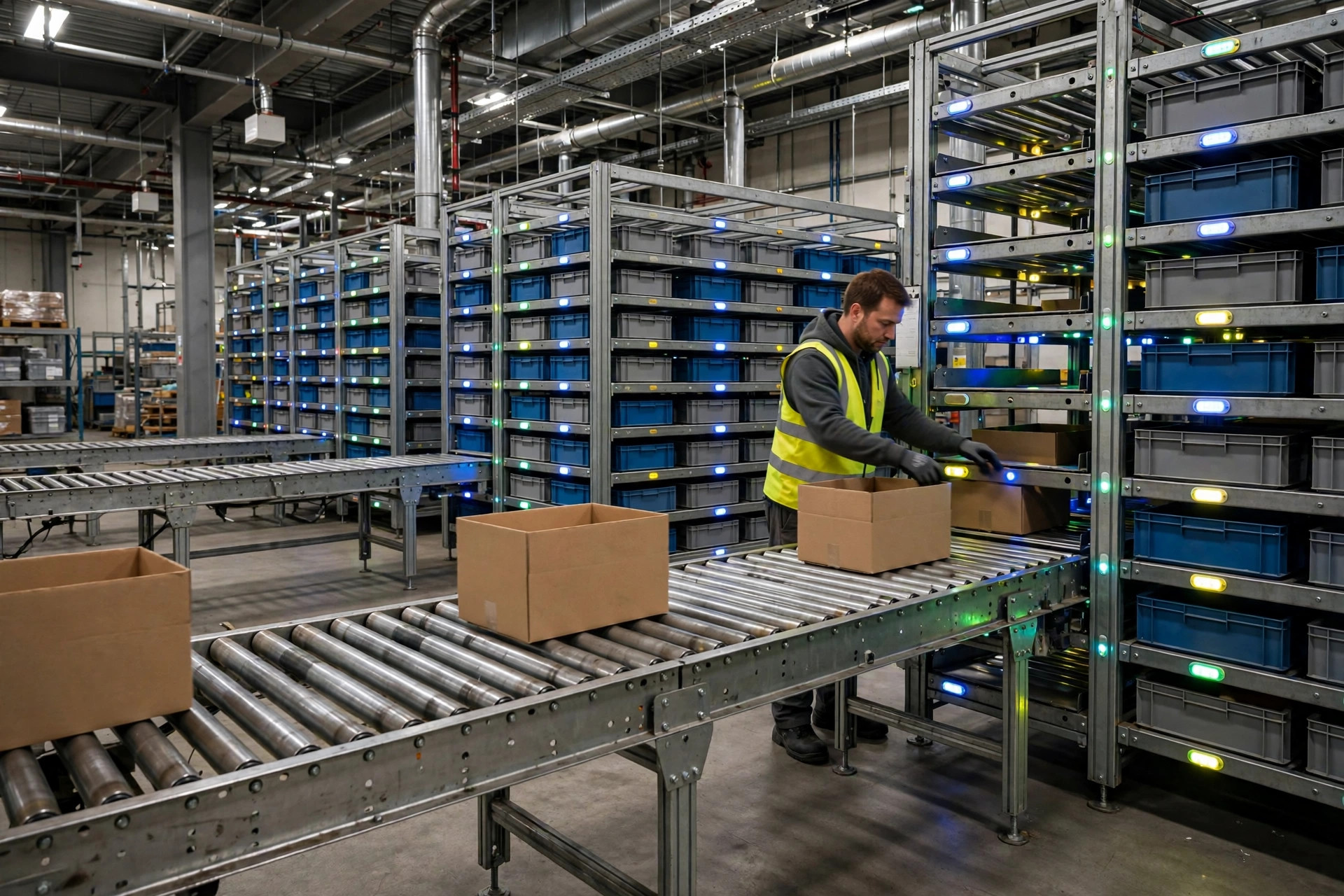
Semi-auto logic: machines do the moving, humans do the deciding. Small investment, fast results, high flexibility:
| Area | Semi-auto solution | Investment scale | Solves |
|---|---|---|---|
| Transport | Electric forklifts / pallet jacks | Thousands/unit | Replaces manual carrying |
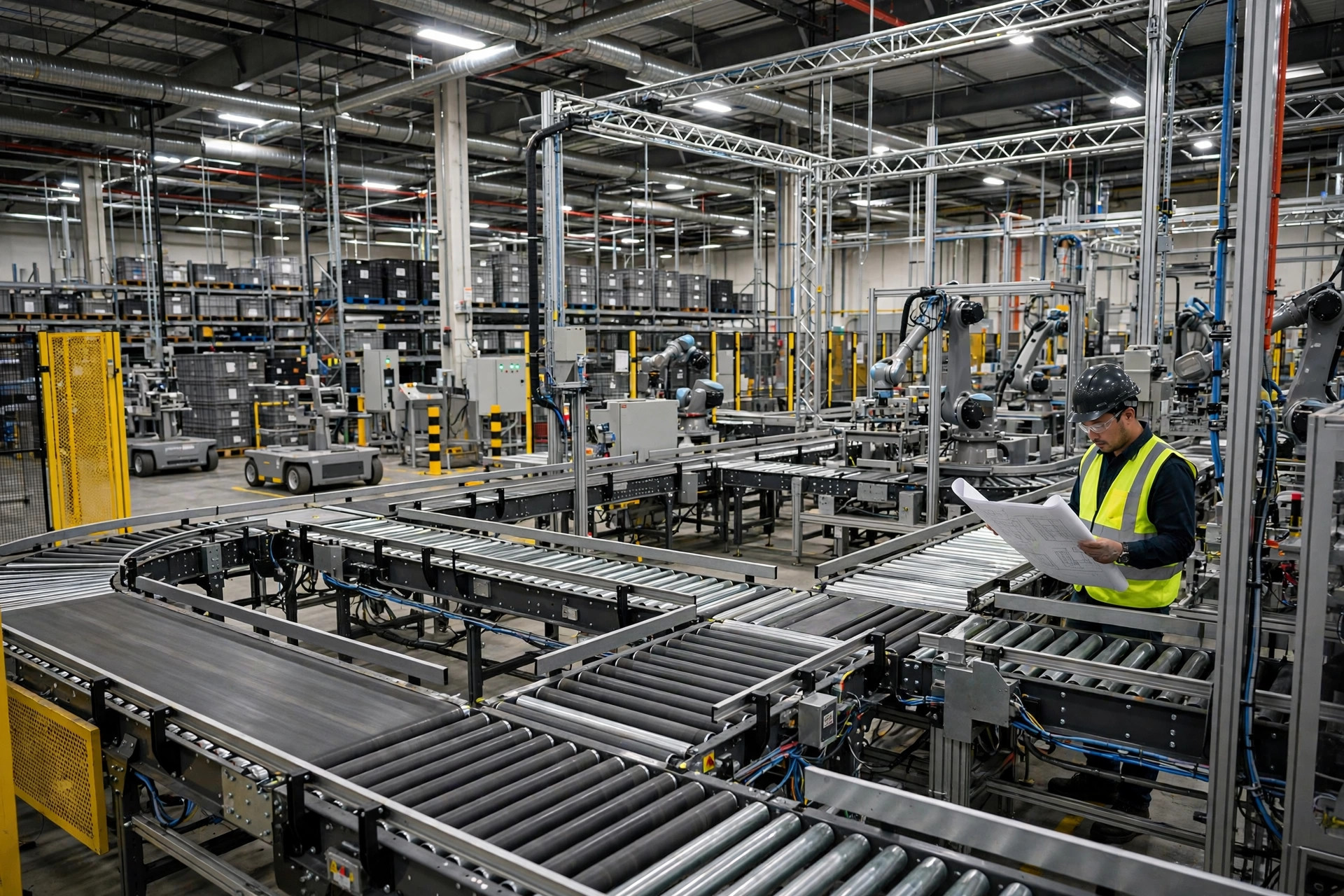
| Conveying | Roller/belt conveyors | Tens of thousands | Cuts walking |
| Picking | PTL / voice / RF | Tens of thousands | Speed + error reduction |
| Packing | Case erectors, sealers, wrappers | Tens of thousands | End-of-line speed |
| Storage | Narrow-aisle racking + reach trucks | Tens of thousands | Space utilization |
A semi-auto phase typically runs $140K–420K with 1–2 year payback. Its value isn't just savings: it's full-auto's scout — run it a year and you learn the true order profile, SKU velocity, and bottleneck points. That data is the foundation full-auto design stands on.
2. The Full-Auto Playbook: Expensive, but Solves the Root Problem
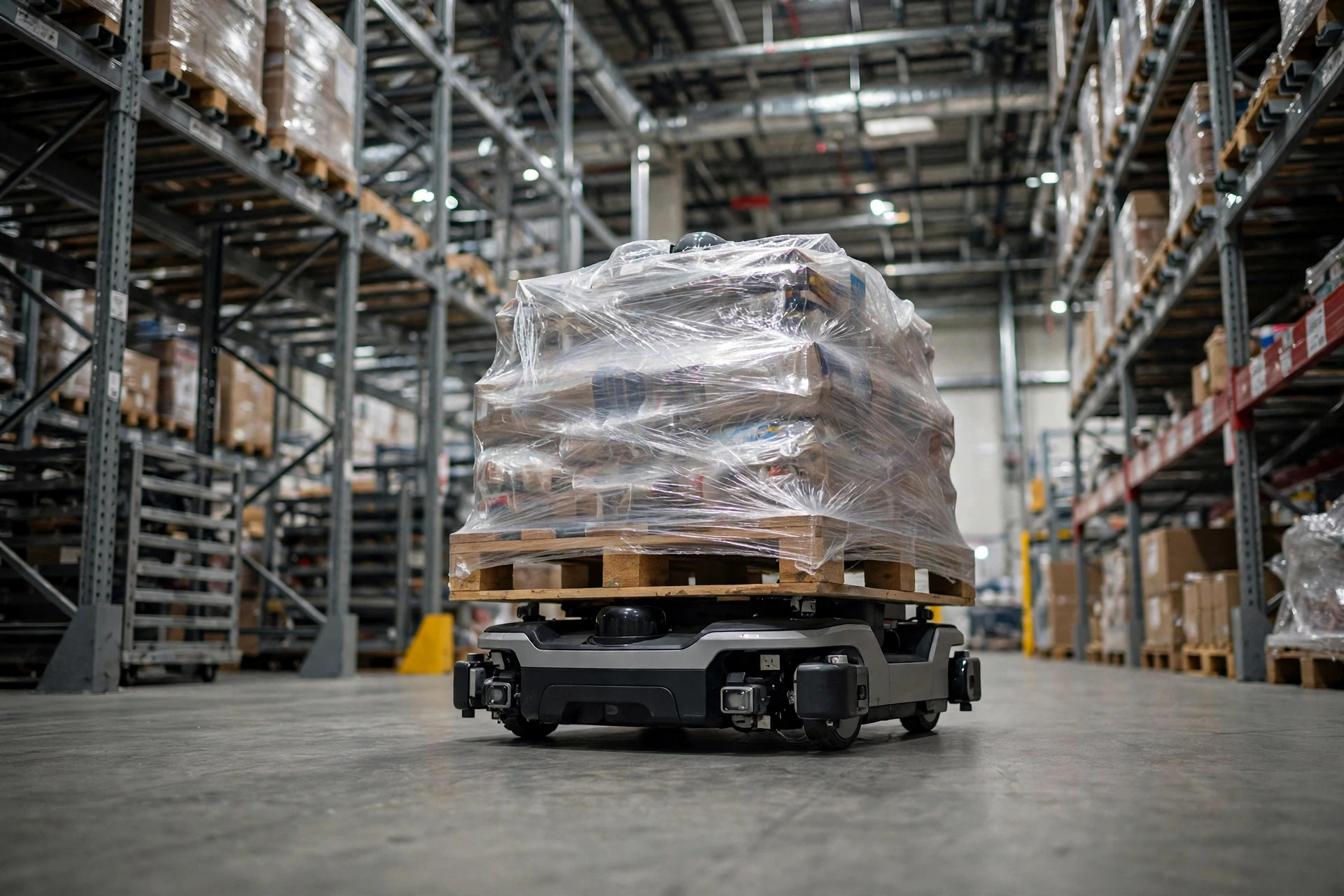
Full-auto logic: machines do the moving and deciding; humans handle exceptions only:
| Area | Full-auto solution | Investment scale | Solves |
|---|---|---|---|
| Storage | AS/RS / shuttle systems | Millions | Space + unmanned storage |
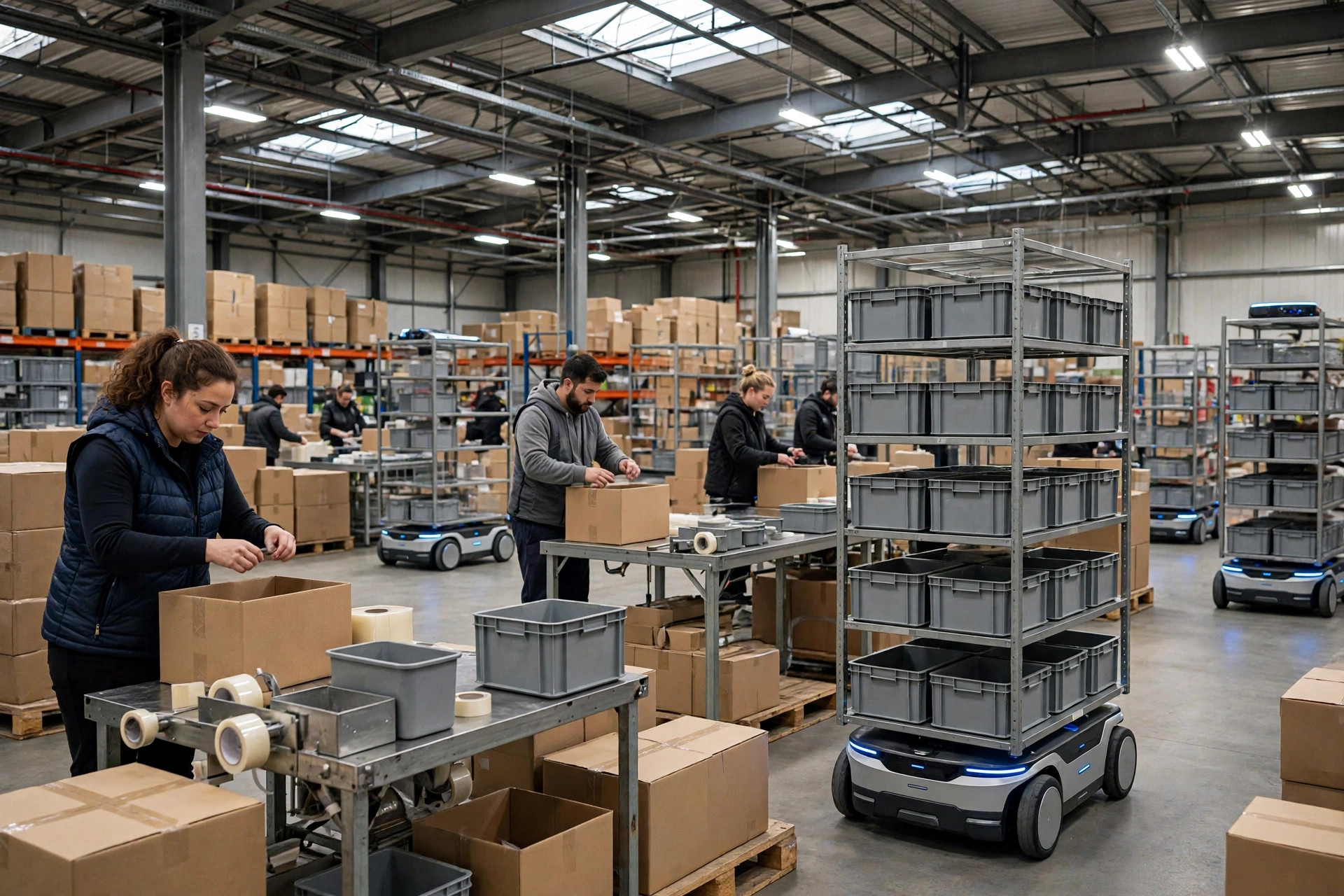
| Transport | AMR / AGV fleets | Millions | Site-wide unmanned transport |
| Picking | Robotic picking / goods-to-person | Millions | Unmanned picking |
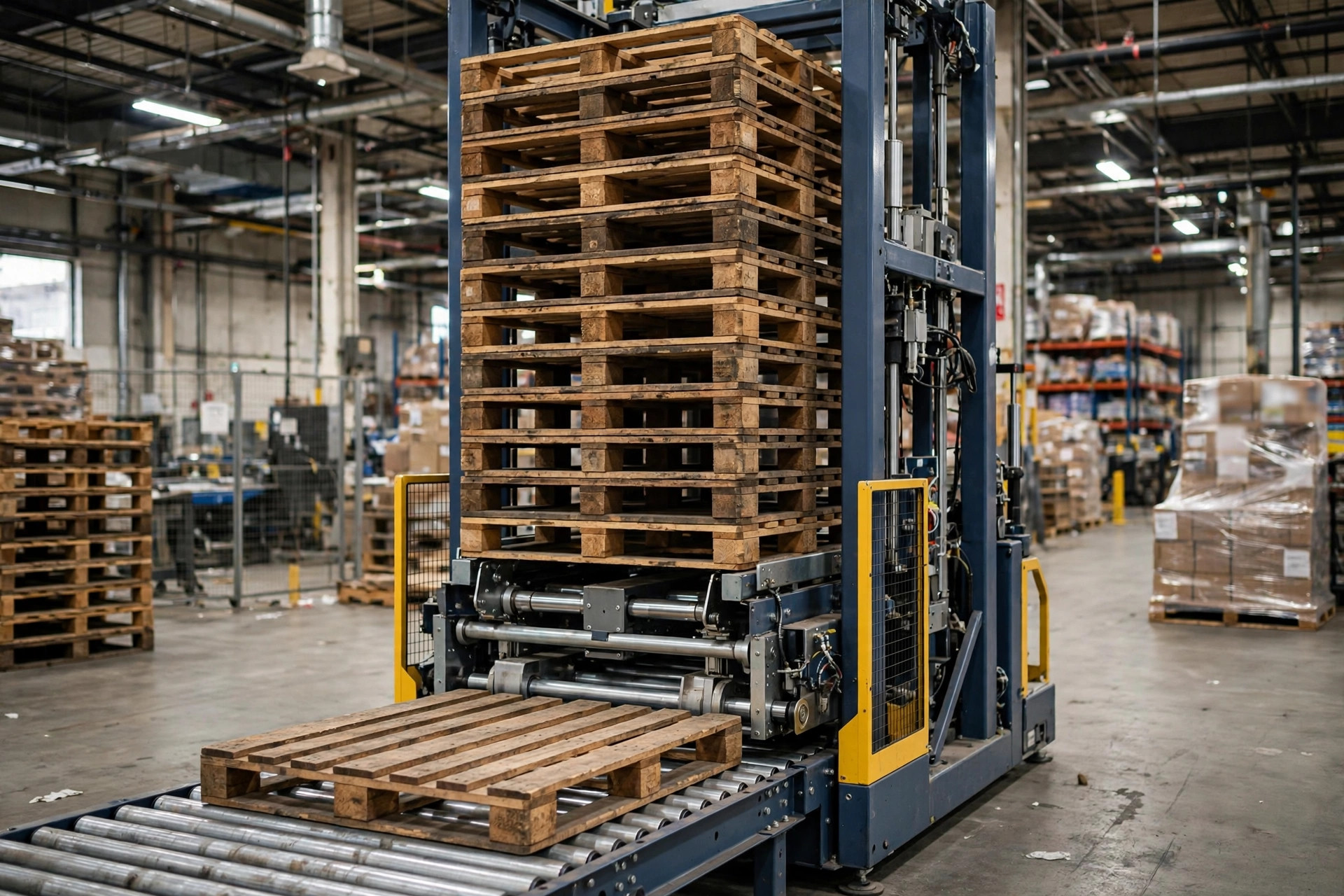
| Palletizing | Robotic palletizing | ~$150K+ | Unmanned end-of-line |
Full-auto solves the root problem — "not enough people, people too expensive, people unstable" — but at a price: big investment, high rigidity (layout changes hurt), and demanding management maturity (WMS, processes, data — none can be weak).
3. Decision Matrix: Score Four Dimensions
Semi or full? Score four dimensions, 1–5 each:
| Dimension | 1 point (leans semi-auto) | 5 points (leans full-auto) |
|---|---|---|
| Order scale | < 3,000 orders/day | > 20,000 orders/day |
| Growth certainty | Volatile business, shifting categories | Stable, predictable 3 years out |
| Labor cost pressure | Easy hiring, low wages | Can't hire, wages climbing yearly |
| Management maturity | WMS just live, messy processes | Mature WMS, accurate data |
Total < 10: stay honestly semi-auto; 10–15: start semi-auto, reserve full-auto interfaces; > 15: plan full-auto directly. Note the third row — labor-cost pressure is the biggest variable: in a city with 10% annual wage growth and hiring pain, the automation math always works.
4. The Three-Phase Roadmap: 1.0 / 2.0 / 3.0
A standard phased roadmap looks like this:
Phase 1.0: Semi-auto foundation (months 0–12, $140K–420K)
- Conveyors + PTL/voice + pack automation + WMS optimization;
- Goals: 30–50% labor productivity gain, error rate down an order of magnitude, payback < 2 years;
- Critical move: reserve interfaces — conveyor stubs for future AGV tie-in, WMS device-dispatch APIs, floor space for an automation zone.
Phase 2.0: Selective automation (months 12–30, $420K–1.1M)
- AGV/AMR transport + robotic palletizing + shuttle dense storage;
- Goals: unmanned transport, another 40% headcount reduction, payback < 3 years;
- Critical move: design from phase 1.0's real data — no more guessing.
Phase 3.0: Full automation (month 30+, ten-million scale)
- AS/RS + goods-to-person + end-to-end orchestration;
- Goal: dark warehouse (or near), sized for 3–5 years of growth;
- Prerequisite: both earlier phases hit targets and growth tracks forecast.
5. Phase Triggers: What Signals an Upgrade
Phasing's biggest risk is "upgrading for upgrading's sake." Each phase must be triggered by data:
| Trigger | Example threshold | Meaning |
|---|---|---|
| Capacity utilization | > 85% for 3 straight months | Semi-auto is maxed out |
| Labor cost share | Warehouse labor > X% of revenue | Labor too expensive to keep |
| Error rate | Plateaued; further cuts need automation | Manual error-proofing at its limit |
| Business growth | > 30% order growth, two years running | Scale justifies full-auto |
| Prior-phase ROI | Actual payback ≤ committed | Proves the team can run automation |
Write the triggers into the plan. The boss sees a rational, disciplined, phased investment — not "tens of millions on a hunch."
Case Study: Three Phases in Three Years at an Apparel DC
Background: an apparel e-commerce DC in South China — 8,000 orders/day, 20,000 SKUs, violent seasonality (Singles' Day at 8× normal).
- 1.0 (year 1, $305K): conveyors + PTL (3,000 points) + auto case sealer + WMS wave optimization. Labor productivity +45%, payback 16 months. AGV lanes and dispatch interfaces reserved.
- Trigger: year two hit 14,000 orders/day; pick-zone conveyor utilization above 90% for 4 straight months.
- 2.0 (year 2, $763K): 12 AMRs (goods-to-person) + robotic palletizing + shuttle storage. Headcount from 180 to 110, payback 2.3 years.
- 3.0 (planned): AS/RS if growth continues — data still in the observation window. No rush to spend.
Three-year totals: $1.07M invested; ~$583K/year in labor, error, and overtime savings; blended payback under 2 years. The boss's verdict: "Every step penciled out."
Pitfalls
- Stranded investment: phase 1.0 equipment ripped out and replaced in 2.0 = money in the water. Countermeasure: at 1.0 selection, ask "does this survive into 2.0?" — conveyors, WMS, network must never be single-use.
- No reserved interfaces: WMS without device-dispatch APIs means AGVs arrive with nothing to talk to; no AGV lanes means they arrive with nowhere to drive. Draw the phase-3.0 master layout during 1.0 planning, even if you only build part of it.
- Team gaps between phases: 1.0 team disbands, 2.0 re-tenders and re-learns — paying tuition twice. Keep the core team; design 2.0 directly from 1.0's data.
- Full-auto for its own sake: some processes are optimal as human + semi-auto (e.g., odd-shaped item picking) — forcing robots there doubles investment for discounted results. Full-auto is a means, not the goal.
Takeaway
Semi-auto vs. full-auto isn't either/or — it's a roadmap: 1.0 semi-auto foundation (validate + data) → 2.0 selective automation (unmanned transport) → 3.0 full automation (dark warehouse), each phase data-triggered, each phase independently paying back. Two mantras: move in small steps, each one firm; reserve interfaces, never rebuild. Automation is a marathon — the one-leap crowd usually collapses midway; the steady pacers reach the dark warehouse.