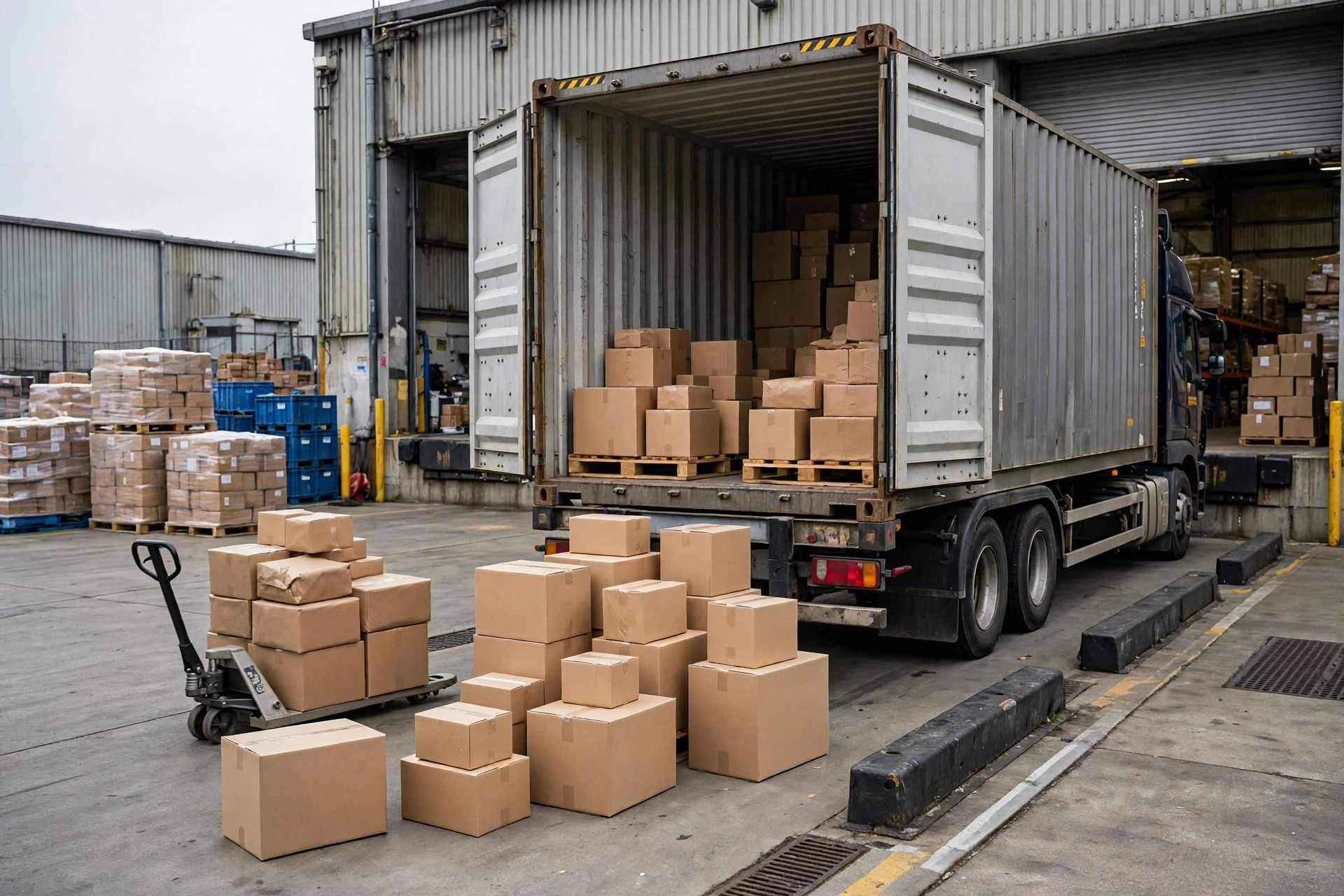
Excerpt: Section 321 Type 86 warehouse fulfillment rules have shifted, and the old ship-direct-from-China playbook no longer pencils out. Two client stories, three fulfillment models, and the contract clauses you should renegotiate before your next shipment.
Section 321 Type 86 warehouse fulfillment used to be a straightforward calculation for our clients: ship small parcels direct from China, keep US inventory light, and let the de minimis channel do the heavy lifting. That calculation no longer holds. The rules governing small-parcel imports have changed, and the sellers feeling it first are not the ones with the highest freight bills. They are the ones whose entire delivery promise depended on every single parcel clearing smoothly, one at a time.
We have a client, a home-goods seller based in Shenzhen, who rented a 3,000-square-foot space near Los Angeles at the end of 2024. He did not rent it to hold stock. He rented it as a returns waystation and an emergency top-up point while his main flow stayed direct-ship: one parcel per order, dispatched from Shenzhen, delivered to the US customer in seven to ten days. On paper it looked brilliant. No US safety stock, no warehousing bill on slow-moving SKUs, and a per-order logistics cost that beat overseas warehousing by a visible margin.
Then the clearance picture changed. His parcels started getting pulled for inspection more often. Some sat an extra week in the clearance queue. A few batches came back altogether because the declaration data was incomplete. A returned parcel could not simply be resold; it had to travel back to Shenzhen, go through quality inspection, get repacked, and ship a second time. The round trip alone wiped out the margin on that order. Worse, the stockouts started to bite. When the direct-ship lane jammed, his marketplace listings lost momentum while his ads kept running. He came to us with a line I have heard from half a dozen sellers since: what he used to save on rent, he was now losing on the whole listing.
Contrast that with a second client, a beauty brand out of Guangzhou that moved its hero SKUs into our partner warehouse in New Jersey in early 2025. Her finance team fought the decision at the time. Pre-positioning stock ties up cash, and a wrong bet on a shade or bundle turns straight into storage fees and markdowns. But once the rules tightened, she became the steadiest account in our book. Orders ship from New Jersey and land in two to three days. Returns come back to the same warehouse, get inspected, and anything resalable goes back on sale the same day. The clearance and declaration burden lands once, on a consolidated import, instead of being spread across thousands of individual parcels. When we reviewed the quarter with her, the saving was not really freight. It was fewer support tickets, lower return losses, and listings that never went dark.
Put the two stories side by side and the lesson is clear: the question in Section 321 Type 86 warehouse fulfillment was never which route has the cheapest freight quote. It is which model keeps delivering after the rules move. Direct shipping spreads risk across every parcel, which looks light but means every parcel is its own customs event. Overseas warehousing concentrates risk into two controllable points, import and inventory, which looks heavy but is far easier to manage and negotiate around.
Three Section 321 Type 86 Warehouse Fulfillment Models
The first model is pure direct ship: orders picked in China, one parcel per customer, straight to the door. Its strengths are zero pre-positioned stock and fast SKU launches. Its weaknesses are the highest clearance uncertainty, the longest returns loop, and the least predictable peak-season delivery times. The second model is pure overseas warehousing: consolidated imports into a US warehouse, then local delivery. Its strengths are stable delivery times, a short returns loop, and no stockouts during promotions. Its weaknesses are cash tied up in inventory and the cost of guessing wrong on a SKU. The third model is the hybrid most of our clients now run: bestsellers pre-positioned in the US warehouse, long-tail SKUs and new launches kept on direct ship until they earn their place in stock.
A worked example shows why the hybrid wins. Suppose a seller ships 8,000 orders a month: 5,000 orders across three bestsellers and 3,000 across twenty-odd long-tail SKUs. If everything ships direct at an illustrative all-in cost of 9 dollars per order including return losses, the month costs 72,000 dollars, before counting the advertising waste and support load that delivery volatility creates. Move the 5,000 bestseller orders to overseas warehousing at an illustrative 7.50 dollars per order and keep the long tail direct at 9 dollars, and the month costs 64,500 dollars. These figures are illustrative arithmetic, not published rates, and any applicable duty thresholds, rates, or effective dates must be checked against the official source in force at the time, since policy details in this area change. But the structure is real: what the hybrid saves is not just the 1.50-dollar gap, but the return-rate reduction and the listing momentum that never gets lost.
| Fulfillment model | Cost structure | Delivery stability | Clearance exposure | Best for |
|---|---|---|---|---|
| Pure direct ship | High per-order freight, expensive returns | Low, depends on clearance | High, spread over every parcel | New launches, long-tail SKUs |
| Pure overseas warehouse | Inventory capital plus storage fees | High, local delivery | Concentrated at consolidated import | Bestsellers, peak promotions |
| Hybrid model | Weighted blend, moderate capital pressure | Medium-high, bestsellers stable | Manageable in layers | Most established sellers |
Here is the counterintuitive part: after a de minimis tightening, the first thing to change is not your freight rate, it is your inventory rhythm. Most sellers react by shopping for a cheaper direct-ship lane, but a cheaper lane cannot fix the structural problem that every parcel must clear on its own. The move that actually saves money is stretching bestseller cover from two weeks to four or six weeks, trading inventory capital for certainty. Two extra weeks of stock costs far less than one peak promotion lost to a stockout, with its ranking damage and wasted ad spend.
Section 321 Type 86 Warehouse Fulfillment Contract Checklist
The contract needs attention in three places. First, the inventory responsibility clause: contracts written for direct ship usually price everything per order, but an overseas-warehouse arrangement needs a storage-plus-order-processing price, plus an agreed mechanism and cost cap for clearing slow-moving stock. Second, the returns clause: who inspects returns, what standard counts as resalable, and how unsalable goods are destroyed or shipped back. Under direct ship these clauses were often blank; now they decide real money. Third, the liability split for exceptions: clearance delays, inspection holds, and carrier losses each need a notification deadline and a named cost bearer, not a salesperson's verbal assurance.
In practice, I advise sellers to work through four steps. Split SKUs into bestseller, steady, and long-tail tiers and start pre-positioning the bestsellers immediately. Assemble import documentation, product qualifications, and origin information in one pass, and treat every threshold, rate, and date as something to verify against the official source in force, never as a number remembered from last year's playbook. Walk the returns inspection standard and the relisting process through with your 3PL before peak season. Then rewrite the contract's fee structure, slow-stock handling, and exception liability before signing anything new.
One clause deserves special attention in negotiation: because Section 321 Type 86 warehouse fulfillment rules will keep evolving, build in a trigger for repricing and remodeling. Agree that when clearance policy or the applicable fee basis changes materially, both sides sit down within a set number of working days to renegotiate, rather than waiting for the next failed shipment to start an argument. There is no permanent answer to this problem. The sellers who come out ahead are the ones whose fulfillment model can turn when the rules do.
By Susan, 3PL Sales Director