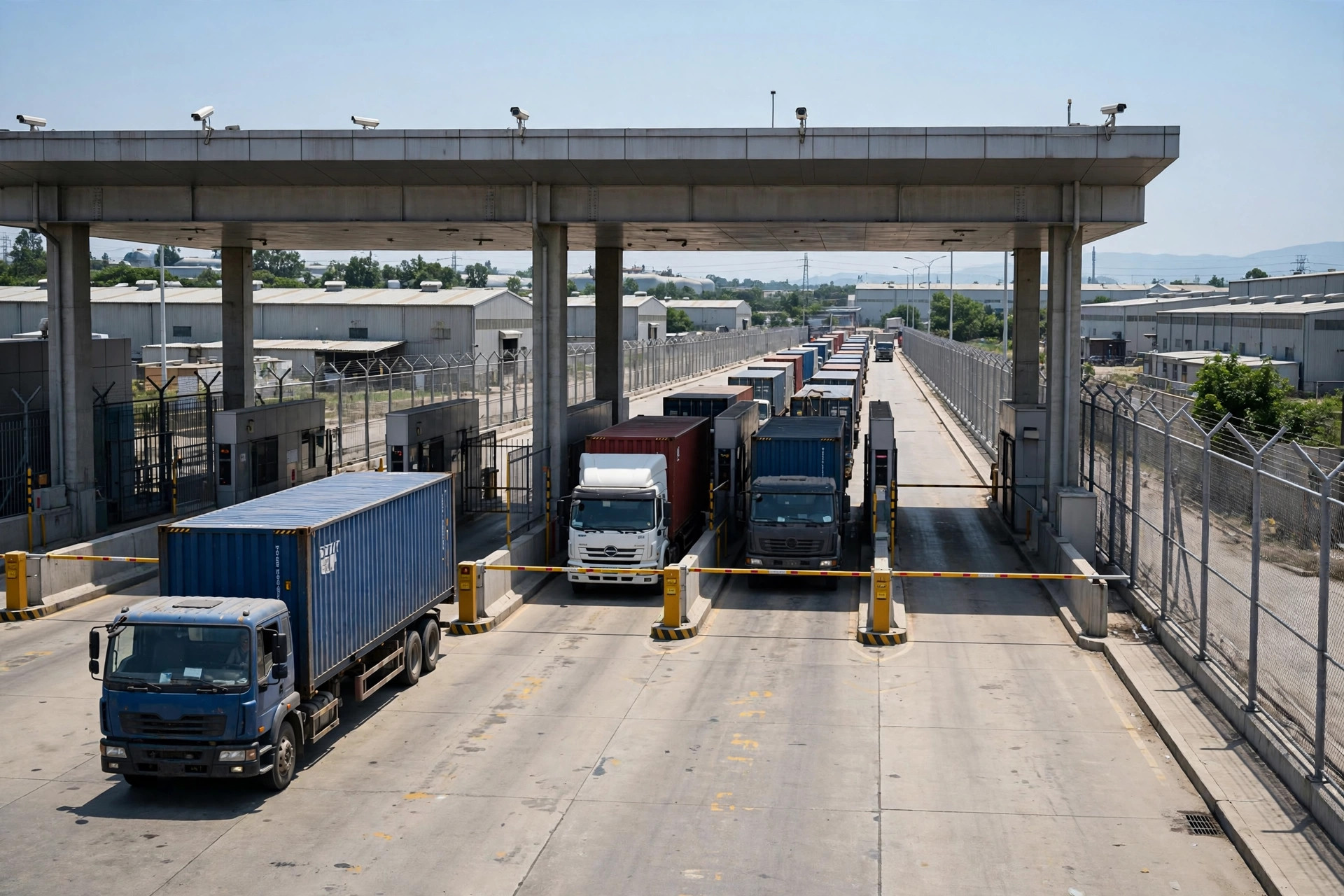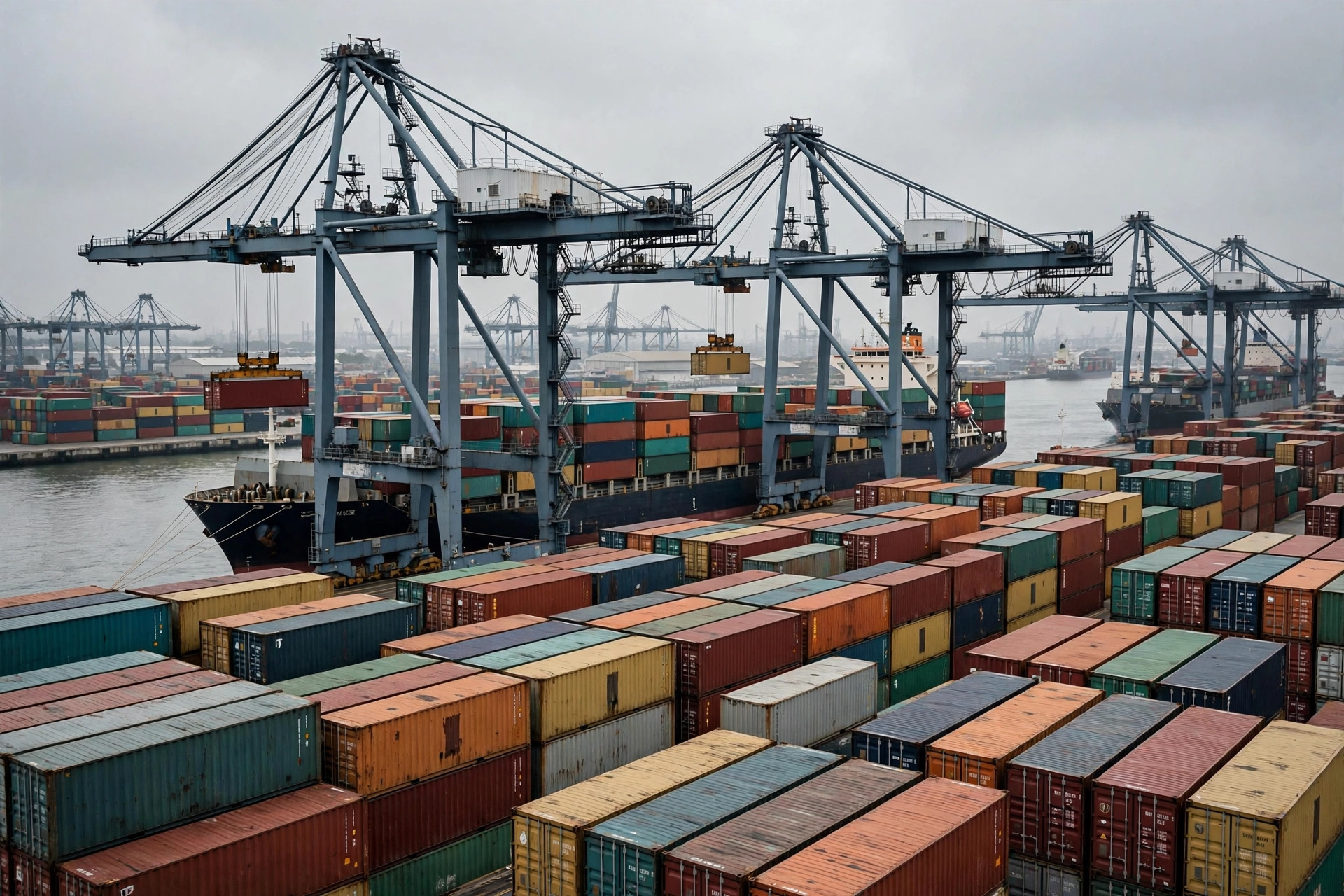
This summer, the owner of a 3PL in Texas showed me a quote. A Chinese factory offered a floor-running AGV at $80,000 FOB. He did his own math: ocean freight and insurance, maybe $9,000. Landed cost, $89,000 tops. Then his customs broker ran the numbers: over $110,000. "Where did the extra $30,000 come from?" he asked. That, I told him, is the real price of buying automation equipment from China in 2026. The number on the FOB quote is just where the story starts.
Here is my take up front: if you are buying AGVs, automated forklifts, or conveyor systems from China and negotiating price without talking tariffs, you are negotiating a fantasy number. Once the duties stack, the real tax burden routinely lands at 35–40% of the goods' value. Get this math wrong and every sourcing comparison you run is wrong.
How the layers stack
U.S. import duties stack in layers. For equipment coming from China, as of October 2026, there are five.
First, the MFN (most-favored-nation) rate, set by the HTS code. A lot of automated handling equipment is duty-free at the MFN level — works trucks without lifting equipment (HTS 8709), for example, are Free. It is the cheapest layer and the most overlooked one: get the classification wrong and everything downstream is wrong.
Second, the legacy Section 301 lists from 2018. Lists 1 through 3 add 25%; List 4A adds 7.5%. Most industrial machinery sits in the first three lists, so 25%. This is determined code by code — it is not a flat 25% on everything from China.
Third, the new Section 301 action that took effect July 24, 2026. USTR's forced-labor-enforcement investigation produced fresh Section 301 duties across roughly 60 economies; China is in the 12.5% tier. This stacks on top of the legacy lists. Twenty-five states are suing to block it, but duties are being collected while the case proceeds. Your broker needs to confirm whether your entry is assessed on an additive or capped basis — treatment can vary.
Fourth and fifth are the fees, and they are not rounding errors. The Merchandise Processing Fee is 0.3464% of entered value — as of October 1, 2026, the FY2027 floor is $34.58 and the ceiling is $670.86. The Harbor Maintenance Fee is 0.125% on ocean shipments.
Two housekeeping notes so you do not work off an old playbook: the IEEPA "fentanyl" and "reciprocal" tariffs were struck down by the Supreme Court on February 20, 2026. They are gone — and if you paid them, CBP has a refund process. The interim 10% Section 122 surcharge expired on July 24, 2026. So the five layers above are the current picture. Tariff policy is being actively litigated; verify everything against the latest CBP, USTR, and White House guidance before you commit to a purchase.
The real invoice on an $80,000 AGV
Assumptions: one floor-running AGV, $80,000 FOB, ocean freight to the Port of Long Beach. MFN at 0% (HTS 8709 is Free — but have your broker confirm the 10-digit code before you order), legacy Section 301 at 25%, new Section 301 at 12.5% additive.
| Line | Rate | Amount (USD) | | MFN duty | 0% | 0 | | Section 301, legacy lists | 25% | 20,000 | | Section 301, new (effective 2026-07-24) | 12.5% | 10,000 | | MPF | 0.3464% | 277.12 | | HMF (ocean) | 0.125% | 100 | | Total duties and fees | — | 30,377.12 |
On an $80,000 machine, that is $30,377.12 in duties and fees — an effective rate of 38% — before freight and insurance are even added. Landed, you are at $110,377 and change. Put it this way: the $5,000 you squeezed out of the supplier in negotiation does not even register next to the tax line. Getting the duty math right matters more than any discount you will ever negotiate.
Classification: one wrong line, tens of thousands of dollars
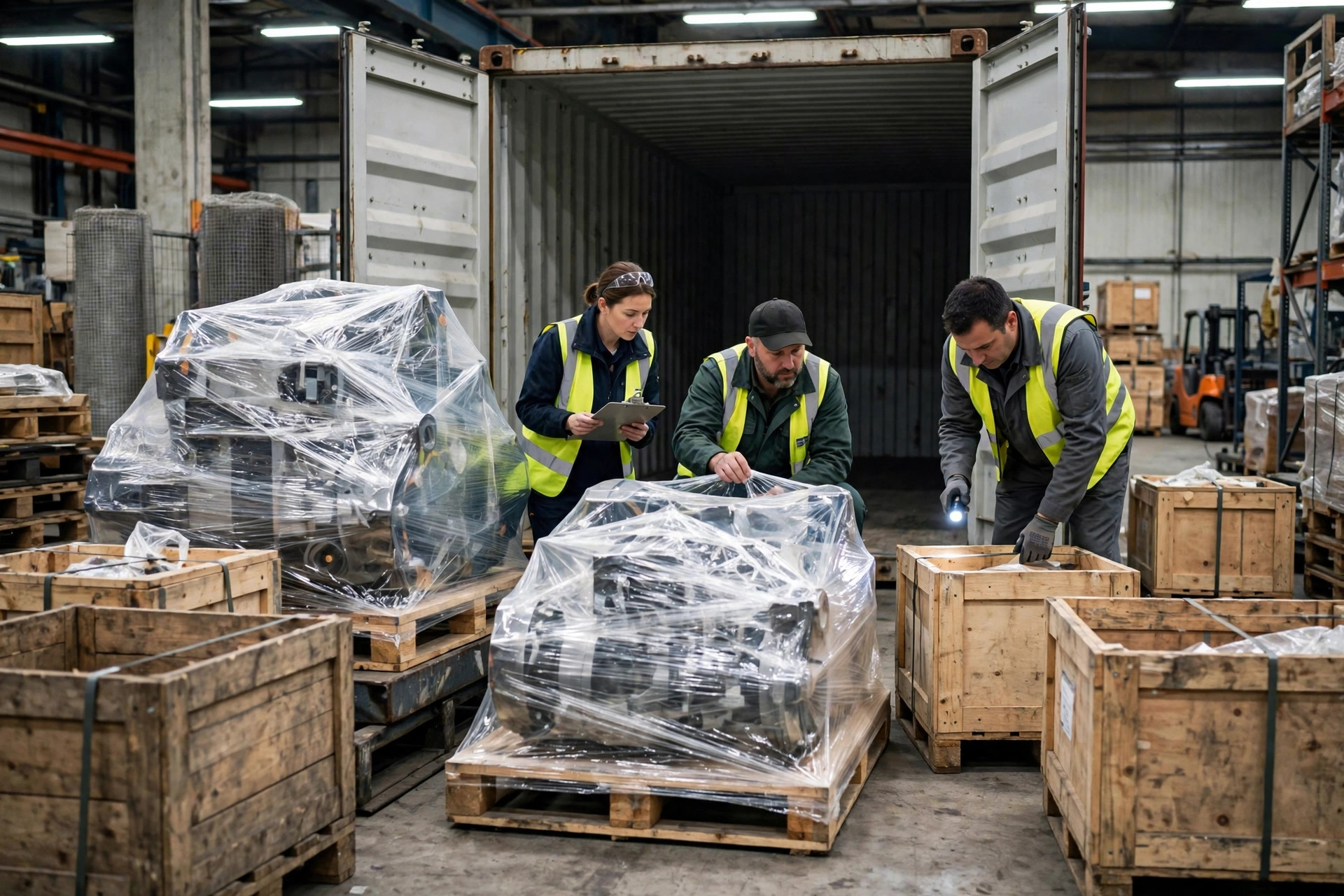
Classification decides which layers apply and at what rate. Whether an AGV has lifting equipment, how an automated forklift is described — the code it lands in changes the Section 301 treatment. We published a dedicated piece on HTS classification practice on October 4, 2026, so I will keep this to one line: before you place the order, have your broker issue a written rate opinion against the 10-digit HTS. It is worth more than any price cut.
Legal ways to pay less — and the one that is not
The illegal one first, because people keep asking: route the goods through a third country and re-label the origin. That is transshipment, and U.S. customs law treats it as fraud. Under 19 U.S.C. 1592, penalties can run up to the domestic value of the merchandise, and egregious cases draw criminal prosecution. CBP's origin enforcement has only gotten sharper. Do not touch it.
The legal paths:
Start with the supplier. The importer pays the duty, but the price is negotiated by both sides. In 2026, plenty of Chinese equipment makers will absorb part of the tariff in the FOB price or quote DDP and handle clearance themselves. If you never ask, the whole bill is yours.
Pick the right Incoterm. The difference between DAP and DDP is who pays the duty and who bears the risk. A DDP seller builds the tax into their cost — and suddenly they care a lot about getting classification right. Just make sure a DDP quote is itemized; do not accept a black-box number.
Then there is tariff engineering, the legitimate kind: designing the product or the shipment around classification. Shipping a system knocked down, declaring functional modules separately — where the classification rules genuinely support a lower-duty code. Big multinationals do this every day. But it has to be signed off by a broker or trade counsel; re-describing goods on your own is misdeclaration.
Check the Section 301 exclusions. USTR maintains product-level exclusions, currently extended through November 10, 2026. If your equipment is on the list, that legacy 25% may not apply. Plenty of importers have paid for years without knowing they qualified.
And do not forget duty drawback. Import equipment or components, process them, and re-export — Section 301 duties are recoverable up to 99%. For integrators and re-exporters, that is real money. But it takes record-keeping and a proactive filing; nobody reminds you.
Next time a supplier sends an FOB quote, do not start by haggling. Have your broker run all five layers against the 10-digit HTS first, then ask the supplier one question: how much of the duty will you share, and can we do DDP? Do those two things and your true cost of ownership is finally on paper. When was the last time a duty line surprised you on an import?