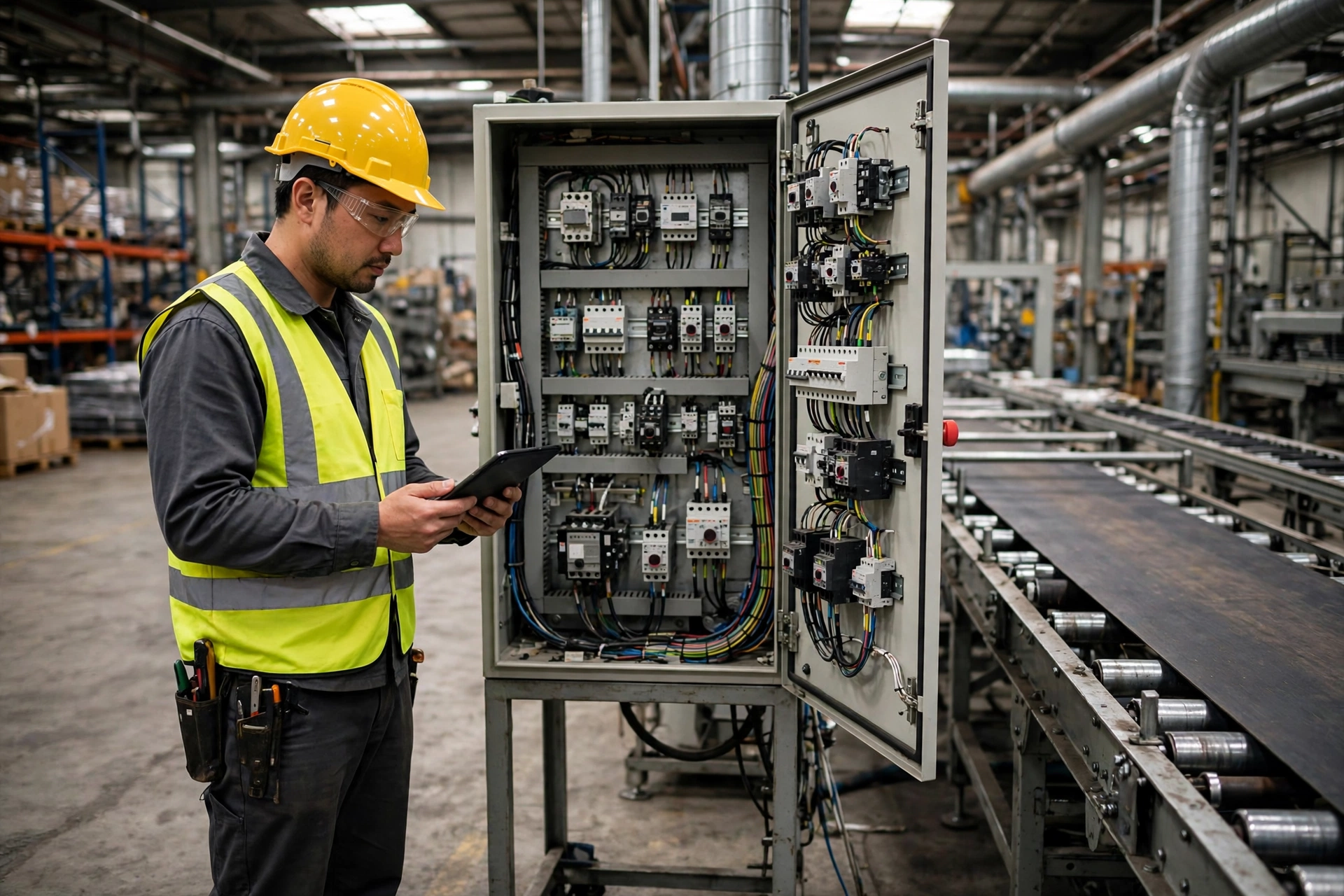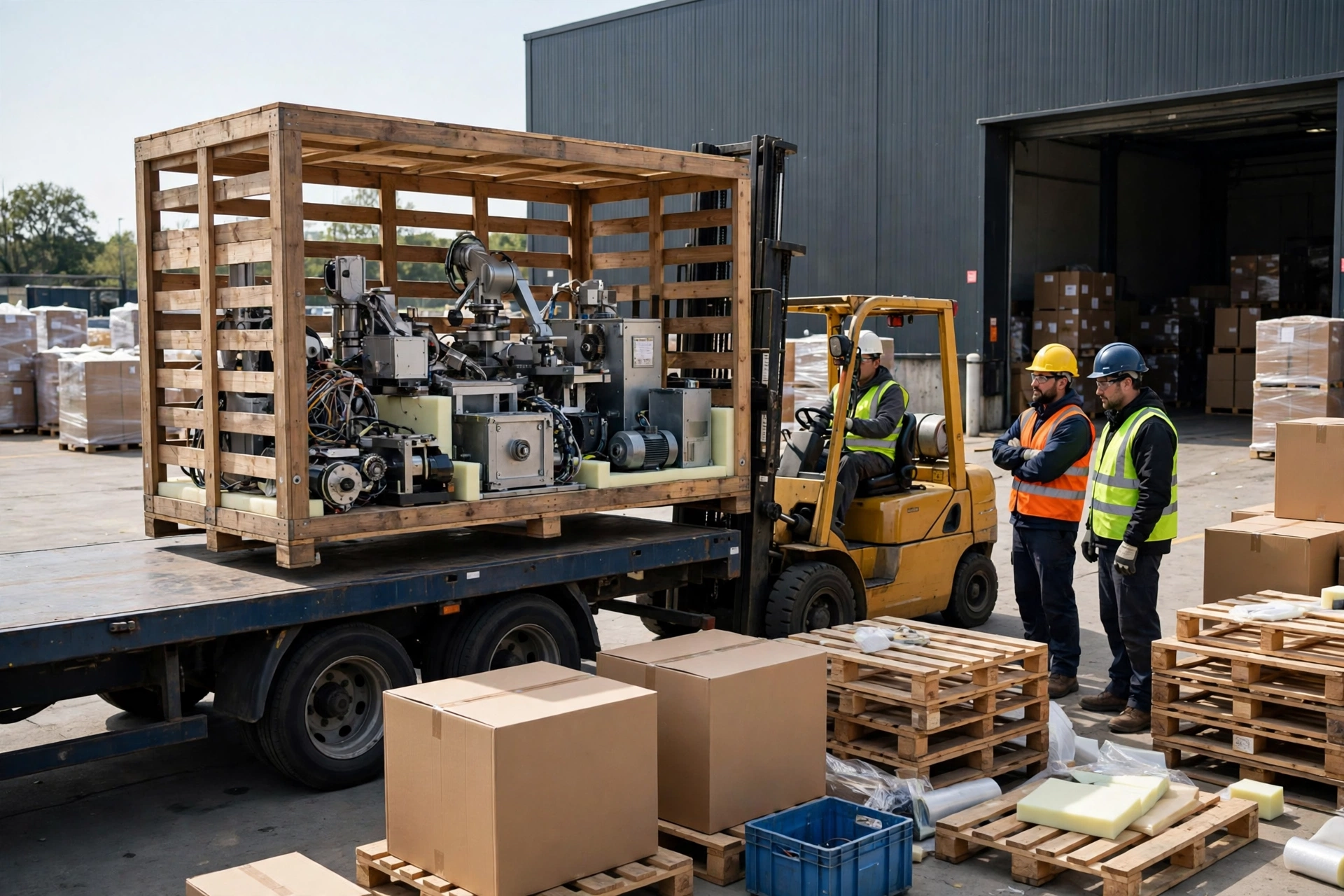
Last fall, a 3PL in Ontario, California asked me to review a conveyor line they were buying from China. FOB price: $380,000. On their budget sheet, the duty line said $20,000 — they had estimated 5%. I looked at the quote and told them: that number is wrong. Recalculate at 25%, then decide whether this line is worth buying. Search "section 301 tariff automation equipment import cost" and all you get is law-firm ads and broker advertorials. Nobody shows you where the money actually hides in a quote. So let's do that here — take one machine apart, line by line, until the landed cost is on the table.
What Section 301 Actually Is: Four Lists, One Bill
Section 301 is not a single tariff rate. It is a set of lists. Starting in 2018, the U.S. Trade Representative (USTR) imposed additional duties on Chinese goods in four tranches: List 1 (July 2018, 25%), List 2 (August 2018, 25%), List 3 (September 2018, starting at 10% and raised to 25% in 2019), and List 4A (September 2019, 7.5%, where it has stayed since February 2020). Most automation equipment falls under Chapters 84 (machinery) and 85 (electrical machinery) of the tariff schedule, and List 1 is heavy with exactly that kind of gear.
Think of it like a toll road: same highway, different toll booths for different vehicle classes — and your HTS code is your vehicle class. The rate is set by the 8-digit HTS subheading, and the same machine can land on a different list depending on whether it is entered as a complete unit or as parts. That is why no one should tell you "this machine is 25%" without checking the specific code first. Verify every code against the official HTSUS schedule or with your customs broker, and treat the latest official policy as the final word.
Duties stack. You pay the MFN (most-favored-nation) rate first, then the Section 301 additional duty on top, then the Merchandise Processing Fee (MPF), which is charged as a percentage of value with a floor and a cap — check the current CBP rate at time of entry. The 2024 four-year review pushed some strategic categories higher still, including semiconductors and batteries, so a lithium-battery AMR and a purely mechanical conveyor can carry very different duty structures. One number does not fit all equipment.
Here is the counterintuitive part: the Section 301 duty is generally assessed on the transaction value — the price paid for the goods — not on the landed cost. International freight and insurance are generally excluded from the dutiable value, though your broker should confirm this for your entry. Ocean freight can triple and the Section 301 portion of your duty does not move. A lot of buyers calculate duty on the delivered price, overstate the tax, and scare themselves out of a good purchase.
The Section 301 Tariff Automation Equipment Import Cost, Line by Line
Take that $380,000 conveyor as a worked example. Assumptions up front, so you can see the method rather than just the answer: the HTS code falls on List 3, the MFN rate is zero, Section 301 applies at 25%, ocean freight plus insurance runs $18,000, broker and terminal charges run about $2,500, and the MPF comes to roughly $1,300 at the current CBP rate. Change the code and the answer changes — that is the point.
| Item | Amount (USD) |
|---|---|
| FOB value | 380,000 |
| MFN duty (assumed 0%) | 0 |
| Section 301 additional duty (25%) | 95,000 |
| Merchandise Processing Fee | ~1,300 |
| Ocean freight + insurance | 18,000 |
| Broker + terminal charges | ~2,500 |
| Total landed cost | ~496,800 |
A $380,000 machine lands at nearly $500,000, and the Section 301 line alone is $95,000. The $20,000 duty estimate on the client's budget sheet was off by almost five times. This is the first thing an equipment engineer looks at in a Chinese quote: the FOB number is a teaser. Landed cost is the real price.
Here is a second case, from early 2025. An e-commerce fulfillment operator imported 12 AMRs from China at $28,000 each, entered as complete units. Twelve units, $336,000 total, classified on List 3 at 25% — that is $84,000 in duty. The client's words: "They're just little carts, how much tax can there be?" The answer was $7,000 per cart, a quarter of the machine's price again, discovered only when the shipment reached the Port of Los Angeles and the budget blew up. Nobody had run the numbers before the purchase order went out.
My rule is simple: when you look at a Chinese equipment quote, do not start with FOB. Get the HTS code from your broker first, run the table above, and only then talk about whether the machine is cheap. If the code is wrong, every number on the quote is fiction.
Four Legal Ways to Pay Less
First, HTS classification review. Have your broker or a classification attorney re-check the 8-digit code. A machine with several functional components can classify differently depending on which function is principal, and the result can move you a full bracket. This is not "picking a cheaper code to dodge duty" — it is putting the code where the General Rules of Interpretation say it belongs. Get it wrong and nobody refunds the overpayment; get it right and the savings are entirely legal.
Second, tariff engineering. Change the product structure at the design stage: ship the control cabinet separately from the mechanical frame, or price the software license separately from the hardware. The key word is "real" — the change has to be in the product itself and its genuine commercial structure, not on the paperwork.
Third, third-country assembly — and this is where people get hurt. Origin only changes when there is a "substantial transformation." Simple assembly and a new label do not count; CBP will still treat the goods as Chinese origin, and the duty stays exactly where it was. If you want to go down this road, get a written origin opinion from counsel before you spend a dollar on an assembly line. The order matters: opinion first, investment second.
Fourth, duty drawback — the one almost nobody knows about. If imported equipment is later exported — say an integrator builds it into a full line and ships the line to an overseas project — the Section 301 duties can be claimed back, up to 99% of the duties paid, under 19 CFR Part 190, with a five-year claim window. Integrators doing export projects who never file for this are handing money back to the government.
One more, as a supplement: exclusion requests. USTR maintains exclusion lists for specific products; if your product matches the description, you can apply for an exemption. Exclusions are granted by product description plus HTS code and carry an expiry date — check the latest USTR notices. Apply early. Remembering this after the cargo has landed is too late.
Three things are not cost reduction, and I will say this plainly: transshipment with doctored origin certificates, undervaluing goods, and splitting shipments to hide value. That is not saving money, that is smuggling, and getting caught means fines and, in serious cases, criminal liability. The legal paths above are more than enough. Do not gamble on the other ones.
Is It Still Worth It? One Number Decides
Here is the contrarian take: paying 25% duty does not automatically make the purchase a bad deal. If that conveyor lifts your sortation throughput from 800 cases an hour to 2,400, holds uptime at 98%, and stretches MTBF past 2,000 hours, the $95,000 in duty spreads to a few cents per case. Flip it around: a line that is $100,000 cheaper but stops three times a week will eat every dollar of duty savings in downtime. Duty is a cost. Downtime is also a cost. Run both numbers together.
The acceptance test is one number: total landed cost divided by design throughput (cases per hour) divided by annual operating hours. That gives you the equipment-plus-duty cost per case — the real section 301 tariff automation equipment import cost, expressed the way an operator actually feels it. Compare that against your current labor cost per case. If it wins, pay the 25% and move on. If it loses, do not buy it no matter how cheap the FOB looks.
Next time a Chinese equipment quote lands on your desk, run it in this order: get the HTS code, compute the landed cost, then compute the cost per case. Three steps, and you will know whether the money is well spent — before the container ever leaves the port.
By Da Liu, Automation Engineer