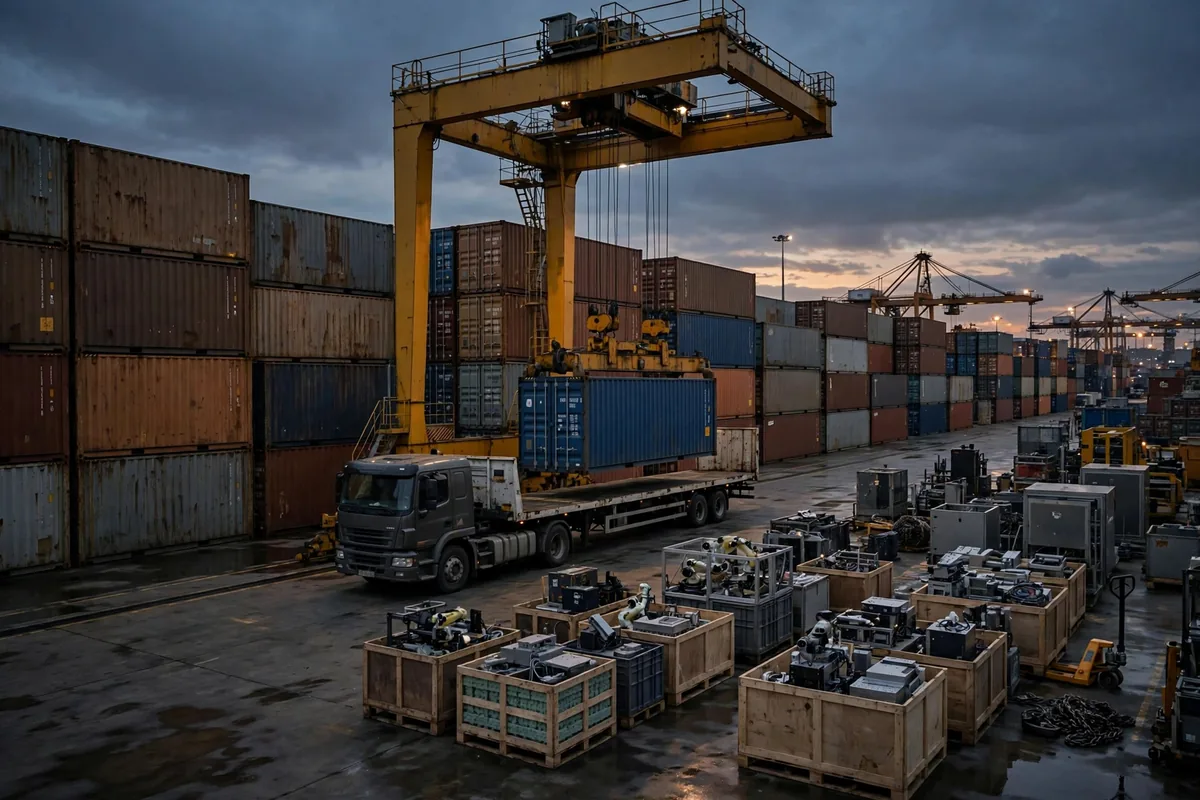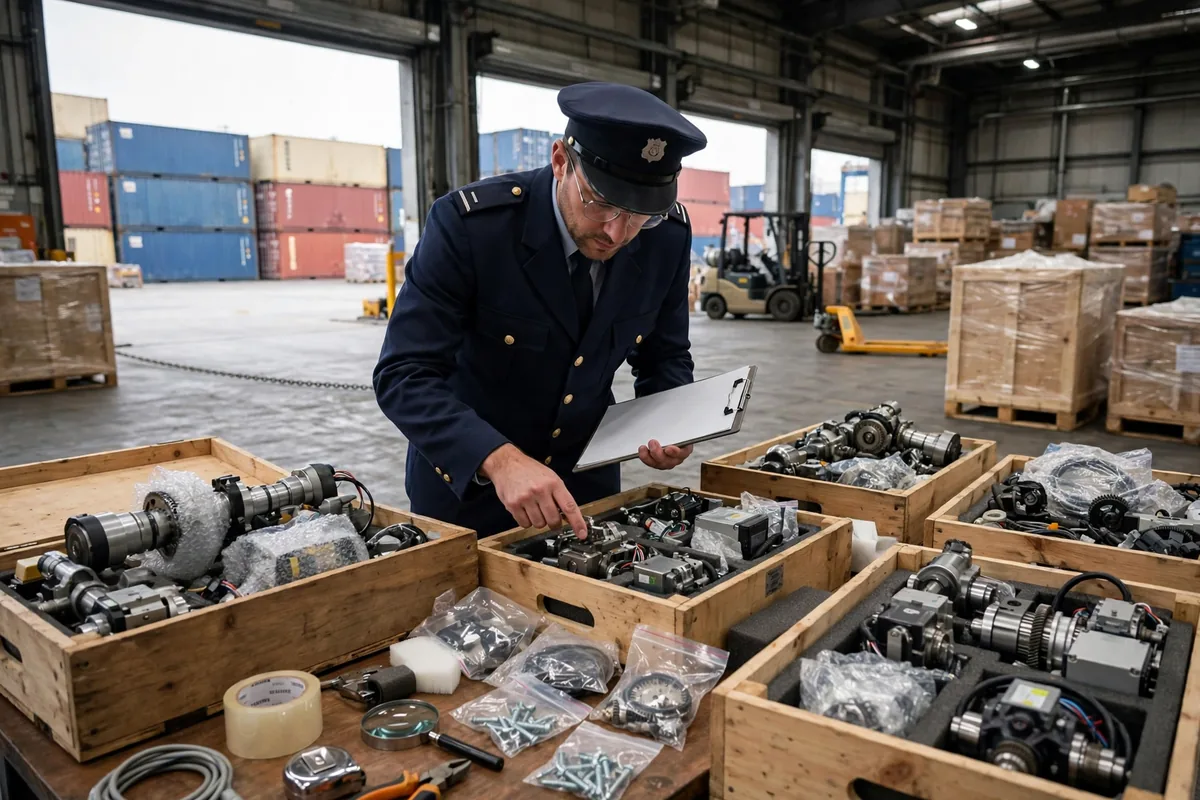
A $400,000 shipment of automated sorting equipment arrived in California, and the duty bill was $40,000 higher than my model predicted. Nobody had miscalculated. The broker had simply picked a different HTS code, and that one choice moved the duty rate by 10 points. The hts classification tariff difference is not a paperwork detail. It is the largest variable on an importer's cost sheet, and most buyers never see it until the bill lands.
Start with the ground rules. The first six digits of an HTS code are harmonized worldwide. The United States uses a 10-digit code, and the last digits can differ between the exporting and importing country. A code is not a serial number stamped on the machine. It is a legal conclusion about what the machine is, argued from its function, structure, and use, and Customs can disagree with it. Section 301 duties stack on top of normal duties rather than replacing them, so a wrong classification can move both layers at once. The $800 de minimis exemption for the United States was suspended on 2025-08-29, so the old habit of sending samples and spare parts through the duty-free channel no longer works. I will not print specific duty rates here. Check the official source for the latest policy before you quote anything, because rate tables change faster than equipment cycles.
Where HTS Classification Goes Wrong
In the fall of 2024, a California e-commerce warehouse imported an automated sortation line: conveyors, scan heads, and a control cabinet. The broker classified the whole system under one code. Customs split it apart, arguing the control cabinet belonged under its own code and the scan heads under another. The reassessment, plus interest, cost the importer close to $60,000. That is a hypothetical example in its numbers? No, the shape of it is real and I have seen the pattern repeatedly: the declaration treated a system and its parts as one thing, the paperwork never broke out the function and value of each part, and Customs split the shipment on the interpretation most favorable to Customs. Systems and parts follow different classification rules. If your filing does not separate them, someone else will.
The second failure mode is marketing language. An AMR with a vision inspection module was described in the filing with long passages about vision recognition and AI algorithms. Customs read that and reached for the code covering camera-equipped equipment. The machine's essential function was moving goods, and vision was an auxiliary function. Classification follows the essential function, not the flashiest feature in your brochure. The more your declaration reads like an advertisement, the more likely the code drifts.
The third failure mode is a new product with no precedent. In early 2025, an integrator imported a mobile robot with a lifting module. Nothing exactly like it existed on the market, so the broker picked the nearest code from experience. Once the goods arrived, Customs applied a different reading for lifting equipment, and the duty difference ate about 8% of the order's margin in this hypothetical example. New products, new functions, and new structures carry classification risk by definition. Guessing from experience is gambling with margin.
How HTS Classification Tariff Differences Add Up Under Section 301
Here is the arithmetic, and I want you to run it on your own shipments. That is the hts classification tariff difference in its simplest form: one code, one rate, and a bill that follows the code rather than the machine. Take a hypothetical example: a shipment with a customs value of $400,000. Under code A the combined duty burden is 5%, or $20,000. Under code B it is 15%, or $60,000. The hts classification tariff difference of 10 points is $40,000 on one shipment. That $40,000 is not a one-time cost. It flows into inventory carrying cost, into your selling price, and into the customer's payment cycle. Sell a machine for $120,000 and an extra $4,000 of duty per unit either raises the price or comes out of your margin. Scale it up: twenty shipments a year, same error every time, and you have paid $800,000 extra in a year. That buys two more AMRs. I have run this calculation many times, and the conclusion never changes: a wrong classification distorts your entire pricing system, not just one invoice.
Stacking makes it worse. Section 301 duties sit on top of normal duties, so a wrong code can be wrong twice, on two layers at once. Then there is the invisible cost. Customs questions the classification, the container sits at the port for an extra week, and demurrage, storage, and a customer's stopped production line all turn into cash outflows. The duty bill shows one number. The delay costs the rest. Together they are the true cost of a classification error.
| Cost item | Correct classification | Wrong by 10 points (hypothetical example) |
|---|---|---|
| Duty on $400,000 customs value | 5%, $20,000 | 15%, $60,000 |
| Extra per shipment | $0 | $40,000 |
| Extra over 20 shipments a year | $0 | $800,000 |
| One extra week at the port | Normal clearance | Demurrage plus customer downtime, extra |
Every number in that table is a hypothetical example. Rates follow the official source and the latest policy. The table exists to show scale: classification is not a few hundred dollars of broker fees. It is money that can swallow a whole order's margin.
Fighting an HTS Classification Dispute
Do not wait for the duty bill to start fighting. The strongest move happens before the goods arrive. A US importer can ask Customs for a binding ruling, a written determination in advance that states which code applies and what rate follows. It takes time and a complete technical file: structure drawings, a functional description, a parts list, and a statement of use. The fuller the file, the firmer the ruling. Once you hold a binding ruling, you file under that code, and Customs does not normally reopen it. My rule is simple: first import of a new product, high-value equipment, or any case with two plausible codes goes through a binding ruling first. Skipping that step is false economy.
If duty has already been paid and the classification looks wrong, there is a protest route. The importer can file a protest with Customs within the prescribed period, attaching the technical case and classification precedent for similar products, and ask for a redetermination. A protest is not a complaint letter. It has to argue the classification rules line by line: what the essential function is, why the code Customs used does not fit, and why the code you claim does. That filing needs someone who does classification for a living, a classification consultant or attorney, not a broker. A broker's incentive is fast clearance, not saving you duty.
Here is the counterintuitive part: the earlier the importer gets involved in classification, the cheaper it is, and the later, the more expensive. Most buyers hand classification to the broker entirely. The broker picks a code from experience, and when it goes wrong, the rescue costs five times the prevention. Classification belongs in the review before the purchase contract is signed. Put engineering, purchasing, and a classification adviser in one room, work out the code, the rate, and the Section 301 exposure, and only then sign the contract and set the price.
Run this self-check before importing automated equipment. What is the machine's essential function, in one sentence? Are you filing as a system or as separate parts, and does the value breakdown exist? What share of the value sits in the control cabinet, the scan heads, and the software license? Is there a binding ruling or precedent for a similar product? Does Section 301 apply, and have you read the operative list itself? Since the $800 de minimis suspension, has your declaration method for samples and spare parts changed? Does the functional description in your filing contain any word that makes the machine sound like something else? Walk that list once and you remove at least half the classification risk. A binding ruling locks down the rest.
A code is worth exactly as much as the moment you start taking it seriously. After the contract is signed and the duty bill has arrived, you are doing arithmetic on a loss.
By Lao Zhou, Logistics Cost Analyst