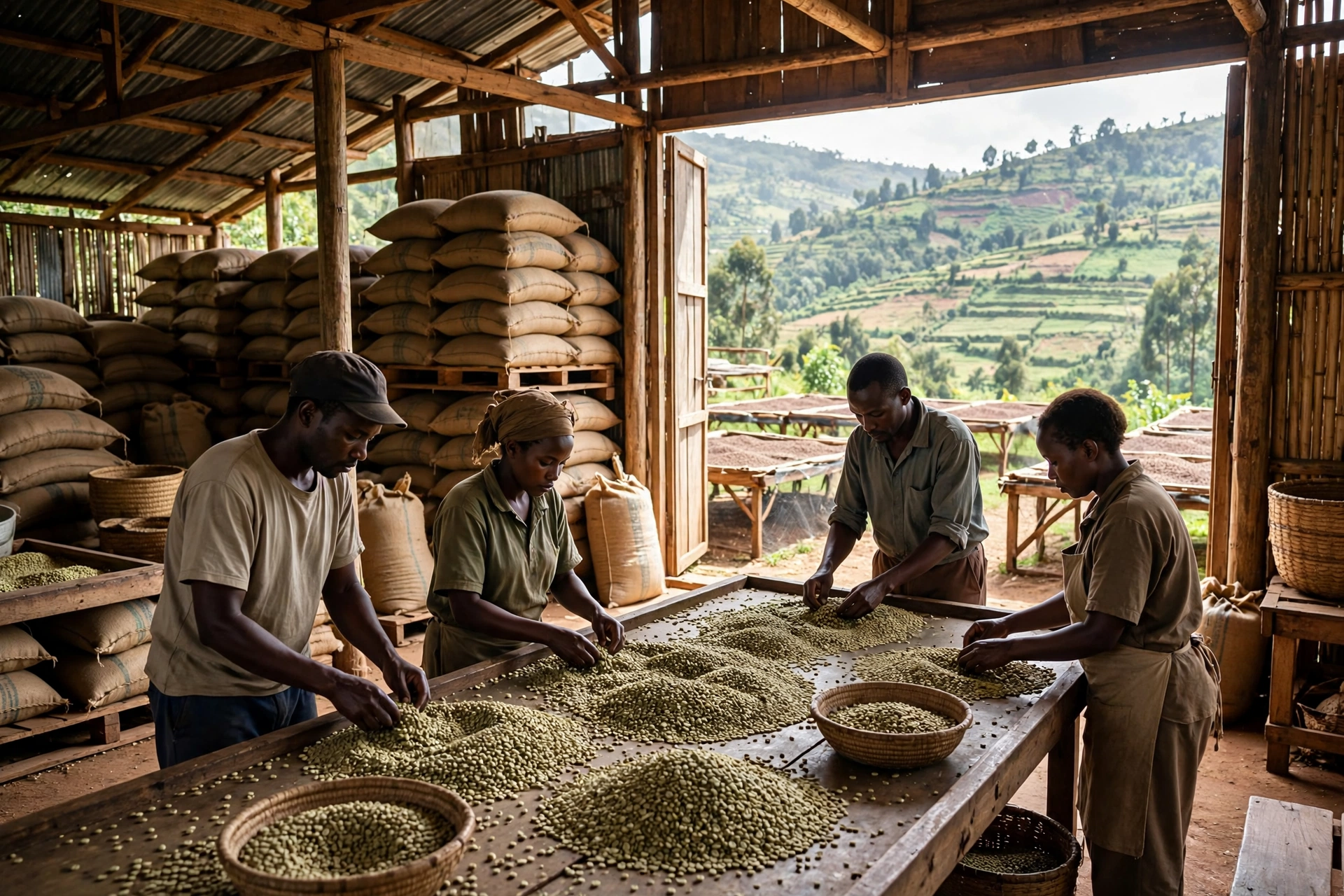
Let me tell you something about Rwanda coffee export warehouse work: not many people have actually done the math on it. The first thing folks say is, landlocked country, no seaport, how does the coffee even get out? But look at the numbers. In the 2024/25 season Rwanda grew 21,295 tonnes of coffee and exported 20,509 tonnes, worth $116.2 million. The beans get out. The problem was never the lack of a sea. It is the stretch from the hillside down to the warehouse and into the container, and whether anybody there takes moisture and smell seriously. That stretch is where most of the money is made or lost.
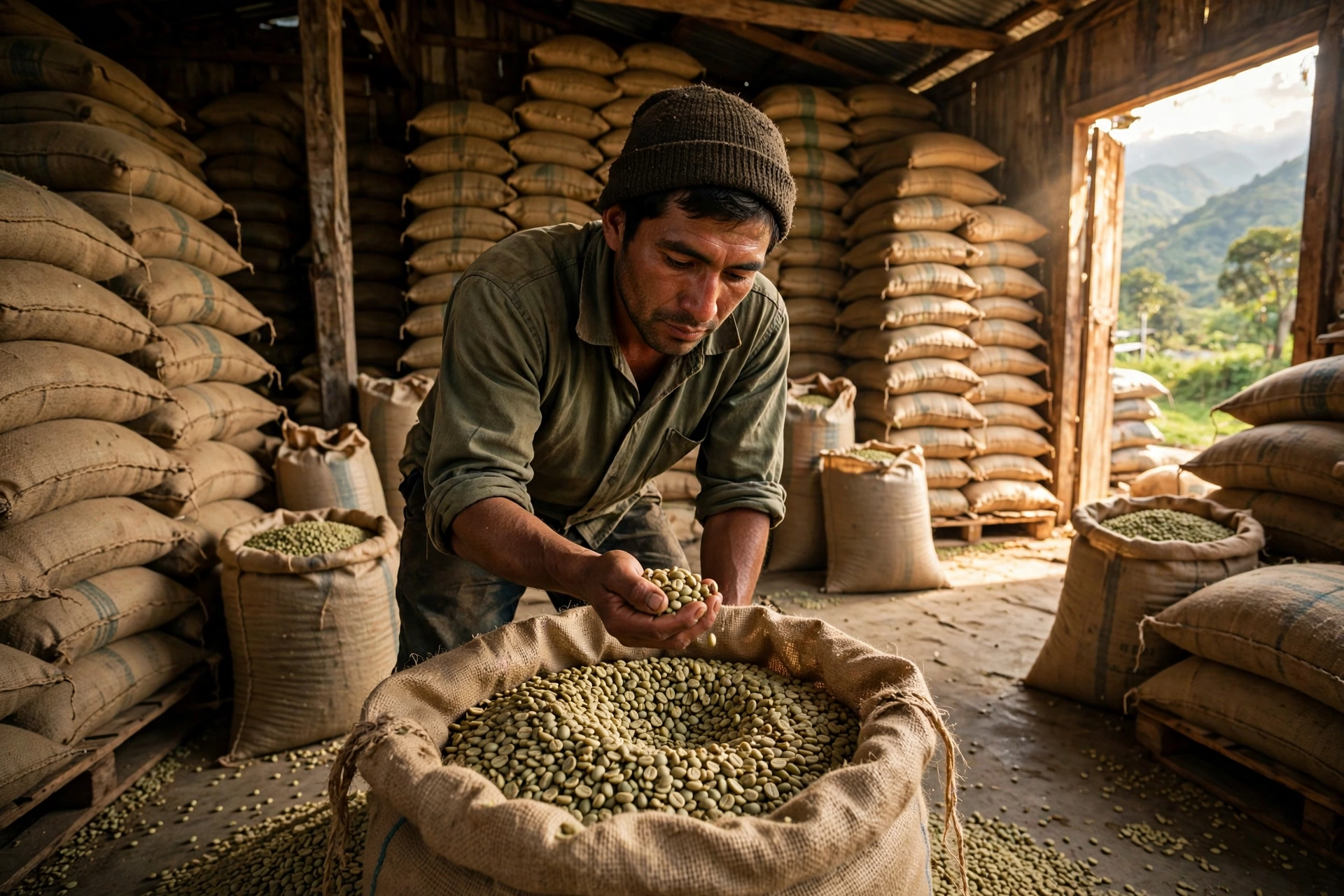
Start with a place. Up near Musasa sits the Ruli washing station, 2,002 metres up, with 250 drying beds. Cherries come in, get pulped, fermented, washed, and then spread on the beds until the moisture is down to 11–12%. Only then do they go into the warehouse, and the dry mill next door can process a full container in a day. Before anything leaves, the National Agricultural Export Development Board pulls samples and inspects the lot. What decides the price of that coffee is the two weeks on the drying beds, not the weeks on the water.
Rwanda Coffee Export Warehouse Work Starts With Moisture
Green coffee wants to sit at 10–12% moisture, with around 11% the sweet spot. Over 13% and mould gets a foothold. Under 9% and the bean turns brittle and roasts dry. Rwanda's harvest runs March to July, right on the tail of the rains. Beans that dried fine today can pick moisture back up in tomorrow's rain. So the old stations work a daily rhythm: spread the beans out in the sun, gather them up and cover them before evening, and measure moisture every single day.
Over in Kinazi, one washing station gives the wet parchment 24 hours under cover first, then moves it to the beds for an average of 15 days. That 15 days is not a number somebody made up. It is how long it takes a bean to dry all the way through. The impatient ones pull the beans after a week. The outside feels dry. The core is still wet. Seal that in a bag, leave it two weeks, and when you open it the whole lot smells of mould and gets downgraded. After fifteen years on the road, I have seen more cargo killed by "that looks dry enough" than by any accident on the highway.
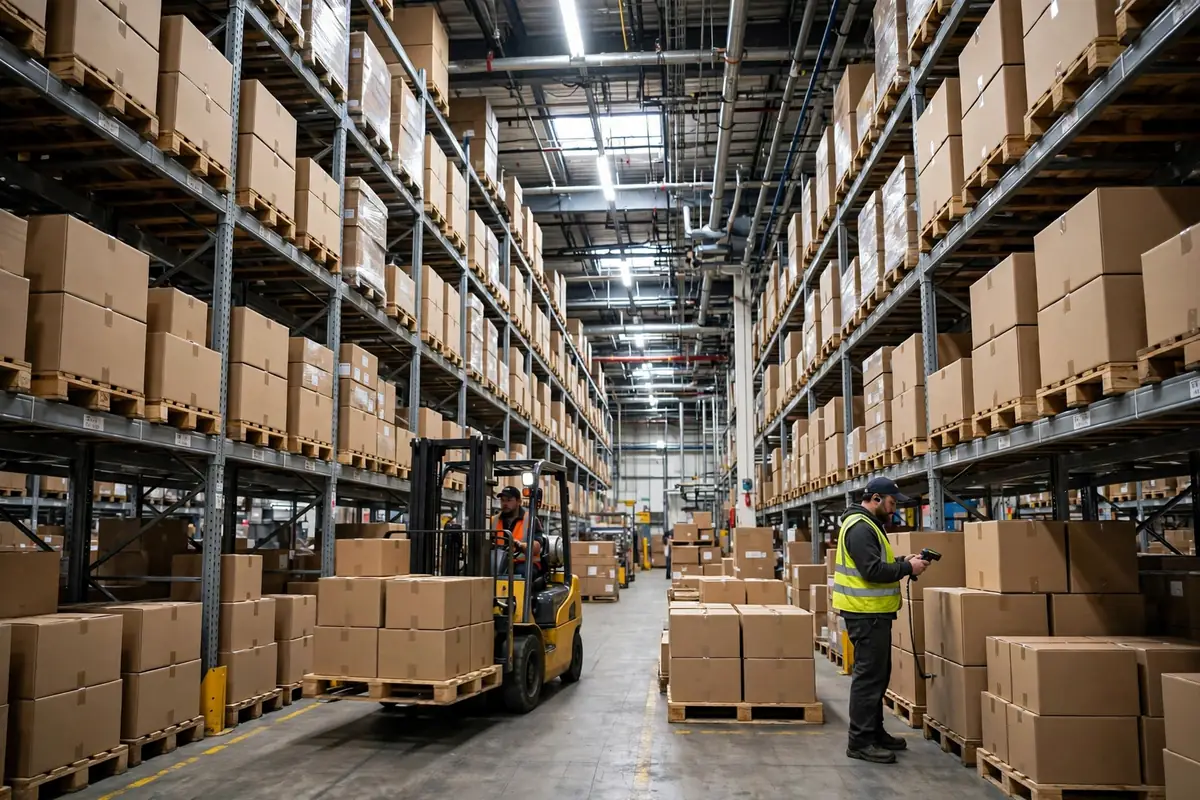
How the beans sit in the warehouse matters too. The happy range is 15–20°C and 50–60% relative humidity, sacks up on wooden pallets, off the floor and off the walls, with air moving through the building. Plenty of Rwandan warehouses do exactly this with natural ventilation and pallets. What kills a lot is mixing: new beans stacked with old beans, wet lots stacked with dry lots. One damp sack, and the whole stack follows it down.
| Moisture | What happens in the warehouse | What to do | | Over 13% | Mould risk, musty cup | Spread it out and dry again, below 12% before it goes back in | | 10–12% | Stable, safe to store and ship | Spot-check daily, measure once more before sealing the bag | | Under 9% | Brittle beans, scorched roast | Stop drying, seal the bags and lock the moisture in |
One more thing beginners always miss: separate the lots and tag them. Beans from different washing stations and different harvest dates get their own stacks, with a tag that says the station, the date, and the moisture at intake. If one lot goes bad, you read the tags and you know exactly which stack it is. Mix everything together to save time, and when trouble comes you will not even know where it started. The tag is the lot's ID card. Lose it and the beans have no story.
Here is a small worked example, assumptions stated, so you can see what moisture is worth. A 20-foot container practically holds 300–320 bags at 60 kilos each, roughly 18–19.2 tonnes. Take 320 bags: 19,200 kilos. At the 2024/25 average export price of $5.66 per kilo, that container is worth about $109,000 (19,200 × 5.66 = $108,672). Now say the moisture slips from 12% to 11% in storage. That is about 216 kilos of water gone, roughly three and a half bags, about $1,200 of value. Small money. But that is only the water bill. If the moisture goes over 13% and the lot moulds, the whole container gets downgraded.
Rwanda Coffee: Keep the Smells Apart or Lose the Cup
Coffee beans soak up smells faster than people think. Store them in the same room as spices, fertiliser, or diesel drums, and the beans will drink all of it in. One cupping and the buyer knows. Rwandan specialty coffee sells on a clean, bright, fruity cup. One stray smell kills it. So separation in the warehouse is not fussiness. It is the floor. Coffee gets its own room, its own cleaning tools, and sacks that once held fertiliser never get used twice. There is a sneakier kind of contamination too: new-season beans stored against last season's leftovers pick up the staleness.
And here is the counterintuitive part: getting beans into a container fast is not the goal. Fresh-dried beans need to rest in the warehouse first, until the moisture is even all the way through, and only then get bagged and loaded. Rush it and condensation forms on the container walls as temperatures swing. Drops fall back on the bags and local moisture jumps past the limit. Rest the beans three extra days. Do not try to save those three days.
There is another warehouse rule that looks dumb and saves real money: first in, first out, with aisles left open when you stack. The stack that went in first has to be able to come out first. Otherwise new beans bury old beans, the old ones sit in a corner past the season, and you find out the aroma is gone when it is too late. Rwanda's harvest is only March to July. Rotation has to follow the harvest calendar, not whichever stack is easiest to reach.
Rwanda Coffee Export by Land: The Road From Kigali to the Port Is the Slow Part
Rwanda has two ways to the sea: north through Mombasa in Kenya, south through Dar es Salaam in Tanzania. Mombasa to Kigali is about 1,700 kilometres, six to nine days by road. Dar es Salaam to Kigali is about 1,600 kilometres, four to seven days. Sea plus road, door to door, runs 35–45 days. Anybody who has driven long haul knows the truth: in those six to nine days, the road is only half the story. The other half is queuing at the border and getting documents checked. One number wrong on a form and the truck waits at the post while the beans sit in the box one more day.
That is why the inland port in Kigali matters so much. Cargo gets consolidated, declared, and inspected there, and only rolls when the paperwork is clean. The time that step saves beats anything you gain by driving through the night. And do not marry one corridor. The northern route is the established one, and the southern port has gotten much more efficient in recent years. Watch the vessel schedule, watch the border queues, take whichever is moving.
One more thing only people who have run this corridor know: coffee moving from Mombasa to Rwanda travels as transit cargo under customs control, so no Kenyan duty is paid on it. The cleaner the documents, the smoother the transit. Fudge one line and the border can hold you two days. Bring one extra copy of everything rather than one page short.
Three last things before the container doors close. Measure moisture twice: once before bagging, once before loading, and write both numbers down. Inspect the container clean and dry: smell it for odd odours, run a hand along the walls for dampness, and refuse any box that smells wrong or feels wet. When you stack the bags, leave a gap at the walls for air, keep a ventilation channel open, and get the bottom layer on pallets. In the rainy season especially, never let a sack sit flat on the floor.
Fifteen years on the road taught me one line I still believe: in freight, slow is fast. Rwanda's beans come down from 2,000 metres, spend more than a month reaching the buyer, and none of it works because one leg went fast. It works because no stop along the way dropped the ball. Keep the air in the warehouse right, keep the condensation out of the box, and that coffee has truly left the country.
By Shifu Zhao, Trucking Veteran (15 yrs)