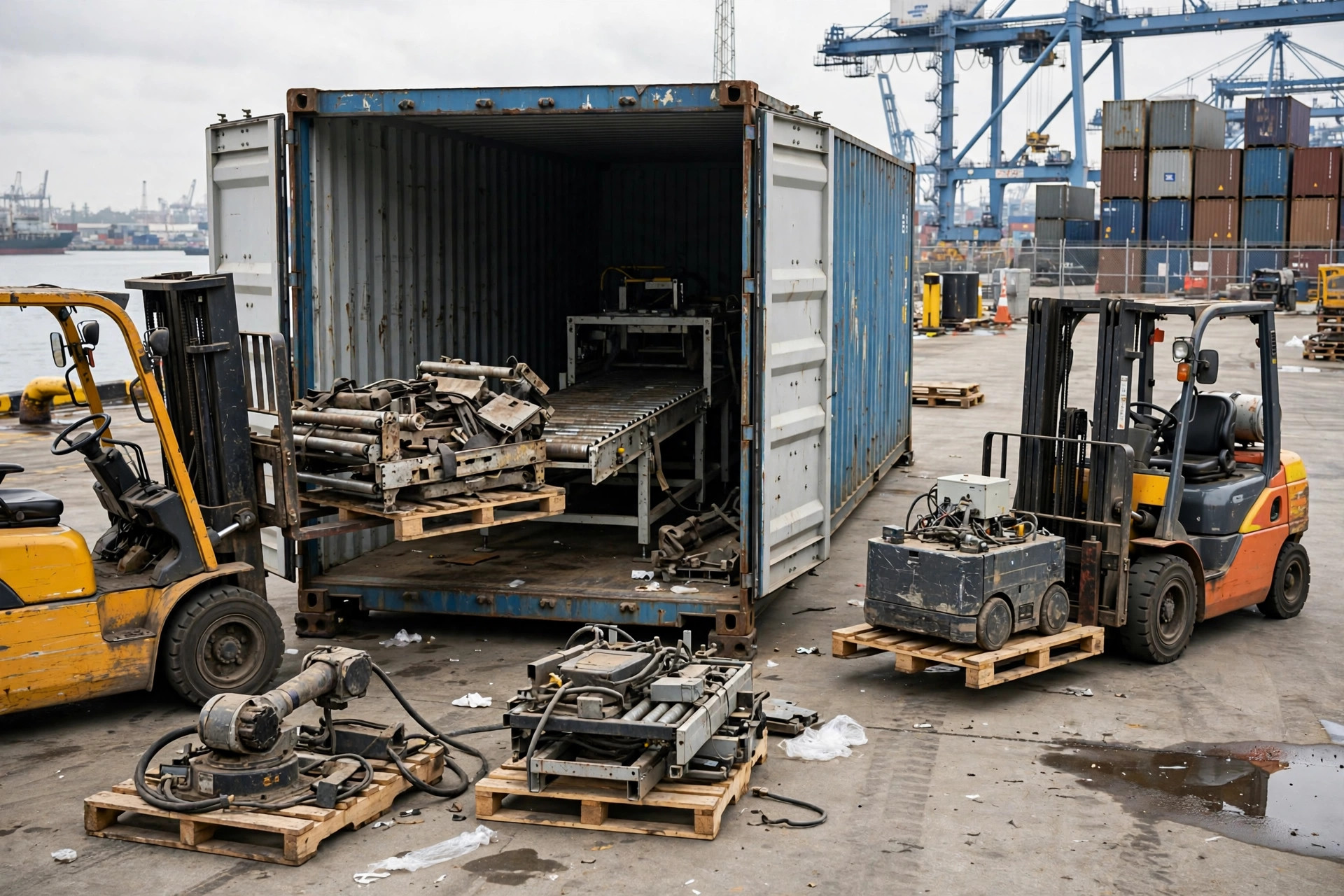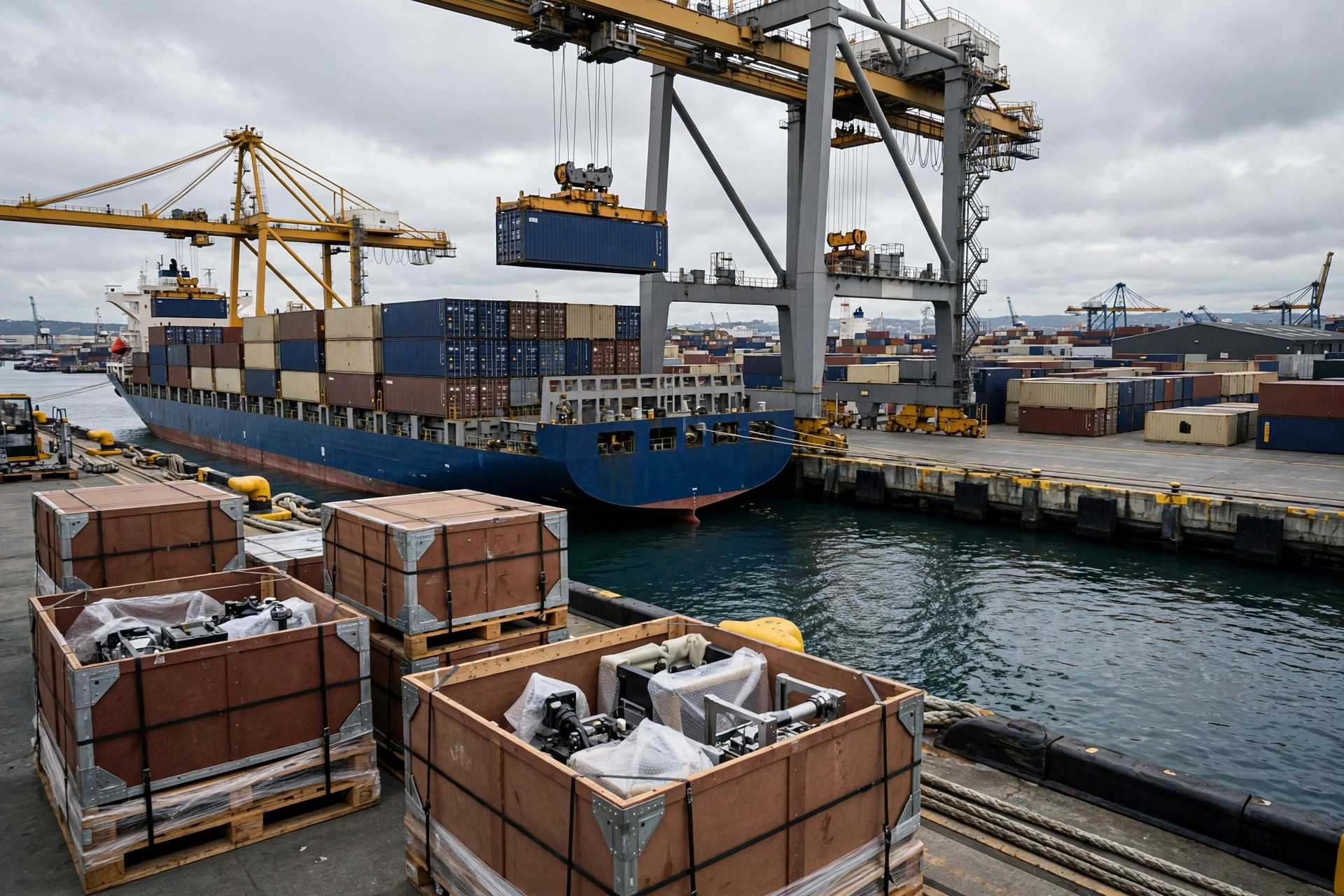
Here's a story I've watched play out more than once. A U.S. importer orders a fleet of AGVs, several hundred thousand dollars' worth. The supplier pitches a plan: core components built in China, shipped to Vietnam for final assembly, declared origin Vietnam — "you'll save a bundle on Section 301 duties." Sounds like free money. Then the shipment hits the Port of Long Beach, CBP reviews the process documentation, and asks one question: what, exactly, did the Vietnam step change? If you can't answer that convincingly, the cargo doesn't move. Back duties, penalties, demurrage — the full menu.
Here's the rule, broken down engineer-style: principle first, then where the line sits, then the traps. After this, you'll smell a bad supplier proposal from a mile away.
The Principle: Customs Doesn't Care Who Turned the Screwdriver
Country-of-origin determinations hinge on one test: did the processing in a given country create a new and different article of commerce — with a new name, a new character, or a new use? Repainting a machine's enclosure from blue to red doesn't make it a new machine. But take a generic motor, add sensors, a controller, and navigation firmware, and turn it into an autonomous drive unit — new name, new character, new use. That's a transformation.
CBP's ruling record draws a few hard lines:
First, assembly of parts with a predetermined use usually doesn't count. There's a classic U.S. court case: prefabricated components imported and assembled into flashlights, a process taking seven to thirteen and a half minutes. The court said no. The components arrived with their end use already determined; the assembly merely put together things destined to be put together. In plain language: turning screws isn't a transformation.
Second, process complexity is a hard metric. In a published CBP ruling, surveillance camera circuit-board assemblies built entirely in India and merely assembled in China kept their Indian origin — the China step didn't qualify. In another ruling, optical fiber made in France, shipped to China for bundling, jacketing, and connector fitting, kept its French origin. Bundling and jacketing don't change the fact that it was already optical fiber when it left France.
Third, transformation happens when components lose their separate identity. Same circuit boards, different story: blank boards shipped to a country, populated with hundreds of components, programmed, and integrated into a finished system — CBP found substantial transformation. A blank board is nothing but a carrier until it's populated; after that it has a new name, character, and use.
That's the dividing line. Every judgment below flows from it.
Where the Line Sits: Four Typical Scenarios for Automation Equipment
Straight to the table. You're a U.S. importer. Core components come from China, and you're considering a processing step in a third country before import:
| Scenario | Third-country operation | Substantial transformation? | Origin determination |
|---|---|---|---|
| AGV knocked down into parts; Vietnam does final assembly only (fasteners, wiring, labeling) | Simple assembly; components' predetermined use unchanged | No | Still China |
| Conveyor structural steel from China; cut, welded, and painted into a complete line in Mexico | Steel already in final form with predetermined use; welding and assembly don't change its essential character | Likely no | Still China |
| Bare PCBs plus hundreds of components populated, firmware flashed, and full system tested in Vietnam | Components lose separate identity; output is a control system with new name, character, and use | Likely yes | Can be Vietnam |
| French-made optical fiber sent to China for bundling, jacketing, and connector fitting only | Process doesn't change the fiber's character or use | No (actual CBP ruling) | Still France |
Customs thinks like an engineer: it asks where the core value was created, not where the last screw was tightened. If the navigation stack, control system, and commissioning all happened in China, the Vietnam step is a glorified freight forwarder.
Now let me take direct aim at a question I get regularly: "Can we just route the goods through a third country, swap the labels, get a new certificate of origin?" Bluntly: that's not optimization, that's transshipment, and it's one of the things CBP watches most aggressively. Enforcement has escalated from administrative penalties into civil fraud and criminal liability territory, with a whistleblower program in the mix. The duty you think you're saving is gambled against the entire company. Not worth it. Ever.
Where the Traps Are: What Inspectors Look For, and How Penalties Scale
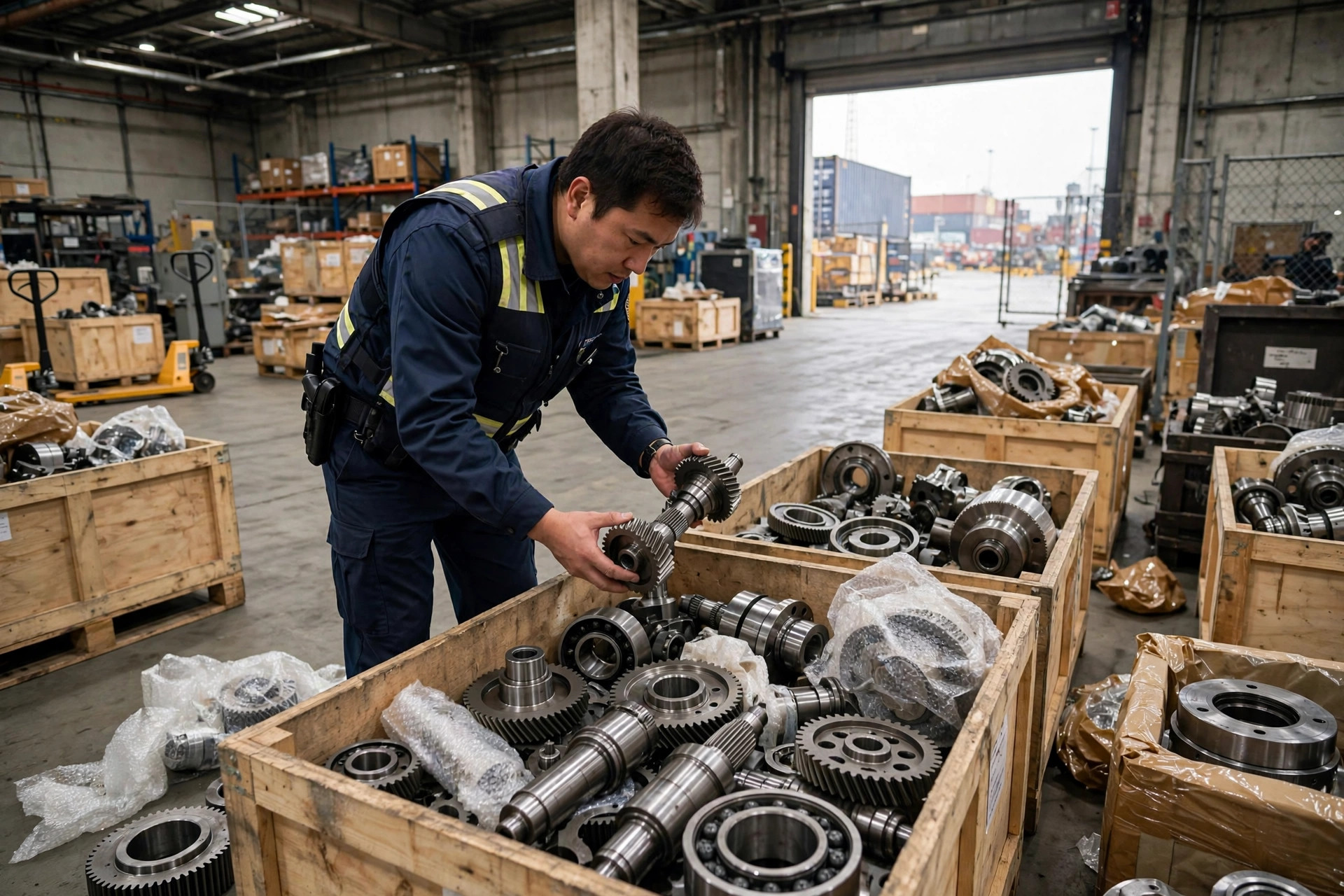
Once cargo lands, inspection risk concentrates in four places:
1. The paper trail doesn't tell one story. Bill of lading, packing list, commercial invoice, certificate of origin, process description — all five must narrate the same events. If the third-country factory claims it "manufactured" the AGVs, but the shipping records show core components moving China-to-third-country, sitting for two weeks, then re-exporting to the U.S., the timeline can't support a manufacturing claim. Inspectors read these timelines all day. They're better at it than you are.
2. The third-country factory is a black box. It can't produce an equipment list, can't explain labor hours, can't describe its technical staff. Real substantial transformation always maps to real machines, real people, real hours. Three "I don't knows" in a row is a confession.
3. The HTS classification jump doesn't make sense. The 10-digit tariff number you declare has to match the process you describe. Claim you "manufactured" complete machines in Vietnam but declare them under a parts heading? The tariff code is customs' first language. Speak it wrong and your exam rate goes vertical.
4. The penalty multiples are brutal. Under 19 USC 1592 and its implementing regulations: fraud — up to the full domestic value of the merchandise; gross negligence — four times the lost duties (capped at domestic value); negligence — two times. Prior disclosure can slash these dramatically, but only if CBP hasn't come knocking yet. Once the inspector is standing in front of you, that window is closed.
Run the math and it becomes obvious. Take a hypothetical $1M automated storage system (a modeling assumption, to make the arithmetic concrete). Declared properly as China origin: base MFN rate + Section 301 additional duties (historically 7.5%–25%, sharply higher for many products since 2025 — verify against CBP's current schedule) + MPF 0.3464% + HMF 0.125% ocean. Call Section 301 25% for the model: $250K in duty delta. Gamble on a false origin declaration and lose: $250K in back duties plus a gross-negligence penalty at 4x — roughly the price of the equipment itself, handed to customs as a fine. That ratio is the entire argument.
Want to Pay Less? These Are the Only Legitimate Paths
Compliant cost reduction, ranked by bang for buck:
1. Get a binding ruling. Cheap certainty. Before importing, submit your process flow, bill of materials, and third-country operation details through CBP's CROSS system and ask for a written origin and classification determination. Once issued, even the port inspector honors it. Best ROI in this entire article.
2. Watch the Section 301 exclusion list. Exclusions for 178 Chinese-origin products have been extended through November 10, 2026, and USTR updates the list periodically. If your equipment's HTS sits on the exclusion list, the savings are automatic and fully legal. Check it yourself; don't take the supplier's word.
3. Get the HTS classification right. This is the most common and cheapest savings lever there is. One wrong digit and your rate and Section 301 applicability are both wrong. A huge share of "the duty is too high" complaints trace back to misclassification. A licensed broker review costs a few thousand dollars.
4. The first sale rule. In multi-tier supply chains, the dutiable value can be based on the first sale price rather than what you ultimately paid. Entirely legitimate — but it demands a complete, genuine paper trail for every tier.
5. Foreign Trade Zones. Bring equipment into an FTZ, defer the duty; and where the finished-good rate is lower than the component rate (inverted tariff), assembling inside the zone can lock in the lower rate. Suits importers with steady, high-volume flows.
Here's the counterintuitive takeaway: in origin rules, where assembly happened matters far less than where the core components came from and whether the process gave the product a new name, character, and use. Sophisticated importers spend their money on rulings and classification — never on relabeling geography.
So, is the money worth spending? Look at this one number: a few thousand dollars for a binding ruling plus a classification review buys certainty for a million-dollar shipment. Gamble on a false declaration, and one loss costs you the value of the goods. I've done the math for you. The rest is just not kidding yourself.
By Da Liu, Automation Engineer