Here's a counterintuitive take to start: the valuable part of a robotic depalletizing system isn't the robot arm — it's how standardized your pallets are. The more uniform the pallet layer pattern, the faster the payback. The messier the patterns, the more time the vision system spends re-teaching itself, and a project quoted at a 12-month payback quietly slides to 30 months. More people have been asking me about robotic depalletizer ROI lately, so let's do the math once, properly.
What a Depalletizer Actually Does: Eyes, Brain, Hands
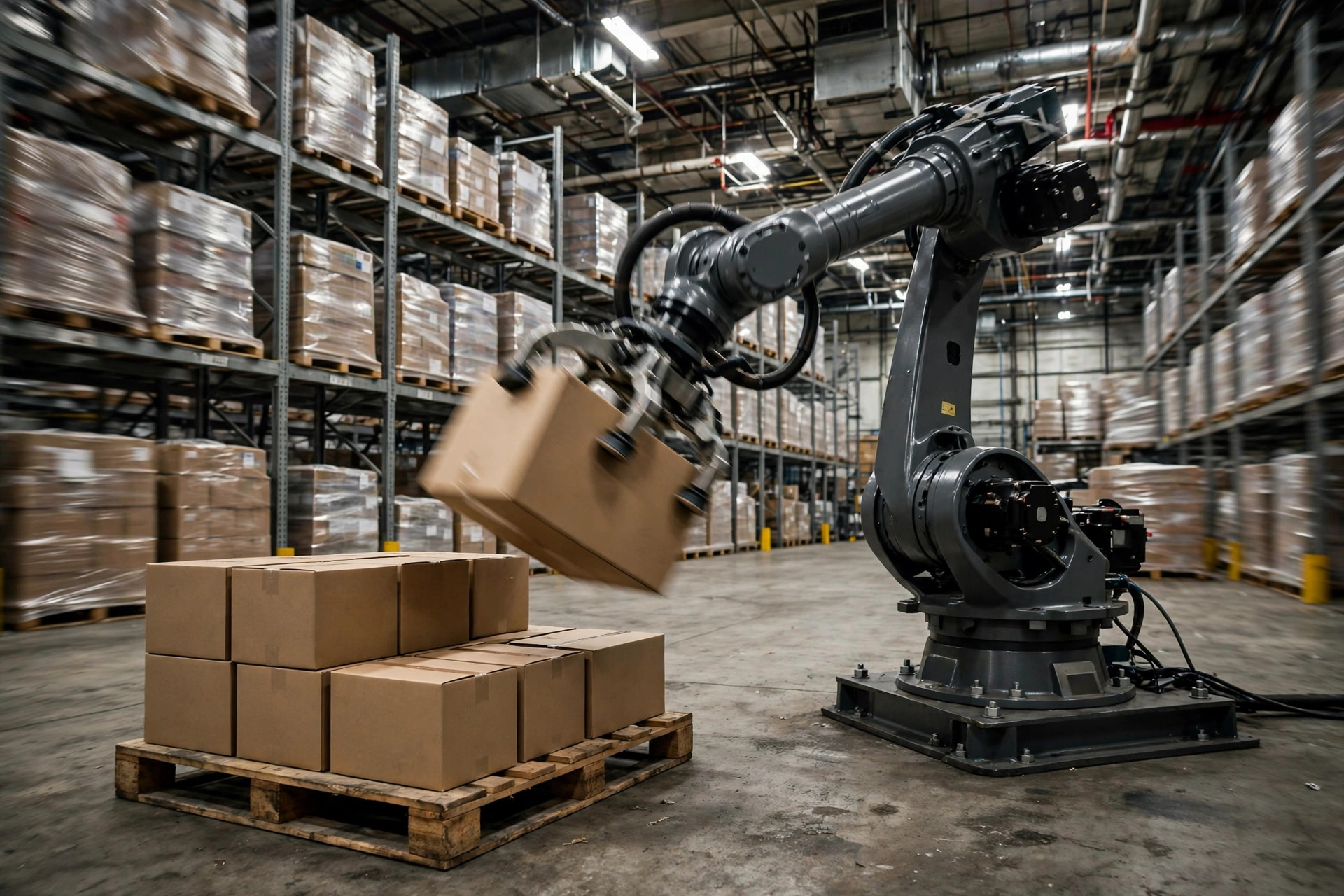
Break a depalletizing robot into three parts. The eyes are a 3D vision camera that sees where each case sits on the layer, how big it is, how heavy. The brain is the grasp-planning algorithm that decides which case to grab first and from what angle so the stack doesn't collapse. The hands are the end effector — vacuum grippers for cartons, clamp jaws for bags and pails. Think of it as a depalletizing worker who never gets tired but only recognizes a fixed set of box types: the more alike your cases look, the faster it goes; the more variety, the more confused it gets.
It's like self-driving cars: great on the highway, helpless in an old-town alley. The depalletizer's "old-town alley" is the mixed pallet — dozens of SKUs on one pallet, layer patterns left to the mood of whoever stacked it. On those pallets the vision system recalculates every layer and cycle time drops by half. So before talking ROI, look at what your pallets actually look like.
In the fall of 2023 I evaluated a beverage distributor's warehouse in Ontario, California. They received 60 to 80 pallets a day of bottled water and functional drinks, with fixed layer patterns — 5×4 footprint, 20 layers high, fewer than 30 SKUs. Two workers per shift did it all by hand, 12 to 15 minutes per pallet, each bending over a thousand times a day. In 2022 they'd had a back injury: six weeks of sick leave plus a workers' comp payout. After that, the manager told me, they couldn't hire depalletizing labor at $22 an hour — young workers would rather drive a forklift than do this.
The Depalletizer ROI Math: Vendor Claims First, Then Your Own Numbers
Let's lay out the public vendor numbers, each with its source — never trust a single vendor's mouth:
- Paxiom (robotic palletizer vendor's ROI guide): robotic palletizing systems run $200k–$450k, with payback in 12–30 months.
- ISD (October 2026 press release — vendor's own numbers): a combined palletizing/depalletizing cell cuts labor cost 43%, ROI in 9–18 months.
- Dataintelo (market report): plants processing 200k–300k cases a month save $150k–$200k a year in labor.
Take vendor marketing pages at half value. Paxiom's 12–30 months assumes two shifts and stable layer patterns at a beverage plant; ISD's 43% is best-case for an integrated cell. If your warehouse runs mixed pallets with dozens of SKUs — cross-border e-commerce returns, say — the vision system re-teaches daily and the payback period can easily double. The real math uses your pallet volume and your labor rates:
| Item | Manual (2 workers/shift) | Robotic depalletizer cell |
|---|---|---|
| Annual labor | $22/hr × 2,080 hrs × 1.3 (benefits load) ≈ $59k/person, ≈ $119k for two | — |
| Equipment depreciation | — | $200k–$450k over 7 years → $29k–$64k/yr |
| Annual maintenance | — | 8–10% of equipment price → $16k–$45k/yr |
| "Robot babysitter" | — | 0.5 headcount, ≈ $30k (explained below) |
| Total annual cost | ≈ $119k | ≈ $75k–$139k |
Those labor numbers are California; in the Midwest at $17–18/hr, redo the math locally. The Ontario site depalletized about 18,000 pallets a year: manual cost $6.60 per pallet, robotic $4.20–$7.70. At a mid-range equipment price, per-pallet cost lands around 60% of manual, payback 18–24 months — the real-world version of Paxiom's 12–30 month band. But this math only holds with two preconditions: stable layer patterns and 60+ pallets a day. Lose either one and the numbers change.
The Buy/Don't-Buy Line: Three Warehouse Types
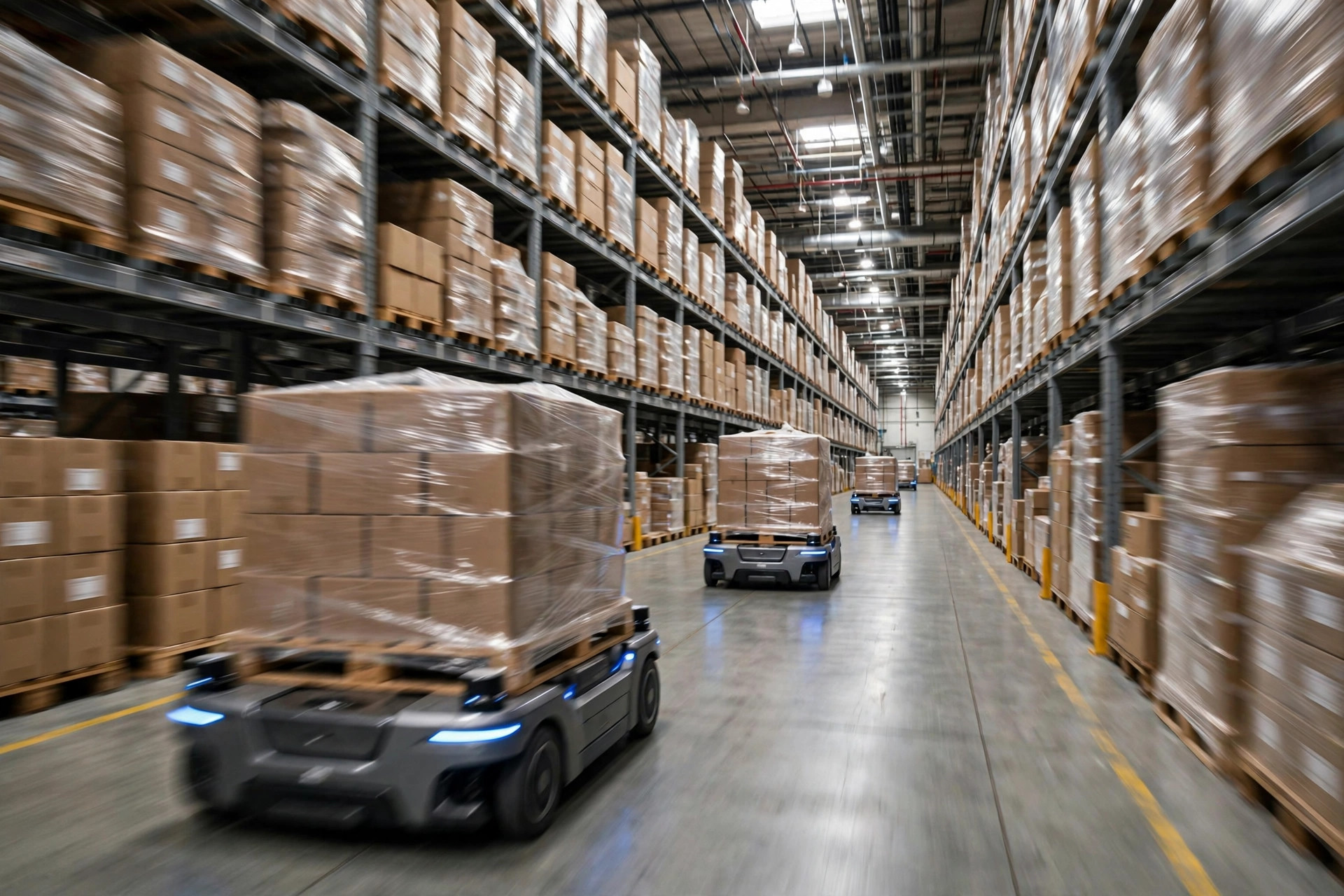
Type one — buy without hesitation: 40+ pallets a day, fewer than 50 SKUs, stable patterns. Beverage, food, paper, and consumer-chemical distribution. The vision system gets taught once and runs for half a year; cycle time holds at 6–8 minutes a pallet. This is where ROI is easiest to prove.
Type two — don't touch it: thousands of SKUs, patterns changing daily, mixed pallets as the norm. E-commerce returns warehouses, retail break-bulk DCs. The vision system recalculates every pallet, cycle time sags past 12 minutes, and two experienced manual workers beat it. Under 30 pallets a day, skip it too — annual depreciation per pallet costs more than labor. That's arithmetic, not sentiment.
Type three — consider the combo cell: you receive full pallets that need breaking down and ship full pallets that need building. A palletizing-plus-depalletizing cell sounds like a bargain — one robot doing both jobs. But there's a trade-off: depalletizing and palletizing cycle times are rarely equal. In 2024 I saw a combo cell at a food plant in Dallas, Texas: 6 minutes to depalletize, 9 minutes to palletize, the robot idling a third of the time waiting for the palletizing station to clear. They saved one machine's purchase price and bought scheduling complexity instead — uptime fell from 96% to 91%. My rule: if inbound and outbound cycle times differ by less than 30%, the combo cell pays; if the gap is wider, two independent machines that never block each other win.
The Maintenance Trap: Affordable to Buy, Affordable to Keep?
This is where most buyers get hurt. A depalletizer's maintenance bill has four lines:
First, vacuum cups are consumables. Dust, moisture, and tape seams on carton surfaces age them fast — plan on a fresh set every 3–6 months. A few hundred dollars a set; cheap, but someone has to remember. Forget, and grasp failure climbs from 1% to 5%, and that extra 4% is all manual intervention eating your cycle time.
Second, the vision system needs re-teaching for every new case size. An engineer walks a sample case through the routine — 20 minutes to half a day. The more SKUs, the higher this hidden cost. Think of it as prescribing glasses for the robot: change the prescription (case type), get a new fitting. Before buying, count how many new case types you add per year and multiply by teaching labor — that's the vision system's true cost of ownership.
Third, empty-pallet handling. Stripped pallets must be auto-sorted, restacked, and conveyed away, and the pallet dispenser jamming is the number-one downtime cause. Most buyers budget the "unstacking" and forget the "pallet goes home" part. Keep a line item for it.
Fourth, people. You think you saved two headcount; you actually added half a "robot babysitter" — someone who reads alarms, swaps cups, and tunes vision parameters. Either train one or sign a service contract at 8–10% of equipment price per year. Put it in the ROI denominator; don't pretend it isn't there.
One more counterintuitive point: the most underestimated line in depalletizer ROI is pallet and stretch-wrap standardization. Inconsistent pallet dimensions and wrap styles can drag vision recognition from 99% to 92%. That lost 7% is all manual intervention, and it halves your ROI. Spend two weeks standardizing inbound pallets before you spend an extra $100k on a better vision system.
So is the money worth it? Watch one number: fully loaded cost per pallet. Depreciation, maintenance, and babysitter labor, divided by annual pallet volume, versus what manual depalletizing costs you per pallet today. If the robot lands under 70% of manual, buy with confidence. If it can't, your warehouse isn't ready — standardize your pallets first, then come back.
By Da Liu, Automation Engineer