Let me be honest: packing consumables procurement is the kind of thing you never think about until you do the math — and then it scares you.
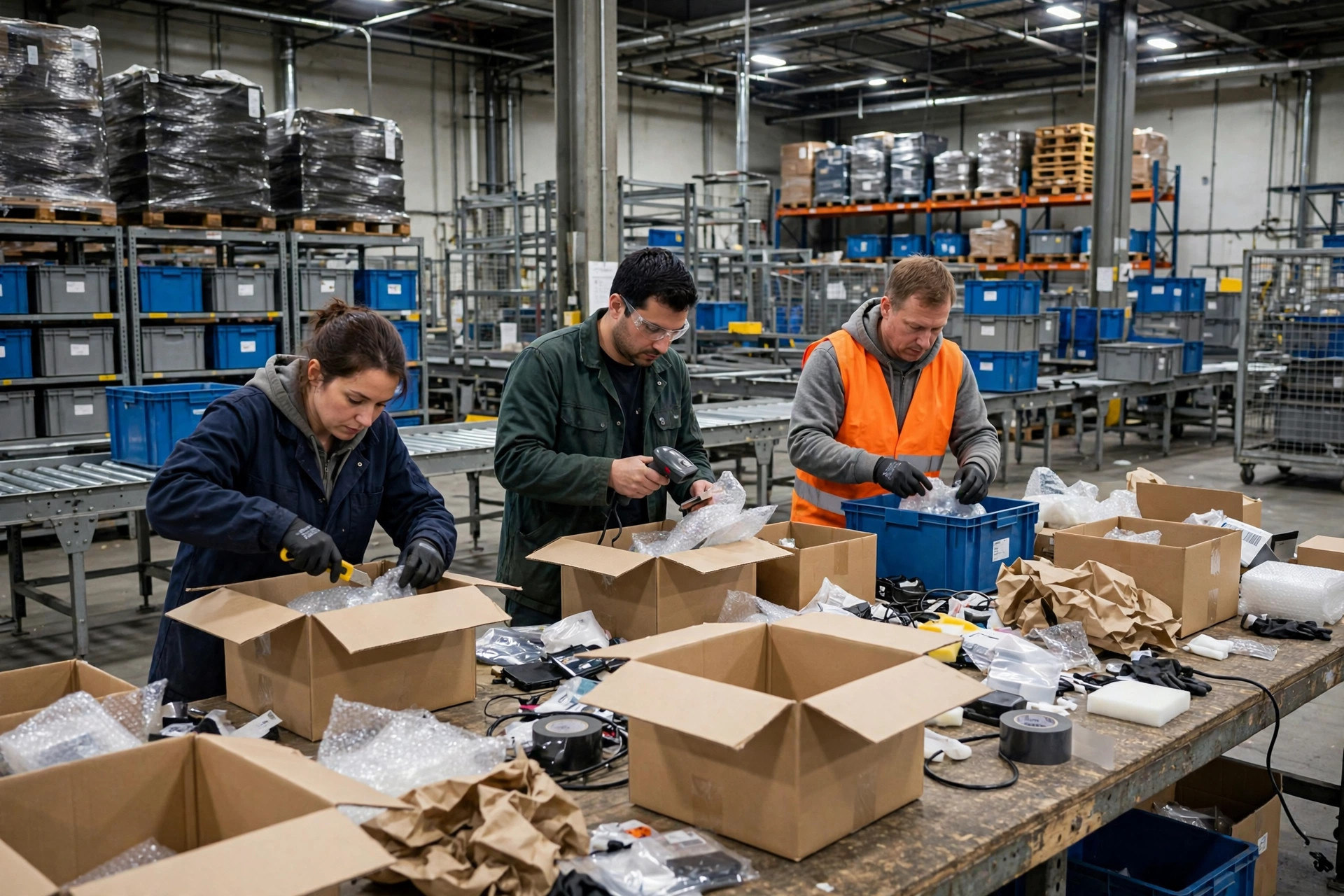
We ship 3,000-plus orders a day. Boxes, tape, stretch film, bubble mailers — over 400,000 yuan a year, gone quietly. Nobody watches it the way they watch ad spend. The warehouse guys just grab what they need, purchasing just places the order, and the money leaks out. Last October I reconciled the numbers and found we were running 14 box sizes from 5 suppliers, every one of them swearing theirs was "the lowest price." My first thought: who here is telling the truth?
Turns out the problem wasn't the suppliers. It was me — I'd split purchasing so thin across five vendors that nobody treated us like a big account.
This article isn't about using less material (smaller boxes, less void fill — that's a different calculation, and this site already covered usage costs). This is about procurement leverage: supplier consolidation, an annual bid, and SKU rationalization. Pure buying power.
Step One: Cut Box SKUs Down to a Third
This is the first move, and the most satisfying one.
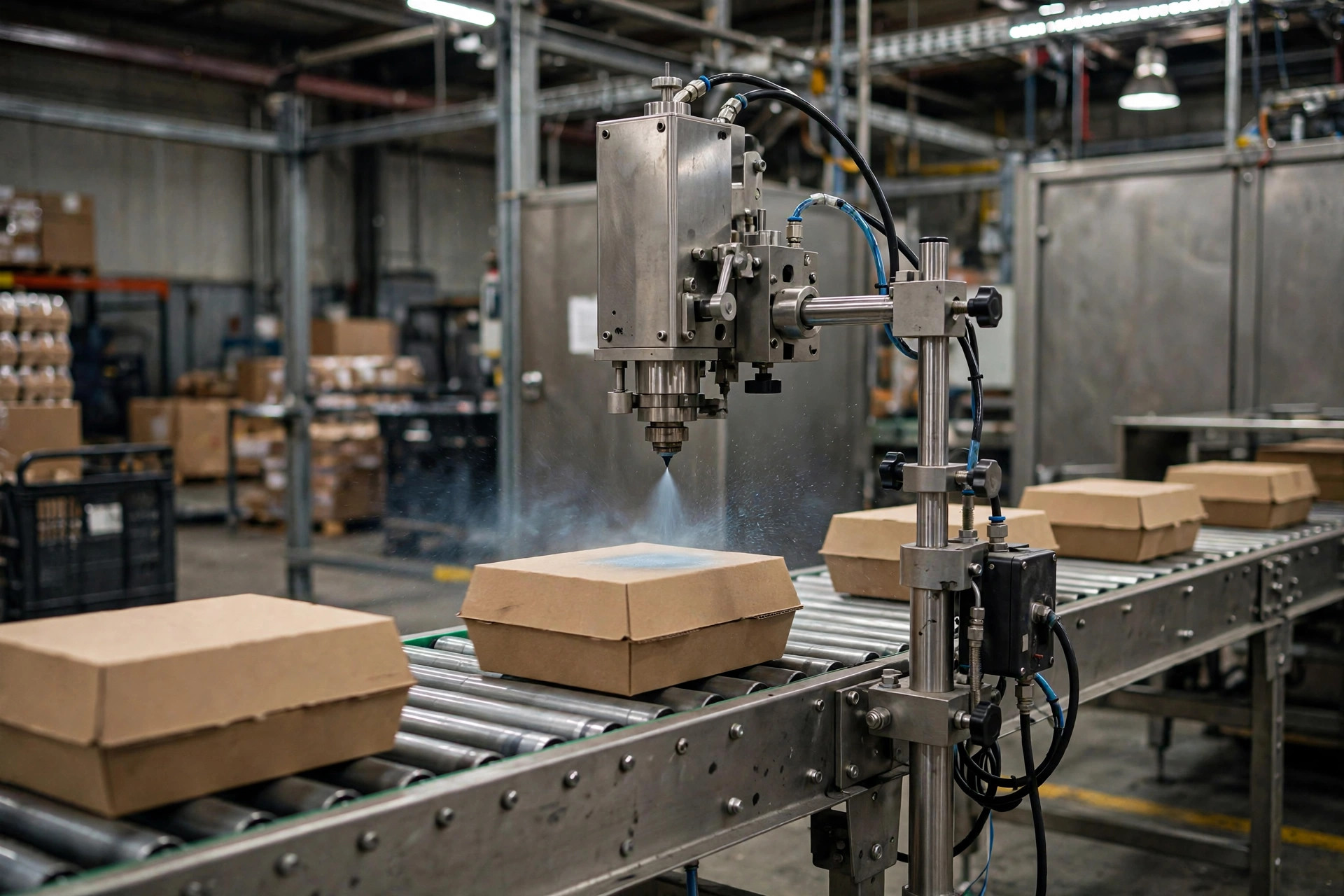
We had 14 box sizes. I pulled three months of outbound data and found 80% of orders fit into 5 sizes. The other 9 sizes moved fewer than 200 units a month each — but every one needed its own die, its own safety stock, its own warehouse slot, and cost 15% more per unit because the volumes were too small to negotiate on.
The fix was blunt: merge the tail sizes into the next size up. A 25×18×12 box becomes a 30×20×15. You use a bit more void fill — so what, void fill is cheap. After the merge, the 5 core sizes doubled in volume, and suddenly suppliers started returning my calls faster.
This step cost us nothing. Average box unit price dropped 12% overnight. SKU rationalization is the foundation of centralized procurement — skip it and everything after is wasted effort.
How I Run the Annual Procurement Bid: My RFQ in Four Steps
Every October we run an annual bid that locks in suppliers and pricing for the next year. Same four steps, every time:
Step 1: Send the spec sheet. The rationalized SKU list, material requirements (flute layers, paper weight targets), and honest annual volume estimates go out to 4–5 suppliers. Be truthful about volume — get caught inflating once and every future quote comes with padding.
Step 2: Demand samples and test them. Boxes get crush and drop tests. Tape gets tack and hold tests. Stretch film gets stretch-ratio and cling tests. Never trust the spec sheet. One year a tape supplier's sheet claimed 50 microns; we measured 38. It stuck fine in summer, then every seal popped open in winter cold. The chargebacks cost us a fortune.
Step 3: Build the comparison sheet. Suppliers across the top, and down the side: unit price per SKU, MOQ, payment terms, lead time, peak-season stock commitments. One rule: compare total cost at equal quality. The cheapest unit price with worse quality is disqualified on the spot — a 1% rise in damage rate wipes out every yuan you saved on procurement.
Step 4: Negotiate. Take the sheet to the top two: can you shave another 3%, stretch payment from net-30 to net-60, hold 20% more peak-season buffer stock? A bid isn't a one-time haggle; you're negotiating twelve months of cooperation terms.
A real story from our 2024 bid. Two finalists: Supplier A was 2% cheaper on boxes; Supplier B delivered 3 days faster with 30 extra days of payment terms. I picked B. People didn't get it — 2% is real money. Here's my math: if boxes arrive 3 days late before a big sale, the packing line sits idle half a day, and that costs more than the 2% ever would. Thirty extra days of terms means hundreds of thousands less cash tied up in peak-season stock. That's the difference between procurement negotiation and shopping: shoppers look at unit price, buyers look at the total ledger.
Boxes, Tape, Stretch Film: The Three Numbers to Watch
Every category has its cheat spot. Watch these:
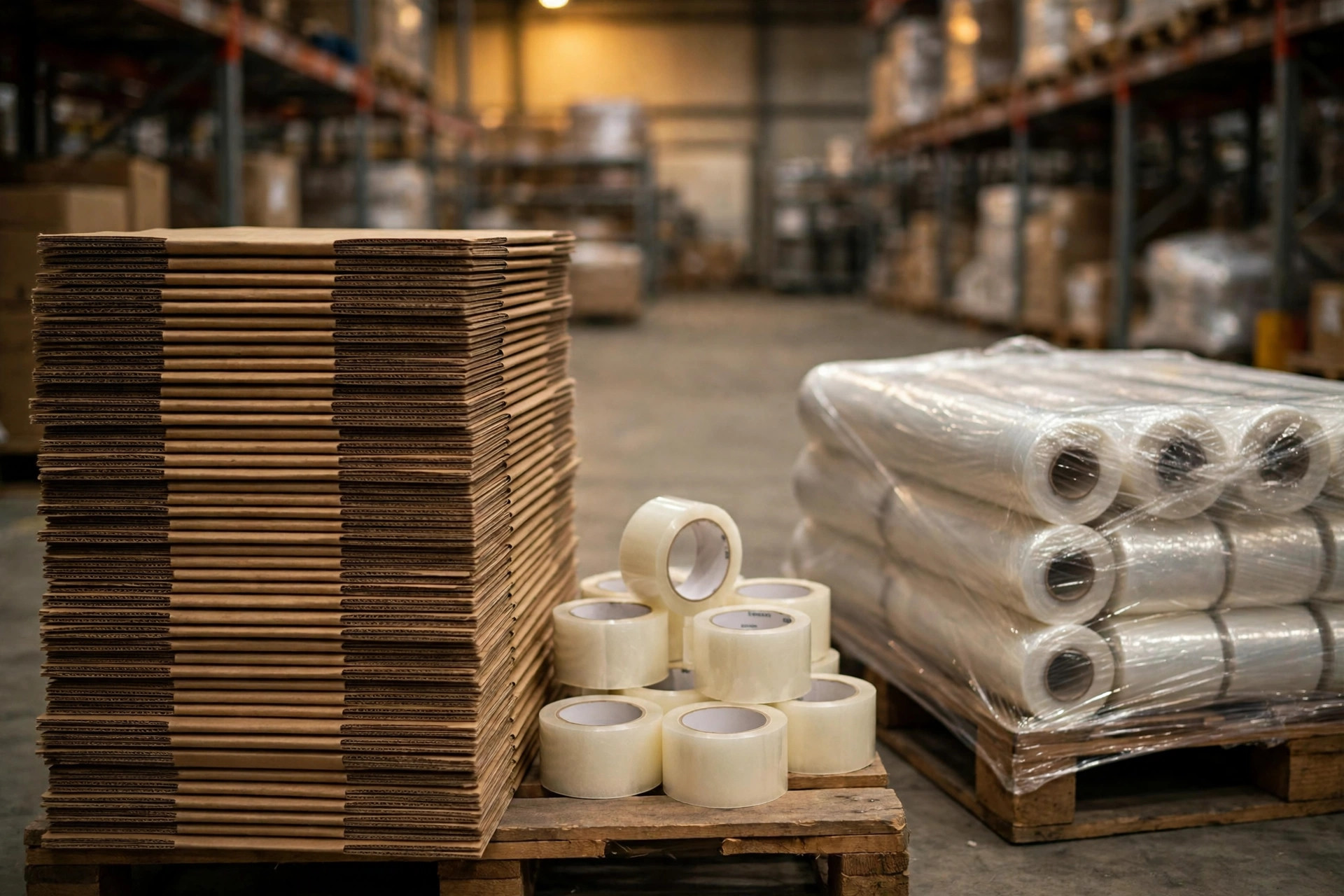
Boxes: watch the liner paper weight and flute type. Same three-layer board, 120g vs 100g liner — over 10% cost difference, and a real gap in crush strength. Suppliers love to quote "3-layer A-flute" without mentioning weight. Write the weight requirement into your spec sheet and spot-weigh incoming shipments.
Tape: watch thickness and actual length. This is the worst category for inflated specs. "4.8cm wide, 100 meters" sounds standard — we've measured plenty at 80 meters. Now we spot-check every delivery: unroll 10 meters with a tape measure, reject the batch if the error exceeds 3%. Write it into the contract.
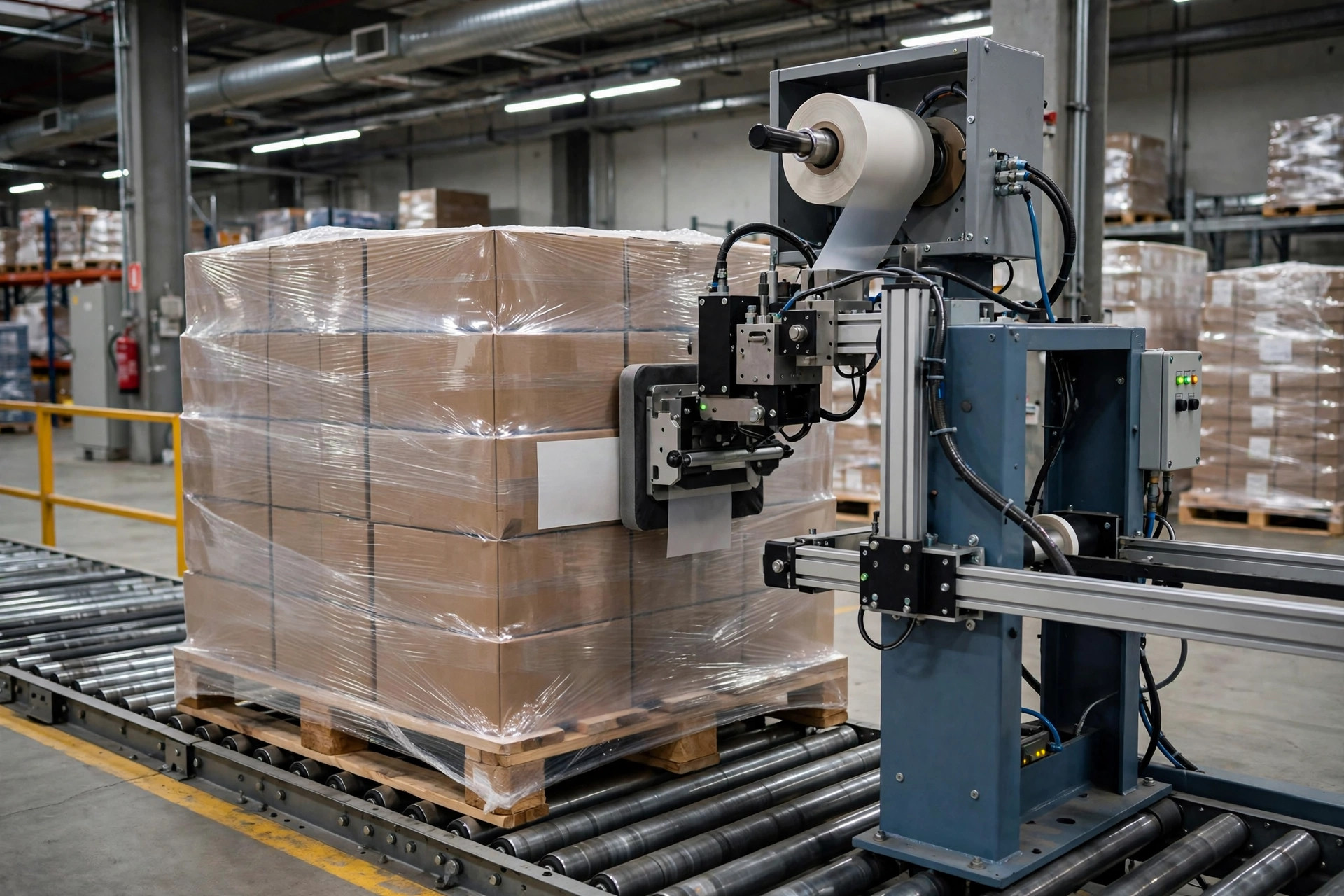
Stretch film: watch stretch ratio and weight. Good machine film stretches 1:3; cheap hand film barely does 1:1.5. Short-weighting is the sneakiest trick here: a roll 200 grams light looks identical but gives you 15% fewer meters. Our fix: bid on price per kilogram, not price per roll. Change the unit and all the padding disappears.
Procurement Numbers: Before vs. After Consolidation
| Metric | Before | After | Change |
|---|---|---|---|
| Suppliers | 5 | 2 primary + 1 backup | -60% |
| Box sizes | 14 | 5 | -64% |
| Avg. box unit price | baseline | -12% | from SKU rationalization |
| Annual tape spend | baseline | -18% | from bidding + testing |
| Annual film spend | baseline | -22% | from per-kg pricing |
| Total annual consumables | 400k+ yuan | ~330k yuan | ~18% saved |
That 70,000-plus yuan is pure profit. No extra orders, no price increases — straight to the bottom line. Every e-commerce seller knows the math: earning one more yuan through ads costs you three; saving one yuan on consumables is one yuan kept.
Three Traps — Hit One and It's All for Nothing
Trap 1: Putting all eggs in one basket to squeeze price. Two primary suppliers plus one backup is the floor. Give the backup 10% of the volume every year so they stay warm. In 2023 one of our primary suppliers had a factory fire; the backup had stock flowing in 3 days. That 10% was insurance.
Trap 2: Unit price without total cost. Cheap tape that pops open creates chargebacks, and one bad review costs more in ad spend to fix than a year's worth of tape. The quality floor for consumables is simple: zero chargebacks caused by packaging.
Trap 3: Payment terms vs. cash discount. "Pay cash, take another 2% off" sounds tempting, but do the math: what's your cost of capital? Do you need the cash flow for peak-season stock? We ran the numbers — 60-day terms are worth far more than a 2% discount. Unbroken cash flow beats everything.
And here's the counterintuitive one: the supplier with the lowest quote is usually the most expensive. Their low price gets recovered somewhere you can't see — paper weight, roll length, lead time, emergency response. One of those blows up eventually. A bid doesn't find the cheapest supplier; it finds the one with the least padding.
When Should You NOT Centralize?
Two cases. First, when your volumes are still ramping and SKUs change monthly — locking in suppliers and sizes then is handcuffs. Bid after things stabilize. Second, highly customized materials — branded color boxes, custom inserts for odd-shaped products. There are only a handful of suppliers for those anyway; a bid won't create competition. Negotiate a long-term deal with an annual reduction clause instead. Centralized procurement gets its leverage from substitutability. No substitutability, no leverage — the bid is theater.
We've run this playbook for two years now, one bid every October like clockwork. This year's round just closed and next year's pricing dropped another 4%. I reuse the same three templates every year — spec sheet, comparison sheet, sample test log — just update the numbers. A fixed process beats cleverness every time. This one I've personally tested. Go use it.
By Ah K, E-commerce Seller (5 yrs)