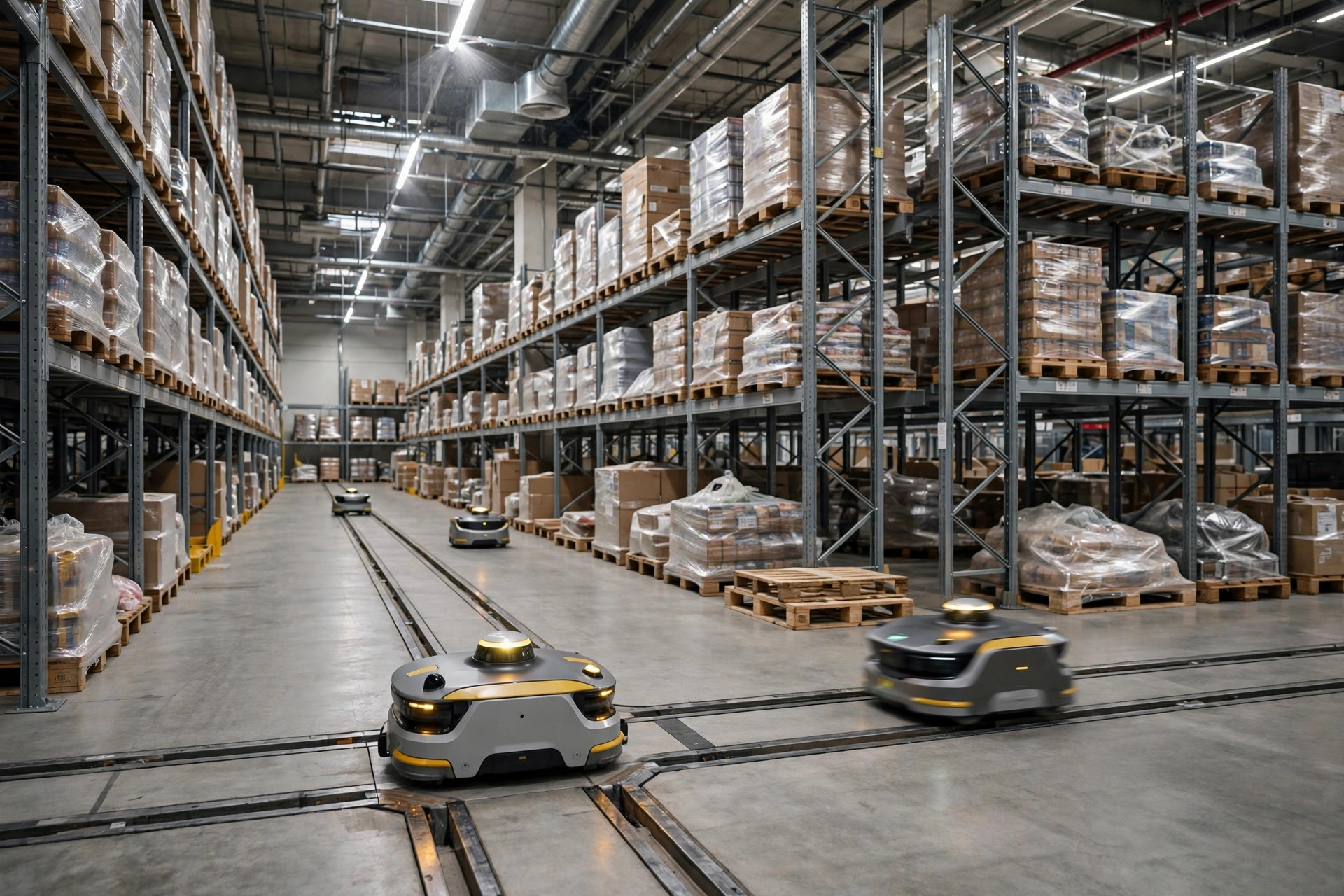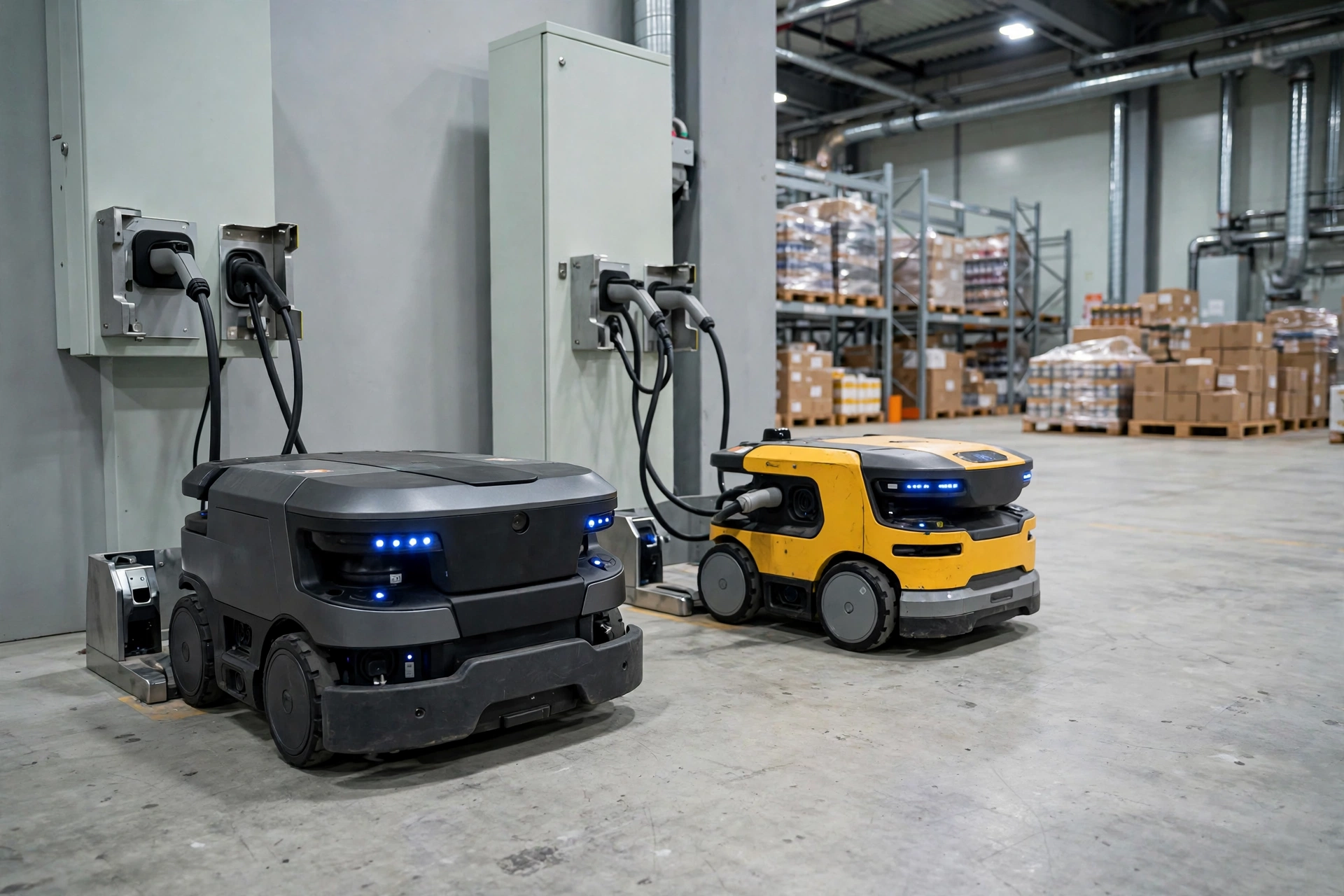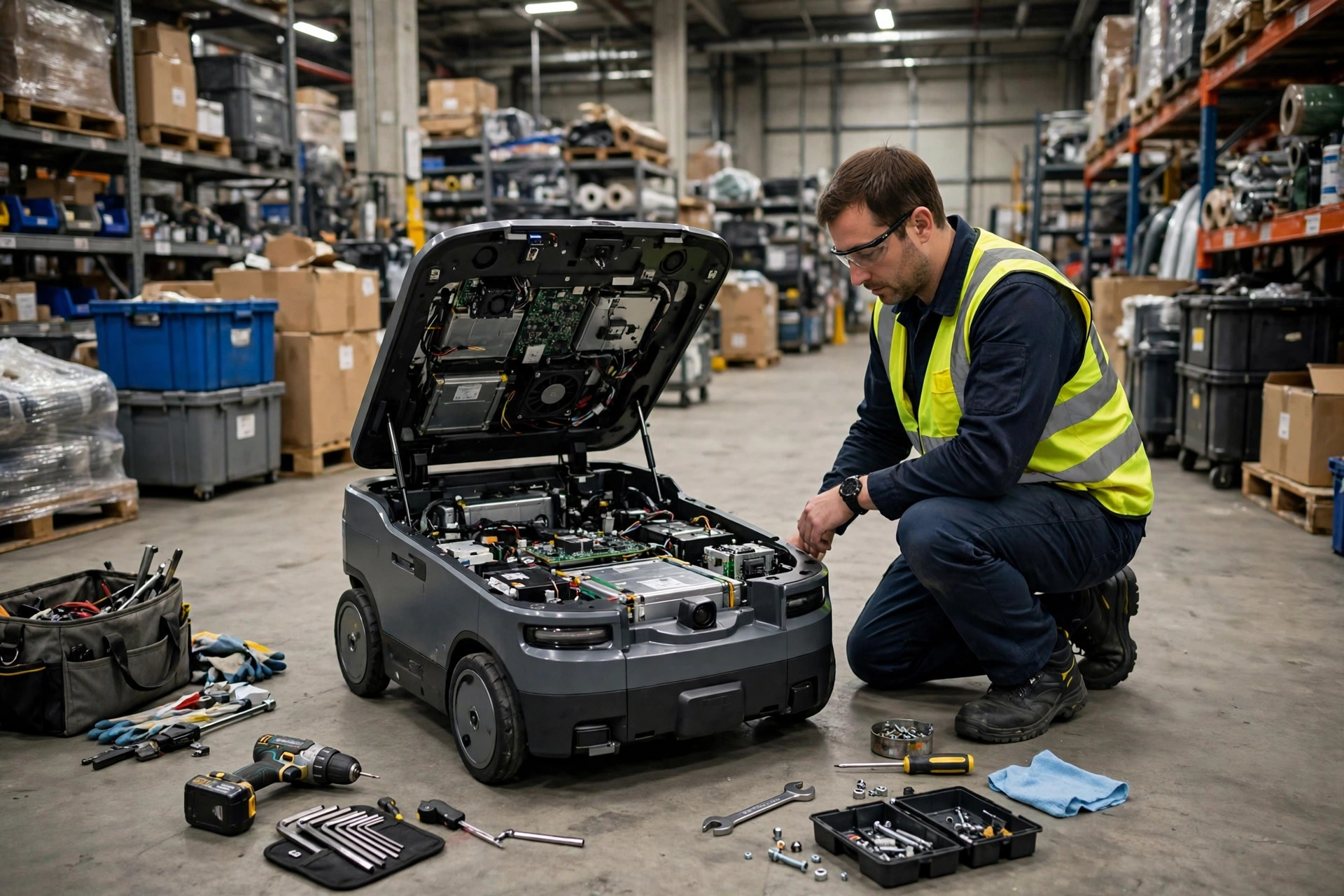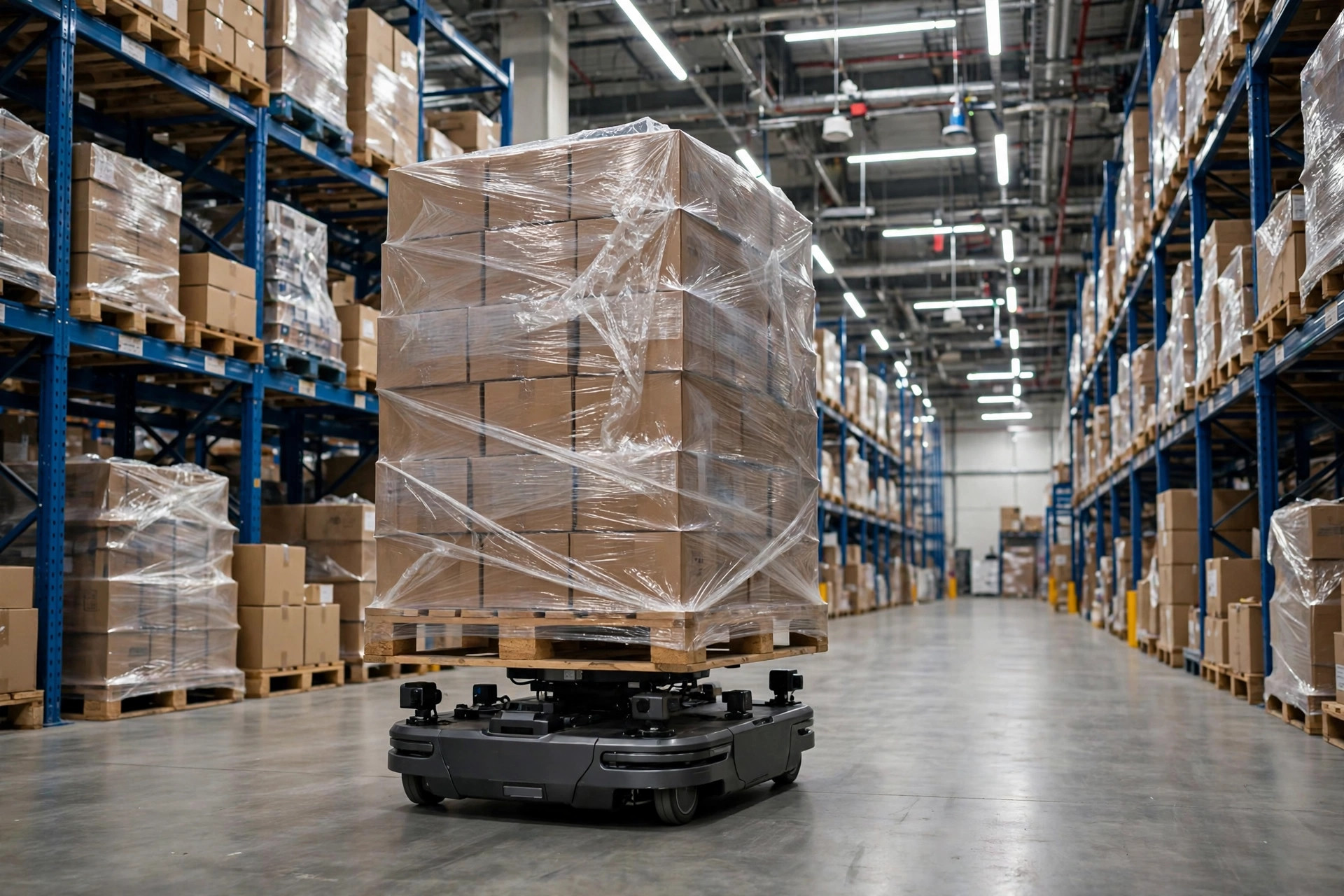
Here's a counterintuitive fact: in an AGV project, the vehicles themselves — from purchase order to delivery — usually account for about one-third of the total timeline. The other two-thirds go to everything around the vehicles: surveying the floor, pulling network cable, mapping, systems integration, and waiting on safety certification. I've watched too many operations teams build their schedule around equipment lead time, only to have the robots arrive and discover the site isn't ready. The AGV deployment stalls before it starts.
Think of it this way: you just bought a sports car, then realized the road in front of your building hasn't been paved yet. The car doesn't matter if there's nowhere to drive it. Let me break down exactly where AGV deployment time goes, which projects move fast and which crawl, and the three delay traps that catch nearly everyone.
Where AGV Deployment Time Goes: Five Phases, None Skippable
An AGV deployment isn't "buying robots." It's paving roads, issuing driver's licenses, and registering plates — a full package. Walk all five phases, and an 8–12 week pilot is the floor, not the ceiling:
Phase 1: Site survey and solution design (1–2 weeks). Engineers walk the entire facility with laser scanners: floor flatness, expansion joint width, slopes, column positions, where the chargers go, how to keep fire lanes clear. Skimp here and everything downstream becomes rework.
Phase 2: Network and infrastructure (2–4 weeks). AGVs talk to the fleet manager over wireless in real time. If Wi-Fi roaming drops packets beyond a threshold, vehicles go blind and freeze mid-aisle. Older warehouses almost always need a network rebuild — this is delay trap number one, more on it below.
Phase 3: Mapping and simulation (2–3 weeks). Build a high-precision map, then simulate a full day of orders to see whether the fleet gridlocks at intersections. Simulation isn't theater: skipping these two weeks routinely costs two extra months of on-site debugging.
Phase 4: Integration (2–4 weeks). Hooking into the WMS/ERP: how tasks get dispatched, how status comes back, how exceptions escalate; charging logic, traffic rules, manual override procedures — all of it has to run end to end. The schedule for this phase usually sits with the customer's IT team, not the robotics vendor.
Phase 5: Trial operation and ramp-up (3–6 weeks). Start with two vehicles, scale to the full fleet, ramp order volume from 30% to 100%. This phase can't be rushed — the robots and the people need time to adapt to each other.
In spring 2024, a home-goods 3PL east of Los Angeles piloted six AGVs for pallet moves. Mapping done, simulation passed, everything green — then on day one of go-live, the first vehicle lost localization every time it crossed a floor expansion joint. The joints were 2 cm wide; the simulation model never included them. The fix: fill and level every joint, retune the LiDAR parameters — three weeks gone. The project manager told me: "We thought we were buying vehicles. Turns out we bought civil works."
The Selection Line: Three AGV Project Types, Three Timelines
Same technology, but deployment timelines can differ by an order of magnitude. The dividing line isn't the brand — it's scale and scenario:
| Project scale | Fleet size | Timeline | Common delays |
|---|---|---|---|
| Pilot | 5–15 vehicles | 8–12 weeks | Site prep, SKU anomalies |
| Department / multi-zone | 30–80 vehicles | 3–6 months | Middleware tuning, safety certification |
| Enterprise rollout | 100+ vehicles | 6–12+ months | Civil works, SAP development |
(The three tiers above reflect published implementation benchmarks from third-party automation integrator SCM Champs; another integrator, docshipper, quotes typical projects at 4–8 months, simple systems at 8–12 weeks, and complex multi-building networks at 12+ months — same order of magnitude, useful as a cross-check.)
Three dividing lines decide which row of that table you're in:
First: AGV vs. AMR. Traditional magnetic-tape AGVs need guide infrastructure laid into the floor — weeks of civil work. Laser-guided AMRs navigate freely with no floor infrastructure, so their deployments start a full step shorter. One needs the road built; the other brings its own navigation.
Second: transport vs. picking scenarios. Fixed-route pallet transport is the fastest scenario to deploy — simple logic, predictable paths. Follow-me picking and human-robot collaborative scenarios carry an order of magnitude more safety logic and exception handling, doubling integration time.
Third: site readiness. A warehouse with industrial Wi-Fi already in place, flat floors, and complete WMS API documentation moves at least a month faster than one starting from zero. That's why the same integrator goes live in 8 weeks at Site A and drags on for half a year at Site B — the difference isn't the vehicles, it's the foundation.
In early 2025, a food distribution center deployed 20 AGVs for cross-dock pallet moves. Vehicles arrived in 10 weeks, the site was in decent shape, and a 3-month go-live looked realistic. Then it hit the SAP interface: the customer's IT team couldn't slot the work for two months, and field mapping needed another rework round. Twenty vehicles sat idle in a warehouse corner for two full months — rent paid, project bonuses gone. Remember: an AGV project's schedule is set by its slowest link, and that link is almost never inside the robotics vendor.
Three Delay Traps: People Problems, Not Robot Problems
Trap 1: Treating simulation as reality. Simulations run standard pallets in standard stacks. Reality delivers odd-size pallets, over-height loads, and loose stretch wrap — surprises everywhere. SKU anomalies are the number-one time killer in pilots. Countermeasure: during the survey phase, inventory every pallet dimension, stack height, and wrap quality across the facility, and build separate test cases for the odd ones.
Trap 2: Handing the network to "whoever's handy." Too many projects toss the Wi-Fi upgrade to the low-voltage contractor, who builds it to office-network standards. AGVs need industrial-grade roaming with handover latency measured in milliseconds. Dozens of vehicles going blind at once, two weeks of troubleshooting, and the root cause turns out to be a misconfigured AP roaming threshold. Countermeasure: make the AGV vendor sign off on the network design — don't let the cabling contractor freestyle it.
Trap 3: Leaving safety certification for last. Warehouses where forklifts and AGVs share aisles need a safety risk assessment (aligned with frameworks like ISO 3691-4) — assessment, remediation, re-inspection runs 3–6 weeks. Many teams file it under "we'll deal with it before go-live," then the vehicles arrive and aren't allowed to move. Countermeasure: kick off the safety assessment in week one, in parallel with civil works.
Whether the Money Is Worth It Comes Down to This One Number
Timeline accounted for — now the money. Don't judge an AGV project by its sticker price. Judge it by one number: cost per pallet move.
The math is simple: total 5-year fleet investment (vehicles + implementation + maintenance) divided by total pallet moves over those 5 years. Compare that against your current fully-loaded manual handling cost — and I mean fully loaded: benefits, overtime, injury claims, and the premium you pay for temp labor in tight hiring markets.
My rule of thumb: in a single-shift warehouse, an AGV fleet needs to replace the handling throughput of 2–3 forklift operators to clear the bar; in a two-shift operation that bar doubles naturally, and the ROI looks far better. So the same system pays back in 2 years at a 24/7 site and might take 4 years on a single shift. When a salesperson pitches you ROI, ask which shift pattern the math assumes — odds are they modeled three shifts.
And one more counterintuitive judgment: the longest phases — simulation and trial ramp-up — are exactly the ones you cannot compress. Every project I've seen that skipped simulation to "save time" paid the saved weeks back double on site, plus a pile of safety remediation. Slow is fast — in AGV deployment, that's literally true.
So the real answer to how long AGV deployment takes: count how many of the three — network, floor, system interfaces — are already in place. All three ready, and an 8-week pilot genuinely runs. Missing even one, add two months to the budget and ignore any "guaranteed 8-week go-live" promise. Next time an integrator hands you a timeline, ask which of the three they're responsible for — if they can't answer, you don't need to read the timeline either.
By Da Liu, Automation Engineer