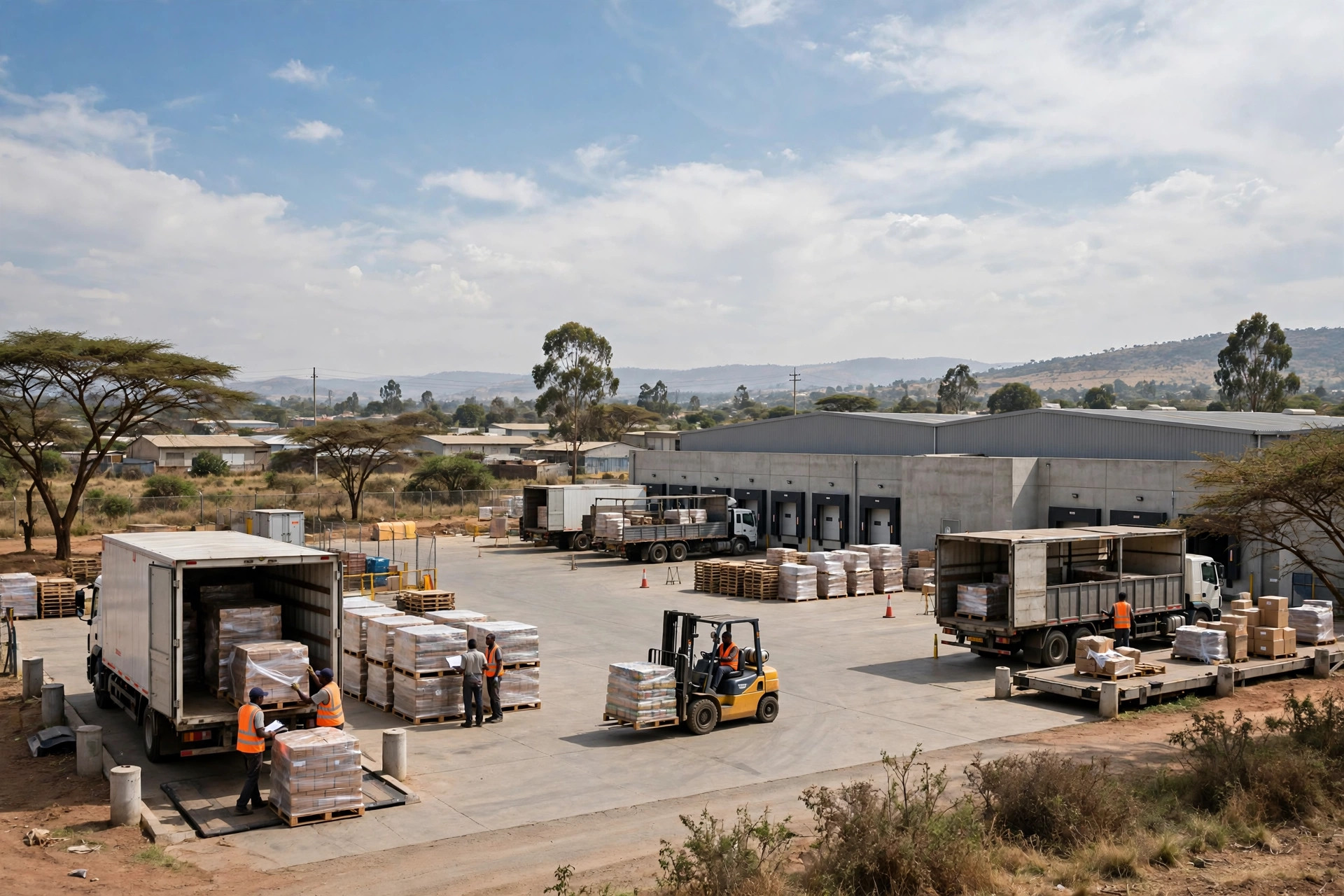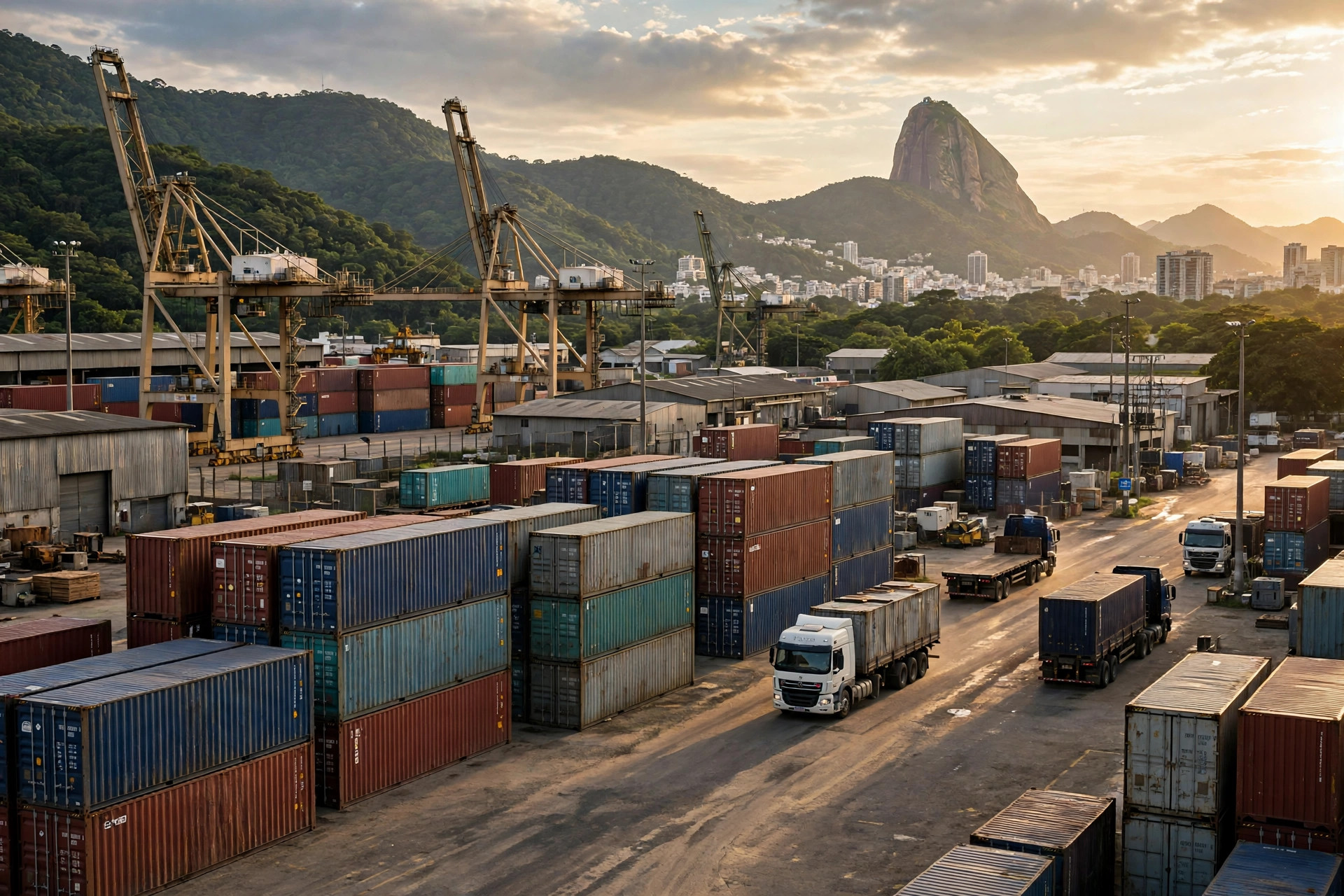
A friend who has run import distribution in Rio for over a decade sent me a site-selection spreadsheet recently, and asked the same question for the third time in a different form: once the goods clear the port, where should the warehouse actually be? He had two options on the table. One was a small facility near the port area, close to the docks but tight on space. The other sat in the suburbs, more than twice the floor area, with a headline rent that looked considerably cheaper. After running the numbers several ways, he found that the two options did not differ all that much on total cost. What differed was everything the spreadsheet could not capture. That spreadsheet has since become my way into understanding Rio's warehouse market: in this city, rent is only one line of the bill, and it is rarely the line that decides the outcome.
Next to the Port: Close to the Cargo, Not Always Close to Easy
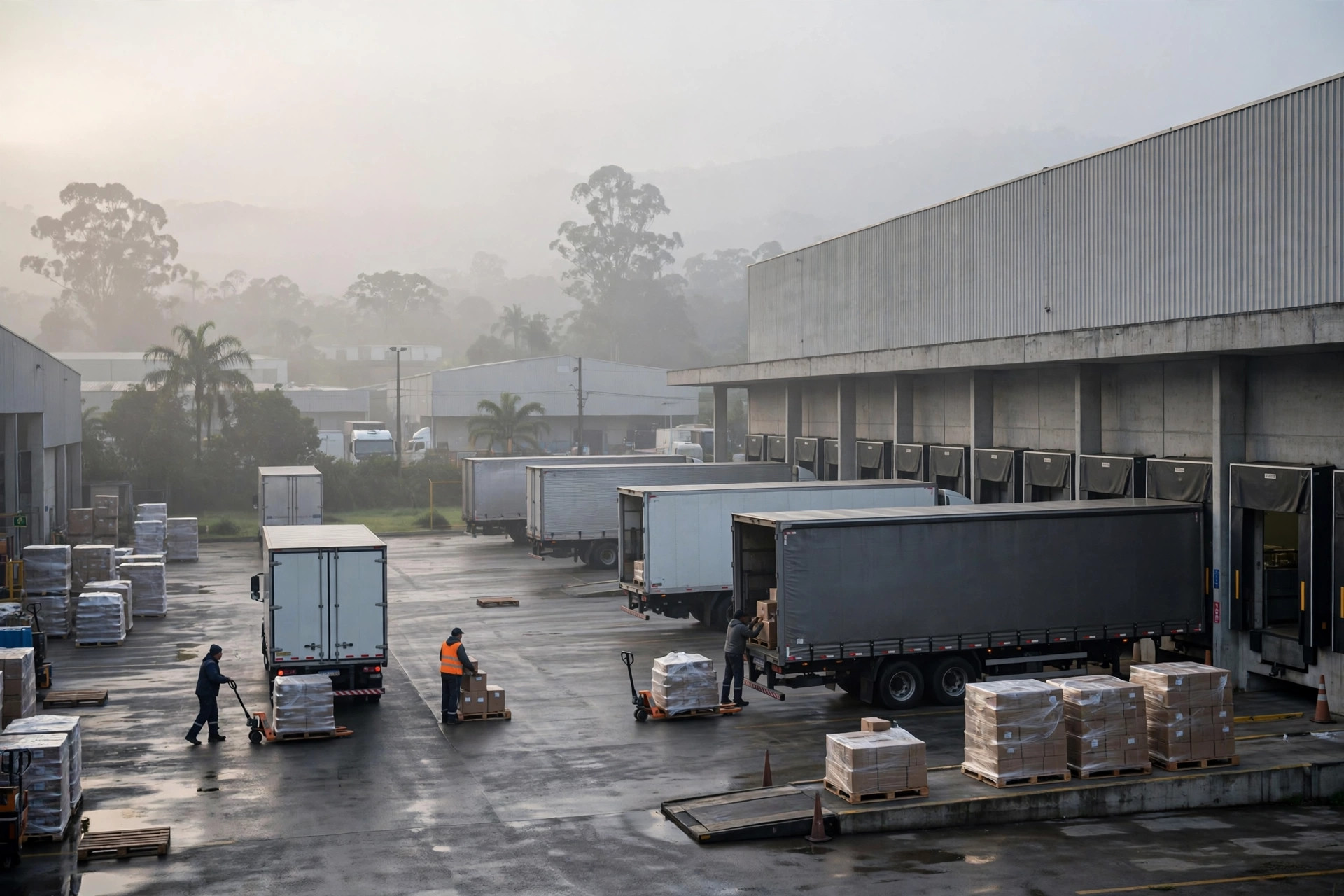
A port-side warehouse sells one thing above all: proximity. Goods can be picked up as soon as they clear, and moved into the city the same day. For time-sensitive cargo, that speed is difficult to put a price on. My friend had a seasonal line in the second half of 2024 that needed to reach shelves before a promotional window closed. Using the port-side unit, he went from pickup to shelf in about a day and a half; the suburban option would have added two to three days. In peak season, those two or three days are the difference between catching the window and missing it entirely.
But the difficulties of a port-side site come from that same proximity. First, space is usually limited, and expanding in a port-adjacent area is hard; when peak season arrives, overflow has to go somewhere else. Second, the roads around the port do not behave well at peak hours, and truck queues at pickup are a recurring reality — cargo can sit within sight of the docks and still be stuck on the last mile into the city. Third, leases on this kind of space tend to be shorter and less flexible, with less room to negotiate. My reading is therefore that a port-side warehouse works best as a buffer facility rather than a main warehouse: hold fast-moving, time-sensitive stock there, use it for its speed, and do not bet your capacity on its floor area.
The Suburban Big Box: Cheap Rent, Expensive Last Mile
The suburbs are where Rio's warehouse market most commonly finds its answer. Along the suburban highway corridors, facilities offer large floor plates, decent clear heights, and proper loading conditions — well suited to regional distribution and bulk storage. On my friend's internal comparison, the suburban unit came in roughly thirty percent cheaper per square meter than the port-side option. Read that one line alone, and the decision looks obvious.
Read further down the spreadsheet and the picture changes. What a suburban warehouse adds is daily linehaul cost and time into the city: trucks travel farther, the congested inbound leg eats into delivery windows, and as delivery frequency rises, fuel, driver hours, and vehicle wear all rise with it. More important is the coverage problem. Rio's terrain and road network mean that a suburban warehouse does not serve the whole city evenly; outlying districts are the first to lose next-day delivery promises when traffic peaks. I saw this play out with an e-commerce fulfillment operator during the November 2024 peak: overflow stock placed in a suburban facility dragged down on-time delivery scores for several days, and the rent saved was eventually given back in customer service costs and refunds. A suburban warehouse is not a bad choice — but it demands genuine distribution capability. Order profiling, route planning, and cut-off discipline all have to be in place first. Without them, the cheap rent is an illusion.
The Small Inner-City Unit: Not a Fallback, a Different Business
There is a third option that is routinely underestimated: the small inner-city or micro-fulfillment unit. It carries the highest rent and the smallest floor area, and looks like the worst deal on paper. But it does not sell storage; it sells certainty of delivery time. For high-frequency replenishment channels — convenience stores, pharmacies — or for any product line with a two-hour delivery promise, an inner-city unit is the only format that lets you write that promise into a contract. Its economics should be judged on cost per fulfilled order, not cost per square meter. Once the repeat purchases and channel stability that reliable speed brings are counted, the expensive warehouse can turn out to be the cheap one.
This leads to a counter-intuitive judgment about Rio's market: the real cost hotspot is not rent, it is uncertainty. Congestion, holiday windows, port working rhythms, and the added security and insurance costs of operating in the city do not appear as line items in a lease, yet they all come due at once in peak season. Anyone who selects a site by comparing rents alone is reading only the first page of the quote.
| Site type | Relative rent | Pickup and inbound speed | Last-mile cost | Best suited for | Main risk |
|---|---|---|---|---|---|
| Port-side | High | Fastest, but exposed to port queues | Low | Fast-moving, time-sensitive goods | Small area, hard to expand, rigid lease |
| Suburban big box | Low | Slower by half a day to two or three days | High, rising with delivery frequency | Bulk storage, regional distribution | Uneven coverage, peak-season failures |
| Inner-city small unit | Highest | Most predictable | Lowest | High-frequency replenishment, instant fulfillment | Small capacity per site, fine-grained management |
The table above is an illustrative comparison framework: rent levels are relative, not published market rates, and tax and compliance costs vary by product category and trade arrangement — readers should confirm current local policy before acting on any figure.
In practice, I suggest three checks before signing anything. First, drive the morning-peak pickup route yourself rather than trusting map distance; actual port-to-city transit time is the truth about delivery speed. Second, negotiate the lease's expansion clause and exit terms as standalone items — overflow without a contractual exit costs far more than rent when peak season forces a last-minute search. Third, split your order profile by channel before choosing a format: if more than roughly a third of orders are time-sensitive, paying a premium for port-side or inner-city space is justified; if the bulk is large, low-frequency shipments, the suburban warehouse wins.
Structurally, Rio's warehouse landscape appears to be settling into a three-layer division of labor: port-side units as buffers, suburban warehouses as main stockholding, and inner-city units as fulfillment touchpoints — with the same operator increasingly holding two or even all three formats rather than betting on one. The logic is straightforward: no single format covers speed, cost, and flexibility at the same time, and Rio's geography stretches the tension between the three further than a flat-terrain city would. Two variables are worth watching over the next few years: whether new supply along the suburban highway corridors widens the suburban rent advantage further, and whether inner-city units spread beyond e-commerce fulfillment into more product categories.
So my answer to my friend's spreadsheet runs in the opposite direction from the question he asked. Do not start by asking which warehouse is cheapest. Start by asking what your goods fear most. If they fear arriving late, stay close to the port. If they fear expensive last-mile delivery, build distribution capability before committing to the suburbs. If they fear broken delivery promises, reserve a place for an inner-city unit. A warehouse location was never a single choice; it is a bundle of trade-offs — and in Rio, the answers to those trade-offs will very likely shift again within a few years. Which of the three layers, I keep wondering, will move first?
By Dr. Chen, Supply Chain Researcher