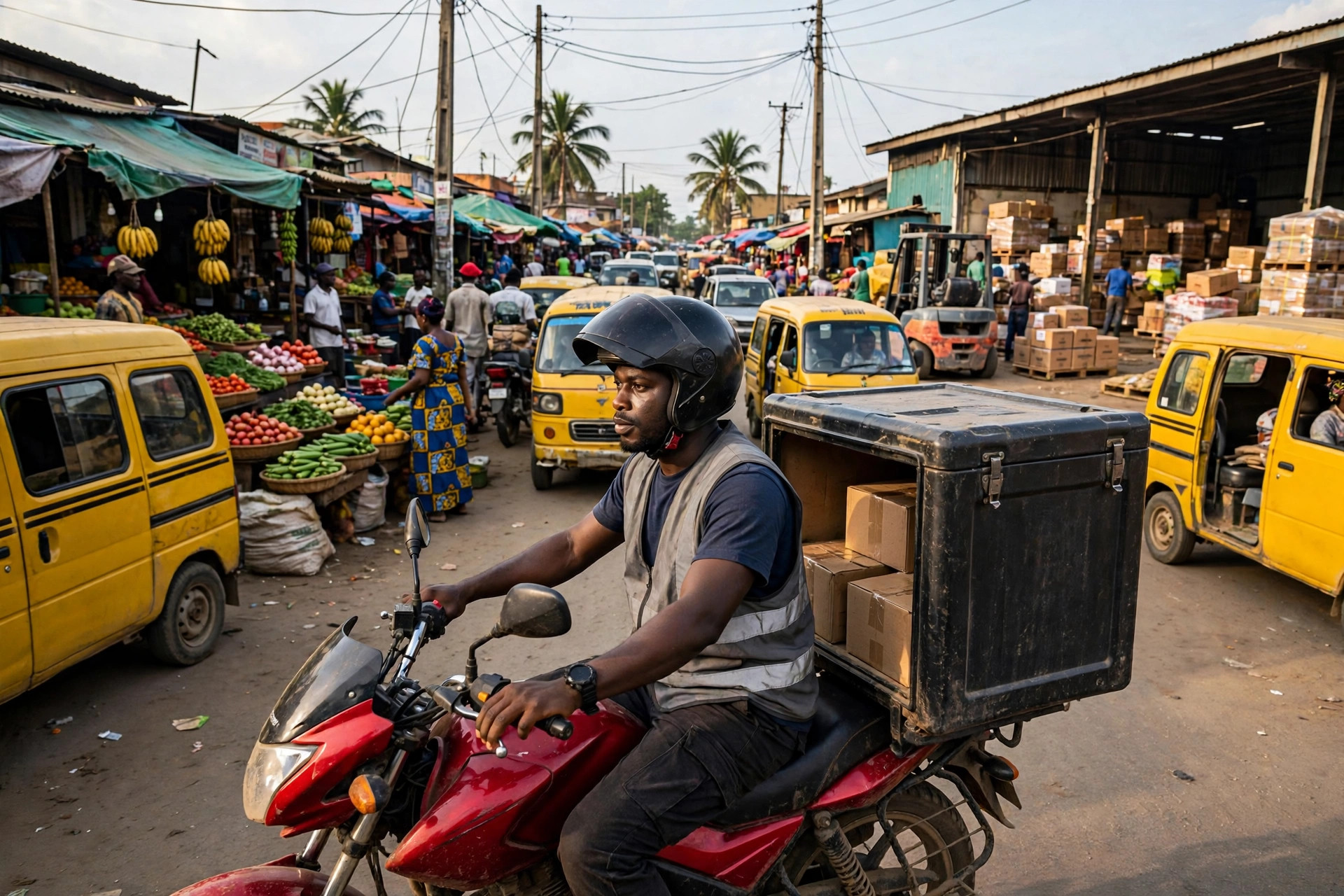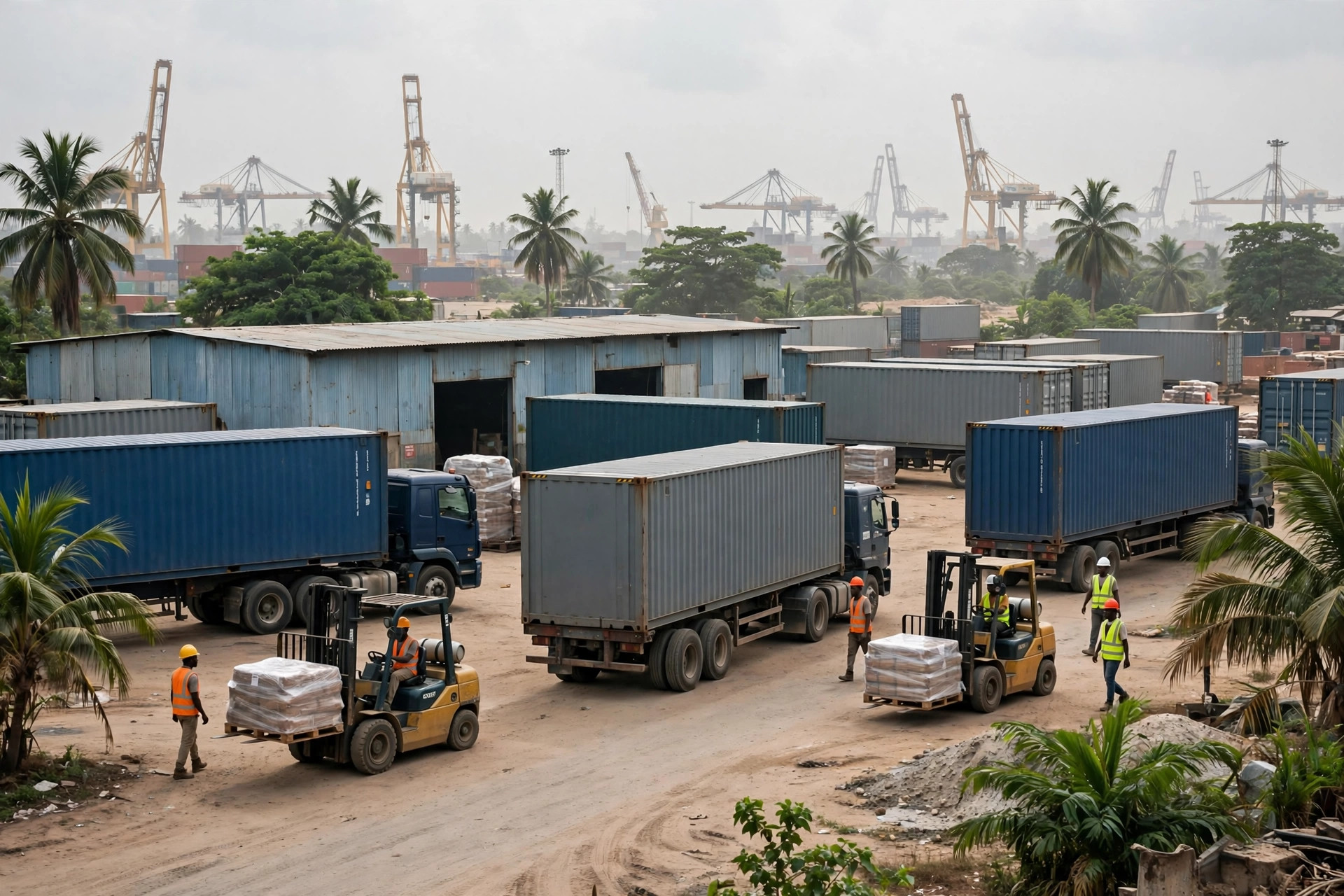
I tell you, the Lagos Nigeria warehouse market is something you figure out on the road, not on a spreadsheet. One morning I rode along with a container truck coming out of the Apapa port direction, loaded with imported household goods bound for a distribution point outside the island. The distance was nothing special. The trip was something else entirely: stop, crawl, wait, crawl again, and by midday the truck still had not finished unloading. The driver just shook his head. When he signed the warehouse deal, the rent had looked fine. Once the trucks started running, the money was leaking out on the road and in the waiting. After that day, I stopped asking about rent first. I ask where the truck comes from, where it is going, and how many trips it can make in a day.
Lagos gets its goods from the sea and scatters its customers everywhere: the island, the mainland, and the sprawling suburbs beyond. Put your warehouse close to the port and picking up cargo is easy, but when the port roads jam, your trucks and drivers sit there burning the day. Push the warehouse farther out and the roads run smoother, yet every trip costs more fuel, more hours, and more driver time. Nobody gets a free location here.
I know a distributor who learned this the hard way. At first he kept everything in a small warehouse near the port because same-day pickup felt fast. It was fast, right up until it was not. The place was too small, so a busy week filled it to bursting. Big trucks struggled to get in and out, small vans had to make extra runs, and on a congested port day his fleet managed barely a trip and a half by noon. He changed the setup: a small cross-dock point near the port just to receive, break down containers, and split loads, with the bulk stock held in a larger suburban warehouse. In practice the trucks ran on schedule, drivers got an extra trip in most days, and stockouts and pile-ups both dropped.
A different shipper I know runs the opposite pattern, and it works for him. His orders are small and urgent, going out across Lagos Island and nearby districts every single day. A big suburban warehouse, however cheap per square metre, would have eaten his margin in last-mile costs. So he rents a modest cross-dock on the edge of the city centre. Goods are sorted in the early hours, small vans roll out before dawn, and he can cover two delivery waves a day. His rule is blunt: the warehouse can be small, but it cannot be far; the vans can be old, but the delivery time cannot slip. In this market, the warehouse follows the orders, not the rent advertisement.
The Lagos Warehouse Market Starts at the Port
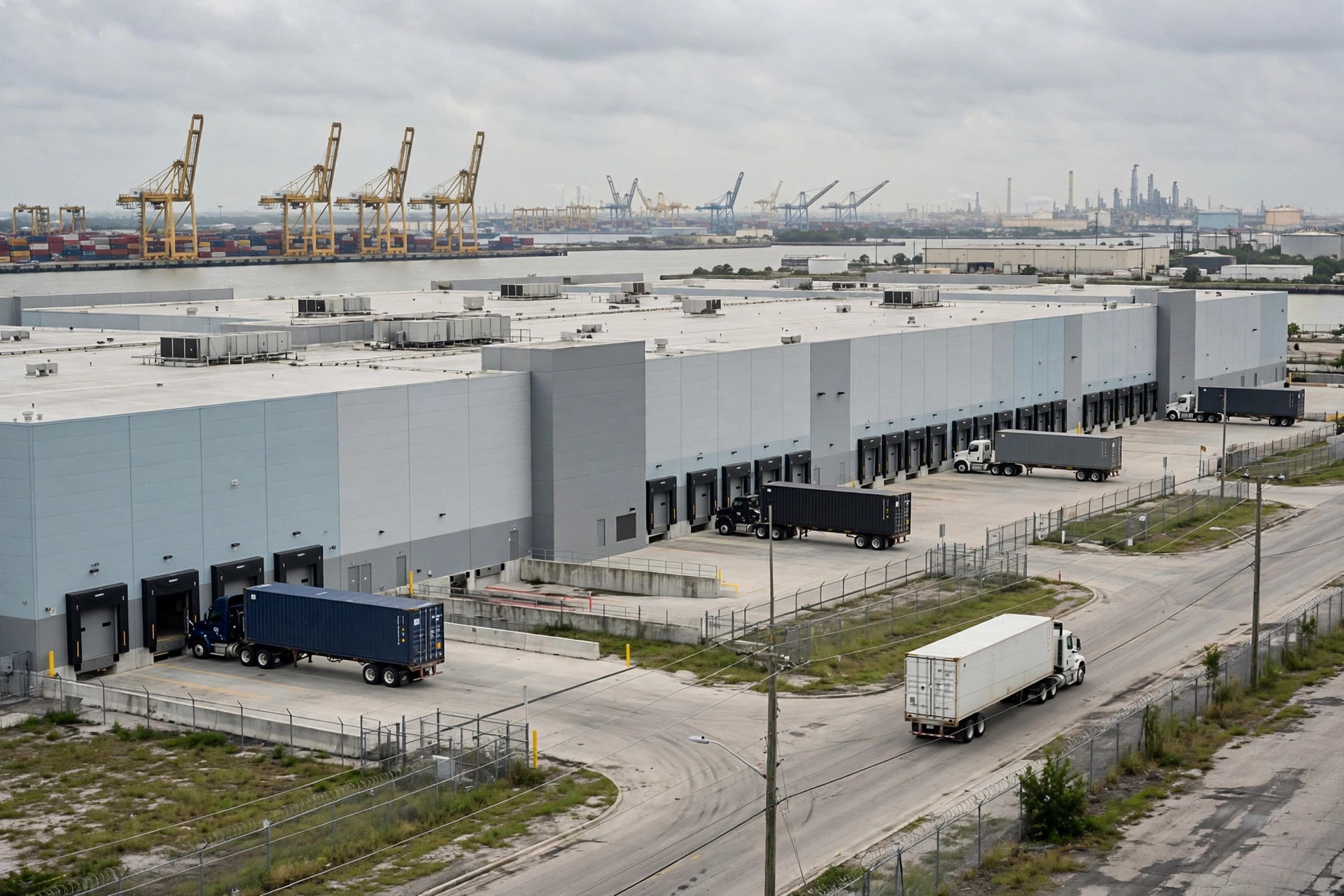
After fifteen years on the road, I have one habit when I size up a new city: look at the port and the main arteries first. In Lagos, most imported freight still comes through the Apapa and Tin Can Island port area and fans out along a handful of trunk roads. A warehouse in the port corridor wins on pickup speed and suits import distribution and post-clearance transfer. It loses on exactly the same ground: when those roads clog, every plan slides backwards.
So treat a port-side site as a transit point, not a permanent home for stock. It fits cargo that arrives, breaks down, and leaves again in short order, with clear batches and clear destinations. Using it as a long-term storage base usually backfires. Space is tight, access is awkward, and the busy season will jam it solid. Keep a port warehouse small and flexible, and leave yourself room to reroute. That is why the Lagos Nigeria warehouse market punishes anyone who treats rent as the whole cost.
Port Corridor vs. Suburbs: The Lagos Logistics Trade-off
Anyone serious about setting up here has to face the trade-off below. This is not a rent ranking — for current rent levels, check current local market reports. It compares what each location saves you against what it charges you in another form.
| Submarket direction | Best for | What it saves | What it costs you |
|---|---|---|---|
| Port corridor | Import distribution, post-clearance transfer | Fast pickup, fewer handoffs | Unstable lead times in congestion, hard to expand |
| City-edge cross-dock | City delivery, urgent small orders | Close to customers, an extra delivery wave a day | Small footprint, good for transit not bulk storage |
| Suburban big warehouse | Bulk stock, slow-moving goods, regional distribution | Room to breathe, calm management, good for buffer stock | Longer trunk hauls, heavy dependence on line-haul fleet |
| Lekki corridor emerging area | Export processing, industrial park customers | Near new parks and their tenants | Amenities and demand still growing, suits patient investment |
Here is the counter-intuitive part, and it surprises newcomers every time: the warehouse closest to the port does not always give you the lowest total cost, and the warehouse farthest from the city is not always the loser. It depends on whether your cargo can wait. Cargo that cannot wait turns time into money, so the site has to lean toward the customer. Cargo that can wait turns space and order into money, so a suburban warehouse wins. Beginners compare rent per square metre and stop there. They forget the traffic jam, the empty return run, the overtime sorting shift, and the lost customer. In Lagos, cost the whole journey, from port gate to the customer's door.
Before you sign anything, run the route three times yourself: once in the morning, once in the afternoon, and once when it rains or the port is busy. A road that looks short on the map can be a different animal in real life. Talk to local fleet operators and ask what time each road chokes, whether big trucks can enter the site, and how long unloading really takes. Their answers beat any glossy brochure. Drivers know whether a warehouse works, because they are the ones who pay for it in hours.
A simple decision frame helps here. Ask three questions before you commit. Can your cargo wait? If not, push the location toward the customer and stop haggling over a small rent gap. Are your orders scattered across the city or concentrated with a few big buyers? Scattered orders call for a cross-dock to consolidate; concentrated orders can often go direct from a suburban warehouse. And how much does your volume jump in peak season? A warehouse that fits in a quiet month will need extra sorting space, parking, and hands when volume doubles, so negotiate expansion room before peak season, not during it.
Last-Mile Realities in the Lagos Nigeria Warehouse Market
Now the last mile. I will be straight with you: in Lagos, the last mile is won on rhythm, not on truck count. Road conditions change fast, customers keep different receiving hours, and throwing more vans at the problem mostly adds chaos. The steadier setup splits the job in two layers. A suburban warehouse holds buffer stock and replenishes a city-edge cross-dock; small vans deliver from the cross-dock during the day; undelivered and returned goods come back to the cross-dock in the evening for recounting and a decision — redeliver or send back to bulk stock. It looks like an extra step. In practice it frees the big trucks from city traffic and lets the small vans run tighter routes.
For a shipper just entering Nigeria, my advice is even more cautious: rent first, do not build yet. Run one cross-dock plus one suburban warehouse for a quarter, learn where orders cluster, learn the congestion pattern, learn your return rate, and only then decide whether to add space or move. The market moves, orders move, and your network has to keep room to adjust. Get the lease terms right up front too — term length, expansion, and exit clauses — because a warehouse you cannot move becomes a trap when the business changes. The Lagos Nigeria warehouse market rewards the operator who stays flexible, not the one who locks in the biggest building on day one.
There is an old saying among drivers that fits this city well: sharpen the axe before you cut the wood. In Lagos, run the roads first, then fix the warehouse. Get the route right, and the numbers tend to follow.
By Shifu Zhao, Trucking Veteran (15 yrs)